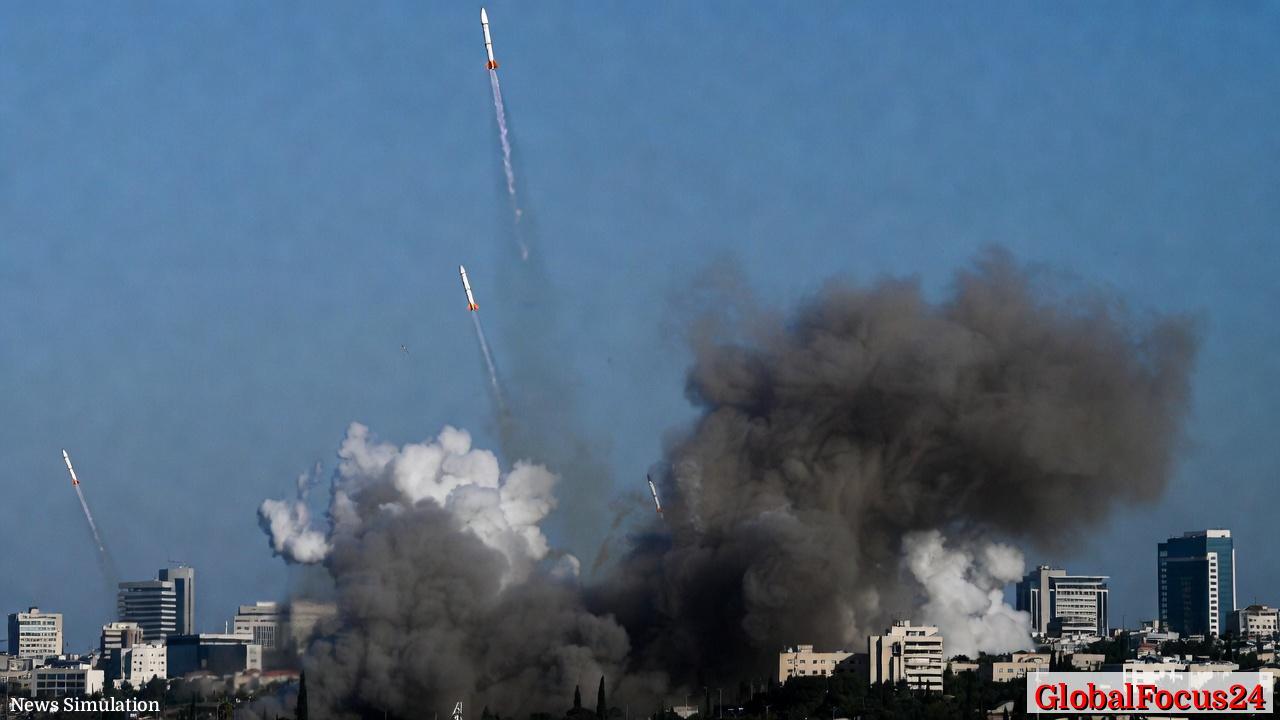
Iran Targets Tel Aviv with Missiles Carrying Cluster Warheads in Retaliation Claim
In a high-stakes escalation that reverberates beyond the immediate theater of conflict, Iran announced that missiles launched toward Tel Aviv carried cluster warheads, signaling a calculated response to the assassination of Iran’s security chief Ali Larijani. State television, operating under the country’s official media channels, described the strike as a direct retaliation for what Tehran characterizes as a targeted killing that severed a pivotal security link in its governance. The episode unfolds amid a broader regional crisis, drawing attention to the complex interplay of strategic deterrence, weapon development, and regional security dynamics in the Middle East.
Historical Context: A Long Arc of Tensions and Retaliation
To understand the present moment, it helps to trace the arc of tensions that have defined the Iran-Israel dynamic for decades. Since the Islamic Revolution of 1979, Iran and Israel have existed as regional adversaries with competing visions for security, influence, and governance. The animus intensified through Iran’s nuclear ambitions, its support for proxy groups across the region, and Israel’s emphasis on disrupting Iranian entrenchment in neighboring areas. Periodic escalations have included conventional cross-border exchanges, cyber operations, and information campaigns aimed at shaping international perception.
The assassination of a high-ranking Iranian security official—whether framed as a preemptive measure, retaliation, or a culmination of covert operations—typically triggers a cycle of reciprocal moves. In such cycles, each side weighs the strategic costs of escalation against the deterrent value of potential retaliation. The current development, featuring missiles with cluster warheads, suggests an intent to maximize battlefield effect while signaling resolve. The historical pattern indicates that leaders in Tehran often respond with a combination of conventional and asymmetric instruments to demonstrate that red lines in their security calculus have been crossed.
Economic Impact: Broader Ripples Across Markets and Trade
A conflict of this nature has immediate and cascading effects on regional economies and, by extension, global markets. The deployment of long-range missiles and the explicit mention of cluster munitions can influence energy markets, investor sentiment, and insurance costs for shipping lanes through key chokepoints in the region. While precise casualty and infrastructure data remain fluid in the early hours after any strike, the potential disruption to critical infrastructure—power grids, communication networks, and transportation corridors—poses a risk to both local economies and broader supply chains.
Global energy markets tend to respond to heightened geopolitical risk in the Middle East, given the region’s pivotal role in global oil and gas flows. Even when a country’s energy production remains stable, the perception of risk can prompt futures traders to price in higher volatility and risk premiums. Regions financially tethered to the Middle East—Europe, East Asia, and parts of North America—could experience indirect effects through pricing shifts and adjustments in maritime insurance costs. Historically, sanctions regimes and military actions in or near the Persian Gulf have led to brief spikes in Brent and WTI crude benchmarks, with knock-on effects for refining margins and transportation costs.
Regional Comparisons: Parallels with Past Episodes
Looking at similar historical episodes offers useful benchmarks for interpreting the current event. In past cycles of escalation, some regional powers opted for measured responses that aimed to degrade an adversary’s military capabilities while avoiding a full-scale ground conflict. Other times, the confrontation intensified into a broader conflagration, drawing in international actors and creating spillover risks for neighboring states with security commitments or economic ties to the warring parties.
Developed economies in the region with diversified energy portfolios may experience fewer direct disruptions in the short term, provided critical infrastructure remains intact. In contrast, neighboring countries with higher exposure to cross-border trade and energy transit routes might confront greater volatility in commodity prices, currency markets, and investor confidence. Comparisons to prior escalations underscore the importance of management of information, restraint in the use of weapons that cause wide-area effects, and the role of international diplomacy in de-escalation.
Geopolitical Landscape: Actors, Interests, and Influence
The broader geopolitical tapestry includes a spectrum of actors with varying interests in the outcome. Regional players seek to preserve stability, protect economic interests, and safeguard civilian populations from the worst effects of conflict. Major powers, including global stakeholders, monitor developments closely, weighing diplomatic channels, sanctions policy, and potential mediation avenues. The use of cluster warheads in particular raises humanitarian and legal questions that influence international responses, including considerations of international humanitarian law and the protection of civilians in conflict zones.
Public Reaction: Communities, Civilians, and Media Coverage
In urban centers across the region, residents react with a mix of concern, vigilance, and resilience. Public safety authorities prioritize securing vulnerable populations, ensuring reliable communications, and maintaining supply chains for essentials such as food, water, and electricity. Media coverage, while constrained by safety considerations and access constraints, focuses on verifiable information about the strike’s scale, the trajectory of responses, and the human impact on families and communities in Tel Aviv and surrounding areas. Civilians often bear the heaviest burden in such episodes, underscoring the importance of robust civil defense measures and accurate, timely information.
Military Assessments: Capabilities, Readiness, and Future Trajectories
From a military standpoint, the scenario prompts fresh assessments of air defense readiness, missile defense integration, and the susceptibility of strategic facilities to deterrence theory in practice. Analysts typically examine the effectiveness of interceptors, the redundancy of early warning systems, and the resilience of critical infrastructure against multi-strike scenarios. A key concern is whether such actions will lead to proportional responses or a strategy of escalation that risks broader regional involvement. The balance between demonstrating resolve and avoiding a slide into wider conflict remains a central consideration for policymakers and military planners.
Logistics and Operational Implications: From Launch to Aftermath
Missiles launched toward a densely populated urban area carry not only strategic symbolism but concrete operational implications. The logistics of counter-missile defense, the rapid dissemination of intelligence, and the coordination of civil defense protocols all come into sharp focus during the hours following an attack. Areas near Tel Aviv would typically implement safety measures, including shelter protocols, emergency communications, and traffic management to facilitate emergency services. The aftermath—whether measured in infrastructure status, casualty figures, or displacement—will shape humanitarian relief needs, reconstruction priorities, and long-term regional policy considerations.
Humanitarian Considerations: Safeguarding Civilians in Conflict
Even in moments framed as retaliation or deterrence, the protection of civilian lives remains a core humanitarian imperative. International law emphasizes principles of distinction and proportionality, seeking to minimize harm to noncombatants. Relief organizations monitor access to affected areas, coordinate with local authorities, and mobilize resources to address medical needs, shelter, and basic services. The public’s expectation is for clarity about the scale of impact, the timeline for recovery, and assurances that future steps will prioritize civilian safety and dignity.
Strategic Signals: What This Means for Deterrence and Diplomacy
The rhetoric and actions surrounding such attacks carry strategic signals beyond the immediate geopolitical space. Deterrence hinges on credible consequences for aggression, while diplomacy aims to restore channels of dialogue that can prevent miscalculation. The use of cluster warheads as a public element of the narrative adds a layer of complexity, spurring debates about risk tolerance, escalation thresholds, and the role of international institutions in mediating disputes. The path forward may involve renewed negotiations, confidence-building measures, and a reorientation of regional security frameworks to reduce the likelihood of future incidents.
Regional Security Architecture: Paths Toward Stability
Experts have long argued that durable peace in the region requires a multi-layered security architecture. This includes transparent communications, crisis-management mechanisms, and economic interdependence that raises the stakes of destabilization for all involved parties. Initiatives aimed at de-escalation, joint maritime security arrangements, and verified compliance with arms-control norms could help reduce the probability of rapid, misinformed responses to incidents. The contemporary strike, in this light, could act as a catalyst for renewed discussions about how to manage competing interests while prioritizing civilian safety and regional resilience.
Economic Resilience: Mitigating the Ripple Effects
Given the interconnected nature of modern economies, even localized conflicts can ripple through supply chains, financial markets, and consumer confidence. Businesses in sectors such as logistics, energy trading, and manufacturing may implement contingency plans to weather potential volatility. Governments often respond with targeted fiscal and monetary measures to stabilize markets and reassure investors, while international institutions may offer mediation and humanitarian support to affected populations. The emphasis is on maintaining essential services, protecting critical industries, and minimizing disruptions to everyday life for residents in the region.
Technology and Defense: Advances in Missile Defense and Early Warning
Advances in defense technology influence both the feasibility of deterrence and the potential for rapid response. Modern early warning radars, layered interceptor systems, and real-time data-sharing between allied forces contribute to shaping the balance of power in volatile environments. At the same time, the ethical and legal implications of using cluster munition require careful international scrutiny, with calls for adherence to humanitarian norms and efforts to advance non-proliferation and disarmament objectives. The dialogue around these technologies is likely to intensify as episodes like the current one unfold and drive demand for robust, internationally coordinated responses.
Public Safety and Communication: Keeping Citizens Informed
In a crisis, credible information from official sources is crucial to public safety. Governments and emergency services typically issue regular updates on threat levels, protective actions, and available resources. Civil defense messages emphasize sheltering protocols, emergency contact numbers, and instructions for securing homes and workplaces. Timely, accurate communication helps reduce panic, prevents the spread of misinformation, and supports communities as they navigate the transient shock of sudden aggression.
International Reactions: Allies, Partners, and Global Stakeholders
Beyond the immediate region, allies and partners monitor developments, weighing responses that range from diplomatic condemnation to sanctions or security assurances. International bodies may call for de-escalation, permission for neutral mediation, and mechanisms to prevent the spillover of violence into broader areas of the Middle East. The tone of international discourse often shapes the space in which regional actors operate, influencing both policy decisions and the prospects for a negotiated settlement.
Future Scenarios: Potential Paths After the Strike
The trajectory after such an event can unfold in several plausible ways:
- De-escalation through renewed diplomacy: Prompted by international mediation, with expanded communication channels and verification measures.
- Prolonged stalemate: A situation where incidents continue at a lower intensity, with periodic retaliatory actions but no full-scale war.
- Escalation risk: A dangerous loop of retaliation that increases casualties and destabilizes the region, potentially drawing in additional actors.
- Focus on resilience: Countries mobilize to strengthen civil defense, diversify energy supplies, and invest in crisis response capabilities to mitigate social and economic disruption.
Conclusion: A Moment that May Reshape Regional Security Dialogue
The reported strike, featuring missiles with cluster warheads, marks a significant moment in a long-running regional tension that has tested restraint, deterrence, and diplomacy. While the immediate humanitarian and military implications depend on ongoing assessments, the broader signal is clear: actors in this volatile theater are navigating a complex landscape where history, economics, and regional power dynamics intersect with the fate of civilian populations. As the region absorbs the shock of the attack, the global community watches closely for openings to restore dialogue, safeguard civilians, and chart a path toward a stable, enduring security framework that can withstand future shocks.