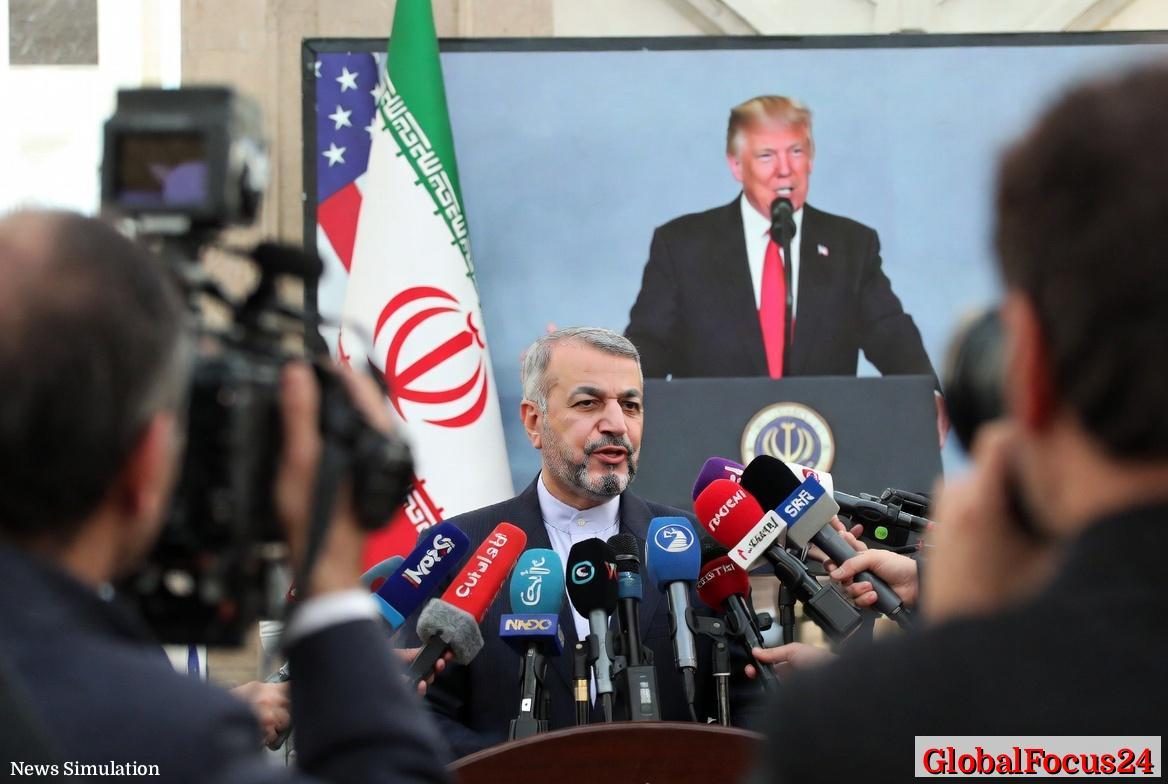
Iran Criticizes Trump’s Mixed Messaging as Tensions Highlight Diplomatic Uncertainty
Iran’s Deputy Foreign Minister has publicly criticized U.S. President Donald Trump, saying the American leader “talks too much” and frequently delivers contradictory statements, underscoring persistent strains in communication between Washington and Tehran. The remarks reflect broader challenges in U.S.-Iran relations, where rhetoric and policy signals have often diverged, complicating diplomatic engagement and regional stability.
Diplomatic Friction Over Messaging
The Iranian official’s comments point to what Tehran perceives as inconsistency in U.S. foreign policy messaging. According to the deputy foreign minister, fluctuating statements from the White House have made it difficult to assess Washington’s strategic intentions, particularly regarding sanctions, nuclear negotiations, and regional security.
In recent years, U.S.-Iran relations have been marked by cycles of escalation and de-escalation, often influenced by public statements from senior officials. Analysts note that rhetoric plays a significant role in shaping diplomatic outcomes, especially in a relationship already burdened by decades of mistrust.
The critique reflects a longstanding concern within Iran’s foreign policy establishment: that mixed signals from Washington can undermine negotiations before they begin. In this context, public comments by political leaders are not merely symbolic—they are closely scrutinized for indications of policy direction.
Historical Context of U.S.-Iran Relations
The tensions highlighted by the Iranian official are rooted in a complex and often adversarial history. Diplomatic ties between the United States and Iran were severed in 1979 following the Iranian Revolution and the subsequent hostage crisis at the U.S. Embassy in Tehran. Since then, relations have been characterized by intermittent confrontation and limited diplomatic engagement.
One of the most significant developments in recent decades was the 2015 Joint Comprehensive Plan of Action (JCPOA), commonly known as the Iran nuclear deal. The agreement, negotiated between Iran and several world powers, including the United States, aimed to limit Iran’s nuclear program in exchange for sanctions relief.
However, the U.S. withdrawal from the JCPOA in 2018 under President Trump marked a turning point. The reimposition of sanctions and the adoption of a “maximum pressure” strategy intensified economic and political tensions. Iran responded by gradually reducing its compliance with the agreement, leading to heightened concerns about nuclear proliferation.
Against this backdrop, statements from political leaders carry significant weight. Diplomatic language is often interpreted as a precursor to policy action, making consistency a key factor in maintaining stability.
Economic Impact of Prolonged Tensions
The ongoing strain in U.S.-Iran relations has had substantial economic consequences, particularly for Iran’s economy. Sanctions have targeted key sectors, including oil exports, banking, and shipping, leading to reduced revenue and limited access to international markets.
Iran’s oil exports, once a cornerstone of its economy, have faced severe restrictions. This has contributed to currency volatility, inflation, and reduced foreign investment. The uncertainty surrounding U.S. policy—exacerbated by conflicting statements—has further complicated economic planning for both domestic and international stakeholders.
Businesses and investors often rely on clear policy signals to assess risk. Inconsistent messaging from major global powers can deter investment and disrupt trade flows. For Iran, this has translated into a cautious economic environment where long-term planning is increasingly difficult.
The ripple effects extend beyond Iran. Global energy markets, for example, are sensitive to developments in the Middle East. Any indication of escalating tensions can influence oil prices, supply chains, and market stability. As a result, diplomatic clarity is not only a political necessity but also an economic one.
Regional Comparisons and Strategic Implications
Iran’s concerns about U.S. messaging are not unique. Other countries in the region have also navigated the challenges of interpreting American foreign policy signals. In the Gulf, nations such as Saudi Arabia and the United Arab Emirates closely monitor U.S. statements to align their own security and economic strategies.
Compared to its regional counterparts, Iran operates under more stringent economic constraints due to sanctions. This amplifies the impact of uncertainty. While Gulf states may have greater flexibility to adapt to shifting policies, Iran’s options are more limited, making clarity even more critical.
At the same time, regional dynamics are shaped by a complex interplay of alliances and rivalries. The United States maintains strategic partnerships with several Middle Eastern countries, influencing the broader balance of power. In this environment, communication—both public and private—plays a crucial role in maintaining equilibrium.
The Iranian official’s remarks can be seen as part of a broader effort to highlight the importance of consistent diplomacy. By drawing attention to perceived inconsistencies, Tehran may be signaling its preference for more predictable engagement.
The Role of Public Statements in Diplomacy
In modern diplomacy, public statements serve multiple purposes. They communicate policy positions, signal intentions, and shape public perception. However, they can also introduce ambiguity, particularly when different messages emerge from the same administration.
For policymakers, balancing domestic political considerations with international diplomacy is a persistent challenge. Statements aimed at domestic audiences may not always align with diplomatic objectives, leading to mixed signals abroad.
In the case of U.S.-Iran relations, this dynamic is particularly pronounced. Both countries operate under significant domestic pressures, which can influence how messages are crafted and delivered. As a result, public rhetoric often becomes a reflection of internal political dynamics as much as external strategy.
Experts note that consistent messaging is essential for building trust, especially in high-stakes negotiations. When statements appear contradictory, they can undermine confidence and complicate efforts to reach agreements.
Market Reactions and Global Attention
Financial markets and geopolitical analysts closely monitor developments in U.S.-Iran relations. Statements from senior officials can trigger immediate reactions, particularly in energy markets. Oil prices, for instance, often respond to perceived changes in regional stability.
The Iranian deputy foreign minister’s comments have drawn attention from international observers, highlighting ongoing concerns about the predictability of U.S. foreign policy. While such remarks are unlikely to cause immediate shifts in policy, they contribute to the broader narrative surrounding diplomatic relations.
Global investors, meanwhile, continue to assess the risks associated with Middle Eastern tensions. The interplay between rhetoric and policy remains a key factor in shaping market expectations.
Outlook for Diplomatic Engagement
Despite the challenges, diplomatic channels between the United States and Iran remain a subject of ongoing interest. Periodic efforts to revive negotiations, particularly concerning nuclear issues, indicate that both sides recognize the importance of dialogue.
However, the success of such efforts often depends on the clarity and consistency of communication. As the Iranian official’s remarks suggest, perceived contradictions can hinder progress and reinforce existing mistrust.
Looking ahead, the trajectory of U.S.-Iran relations will likely continue to be influenced by a combination of political, economic, and strategic factors. Public statements will remain a critical component of this dynamic, shaping perceptions and guiding expectations.
In this context, the call for more coherent messaging reflects a broader desire for stability in an otherwise uncertain relationship. Whether such clarity can be achieved remains an open question, but its importance is widely acknowledged across diplomatic and economic spheres.