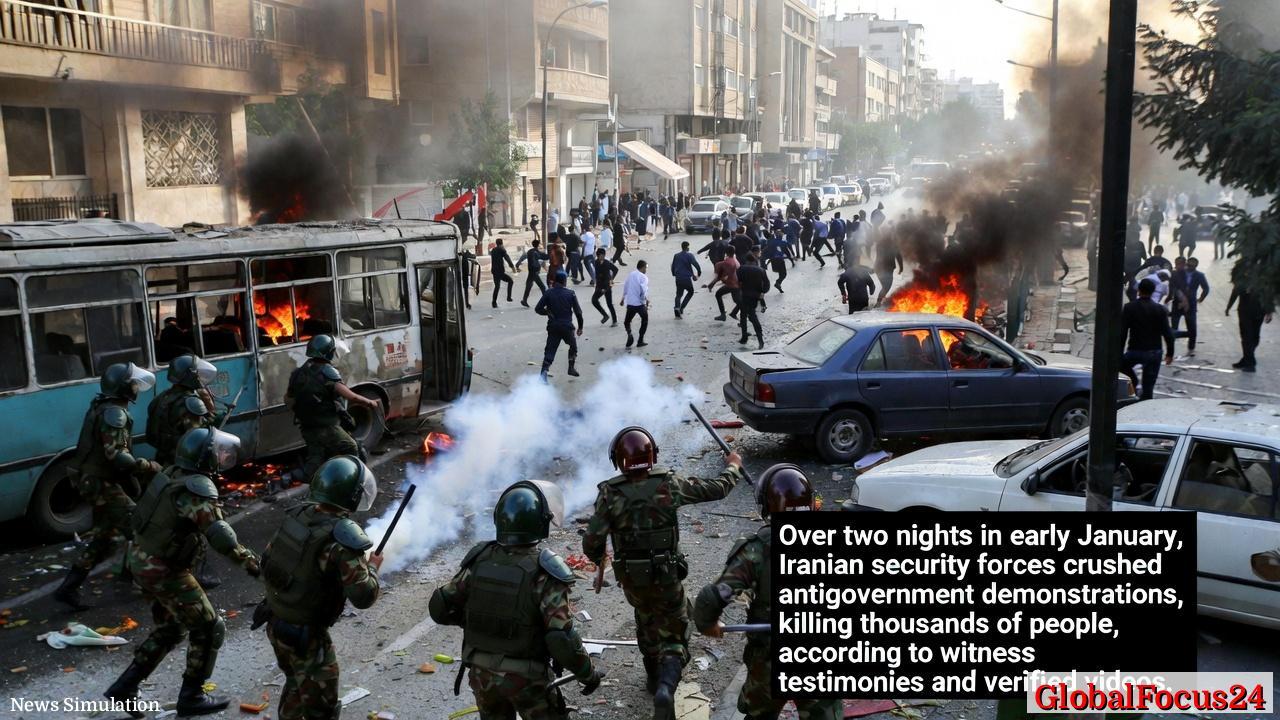
Iran Faces a Turning Point: Protests, Suppression, and the Aftermath
An unflinching account of a public uprising, a brutal crackdown, and the broader economic ripples that follow underscores a moment of upheaval in Iran’s recent history. As security forces moved decisively to quell demonstrations that began in late December, the nation found itself at a crossroads—between a popular demand for political change and a regime determined to maintain control. This article presents a chronological, contextual view of the events, weaving witness testimony, verified footage, and expert analysis into a portrait of a country confronting profound internal strain. It also examines the economic consequences that accompany political turmoil, and it places Iran’s experience in a regional framework to illuminate how neighboring economies and policymakers respond to similar shocks.
Historical context: long-term patterns shaping today’s protests
Iran’s political landscape has been shaped by a long arc of political mobilization, state surveillance, and periodic protests. For decades, the Islamic Republic has balanced a powerful security apparatus with a citizenry increasingly connected through digital networks and global information flows. The current wave of demonstrations is not the first time Iranians have challenged authority, but it arrives at a moment when social media and alternative communications channels enable rapid information sharing even amid state-imposed blackouts. The events of December and January follow a pattern in which popular discontent over economic conditions, governance decisions, and perceived restrictions on civic freedoms sparks mass gatherings, followed by swift and often severe enforcement actions by security forces. Understanding this history helps explain both the scale of the protests and the intensity of the regime’s response.
The spark and the surge: from street protests to nationwide attention
The initial spark appeared in late December as citizens voiced grievances over a range of issues, including inflation, unemployment, and governance concerns. The demonstrations quickly expanded beyond isolated urban centers to encompass diverse segments of society, signaling a broad call for reform rather than a single policy change. As crowds grew, so did popular expectations for meaningful political concessions and greater personal freedoms. The immediate turning point occurred when security forces deployed force to disperse gatherings, leading to a rapid escalation in violence and a dramatic shift in public perception about the feasibility of sustained, peaceful protest. Reported casualty figures and witness accounts reflect a complex, contested reality on the ground, where access to information was frequently restricted and many participants chose not to document their experiences openly for safety reasons.
Witness testimony: firsthand accounts from the front lines
In this unfolding narrative, four witnesses who departed the country after the protests provided on-record testimony about what they witnessed. Their accounts are supplemented by corroborating videos and analysis from weapons and ammunition experts, forming a chronology of events over a critical 48-hour window. The testimonies describe a transition from widespread demonstrations to scenes of extreme violence, with credible indications of heavy security deployment, rapid use of force, and a chilling atmosphere in which communications were suppressed. The witnesses emphasized that fear and caution influenced behavior—some protesters chose not to carry phones or to delete footage to avoid identification and punishment. While individual experiences vary, the consistency of a rapid shift from public gatherings to harsh enforcement points to a systematic pattern rather than isolated incidents.
Economic impact: short-term disruptions and medium-term considerations
Political unrest of this kind typically reverberates through multiple layers of the economy. In the immediate term, uncertainty can disrupt consumer sentiment, investment planning, and currency stability. Businesses may reassess expansion plans, supply chains may experience volatility, and tourism can suffer as travelers weigh safety concerns. Financial markets often react to news about protests, state responses, and potential policy shifts, which can influence exchange rates, inflation expectations, and capital flows. The short-term economic effects are compounded by government actions taken in the wake of demonstrations, such as tightening controls on information, which can affect both domestic activity and foreign investor confidence.
Medium- and long-term implications depend on how authorities address core grievances and how citizens respond to governance reforms. If reforms are perceived as credible and inclusive, confidence may gradually restore; if the regime doubles down on repression, the economy could experience persistent headwinds from continued uncertainty, capital flight, and stalled reforms. In regions with shared economic ties to Iran, neighboring economies monitor developments closely, balancing concerns about stability with opportunities for trade, energy markets, and regional cooperation.
Regional comparisons: lessons from similar episodes
Iran’s experience has echoes in other economies facing domestic protests and state responses. Across the region and beyond, protests often prompt authorities to weigh the balance between security measures and concessions. In some cases, improved governance transparency and targeted economic relief help dampen unrest, while in others, hardline responses deepen discontent and complicate investor confidence. A comparative lens highlights several common factors:
- Economic vulnerability: Where inflation, unemployment, and stagnation converge with political discontent, demonstrations can gain momentum. Mitigating measures such as targeted subsidies, job creation programs, and currency stabilization can influence the trajectory of protests.
- Information controls: States that restrict communications during unrest can hinder the flow of information, complicating both domestic decision-making and international reporting. This dynamic often shapes public perception and international responses.
- Regime adaptability: Governments that demonstrate a credible path toward reform and accountability may defuse tensions more effectively than those that rely solely on coercive measures.
- External leverage: International trade, energy markets, and sanctions regimes can affect the economic calculus for both protesters and authorities, influencing the cost-benefit analysis of continuing demonstrations versus reform.
Public reaction and the information landscape
Public reaction to the crackdown has been sharply polarized. For many, the events represent a moment of collective remembrance and concern for human rights and civil liberties. For others, security and stability are prioritized in ways that reflect deep-seated beliefs about governance. In environments where access to independent reporting is constrained, social networks and diaspora communities often become primary channels for sharing information and sustaining international attention. The situation underscores the importance of verified reporting and the dangers of misinformation during periods of upheaval.
Human stories within the larger narrative
The human dimension of these events cannot be reduced to statistics. Each witness account adds texture to the overarching story of a society grappling with its future. The decision to leave the country to preserve testimony underscores the risk faced by those who speak out. The courage of individuals who recount their experiences, even at personal cost, helps ensure that the world gains a clearer understanding of what occurred and why it matters beyond borders. This human-centered perspective reminds readers that political events are ultimately about people—families, communities, and livelihoods—and the lasting impact on daily life.
Geopolitical and energy considerations
Iran’s role in regional geopolitics and energy markets adds another layer to the analysis. The country’s energy resources, strategic location, and relationships with global partners mean that domestic instability can have ripple effects beyond its borders. Markets that rely on Iranian energy exports may monitor developments closely, adjusting risk assessments and supply expectations in response to political shifts. At the same time, regional actors may recalibrate their diplomatic and economic strategies as they assess Tehran’s stability and policy direction. The interplay between internal politics and external dependencies highlights the interconnected nature of modern energy and policy landscapes.
What comes next: uncertainty and potential pathways
Predicting the exact trajectory of Iran’s political and economic situation remains challenging, given the complexity of internal dynamics and regional influences. Several potential pathways illustrate the range of possible outcomes:
- Incremental reforms: The regime could introduce targeted reforms aimed at improving living standards and expanding civic space, paired with enhanced transparency and accountability measures. If implemented credibly, these steps might reduce the appeal of further protests and help stabilize the economy.
- Crackdown with limited concessions: A sustained security-focused approach coupled with selective concessions could suppress unrest in the short term but risk eroding legitimacy and dampening investor confidence over time.
- Pivotal political transition: A shift in leadership or a reform-minded realignment within the political elite could redefine the regime’s approach to governance, potentially opening space for dialogue and reform if accompanied by credible guarantees of civil liberties.
- Regional and international engagement: Changes in international sanctions regimes, energy markets, and diplomatic engagement could influence economic resilience and political maneuvering, affecting the pace and scope of domestic developments.
Key takeaways for readers and observers
- Protests in Iran reflect a broad spectrum of grievances, not a single issue, and the response by authorities has significant implications for civil liberties, economic stability, and social cohesion.
- The economic impact of unrest extends beyond immediate disruptions, influencing investment, currency dynamics, and consumer confidence in the medium term.
- Regional comparisons offer useful context for understanding how similar dynamics unfold elsewhere, while reinforcing the importance of credible governance, economic relief, and transparent decision-making.
- The human dimension—witness testimonies, personal risk, and the resilience of communities—provides a crucial reminder of the stakes involved in episodes of political upheaval.
Conclusion: weighing memory against momentum
As Iran navigates this critical period, the balance between state security measures and citizen-led calls for reform will shape the country’s path forward. The events of the recent weeks—marked by a rapid escalation in violence, a significant disruption to daily life, and a costly impact on the economy—will be weighed against the potential for lasting reform and improved governance. Observers, policymakers, and citizens alike are watching developments closely, assessing not only the immediate consequences but also the longer-term implications for regional stability, energy markets, and the resilience of Iranian civil society.
Follow the evolving story to understand how governance choices, economic policy responses, and social resilience interact in a nation at a pivotal juncture.