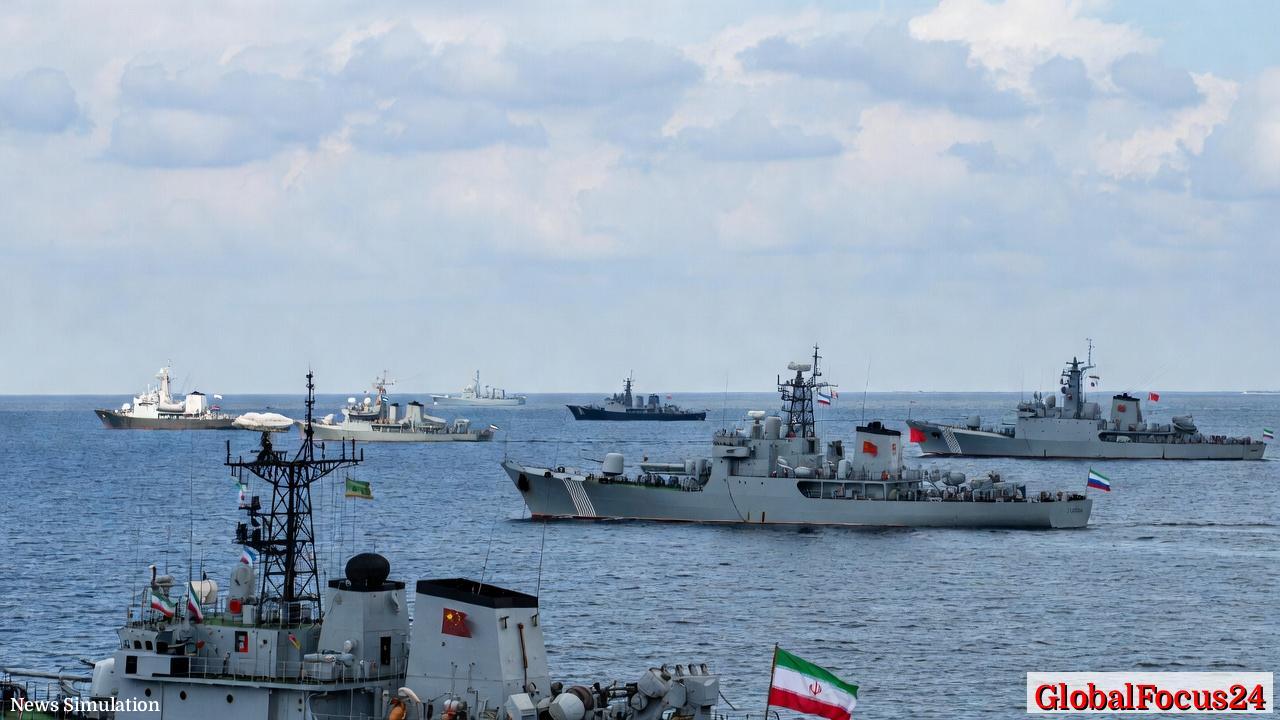
Joint Military Exercises in the Sea of Oman and Indian Ocean Signal Deepening Naval Cooperation
In a three-nation display of strategic coordination, Iran, China, and Russia are preparing to conduct joint military exercises in the Sea of Oman and across portions of the Indian Ocean. The drills, announced amid evolving regional security dynamics, underline a concerted effort among the three powers to strengthen naval interoperability, diversify maritime capabilities, and project influence across critical sea lanes that underpin global trade and energy flows. While specific timelines and drill parameters have not been disclosed, analysts anticipate a combination of surface warfare, anti-submarine operations, maritime patrol coordination, and simulated threat-reaction scenarios designed to test integrated command and control, logistics planning, and rapid-response capabilities.
Historical Context: From Cold War Convergence to a Multipolar Maritime Arena
To understand the significance of these upcoming exercises, it helps to situate them within a broader historical arc. Iran, China, and Russia have long pursued security partnerships grounded in shared interests and complementary capabilities. Beijing’s naval modernization program since the early 2000s has prioritized blue-water fleets capable of extended global reach, rapid logistics, and advanced sensor-shooter integration. Moscow’s maritime activities have increasingly emphasized anti-access/area denial (A2/AD) capabilities, carrier-killer potential, and submarine-warfare proficiency, with a strategic emphasis on Eurasian security corridors. Tehran has focused on protecting regional supply routes, safeguarding energy shipments through critical chokepoints, and cultivating maritime patrol and escort capabilities that extend Iran’s influence into the Gulf of Oman and beyond.
The Sea of Oman, a gateway between the Persian Gulf and the Indian Ocean, has historically been a corridor of commerce as well as strategic contest. Its narrow chokepoints and busy shipping lanes have drawn attention from maritime security operators for decades. The Indian Ocean, by contrast, serves as a vast arena where global powers seek influence over sea lines of communication that sustain economies across Asia, Africa, and the Middle East. In this context, the joint drills reflect a strategic bet: by combining resources, intelligence-sharing, and synchronized maneuvering, the three nations aim to raise the cost of external interference for third parties while validating their own command-and-control architectures in complex maritime environments.
Economic Impact: Weighing Costs, Benefits, and Global Ripples
Maritime security exercises of this scale carry tangible economic implications. First, such drills signal a commitment to maintaining open sea lines for critical commodities, including oil, gas, and diversified consumer goods that traverse the Persian Gulf and Indian Ocean. By practicing coordinated interdiction, search-and-rescue, and maritime domain awareness, the participating nations seek to bolster confidence among regional trading partners and reduce the likelihood of disruption from piracy, terrorism, or unilateral coercive actions that could affect shipping insurance rates and logistics costs.
Second, the exercises could influence regional defense markets and industrial policy. Nations aligned with or opposed to these efforts may accelerate investments in naval platforms, cyber-defense capabilities, and intelligence, surveillance, and reconnaissance (ISR) networks. For Iran, expanding interoperability with Chinese and Russian assets could translate into more sophisticated maritime security collaboration, potential access to advanced surface ships or airborne surveillance equipment, and enhanced training pipelines for officers and sailors. For China and Russia, the drills offer a proving ground for integrated naval operations, the refinement of long-range communication protocols, and the demonstration of strategic reach to partners and observers in the region.
Third, the exercises may affect energy-market sentiment in the short term. While economic markets typically react to broader geopolitical risks, the mere prospect of intensified naval activity near critical energy routes tends to prompt heightened scrutiny of supply-chain resilience and potential price volatility. In the longer term, sustained collaboration could influence investment decisions by regional oil and gas producers, shipping firms, and insurers, as operators weigh the balance between diversification of supply routes and the perception of enhanced military risk in specific corridors.
Regional Comparisons: How This Exercise Relates to Other Maritime Partnerships
The maneuver resonates with a broader pattern of multipolar naval cooperation that has emerged over the past decade. For context, several regional blocs have forged joint exercises to bolster deterrence, humanitarian response capabilities, and interoperability across services. In the Indo-Pacific, for example, alliances and partnerships frequently feature maritime patrols, anti-submarine drills, and amphibious landings designed to demonstrate readiness for a range of contingencies. In the Middle East and the Western Indian Ocean, security exercises have historically focused on counter-piracy operations, maritime governance, and port-security cooperation, reflecting the diverse security concerns of littoral states.
What makes the Iran-China-Russia collaboration distinct is its combination of geographic reach and strategic intent. The Sea of Oman acts as a natural bridge between the Gulf and the wider Indian Ocean theater, offering both proximity to energy hubs and access routes that are of interest to multiple great powers. The inclusion of Russia alongside China introduces additional dimensions of naval experience, from submarine operations to long-range missile defense concepts, which complements China’s expanding surface fleet and logistics capabilities. Iran’s participation anchors the exercises in regional security dynamics, and its cooperation signals a willingness to integrate external partners’ technologies and practices into its own maritime security framework.
Operational Implications: Interoperability, Logistics, and Readiness
From an operations perspective, joint exercises of this nature aim to achieve several core objectives:
- Interoperability: Standardizing communication protocols, navigation and command systems, and tactical procedures to ensure seamless coordination among ships, aircraft, and support vessels from the three nations. Coalition missions typically emphasize harmonized maritime awareness, threat prioritization, and synchronized response times.
- Anti-access and area denial (A2/AD) concepts: Demonstrating the ability to operate effectively in contested environments where adversaries seek to complicate freedom of navigation. Exercises may include long-range surveillance, precision targeting simulations, and coordinated air-defense maneuvers to assess how allied forces can maintain presence and maneuverability.
- Logistics and sustainment: Testing shared logistic chains such as fuel supply, ammunition replenishment, and medical evacuation. Robust logistics are critical to sustaining extended operations in the Indian Ocean theater, where distances are vast and basing options may be limited.
- Anti-submarine warfare (ASW) and surface warfare (SUW): Exercises typically feature ASW drills using sonar, maritime patrol aircraft, and submarines, alongside surface-combat engagements that test missile defense, surface search, and maneuvering in high-traffic zones.
- Search-and-rescue and disaster response: Realistic scenarios often incorporate humanitarian assistance and disaster relief components, reflecting the growing emphasis on protecting civilians and stabilizing regions during times of crisis.
Public Reaction and Regional Security Outlook
Public interest in such joint exercises tends to reflect a mix of concern and strategic curiosity. In littoral states and trading partners along the Indian Ocean rim, observers weigh the potential benefits of enhanced security co-operation against the risk of heightened great-power competition near pivotal sea-lanes. Governments in neighboring regions may respond with calibrated statements that emphasize the importance of freedom of navigation, maritime safety, and the lawful use of seas in accordance with international law. Analysts may highlight that while joint drills can deter wrongdoing and strengthen search-and-rescue capabilities, they also send signals about future security alignments and arms-length commitments, which can influence regional defense planning and diplomatic balancing acts.
Regional partners that rely on stable access to energy and trade routes might monitor the drills closely, evaluating whether the exercises suggest longer-term shifts in balance of power or shifts in maritime governance norms. Small and mid-sized economies with strategic coastlines could interpret the development as a reminder of the persistent emphasis on maritime security and the ongoing relevance of naval diplomacy in maintaining open seas for commerce.
Technological and Strategic Implications: Beyond the Immediate Exercises
Looking ahead, these drills could accelerate technology transfer and collaborative development in several areas:
- Sensor fusion and data-sharing: Integrated ISR networks can enhance maritime situational awareness, enabling faster, more accurate decision-making across fleets and air assets.
- Autonomous systems and unmanned platforms: Unmanned surface and aerial vehicles are increasingly embedded in training scenarios, offering risks-reduced ways to rehearse complex operations and extend reach in challenging environments.
- Cyber defense and secure communications: A secure, resilient communication backbone is essential for coordinated actions across multiple nations. The exercises provide a testbed for cyber defense protocols and contingency planning against potential electronic or cyber interference.
- Maritime domain awareness: Strengthened coordination contributes to broader efforts to map and monitor busy maritime corridors, supporting safety, environmental protection, and compliance with international norms.
Context Within Global Security Trends
This announcement sits within a wider tapestry of global security developments. As nations balance the pursuit of strategic autonomy with the need for shared stability, maritime exercises often reflect a mutual interest in safeguarding critical sea lanes, ensuring freedom of navigation, and developing credible capabilities to deter potential coercion. The Sea of Oman and Indian Ocean region has long attracted attention due to its strategic importance for energy shipments from the Persian Gulf and its role as a corridor linking Europe, Asia, and Africa. The evolving posture of Iran, China, and Russia in this theater suggests a strategic calculus that favors diversified alliances, deeper interoperability, and the testing of combined resilience in the face of potential disruption.
In addition to naval capability, economic and diplomatic channels run parallel to these military demonstrations. Joint exercises frequently accompany broader dialogues on trade, infrastructure investment, and regional security architecture. While the drills themselves focus on the conduct of operations at sea, they are part of a larger ecosystem of security cooperation that includes port visits, intelligence-sharing arrangements, and multilateral training programs that aim to raise standardization and professionalization across partner forces.
Conclusion: A Signpost of Strategic Adaptation at Sea
The forthcoming Iran-China-Russia joint exercises represent more than a routine training event. They are a concrete signal of strategic adaptation in a multipolar maritime order, where nations seek to cultivate interoperable capabilities that can operate across diverse theaters and under varying political climates. The Sea of Oman and Indian Ocean theater offers a proving ground for testing integrated command-and-control structures, cross-platform coordination, and resilient supply chains necessary for sustained maritime presence.
As observers monitor months or even years of evolving drills and deployments, the overarching takeaway is clear: maritime security is increasingly a shared enterprise, with regional players and distant powers all contributing to a dynamic balance of capability, risk, and cooperation. In the near term, stakeholders will watch for how these exercises influence regional deterrence, shipping security, and the practical realities of navigating a maritime world that remains essential to global prosperity and economic stability.