Investors Rush to Protect Portfolios as Put-Call Skew Hits Post-Pandemic Highs
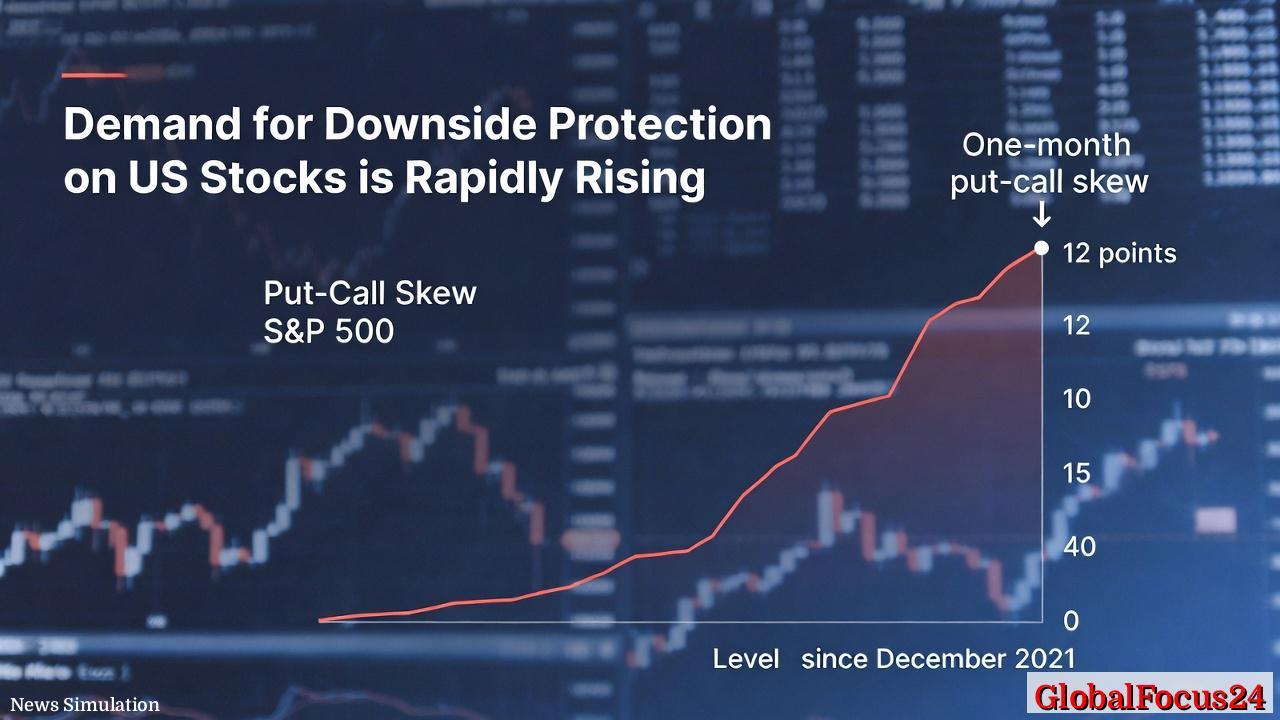
In a climate defined by uncertainty and rapid shifts in market sentiment, downside protection has surged to the forefront of investment decisions across the United States. The one-month put-call skew on the S&P 500 has climbed to about 12 points, a level not seen since the depths of the 2021 volatility backdrop and the 2020 market shock. This measure, which compares the costs of put options to call options, signals that traders are willing to pay a premium for hedges against declines, even as they still participate in the potential upside of a recovering equity market. The current level embodies a strategic tilt toward risk management rather than outright bearish bets, highlighting a broadening convergence of cautious risk discipline with ongoing growth expectations.
Historical context helps frame the present moment. The put-call skew rose dramatically during the market turbulence of 2020, when the onset of the pandemic and the ensuing economic disruption shattered investor complacency. Since then, bouts of elevated hedging have recurred during periods of heightened macro uncertainty—geopolitical flare-ups, inflation surprises, and policy shifts—but the latest reading suggests a renewed appetite for downside protection at an elevated price. Market participants are not simply seeking insurance; they are actively pricing it into portfolio construction, a habit that reflects a maturing risk management framework in a market environment characterized by higher record-keeping of tail risks and a need for liquidity stress tests across investment pillars.
The current trend contrasts with broader market optimism at times during the last decade, where low volatility and abundant liquidity often dampened hedging demand. Yet as yields fluctuated and macro narratives shifted—from inflation normalization expectations to policy rate expectations and economic growth trajectories—investors increasingly treated hedges as essential entries in their playbooks. The one-month skew’s rise to its highest level since late 2021 underscores a shift from passive exposure to strategic protection. It also mirrors a growing awareness that the distribution of potential outcomes in equity markets remains thick on the downside, even as central banks pivot toward a more balanced stance.
Economic implications of this hedging wave are multifaceted. On the demand side, elevated put pricing signals that hedging activity is intensifying across a spectrum of investors, from hedge funds to wealth management platforms and individual savers seeking to preserve capital in a volatile environment. The increased cost of downside protection effectively acts as a form of insurance premium paid for risk reduction, potentially leading to a more resilient set of balance sheets when markets turn. On the supply side, market makers and options desks absorb this demand by providing a wider array of put options with varying strike prices and tenors, which can contribute to greater liquidity in hedging instruments but also to higher bid-ask spreads during periods of stress.
Beyond the options market, short positioning in exchange-traded funds has surged for the second straight week, marking one of the fastest accelerations on record. The appetite to short ETFs reflects a broader hedge strategy—investors seek to dampen exposure to broad market movements or sector-specific risk while still maintaining tactical exposure to certain themes when conditions permit. This dynamic has left ETFs accounting for over 35 percent of market trading volume for 11 consecutive days, a pattern that aligns with the longest streak seen in 2020 and has been driven by a combination of short selling activity and hedging strategies. The persistence of this pattern suggests a structural shift in how market participants manage risk, with leveraged trades, synthetic exposure, and hedging overlays playing an increasingly central role in daily liquidity and price discovery.
Regional and sectoral considerations illuminate how this hedging cycle plays out across the broader economy. In the United States, robust consumer demand, resilient labor markets, and ongoing supply chain realignments have provided a cushion against abrupt downturns. Yet the sensitivity of asset prices to macro surprises—especially those related to inflation dynamics, energy costs, and global demand—has elevated the value of hedges as a way to reduce the implied cost of volatility. Investors in regions with stronger exposure to cyclical sectors, such as manufacturing and energy, may be particularly active in managing downside risk given the amplified influence of commodity prices and interest rate expectations on earnings visibility.
Comparisons with regional markets reveal a nuanced landscape. In Europe and Asia, where monetary policy paths and growth trajectories diverge from U.S. conditions, hedging behavior tends to reflect local risk premia and currency considerations. Global investors often employ cross-asset hedges to moderate cross-border exposure, with foreign exchange risk intensifying the demand for protective instruments. While the exact premium levels differ by market structure and liquidity, the overarching theme remains consistent: risk management takes precedence as investors seek to protect gains and preserve capital in the face of uncertain macro winds.
Market psychology plays a critical role in interpreting the current hedging surge. A sense of urgency among investors is underscored by the rapid acceleration of put demand and the simultaneous use of protective strategies across multiple asset classes. This urgency is not inherently pessimistic about future returns; rather, it reflects disciplined risk budgeting. In volatile periods, hedging can stabilize portfolios, enabling fund managers to maintain strategic allocations rather than reacting impulsively to every price move. The willingness to pay higher hedging costs is a sign that participants value downside protection as a strategic asset—an insurance layer that may ultimately contribute to smoother drawdowns during adverse events.
From a long-term perspective, hedging activity has implications for market efficiency and capital allocation. When investors buy insurance against downside, price discovery can be tempered in the near term as risk premia widen and protective demand absorbs some of the selling pressure during pullbacks. However, this dynamic can also preserve capital for recovery phases, enabling a quicker re-engagement with equities once downside scenarios abate. The balance between hedging costs and potential upside remains a central consideration for portfolio managers aiming to optimize risk-adjusted returns.
The broader context includes notable shifts in trading behavior. Short-term options activity has a disproportionate impact on volatility metrics and liquidity patterns, particularly in times of stress. As hedging activity intensifies, market participants should monitor the interaction between options markets and underlying stock prices, as well as the flow of funds into and out of exchange-traded products. Analysts emphasize that while hedging can blunt downside moves, it can also contribute to rapid hedging unwind episodes if market sentiment snaps back or if risk incentives change abruptly.
Public reaction to this hedging trend has been mixed yet insightful. Some investors view elevated protection as prudent risk management that preserves capital during uncertain times. Others worry about the cost of hedging and whether premiums reflect actual risk or speculative demand. Financial advisory firms note that clients with diversified portfolios and longer time horizons tend to benefit from a measured hedging approach, whereas short-term traders may experience higher costs that influence their trading cadence. In regional markets with high exposure to technology and growth equities, hedging activity may also reflect concerns about valuation normalization and potential earnings volatility as rate expectations shift.
From a regional perspective, the current hedging cycle echoes historical patterns observed during prior episodes of heightened market tension. The early 2020s have shown recurring themes: a robust participation of retail and institutional investors in protective options strategies, the prominent role of ETFs as vehicles for hedging, and a continued emphasis on risk budgeting in asset allocation. What differentiates today’s environment is the scale and velocity of hedging demand, amplified by digital trading platforms, real-time data analytics, and the integration of risk controls into everyday investment decisions.
Looking ahead, several scenarios could influence the trajectory of downside protection demand. If inflation cools and central banks signal a more confident path toward rate normalization, hedging costs might ease as volatility subsides. Conversely, if growth surprises to the downside or geopolitical tensions intensify, hedging premiums could remain elevated or rise further, reinforcing the momentum behind protective strategies. Market participants will likely pay close attention to macroeconomic indicators, corporate earnings guidance, and policy communications as they navigate the ongoing risk-reward calculus.
In sum, investors are increasingly embracing downside protection as a core element of portfolio strategy. The one-month put-call skew on the S&P 500, now near its highest point since the 2021 volatility spike, reflects a disciplined stance toward risk management. Short ETF positions have surged, and ETFs have accounted for a sizable share of daily trading activity, underscoring a broader appetite for hedging and defensive positioning. As markets continue to evolve, the relationship between hedging activity, price discovery, and capital allocation will remain a focal point for investors, policymakers, and market watchers seeking to understand how risk management shapes the behavior of modern financial markets.