India’s VIP Culture Is Out of Control: A Growing Divide Between Leaders and Citizens
The Return of an Old Problem
In India, a country that often prides itself on being the world’s largest democracy, the sight of flashing red beacons, motorcades that bring traffic to a standstill, and restricted zones at public events has become all too familiar. VIP culture—an enduring symbol of privilege and hierarchy—has re-emerged as a dominant concern among ordinary citizens. Despite repeated pledges by successive governments to curb such excess, frustration is mounting that the gap between India’s leaders and the people they claim to serve has rarely felt wider.
When Prime Minister Narendra Modi came to power in 2014, he famously described himself as the nation’s “chief servant.” His administration promised a government “of service, not power,” seeking to eliminate the legacy of elitism ingrained in Indian bureaucracy and politics. Yet, despite such rhetoric, from government offices to airports, temples to public conferences, the evidence increasingly suggests a reversal. India’s VIP culture, rather than fading, appears to be evolving—becoming more pervasive, sophisticated, and normalized.
The India AI Impact Summit: Symbol of a Larger Issue
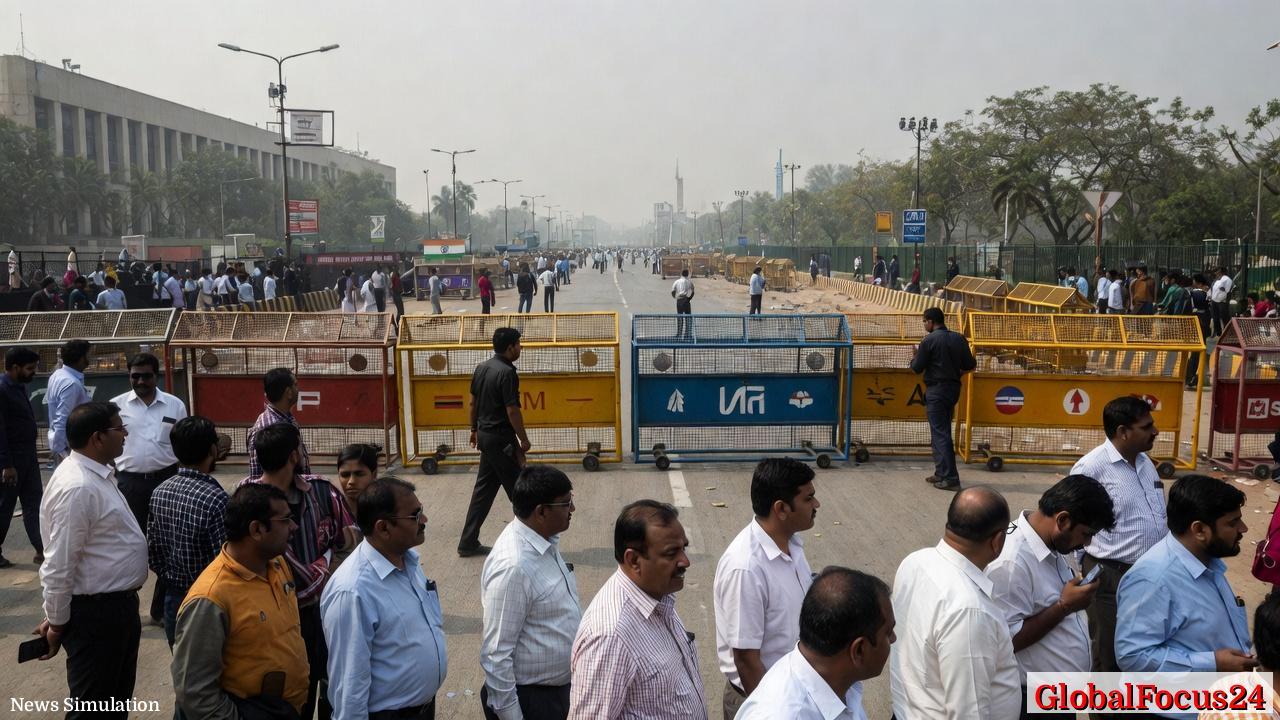
The latest flashpoint emerged from the India AI Impact Summit 2026 in New Delhi, a high-profile gathering of researchers, technologists, and policymakers aimed at shaping the country’s artificial intelligence strategy. While the event was expected to showcase India’s leadership in emerging technologies, it instead became a case study in hierarchical privilege.
Multiple attendees reported being denied entry or delayed for hours as security teams cleared routes for government dignitaries. One Bengaluru-based AI researcher described feeling like a “third-class citizen” after being stopped repeatedly by guards and made to walk several kilometers as VIP convoys blocked access roads. International delegates and differently-abled participants faced similar treatment, with limited transportation or communication from organizers. What should have been a moment of global collaboration ended in logistical chaos and social commentary—a reflection, many felt, of priorities skewed in favor of status over substance.
The incident spread quickly online. Images of stranded participants circulated on social media, sparking debate about whether India’s aspiration to build a future powered by technology was being undermined by archaic notions of entitlement. Critics argued that these disruptions symbolize how deeply embedded VIP privileges remain in the country’s administrative and cultural psyche.
Public Frustration on the Rise
The public mood reflects growing impatience. A nationwide survey conducted in early 2026 across 333 districts gathered responses from more than 54,000 citizens. The results painted a stark picture: 77% of respondents said VIP culture had worsened in the past year, up from 64% in 2024. Only about a third felt any reduction in such practices over the last three years.
Respondents reported being inconvenienced by VIP movements in daily life—whether at hospitals where entire wards were sealed off for dignitaries, or on highways suddenly blocked for motorcades. Even in places of worship, special access for political figures and business leaders continues to stir resentment. For ordinary Indians, these privileges often manifest as lost time, missed opportunities, and a lingering sense of exclusion in public spaces.
A Human Cost Beyond Inconvenience
While traffic delays and restricted events may seem trivial in isolation, their cumulative impact reveals deeper structural inequality. For example, when ambulances are held behind security cordons or when daily commuters lose hours on roads because of motorcade diversions, the cost is not merely symbolic—it affects livelihoods, health, and trust in governance.
Economically, VIP privileges compound inefficiencies already embedded in India’s public service systems. Small disruptions across multiple sectors—from healthcare to transportation—translate into lost productivity. A 2025 study by a Delhi-based think tank estimated that security-related traffic halts and convoy diversions cost major Indian cities nearly ₹4,000 crore annually in productivity losses, primarily due to delayed freight, missed business appointments, and fuel wastage.
The Roots of VIP Culture
India’s VIP culture is not new; its foundations lie deep in colonial bureaucracy and the post-independence political elite’s attempts to emulate Western protocols of state function. The British Raj institutionalized administrative rank, with elaborate symbols—from insignias to exclusive clubs—designating authority. Post-1947, independent India carried over several of these markers, with senior officials and ministers assuming privileges intended for colonial governors.
For decades, red-beacon cars became emblems of unchecked status. Attempts to phase them out have met mixed results. In 2017, the central government formally banned their use on civilian vehicles, calling them “symbols of power and entitlement.” Yet the essence of the problem proved harder to eliminate. The hierarchy simply adapted—manifesting in other ways: special lanes, reserved seats, extended security details, and exceptions to queue systems at airports and temples.
Comparing Global and Regional Practices
Globally, democracies have grappled with similar issues of privilege and public perception. In Scandinavia, ministers often travel without security convoys and mingle in public transport. New Zealand’s prime minister famously cycled to parliament, signaling accessibility. In contrast, India’s densely populated urban centers, layered bureaucracy, and complex security apparatus pose distinct challenges to such openness.
Within Asia, India’s predicament mirrors patterns seen in several developing nations where economic and political elites remain socially insulated. However, emerging economies like Indonesia and Vietnam have begun introducing policy reforms limiting convoy privileges and mandating transparency in event security planning. Observers suggest that India could adopt similar models—emphasizing proportional resource use and citizen convenience—to rebuild public trust.
Political Acknowledgment but Little Action
Even high-ranking officials now recognize the optics of privilege. Vice-President Jagdeep Dhankhar recently called VIP culture “an aberration with no place in modern society,” underscoring its contradiction with constitutional principles of equality. His remarks followed public anger over incidents of blocked roads during religious festivals for ministerial visits—clashes that often go viral online and trigger wider debate on the meaning of “public service.”
Despite periodic statements, tangible reforms remain slow. Bureaucratic inertia, combined with entrenched expectations of protocol, continues to resist change. For many in officialdom, the perks of position—dedicated security escorts, priority access, separate entrances—are seen less as indulgence and more as occupational entitlement.
The Economic and Social Consequences
The growing perception of inequality fosters cynicism toward institutions. Public resentment over special treatment erodes confidence in fairness and meritocracy, discouraging citizen participation and reinforcing a sense of distance between rulers and ruled. Analysts warn that this social divide could undermine India’s ambitions for inclusive growth.
On a macro level, overt displays of privilege influence investor sentiment and international perception. Foreign partners increasingly assess not just policy stability but also administrative transparency and ease of access. Incidents like the AI Summit disruptions can signal deeper governance inefficiencies. In a nation aspiring to attract global talent and capital, such perceptions matter.
Cultural observers also note shifting generational attitudes. Younger Indians, connected through social media and more sensitive to inequality, are vocal in demanding accountability. Viral posts exposing misuse of privilege—such as queue-jumping, heavy security details in public spaces, or restricted cultural venues—often ignite debates on modernization versus tradition. The resulting dialogue reflects a society negotiating the boundaries of status and equality in a rapidly changing economy.
Lessons from the Past and Paths Forward
Historically, India has oscillated between reformist efforts and public fatigue over recurring privilege scandals. In the 1990s, administrative reforms attempted to rationalize security deployment for elected officials, but continuous expansion of political offices outpaced enforcement capacity. A renewed attempt at reform would need not only legislation but cultural change—demonstrating humility as a form of leadership rather than rhetoric.
Potential measures include transparent criteria for security allocation, digital tracking of convoy-related disruptions, and penalties for unjustified road closures. Cities like Mumbai have already tested real-time traffic communication systems that notify citizens of planned diversions. Similar initiatives, if scaled nationally, could mitigate public frustration while maintaining necessary protection for officials.
A deeper cultural shift, however, depends on example-setting from the top. Symbolic gestures—leaders attending public events without elaborate entourages, voluntarily standing in queues, or traveling by regular flights—can yield disproportionate impact. Such actions resonate far beyond their logistical significance, signaling a break from hierarchy and reinforcing the idea that governance is service, not spectacle.
The Road Ahead
India stands at an inflection point. As the nation transitions into a global economic powerhouse and digital innovator, the persistence of feudal privilege undermines both domestic morale and international credibility. The public’s message is clear: modern India demands accountability, accessibility, and humility from those who govern.
The episode at the AI Summit may fade froms, but its echoes will linger. It captured in miniature the contradictions of a country that celebrates its democratic values yet struggles to embody them evenly. Ending VIP culture will require more than policy—it will require imagination, empathy, and political will. Without these, India risks perpetuating a system that serves power first and people last.