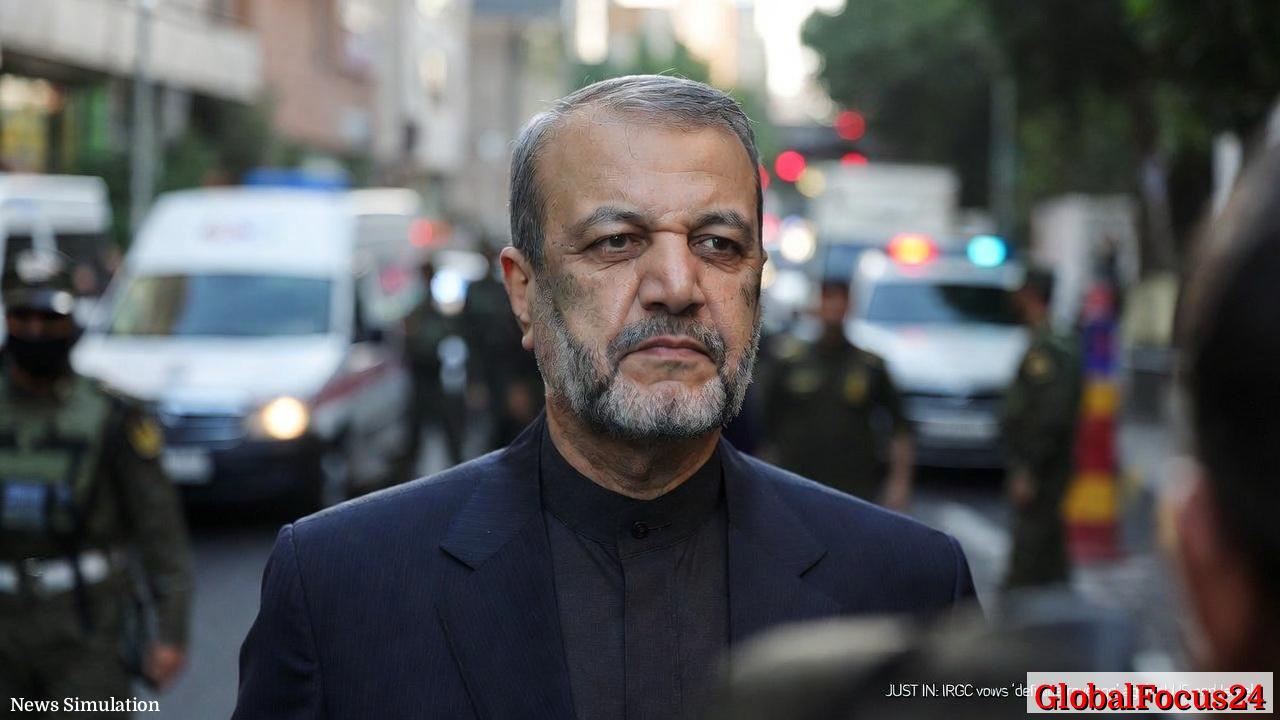
IRGC Vows Definite Revenge After Iranian Security Chief Killed in Israeli Strike
In a stark escalation following the death of Iran’s top security official, Ali Larijani, along with his son Morteza Larijani and senior diplomat Alireza Bayat, the Islamic Revolutionary Guard Corps (IRGC) has promised “definite revenge” against the United States and Israel. The strike, described by Iranian authorities as an Israeli air raid targeting a building in Pardis, eastern Tehran, occurred as Larijani was visiting his daughter, adding a personal dimension to a highly strategic political event. The incident arrives in a moment of volatility across the broader Middle East, amid shifting alliances, regional power plays, and renewed debates about Iran’s nuclear posture and external security calculations.
Historical context: a pivotal moment in Iran’s security architecture
The death of Ali Larijani marks a significant turning point in Iran’s security and political landscape. Larijani, long a central figure in Iran’s policy apparatus, served in multiple influential roles, including as a lawmaker, head of the Supreme National Security Council, and, notably, as a stabilizing technocrat during periods of tension with the West. His loss removes a veteran negotiator and strategist from a security framework that has repeatedly navigated the tightrope between hardline deterrence and diplomatic engagement. In the immediate aftermath, Iran’s leadership is confronted with a leadership vacuum in the security establishment, even as the country seeks to preserve its domestic political legitimacy and regional influence.
The broader historical arc surrounding Iran’s security leadership is one of resilience amid external pressure. Iran’s security establishment—comprising efforts coordinated by the IRGC, the regular armed forces, and the political leadership—has emphasized deterrence as a core doctrine for decades. The IRGC, in particular, has grown in both influence and capability since the 1980s, expanding its reach across regional proxies and strategic sectors. The killing of a senior figure like Larijani magnifies the perceived need for a unified response that can signal resolve without precipitating a broader confrontation, a balance that has historically defined Iran’s strategic posture.
Economic impact: ripple effects across energy, markets, and regional trade
The implications of a high-profile security strike reverberate through Iran’s economy and the wider regional economy. Iran’s economy, already shaped by sanctions and persistent inflation, could experience a combination of short-term volatility and longer-term shifts depending on the severity and duration of the crisis, as well as how the international community responds.
- Energy markets and supply chains: Even when production remains constrained by external pressures, geopolitical shocks can influence oil and natural gas sentiment. Investors monitor Middle East risk premiums closely, and a credible threat or activation of retaliatory actions can prompt price adjustments, hedging moves, and shifts in risk assessment among energy traders.
- sanctions dynamics: The death of a senior security figure can prompt a recalibration of sanctions regimes and international financial channels. If the crisis spurs broader sanctions or intensified scrutiny on Iran’s financial system, that could further constrain Iran’s access to international banking and trade financing. Conversely, if there is movement toward de-escalation or limited stabilization talks, a negotiated pathway could ease some financial frictions over time.
- domestic economic sentiment: Public reaction to political volatility can affect consumer confidence, investment willingness, and the trajectory of domestic demand. In Iran, where state intervention and control over key industries intersect with private sector activity, the political atmosphere can influence capital flows, enterprise planning, and supply chain continuity.
- regional trade corridors: Iran sits at a crossroads of major regional trade routes. Instability in Iran’s security environment can affect cross-border commerce, particularly in sectors like energy, logistics, and manufacturing that rely on stable transit routes. Neighboring economies with strong trade links, including the Persian Gulf states and Central Asian neighbors, may experience indirect effects as risk assessments adjust and insurance costs rise for cross-border shipments.
Regional comparisons: how this event sits within a broader Middle Eastern security tapestry
- Israel-Iran tensions: The strike underscores the enduring adversarial dynamic between Iran and Israel, a relationship defined by contesting red lines, covert operations, and deterrence signals. The exchange of threats and counter-threats has traditionally kept the region just below the threshold of wide-scale conflict, with both sides pursuing strategic depth via allied proxies, cyber operations, and intelligence campaigns.
- U.S. involvement and posture: Washington’s role in the region is shaped by long-standing security commitments and a broad set of strategic objectives, including counterterrorism, nonproliferation, and regional stability. Any prospective retaliation or escalation would be evaluated through the lens of risk to American personnel, allies, and energy security, with considerations about international law and the potential spillover effects on global markets.
- Regional powers and alliances: In the period surrounding Larijani’s death, other regional actors—such as Saudi Arabia, the United Arab Emirates, and neighboring states—are recalibrating security and diplomatic postures. These adjustments may involve balancing deterrence with diplomacy, seeking to de-risk their energy sectors and infrastructure, and exploring multilateral channels to manage risk.
- Proxy dynamics: The Middle East has long used proxy actors to project power, absorb shocks, and attempt to influence regional outcomes. The IRGC’s network of external operations and allied groups remains a critical component of Iran’s strategy, complicating efforts to de-escalate and creating a multi-layered security environment.
Policy and defense implications: evaluating options in a volatile landscape
- Diplomatic channels and de-escalation: Given the high-stakes environment, international players could explore back-channel or formal channels to manage escalation. Confidence-building measures, even in small steps, can help reduce misperceptions and miscalculations that often drive crisis spirals.
- Deterrence and defense modernization: Iran’s security leadership has frequently cited deterrence as a foundation of national defense. In the current context, this could translate into enhanced readiness across land, air, and cyber domains, along with continued investment in defensive capabilities and regional power projection.
- Regional security architecture: The crisis highlights the importance of a resilient regional security framework that can address cross-border threats without triggering wider conflict. Multilateral initiatives, regional dialogues, and confidence-building measures may be pursued to reduce the probability of misinterpretation and accidental escalation.
- Economic resilience strategies: For Iran and its trading partners, diversifying energy supply, ensuring financial stability, and safeguarding critical logistics networks are practical priorities. Insurance markets, risk assessment, and commodity pricing mechanisms will factor into decision-making as markets respond to ongoing developments.
Public reaction and societal currents: from streets to political discourse
Public sentiment in Iran and across the Middle East often sharpens in the wake of major security incidents. In Iran, loyalty to state narratives and concerns about national security may intensify, while ordinary citizens weigh the personal risk of living in a region accustomed to cycles of retaliation and political upheaval. Across the region, risk-aware communities watch for any signs of stabilization or further disruption. Social media, public statements from officials, and local media coverage contribute to a layered mosaic of reactions—from cautious sympathy for security personnel to calls for restraint and de-escalation.
IRGC statements and strategic messaging: signaling resolve without provoking overreach
The IRGC’s rhetoric surrounding “definite revenge” signals a durable intent to respond to perceived assaults, while also attempting to set boundaries around the scope and nature of retaliation. This messaging serves several purposes: it reassures domestic audiences of resolve, deters potential aggressors through credible threat signaling, and signals to international observers the seriousness with which Tehran views the incident. The tension between signaling strength and avoiding wider confrontation is a historical feature of Iran’s strategic communications, reflecting a careful calibration to manage escalation while preserving leverage.
Historical parallels: lessons from past cycles of confrontation
While every crisis carries its own unique elements, patterns from prior decades offer some context. In many cases, escalations have followed a recognizable arc: initial high-profile strike or incident, retaliatory or retaliatory-like moves, cycles of political rhetoric, and then a negotiation window that might reopen, either formally or de facto, under changed circumstances. Observers will watch for indicators of a potential shift toward dialogue or renewed hardline posturing, and will assess whether key actors seek to de-link security abuses from broader economic or nuclear negotiations.
Regional human impact: communities, families, and everyday life
Beyond the corridors of power, incidents like this influence daily life in tangible ways. Local communities may experience disruptions due to heightened security measures, increased airspace monitoring, or anxiety about potential airstrikes. Businesses may adjust operations to accommodate changing risk perceptions, while schools, hospitals, and public institutions may implement contingency plans to ensure continuity of essential services. In regions with long-standing disruptions, such events periodically reinforce the importance of resilience, emergency preparedness, and community cooperation.
Technology and intelligence dimensions: modern warfare’s evolving toolkit
In contemporary security environments, deterrence increasingly relies on a mix of traditional military capabilities and advanced technologies. Cyber defense, unmanned systems, surveillance capabilities, and intelligence-sharing networks all play central roles in shaping the strategic calculus post-incident. Countries and alliances are continually investing in modernization to prevent or blunt the impact of external aggression while also preparing for potential retaliatory steps that could involve non-kinetic domains alongside conventional force.
Longer-term strategic outlook: what comes next for Iran and its neighbors
The trajectory after such a high-profile incident hinges on multiple interconnected factors. Domestic political considerations, including the leadership’s ability to maintain legitimacy and control, will influence Iran’s choices. International responses—ranging from sanctions policy to diplomatic engagement—will shape economic and strategic options. Regional players will continue reassessing risk, adjusting alliances, and seeking stability that permits economic recovery and social cohesion.
In this evolving landscape, stakeholders across government, business, and civil society will be closely evaluating risk assessments, production plans, and cross-border cooperation mechanisms. The balance between firmness in defense and openness to dialogue will determine whether the region can avert further destabilization while preserving channels for constructive engagement.
As the story develops, observers will look for concrete signals—whether through official statements, shifts in sanctions posture, or moves toward negotiation—that illuminate the path forward. The death of a senior security figure, especially in a volatile region, often catalyzes a spectrum of reactions, from hardened stances to cautious diplomacy. What remains clear is that the region stands at a crossroads, with broader implications for security, trade, energy, and the daily lives of millions who inhabit this complex and strategically vital part of the world.