How Long-Lost Empires Still Shape Europe
Europe’s shared past continues to mold its present, shaping everything from defense strategy and regional cohesion to economic policy and cultural memory. The idea of a continent stitched together by centuries of ambition, conflict, and collaboration remains a powerful undercurrent in today’ss, even as institutions have evolved from rival principalities to a complex, multi-national alliance. This article examines how historical empires and long-standing regional dynamics influence Europe’s current trajectory, with attention to economic impacts, regional comparisons, and the enduring idea of collective security.
Historical roots: empires, borders, and cultural diffusion For historians and policymakers alike, the past is not a museum display but a living framework for understanding current choices. Europe’s historiography is replete with empires that stretched across hundreds or thousands of miles and included diverse populations. The Roman, Byzantine, Carolingian, Ottoman, and Habsburg traditions left legacies in language, law, infrastructure, and governance that persist in modern forms. Even when empires dissolved, they left behind administrative templates, land use patterns, and urban hierarchies that continue to influence regional development.
The long arc of borders matters because borders are not merely lines on a map; they reflect centuries of negotiation, conquest, migration, and economic specialization. In Western Europe, centuries of shifting frontiers produced dense networks of towns and roads, enabling rapid exchange of goods and ideas. In Central and Eastern Europe, imperial legacies helped shape diverse ethnic compositions and multi-layered governance structures that resurfaced during periods of nation-building in the 19th and 20th centuries. These historical patterns matter today because they affect where investment flows, where labor markets concentrate, and how political cultures respond to external pressure.
Economic impact: infrastructure, industry, and integration The echo of past empires is evident in Europe’s economic geography. Imperial-era investments in ports, railways, and fortifications laid down infrastructure that, decades later, underpinned industrial expansion and regional specialization. The density of rail networks in some regions traces back to imperial logistics needs, while port cities that once served imperial trade routes remain in the vanguard of continental commerce. This legacy helps explain why certain regions display higher levels of productivity and investment, while others face structural challenges that require targeted policy support.
European economic integration—built through reforms, trade liberalization, and shared institutions—has amplified the reach of these historical advantages and weaknesses. The creation of a single market, the harmonization of standards, and the development of cross-border value chains have allowed European firms to scale more efficiently than in many other regions. Yet integration has also exposed regional disparities: some regions benefit from agglomeration effects and access to integrated supply chains, while others experience slower growth due to relatively weaker comparative advantages, aging populations, or limited domestic demand. The contrast between highly integrated urban corridors and more peripheral rural areas illustrates how history and policy interact to shape current economic outcomes.
Regional comparisons: contrasts that illuminate Europe’s path To understand Europe’s present, it helps to compare it with other continental blocs. In North America, for example, a large, unified market with a history of federal governance created a strong center-to-periphery dynamic, where national policy can drive broad economic and security outcomes. In Europe, however, sovereignty is shared among many states with distinct political cultures, languages, and legal systems. This multiplicity has produced a resilience—tight collaboration through European Union frameworks—that can absorb shocks yet complicate rapid, unified responses to crises.
In Asia, economic growth has often followed different institutional models, balancing state-led development with market forces. Europe’s experience demonstrates the value and limits of consensus-building among diverse nations, particularly when security questions intersect with trade, immigration, and climate policy. The result is a continent that can pursue ambitious, jointly designed initiatives—such as climate targets, digital regulation, and defense cooperation—while managing the internal frictions that come with multiple governing authorities and national interests.
Security architecture: lessons from historical empires and postwar initiatives Security in Europe is inseparable from history. The continent’s long experience with shifting alliances and contested borders has driven the creation of institutions designed to prevent a reversion to large-scale conflict. The post-World War II order introduced a framework aimed at binding German power within a Western alliance and integrating Western Europe economically to reduce incentives for future invasion. Over time, this framework evolved into a broader system that seeks to combine national sovereignty with shared security responsibilities.
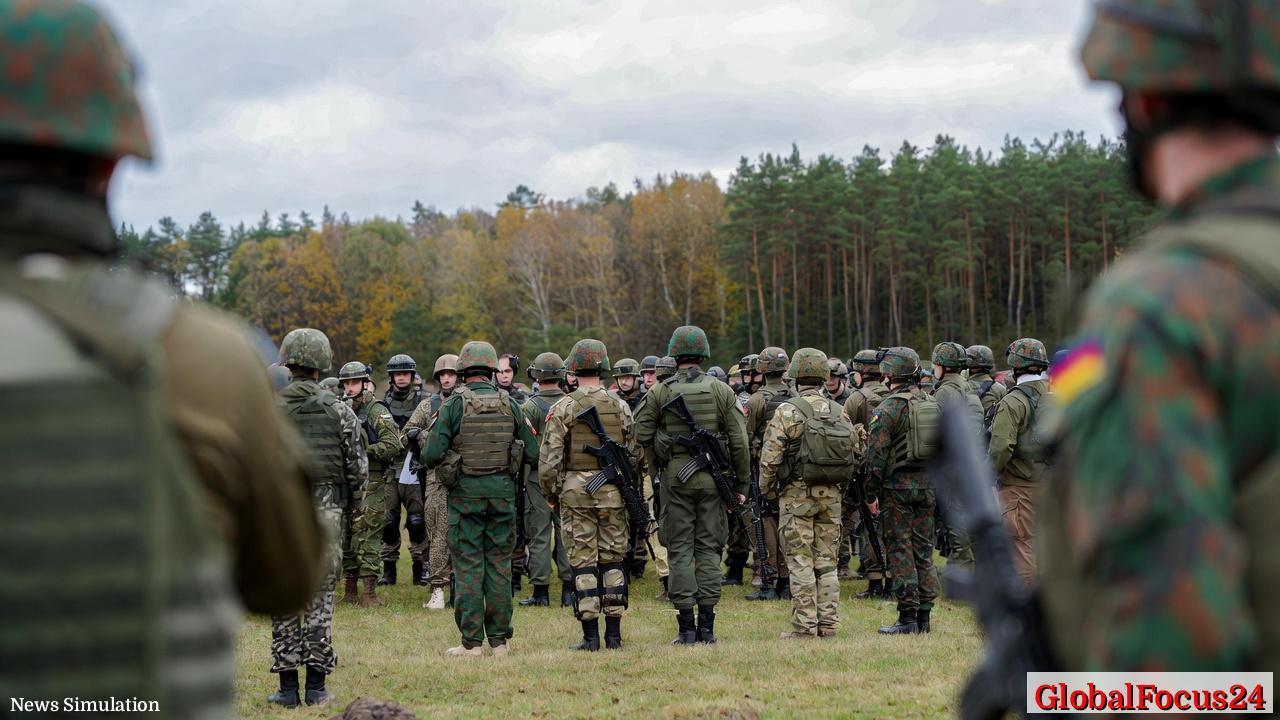
The lesson embedded in this history is nuanced. While a centralized command structure for a European army remains a hypothetical scenario, the practical outcome has been substantial defense interoperability and strategic coordination. Multinational units, joint exercises, and standardized equipment across member states enhance readiness and deter external aggression. This cooperative approach, rooted in the memory of past empires and wars, helps explain why Europe continues to invest heavily in defense research, shared procurement, and rapid-response capabilities while preserving national decision-making authority in security matters.
Public reaction and societal memory: culture, identity, and resilience Public sentiment in Europe about its historical trajectory is complex and often emotional. War memories, migration patterns, and cultural exchange have created a diverse social fabric where regional identities coexist with a broader European identity. This shared memory can foster resilience during economic downturns or security challenges, encouraging public support for collaborative policies that promise stability and prosperity. Conversely, it can also amplify concerns about sovereignty and national control, shaping political discourse and influencing policy choices at the regional and EU levels.
Meanwhile, cultural heritage programs, education initiatives, and museums preserve the stories of empires and their legacies. These projects contribute to a collective understanding of Europe’s past and its relevance to contemporary governance, urban planning, and social policy. By grounding policy in historical context, European institutions can design strategies that honor cultural memory while pursuing inclusive growth and modernization.
Economic resilience and crisis response: how history informs policy European economies have faced a succession of shocks in recent decades—from financial crises to pandemics and energy price spikes. The historical emphasis on diversification, regional cohesion, and supranational cooperation has helped Europe deploy coordinated responses. For instance, regional development funds and cohesion policies target underperforming areas, helping to balance economic disparities that can arise from historical geography. This approach echoes the imperial-era need to secure supply lines and maintain stability across a broad territory, translated into modern mechanisms that prioritize resilience and sustainable growth.
At the same time, Europe’s experience shows the limits of integration without political consensus. Crises reveal that while economic rules and financial safeguards can be shared, political commitment remains essential for rapid decision-making and effective implementation. The ongoing discussions around defense, infrastructure investment, and climate transition demonstrate how history informs a deliberate, stepwise approach to modernization—one that seeks to avoid the destabilizing consequences of disjointed policy and misaligned incentives.
Regional comparisons in practical terms
- Core industrial regions in Western Europe benefit from dense infrastructure, skilled labor pools, and access to European markets, reflecting centuries of trade and industrialization that date back to imperial trade networks.
- Central and Eastern Europe face different historical legacies, including slower initial industrial development in some periods and strong manufacturing bases that have evolved through transition economies. These regions often require targeted investment in modernization and digitalization to remain competitive.
- Southern Europe’s economic profile is shaped by tourism, agriculture, and light manufacturing, with structural reforms aimed at improving productivity and integration into broader supply chains.
- Northern Europe emphasizes high value-added sectors, energy efficiency, and innovation ecosystems, leveraging both geographic advantages and long-standing pragmatic governance structures.
Conclusion: a continent scripted by its past, acting in the present Europe’s long history of empires, borders, and political experiments has left an enduring imprint on its economic structure, regional development, and security architecture. This legacy helps explain why European policy makers pursue collaborative, multi-state solutions that balance national sovereignty with collective action. The resulting model—one of interconnected economies, shared standards, and a resilient defense posture—reflects a practical synthesis of history and modern needs.
In a world where global dynamics shift rapidly, Europe’s approach demonstrates a measured, historically informed path forward. By recognizing the influence of past empires while embracing contemporary governance mechanisms, Europe aims to sustain stability, promote inclusive growth, and preserve its distinctive regional identities. The story of Europe, after all, is not merely about the distant past; it is about how those legacies are translated into present-day policies that affect everyday life for tens of millions of people across the continent.