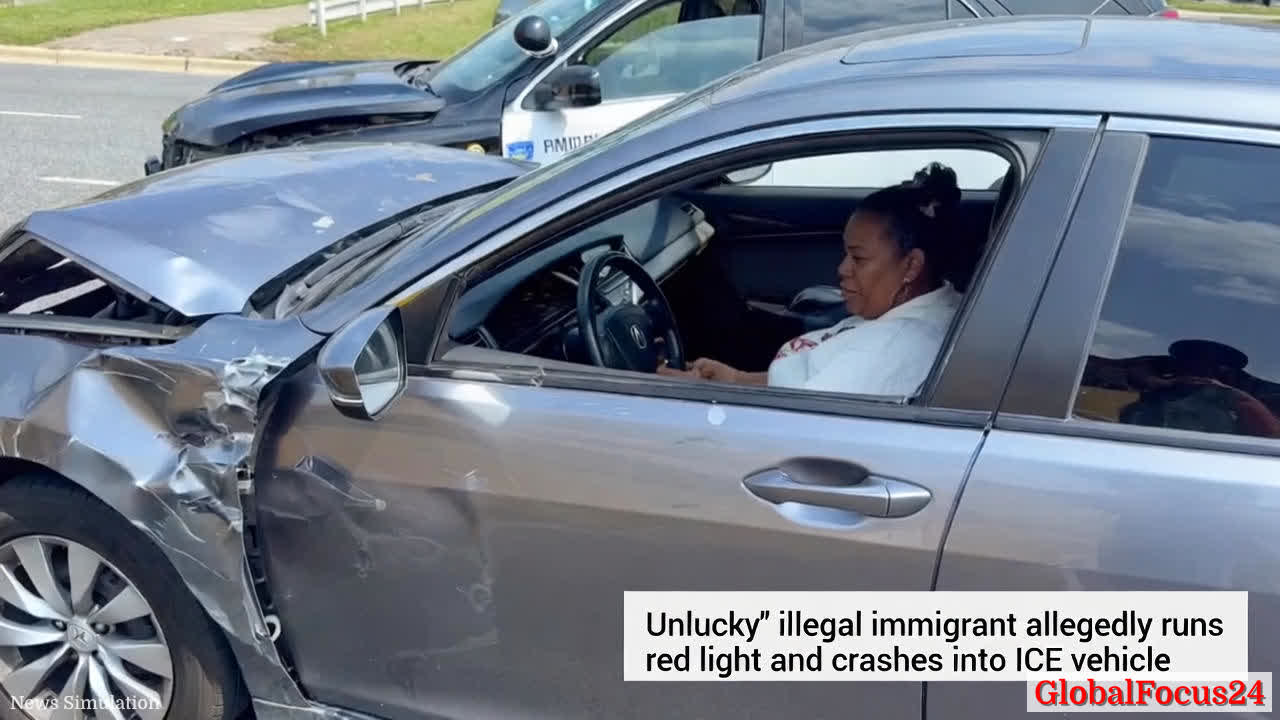
Slidell Collision Highlights Ongoing Immigration Enforcement Operation
A collision involving a federal immigration enforcement vehicle and a civilian driver occurred Friday in Slidell, Louisiana, drawing attention to a nationwide effort focused on individuals with criminal histories who are undocumented. The incident, which happened during an active operation, resulted in no reported injuries and led to the arrest of the female driver, a Honduran national, by federal agents at the scene. Photos from the scene depict extensive damage to the front of the gray Acura sedan that she drove, while she later appeared calm inside another vehicle.
Context and timeline of the operation
Federal authorities launched the operation earlier in the month with a stated objective of prioritizing enforcement against undocumented individuals with criminal records. Since the operation began, law enforcement officials have announced the apprehension of nearly 370 individuals across multiple jurisdictions, reflecting a sustained nationwide effort rather than a single-day incident. The Slidell event stands as one of several field encounters illustrating the day-to-day realities of immigration enforcement operations, including traffic stops, vehicle checks, and coordinated arrests in settings ranging from highways to neighborhood streets.
Officials said the operation is part of a broader strategy to concentrate resources on individuals with documented criminal histories who are believed to pose elevated public safety risks. The approach aligns with long-standing priorities articulated by federal immigration agencies that emphasize targeted enforcement rather than blanket sweeps. While оперативe details can vary by locality, the overarching aim remains to deter illegal entry and prioritize removals for those with prior offenses.
Legal and procedural framework
The incident occurred under federal authority related to immigration enforcement, which empowers federal officers to pursue, detain, and ultimately remove certain individuals encountered during their operations. When a collision or any on-scene incident occurs involving a federal vehicle, standard procedure typically includes securing the area, ensuring civilian safety, documenting the evidence, and conducting a joint review by the relevant agencies. In this case, the driver was detained by federal agents following the collision, consistent with protocol when an apprehension is part of the same operational activity as the traffic incident.
Observers may note that traffic incidents involving law enforcement vehicles can prompt discussions about road safety, officer conduct, and the potential for jurisdictional overlap. In Slidell, local authorities and federal agents coordinated to manage traffic and preserve evidence while continuing the ongoing operation. No injuries were reported, which suggests that the collision, while serious enough to cause substantial damage to the civilian vehicle, did not escalate into a broader public-safety incident.
Historical context of immigration enforcement patterns
Immigration enforcement in the United States has undergone several shifts over the past decades. Past administrations have alternated between more aggressive enforcement actions and broader policy changes aimed at addressing root causes of migration and the realities of border security. Historically, operations targeting individuals with criminal histories have been a recurring feature of immigration enforcement, reflecting a policy emphasis on public safety concerns associated with certain noncitizens.
Regional patterns in enforcement labor and logistics reveal a mosaic of approaches. In border-adjacent states, operations often intersect with border control activities and engage a mix of federal and local resources. In interior communities like Slidell, enforcement events can draw attention from residents and local media, given the potential implications for community relations, local commerce, and perceptions of fairness in policing. Over time, these operations have prompted debates about civil liberties, the effectiveness of removals as a deterrent, and the balance between humane treatment and law enforcement priorities.
Economic impact and community effects
Beyond the immediate law enforcement outcomes, the ongoing operation has broader economic and social implications. On the one hand, targeted removals and deportations touch the labor markets in sectors that rely on immigrant workers, particularly in hospitality, agriculture, and construction. While the operation emphasizes individuals with criminal histories, its ripple effects can extend to communities where undocumented residents contribute to local economies, create small businesses, and sustain families.
From a public policy perspective, the operation underscores the ongoing tension between immigration enforcement and local economic vitality. For Slidell and similar communities, business owners may experience shifts in workforce availability and consumer sentiment during high-visibility enforcement periods. Law enforcement activity can also influence local traffic patterns, emergency services response times, and the allocation of municipal resources for public safety and onboarding of new personnel.
Regional comparisons illuminate how enforcement dynamics differ across the country. In urban hubs with dense immigrant populations, enforcement operations may attract more media attention and community advocacy around civil rights and due process. In smaller cities and towns, residents may focus on the practical implications for daily life, such as school attendance, healthcare access, and public transportation. The Slidell incident adds to a nationwide tapestry of events that reflect the complexity of implementing federal immigration priorities within diverse local contexts.
Public reaction and human stories
Events like the Slidell collision tend to generate a spectrum of public reactions. Some community members express concern about safety on roadways shared with federal agents and the potential for miscommunication during high-tension operations. Others emphasize the importance of enforcing immigration laws and removing individuals who pose safety risks. The Honduran driver’s experience, including her apprehension and subsequent custody, underscores the human dimension of immigration enforcement—how policy decisions intersect with personal histories, families, and livelihoods.
Historical narratives surrounding immigration enforcement emphasize both procedural rigor and the human costs of policy choices. Advocates for reform often point to cases where enforcement actions intersect with access to social services, residency status, and long-term community integration. Critics contend that heavy-handed tactics may erode trust between immigrant communities and law enforcement, whereas supporters argue that consistent enforcement reduces crime and enhances public safety. The Slidell incident demonstrates how these broader conversations play out in real-time on local streets.
Operational takeaways for law enforcement professionals
For practitioners, the incident offers several operational lessons. First, it reinforces the need for robust interagency coordination during active operations to manage traffic safety, scene security, and evidence preservation. Second, it highlights the importance of clear communication with local authorities and the public to maintain situational awareness and minimize disruption to everyday life. Third, it underscores the fundamental legal principle that enforcement actions and traffic incidents can overlap, requiring meticulous documentation and adherence to due process.
Additionally, the event underscores the value of post-incident accountability and transparency. Agencies typically publish preliminary statements after such events, followed by more detailed reports as investigations proceed. In communities where residents closely monitor federal activity, timely and accurate information helps prevent rumor-driven misperceptions and fosters a more informed public discourse.
Sustained enforcement: a broader perspective
The operation’s reported tally—nearly 370 apprehensions since its inception—reflects a sustained initiative rather than a one-off enforcement action. Sustained enforcement efforts can influence crime statistics and deter potential offenses by signaling ongoing vigilance. However, the effectiveness of such campaigns depends on numerous factors, including resource allocation, judicial processing capacity, and the ability to address legitimate concerns raised by communities about civil liberties and family stability.
From an economic lens, sustained enforcement can affect local employment dynamics, especially in industries that rely on immigrant labor. While the immediate focus remains on individuals with criminal histories, broader enforcement campaigns may shape perceptions of the safety and attractiveness of certain regions for investment, tourism, and small business development. The cumulative impact on regional economies is a topic that researchers monitor over time, often using a mix of employment data, migration trends, and crime statistics to gauge outcomes.
Documentation and transparency trends
As federal operations unfold across the country, the role of documentation becomes increasingly important. Public-facing updates, incident reports, and official briefings help demystify complex enforcement activities for the general public. Transparency does not simply satisfy curiosity; it helps communities understand the rationale behind enforcement, the safeguards in place to protect civil rights, and the consequences for behavior on and off the road. Journalists and researchers frequently analyze these data points to assess whether enforcement aligns with stated policy goals and to identify any unintended consequences that may arise.
The Slidell collision, while singular in its immediate details, contributes to a wider narrative about how federal immigration policy translates into daily life at the municipal level. For residents and observers, the incident prompts questions about how to reconcile public safety priorities with community cohesion, trust in law enforcement, and the practical realities of living in a connected, increasingly mobile society.
Conclusion: implications for the year ahead
The Slidell incident is one point in a larger continuum of immigration enforcement that shapes decisions for policymakers, law enforcement, and communities across the United States. As authorities continue to pursue individuals with criminal histories who are undocumented, the interplay between public safety objectives and civil liberties will remain a focal point of public discussion. The incident’s lack of injuries suggests a narrowly contained event, but it also serves as a reminder of the real-world consequences of enforcement operations—how they affect families, neighborhoods, and the daily rhythms of life in towns like Slidell.
Looking ahead, regional analysts will watch how enforcement trends evolve in response to legal challenges, budget realities, and shifts in immigration policy at the federal level. Researchers will likely study whether the current approach yields measurable gains in public safety and whether it affects labor market dynamics, community trust, and the long-term sustainability of immigration enforcement programs. In the meantime, Slidell residents and the broader public can expect continued coverage of enforcement activities that intersect with transportation, local governance, and the ongoing story of how nations manage the movement of people in an interconnected world.