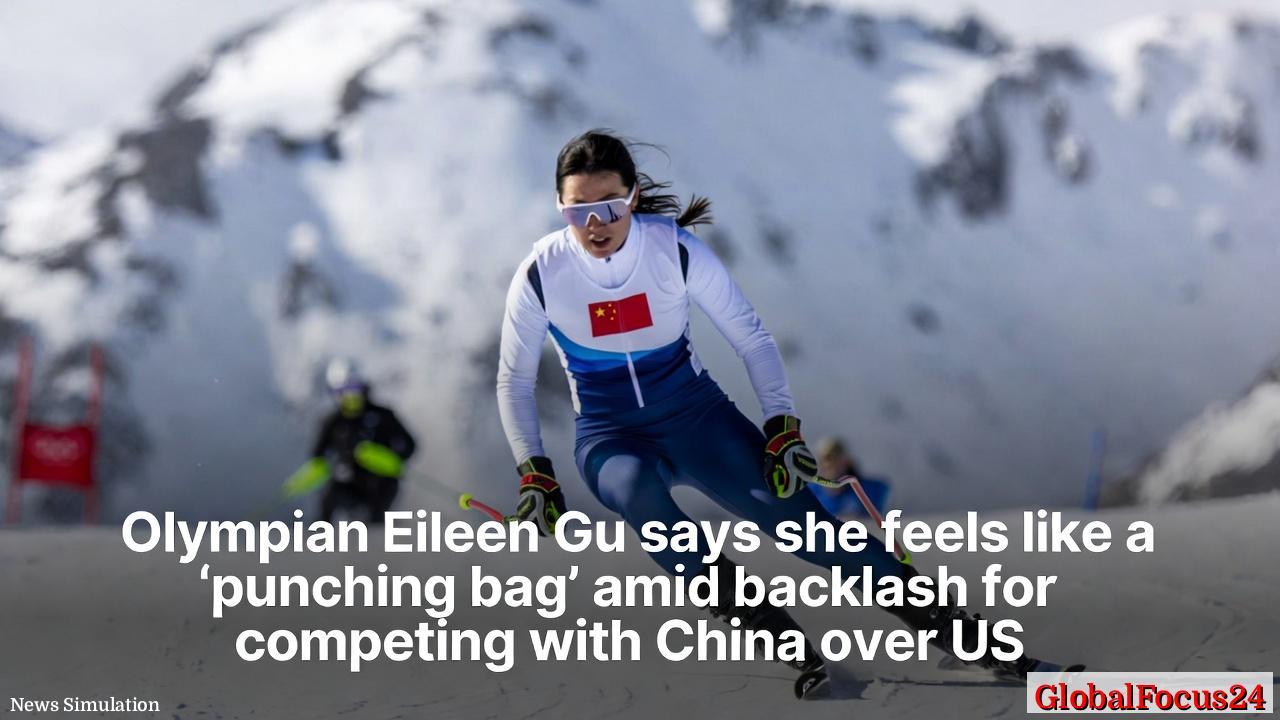
Eileen Gu’s Dual Identity: Impact, Backlash, and the Global Stage of Winter Sports
The Milano Cortina 2026 Winter Olympics have once again showcased the intricate interplay between national identity, athletic choice, and global audiences. American-born freestyle skier Eileen Gu—who competes for China after switching allegiance in 2019—has emerged as a focal point in this dynamic. With two medals already earned at Milano Cortina (silver in big air and silver in slopestyle), Gu has solidified her status as a defining figure in women’s freestyle skiing. Her experience underscores broader conversations about nationality, opportunity, and the evolving landscape of international competition.
Historical context: changing loyalties and the globalization of sport The modern era of the Olympics has long featured athletes who train across borders, cultivate multiple national affiliations, or switch teams for strategic reasons. Historically, these moves have sparked debate about loyalty, cultural identity, and the very meaning of representing a nation on the world stage. Gu’s trajectory—from San Francisco, California, to the Chinese national team—fits within a longer arc of athletes leveraging cross-border training ecosystems, sponsorship networks, and targeted development programs to maximize their competitive edge. For Gu, the decision to compete for China was driven, in her view, by a desire to broaden the sport’s footprint in a country where she believed there were fewer role models and a larger potential audience for freestyle skiing.
Economic impact: brand, sponsorship, and regional development Athletes who compete across borders often become catalysts for economic activity that extends beyond medals. Gu’s presence on China’s national team has several intertwined economic effects:
- Sponsorship ecosystems: Her high profile attracts sponsorship opportunities not only for herself but for Chinese winter sports brands and sponsors seeking global visibility. This can stimulate marketing campaigns that emphasize winter sports participation, especially among younger audiences.
- Tourism and infrastructure spillovers: Success in freestyle skiing can drive local interest in training facilities, ski resorts, and youth programs. Regions that host or support elite athletes may see investment in snow sports infrastructure, which can have multiplier effects on local economies through tourism, hospitality, and related services.
- Global brand visibility: Gu’s international background makes her a bridge between markets. Companies aiming to reach both American and Chinese consumers can leverage her unique profile to communicate cross-cultural narratives, potentially expanding consumer engagement beyond traditional demographics.
Regional comparisons: how the conversation differs across major winter-sports markets China and the United States represent two distinct ecosystems for winter sports, and Gu’s story highlights these differences:
- China’s acceleration in winter sports: In the last decade, China has invested heavily in winter sports infrastructure, youth development programs, and hosting capabilities. Gu’s decision aligns with broader state-supported efforts to raise medal contenders and to cultivate a domestic audience for disciplines that have historically enjoyed limited mainstream attention in the country.
- United States’ long-standing freestyle tradition: The U.S. has a deep pool of talent, extensive training facilities, and a broad base of amateur and professional support. For athletes born in the U.S., the options to pursue Olympic-level competition are numerous, and national team selection often reflects a mix of athletic merit and strategic considerations about international exposure.
- Europe’s competitive hub: Countries with strong winter sports cultures—like Norway, Austria, and Switzerland—provide dense competitive ecosystems, standout coaching, and robust club networks. The European model emphasizes consistent grassroots development coupled with high-level competition, which shapes how athletes plan transitions between national teams or federations.
Gu’s performance and public reaction: navigating praise and pressure The public response to Gu’s dual allegiance has been a blend of admiration for her athletic prowess and scrutiny over her national representation. Her medals at Milano Cortina reinforce the view that her decision has yielded tangible competitive dividends. Yet, the backlash highlights the emotional and political undertones that often accompany athlete nationality choices. Gu has described feeling targeted—framed by some as a symbol of a broader political narrative rather than as a person pursuing sport. Her reflections point to a tension between individual athletic aspirations and collective national sentiment that accompanies elite competition in a globalized sports landscape.
Key moments and athletic performance: what Gu’s medals signal
- Medals and discipline spread: Gu’s silver medals in big air and slopestyle at Milano Cortina demonstrate versatility across multiple freestyle disciplines. This breadth affirms her status as one of the sport’s most complete competitors and underscores the value of cross-discipline training in snow sports.
- Career trajectory: With five Olympic medals across two Games (two golds and one silver in 2022, plus two silvers in 2026 so far), Gu has etched her name into the history books as the most decorated female freestyle skier to date. This level of achievement elevates discussions about how national teams cultivate talent and how athletes balance personal identity with representation.
Public reaction and the human element: empathy amid controversy Beyond numbers and podium finishes, Gu’s experience sheds light on the lived reality of athletes in a world where global audiences intersect with national loyalties. Supporters emphasize resilience, discipline, and the cross-cultural storytelling that can accompany a high-profile athlete navigating multiple identities. Critics reply with questions about allegiance, which can illuminate conversations about the evolving nature of national representation in a globalized sports environment. The conversation is rarely simple, but it increasingly centers on fairness, opportunity, and the athlete’s ability to maximize their potential while engaging diverse audiences.
Upcoming events and continuity: what to watch next As the women’s freeski halfpipe final approaches, audiences will watch not only for a potential podium but also for how Gu handles the broader narrative surrounding her career. Her ongoing competition will be a barometer for how cross-border athletic careers are evolving in an era of expansive media coverage, sponsor scrutiny, and public debate about national identity in sports.
Implications for the broader Olympic ecosystem Gu’s story invites a broader reflection on how national teams recruit, develop, and support athletes who move across borders. It prompts federations to consider:
- Talent development pipelines: How can countries expand access to elite coaching, facilities, and mentorship for aspiring winter sport athletes, regardless of birthplace?
- Media and public communication: What strategies can athletes and federations employ to address scrutiny while highlighting athletic merit and personal narratives?
- International cooperation: How can cross-border training partnerships, exchanges, and joint development programs foster competitive balance while respecting athletes’ personal autonomy?
A nuanced perspective on national representation The core question raised by Gu’s experience is not a critique of her personal choices alone but a reflection of how national identity is interpreted in a world where borders are increasingly permeable to talent, sponsorship, and aspiration. Her achievements demonstrate that individual excellence can flourish within multiple national frameworks, a reality that contemporary sports governance must acknowledge and adapt to. In doing so, the community can focus on fair competition, athlete well-being, and the continued growth of winter sports across diverse regions.
Background scene: the human story behind elite sport Off the slopes, Gu’s life embodies a blend of cultural influences, multilingual communication, and a transnational fan base that spans continents. Stories from athletes who navigate dual identities can humanize the sport, inviting audiences to celebrate dedication, perseverance, and the pursuit of excellence beyond the confines of national labels. These narratives enrich the Olympic experience by highlighting the universal appeal of sport as a language that transcends borders, while also acknowledging the emotional complexity that accompanies global fame.
Conclusion: the enduring value of athletic excellence in a connected world Eileen Gu’s ongoing success at Milano Cortina 2026 reinforces a central truth of modern sport: athletic excellence often travels beyond borders and borders themselves become part of the conversation about opportunity, representation, and impact. As she continues to compete, her journey serves as a case study in how athletes balance personal motivation with the expectations of several national audiences. The broader sports community can view this moment as a reminder that performance, resilience, and inclusive storytelling remain essential to the evolving narrative of global athletics.