How a $3 Grocery Bag Became a Global Status Symbol
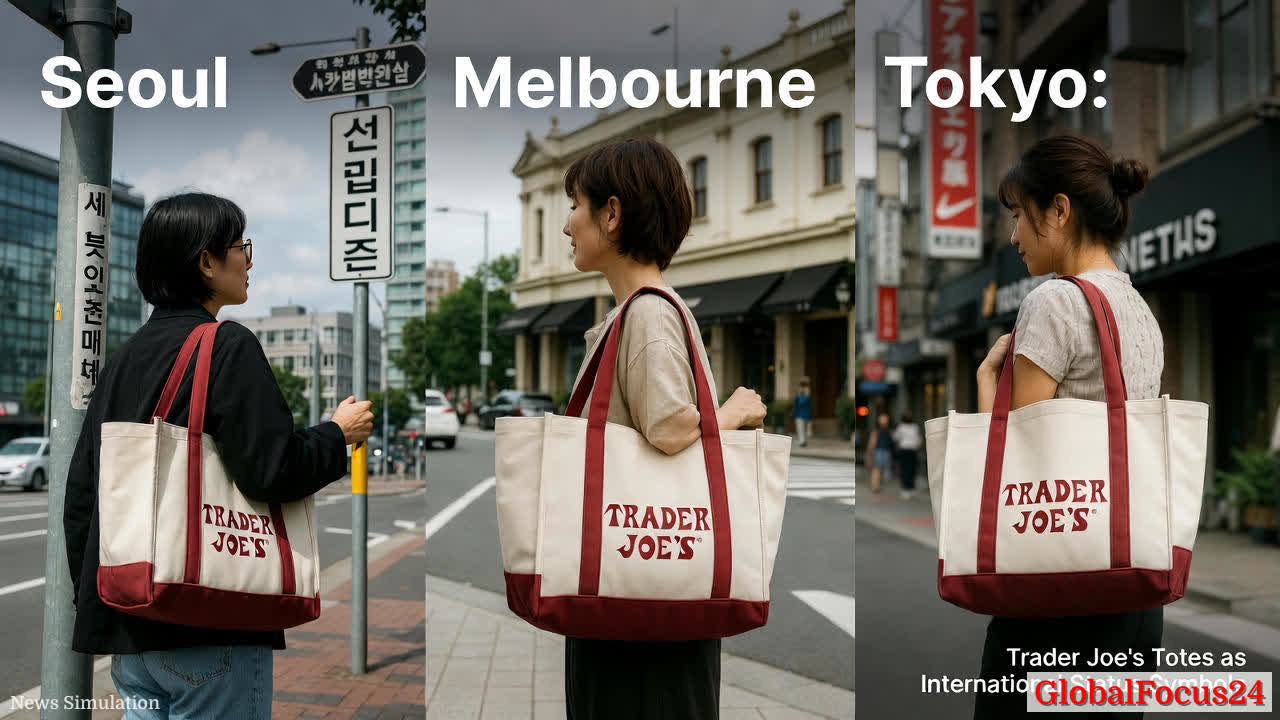
Across continents and cultures, a simple canvas grocery tote has evolved from a practical carryall into a telltale marker of global connectedness. From Seoul to Melbourne, these unassuming bags are being read as signals of travel experience, cultural literacy, and a shared conversation that transcends borders. The ascent of the tote—sold for modest sums in the United States and now coveted as a rare artifact on international markets—offers a fascinating lens on consumer behavior, globalization, and the subtle choreography of status in the 21st century.
A modest launch, a worldwide ripple
The object at the center of this phenomenon is a basic canvas tote, priced at approximately $2.99 in the United States. Its appeal did not lie in luxury materials or high fashion branding; rather, it emerged from everyday utility and a distinctive design that feels both familiar and idiosyncratic. The bag’s charm rests on a combination of nostalgia and authenticity: a straightforward silhouette, a logo that echoes classic maritime aesthetics, and an insistence on approachable accessibility. This blend helped the tote cross from a local retail staple into a globally recognizable symbol.
The bag’s journey is as notable for what it avoids as for what it embodies. Its stores are not ubiquitous; the company operates a limited distribution model with a strong emphasis on U.S. locations. That scarcity—paired with a rapid restock cadence that often sells out quickly—creates an aura of exclusivity. In an era dominated by unlimited online shopping, scarcity becomes a status signal in its own right. The tote’s price tag may be modest, but the social capital attached to owning one is anything but.
International sightings and the social trail
The tote’s presence has shifted from grocery aisles to social spaces that matter in a globalized culture: subway cars in Seoul, pubs in Melbourne, and street corners in Tokyo. Observers report not just the bag itself but the mood it conveys—a sense of being in the know, a passport-style credential of cross-cultural exposure. In some cases, owners describe a shared wink among fellow travelers, a subtle recognition that transcends language and national boundaries.
The resale ecosystem amplifies the bag’s momentum. With no formal international distribution, the item travels through secondary marketplaces such as Depop, eBay, and regional platforms like Korea’s Karrot Market. Prices in some listings have surged into the thousands, with speculative postings occasionally listing the bag for tens of thousands of dollars. This phenomenon underscores a broader shift in value creation: when a low-cost consumer good is embedded with global meaning, its perceived value can skyrocket in non-traditional markets.
Manufacturing, branding, and the optics of authenticity
Constructed in Vietnam and distributed exclusively through U.S. locations, the tote is intentionally positioned to sound authentic, owner-assembled, and human-scaled rather than corporate. The company has taken public steps to discourage reselling, acknowledging that its vision hinges on a sense of global connection rather than commodified overreach. This stance adds another layer to the bag’s narrative: it is a reminder of boundaries within a global supply chain and an illustration of how brands manage the tension between accessibility and exclusivity.
The design itself plays a crucial role in international acceptance. The logo’s traditional, non-simplified form echoes a maritime or classic canvas aesthetic that resonates across cultures. This timeless look helps the bag avoid overt associations with any single nation or political message, enabling a broader audience to claim it as part of their personal story of travel and discovery. In a global marketplace that often leans into conspicuous labels, the tote’s understated branding becomes a form of cultural diplomacy through everyday object design.
Regional contrasts and cultural readings
Analyzing the bag’s spread reveals interesting regional nuances in how it is perceived and valued. In some markets, ownership signals a cultivated taste for American cultural exports—streetwear, literature-adjacent brands, and the archival vibe of independent bookstores. In others, the tote is read as a symbol of cosmopolitan literacy, a badge of participation in a global conversation rather than a mere fashion statement. The same object, depending on local context, can evoke different aspirations: in one city a tote may represent a weekend of travel storytelling; in another, a thoughtful nod to cross-continental friendships and professional networks.
Historical context: echoes of past emblems of travel and learning
The trajectory of the canvas tote mirrors historical patterns in which everyday goods become emblems of broader cultural exchange. In the late 20th century, certain travel accessories—be they leather satchels, logoed luggage tags, or distinctive book bags—carried social meaning that extended beyond function. What makes the current tote distinctive is the speed, scale, and digital interplay of value creation. Social media has accelerated the circulation of cultural artifacts, allowing a mundane item to morph into a global status marker in a matter of months rather than years. The tote’s story sits at the intersection of consumer psychology, digital marketplaces, and the enduring appeal of tangible, craft-like design in a world of rampant automation.
Economic impact: micro-movements with macro signals
From a microeconomic perspective, the bag’s rise illustrates how scarcity and perception drive demand. Even though the product is inexpensive to manufacture and purchase, the limited geographic reach and the cachet of cross-border use contribute to a differentiated value proposition. For retailers, this dynamic underscores the importance of brand storytelling and the way small, well-designed products can become central to a larger cultural narrative. It also highlights how secondary markets can unlock new revenue streams, albeit in a way that challenges brand stewardship and reselling policies.
For regional economies, the tote’s allure translates into soft power: it signals a shared, globalized taste that can influence consumer expectations, retail partnerships, and marketing strategies. The bag becomes a case study in how consumer goods can travel faster than people, and how the same item can simultaneously feel intimate and borderless. If regional markets begin to emulate or reinterpret the tote’s branding, the implications extend to trade patterns, cross-cultural collaborations, and the diffusion of design aesthetics across continents.
Public reaction and cultural discourse
Public responses to the tote’s international status have been mixed, ranging from fascination to light humor. Much of the conversation centers on identity—how a low-cost bag can become a marker of cosmopolitan experience without overt signaling of wealth or exclusivity. Some observers praise the object for democratizing travel culture, while others caution against the flattening of complex cultural signals into a single, shareable symbol. The conversation also touches on issues of authenticity and responsibility: what does it mean for a product to symbolize global connectedness when it is manufactured in one country, sold through limited channels, and resold at premium prices elsewhere?
The logistics of global distribution, though not the focus of scrutiny, play a critical background role. The absence of formal international stores means the tote’s admirers must locate it through a web of networks, personal exchanges, and digital marketplaces. This indirect distribution creates a narrative of discovery and serendipity—an experience that appeals to travelers and curious consumers who value the sense of finding something that feels uniquely theirs.
Looking ahead: potential trajectories
As the tote continues to circulate, several scenarios could shape its future trajectory. First, if the company expands or alters its distribution strategy, the balance between accessibility and scarcity could shift, affecting the bag’s status value. Second, evolving consumer attitudes toward sustainability and ethical sourcing could influence perceptions of low-cost, high-visibility items. Third, regional fashion and lifestyle trends may redefine what constitutes “beloved travel gear” in different cities, potentially stabilizing or destabilizing the tote’s global appeal.
In the broader context of global commerce, the tote’s success signals a pattern where everyday objects can become credible interfaces for cultural dialogue. It demonstrates how ordinary products can travel with travelers and be reinterpreted by communities around the world. The result is a dynamic tapestry of personal narratives—each bag a companion to someone’s journey, each sighting a subtle reminder that global culture is constructed not just in high-profile fashion houses or luxury brands, but in the everyday, widely accessible items that accompany people on their daily routines.
Historical context revisited: a bookmark in time
The tote’s rise can be read as a bookmark in the current era of globalization, where travel and digital connectivity have become intimate parts of daily life for millions. It embodies a shift from status tied to conspicuous wealth or exclusive access to status conferred by knowledge, curiosity, and the willingness to collect shared experiences. The bag’s modest price undercuts the notion that luxury must be expensive to be valuable; instead, it suggests that value can emerge from communal recognition, cross-border conversations, and the simple joy of finding a piece of the world in a familiar object.
Conclusion: a small bag with a big story
What began as a practical grocery tote has evolved into a cultural artifact that travels as quickly as the stories of the people who carry it. Its global footprint—from Washington, D.C., to Seoul, Melbourne, and beyond—offers a revealing snapshot of today’s consumer landscape: a world where accessibility, design, and social meaning fuse to create a shared symbol of travel, knowledge, and connectedness. While the tote’s future remains open, its current status as an international marker of being well-traveled and in-the-know is clear. This simple canvas bag, born of everyday need, has become a mirror reflecting how people around the world seek connection, express identity, and participate in a global conversation—one sighting, one listing, and one carry at a time.