)
Strait of Hormuz Closure Sends Shockwaves Through Global Energy Markets
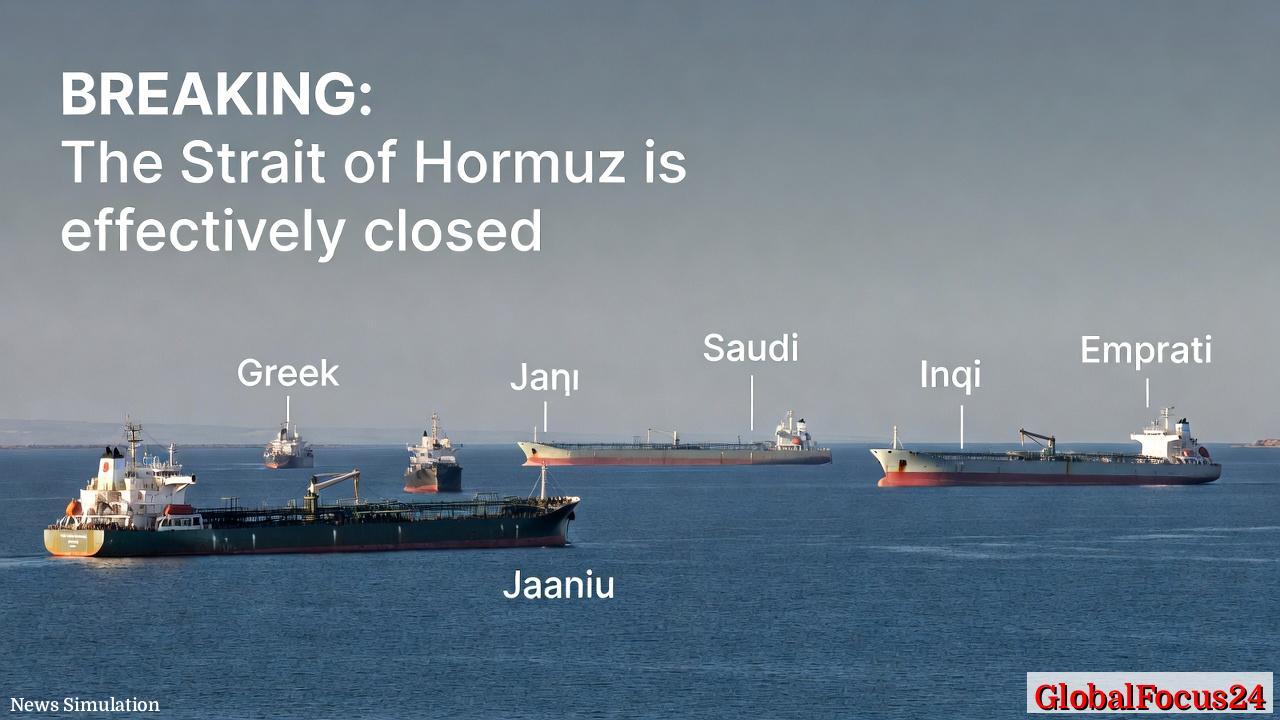
The world’s most vital oil artery — the Strait of Hormuz — has effectively closed, triggering immediate turmoil across global energy markets. Within hours, crude oil prices soared by more than 12%, marking the sharpest single-day surge since the early days of the 2022 Russia-Ukraine conflict. Japanese tankers have turned back. Greek shipping fleets are rerouting their vessels around Africa. Saudi, Iraqi, and Emirati crude exports sit idle at sea. For now, the flow of nearly one-fifth of the world’s seaborne oil has stopped.
A Critical Chokepoint Frozen
The Strait of Hormuz, a narrow passage linking the Persian Gulf with the Arabian Sea, has long been recognized as one of the world’s most strategically sensitive maritime corridors. Roughly 20–25% of global oil consumption moves through the strait each day — an estimated 21 million barrels of crude and refined petroleum products. It also carries all of Qatar’s liquefied natural gas (LNG) exports, making it indispensable not just for oil but for natural gas supply chains reaching Asia and Europe.
The closure — whether temporary or prolonged — threatens to paralyze energy flows from some of the largest producers in the Middle East. Saudi Arabia, Iraq, the United Arab Emirates, and Kuwait all rely on this route for the bulk of their oil exports. While some have limited alternative pipelines, most cannot compensate for a total maritime shutdown.
Immediate Market Reaction
Energy traders reacted with panic as Brent crude futures spiked past $110 per barrel, a level unseen in years. West Texas Intermediate (WTI) followed suit, exceeding $106. Trading volumes surged as hedge funds and institutional investors scrambled to hedge against potential long-term disruptions.
In commodity markets, LNG spot prices in Asia jumped more than 15% overnight, with buyers in Japan, South Korea, and India bracing for supply gaps. Refiners across Asia have begun quietly discussing emergency measures, including tapping into strategic reserves and delaying scheduled maintenance to maintain refinery throughput.
Financial markets mirrored the turbulence. The yen strengthened as investors sought safe-haven assets, gold prices climbed beyond $2,300 per ounce, and major airline stocks fell on fears of surging jet fuel costs. Global shipping indices rose sharply as insurance premiums for vessels entering the Gulf region skyrocketed.
Historical Parallels: Crises That Redefined Oil
The closure of the Strait of Hormuz recalls several past flashpoints that reshaped the global energy order. During the 1980–1988 Iran-Iraq War, both nations attacked oil tankers in what became known as the “Tanker War.” Although the strait never fully closed then, insurance rates and freight costs soared, forcing naval escorts from major powers.
Another precedent came in 2019, when a series of tanker seizures and drone attacks briefly disrupted shipping lanes in the Gulf. That episode sparked weeks of tension but avoided outright closure. What distinguishes the current situation is its scale and velocity: virtually all traffic through the narrow channel has halted simultaneously.
Comparisons are already being drawn to the 1973 oil embargo, when Arab producers curtailed exports to the West, quadrupling oil prices and triggering global recessionary pressure. Analysts warn that even a brief closure today could have consequences exceeding those of the 1970s, given the tighter integration of global supply chains and ongoing fragility following the COVID-19 pandemic and previous inflationary cycles.
Regional and Global Economic Fallout
The Middle East’s major economies face a paradox. While oil prices are rising, exporters cannot capitalize if shipments cannot leave port. Governments in Riyadh, Baghdad, and Abu Dhabi are said to be in emergency talks to diversify transport through the Red Sea and existing cross-country pipeline networks. However, these infrastructures — such as Saudi Arabia’s East-West Pipeline to Yanbu and the UAE’s Habshan-Fujairah line — can only handle a fraction of daily exports.
Asian economies, particularly Japan and South Korea, are among the most exposed. Nearly 90% of Japan’s crude imports originate from the Middle East, with most passing directly through the Strait of Hormuz. China, although more diversified, still receives roughly 40% of its imports from the Gulf. Analysts estimate that if the shutdown persists for even two weeks, regional refineries could face input shortfalls beginning mid-March.
In Europe, the impact will come through higher replacement costs for oil and gas. Although direct dependence on Gulf crude has declined since the Russian invasion of Ukraine, European refiners still compete for the same spot-market cargos now under pressure. LNG markets are especially vulnerable; Qatar supplied about 13% of Europe’s imported gas last year, shipments that are now stranded or delayed.
The Strategic Stakes
Beyond immediate economic consequences, the closure underscores how fragile the global energy architecture remains. The Middle East continues to exert outsized influence over markets, even as nations attempt to diversify toward renewable sources and domestic production. The Strait of Hormuz functions as a single point of failure in this system — a 21-mile-wide corridor at its narrowest, bordered by Iran to the north and Oman and the UAE to the south.
Military analysts note that securing free passage through the strait has been a central objective of naval coalitions for decades. The U.S. Fifth Fleet, based in Bahrain, and coalition forces routinely patrol the region to deter threats to shipping. The closure now places diplomatic and logistical pressure on global powers to stabilize the passage quickly. Depending on how long it takes to reopen, questions about maritime security and energy transit resilience are likely to dominate global policy discussions.
Oil Price Projections and Inflation Risks
Analysts at major financial institutions warn that continued blockage could propel crude oil toward $130–$150 per barrel within weeks. For consumers, that could push gasoline prices back toward 2022 highs and reinvigorate inflationary pressures that central banks have struggled to tame.
In the United States, the average household energy bill already rose nearly 30% over the last three years. A new oil shock could reverse recent inflation declines, complicating monetary policy. In Europe, policymakers face a delicate balance: replenishing energy reserves while maintaining commitments to fiscal discipline after years of crisis spending.
Asian economies, heavily dependent on imported fuel, could see consumer prices climb rapidly, especially in transport and manufacturing sectors. For developing nations, surging energy costs threaten to roll back gains made since the post-pandemic recovery.
Shipping and Insurance Disruptions
Beyond the oil trade itself, ripple effects across maritime logistics are growing severe. Major shipping companies are rerouting vessels thousands of miles around the Cape of Good Hope, adding more than two weeks to delivery times. Insurance underwriters have already declared the Persian Gulf a “war risk” zone, imposing surcharges of up to 10% of cargo value for voyages through the area.
This not only raises costs for crude but for all goods transiting adjacent waters — from petrochemicals to grain and manufactured products bound for South Asia. Energy companies are also beginning to face storage challenges, with tankers anchored in the Gulf of Oman and the Arabian Sea awaiting clarity before proceeding.
Lessons and Long-Term Implications
The crisis at the Strait of Hormuz is a potent reminder of how dependent global systems remain on a handful of geographically vulnerable trade routes. Despite rapid growth in renewable energy, fossil fuels still provide more than 80% of global energy consumption. Any disruption to the flow of oil or gas through the Persian Gulf sends immediate shockwaves across the world economy.
Governments may now accelerate efforts to diversify energy sourcing and invest in supply redundancy. Regions such as Africa’s west coast, Brazil’s offshore fields, and U.S. shale basins could see renewed attention and capital inflows. Similarly, LNG projects in Australia, Canada, and East Africa may gain added momentum as nations seek alternatives to Gulf routes.
Yet such transitions take time. The current closure underscores an uncomfortable reality: even as the world talks about decarbonization, oil remains the lifeblood of global commerce. Until viable substitutes reach scale, narrow choke points like the Strait of Hormuz will continue to define the balance between stability and crisis.
A Fragile Equilibrium
As of Saturday afternoon local time, shipping data shows minimal movement within the strait. Tankers remain anchored, awaiting clearance or naval escort. Regional governments have issued no formal announcements regarding reopening. Diplomats and industry leaders alike are calling for urgent de-escalation to prevent further economic fallout.
For now, the world watches a narrow blue corridor stretching between Iran and Oman — a waterway whose stillness carries unprecedented global consequence. Every hour that passes with ships motionless in the Gulf deepens uncertainty about the months ahead and reminds nations how fragile the arteries of modern energy truly are.