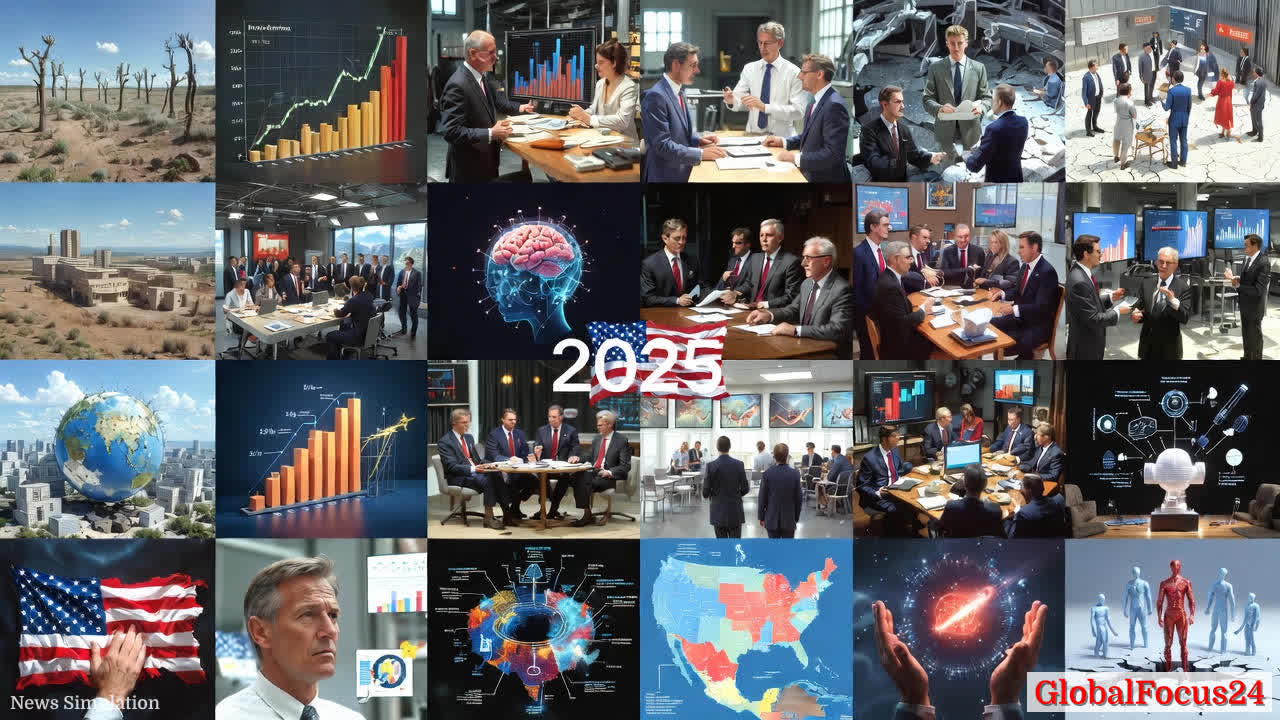
A Year in Review: 2025 Captured Through Illustrations
Across continents and through markets, 2025 unfolded in images as much as ins. The year’s defining moments—economic shifts, climate risks, technological leaps, and evolving social fabrics—were distilled into a suite of representations that readers can grasp at a glance yet reflect complex, interwoven dynamics. This article explores the illustrative snapshots of 2025, places them in historical context, examines their economic implications, and offers regional comparisons to help readers situate the year within broader trajectories.
Historical context: patterns that frame 2025 To understand the visuals of 2025, it helps to recall the longer arc of the past decade. The global economy has oscillated between resilience and fragility, with supply chain recalibrations, inflationary pressures, and shifting geopolitical alignments reconfiguring how nations trade, invest, and govern. The rise of digital platforms, AI-enabled decision-making, and data-driven policymaking have amplified both efficiency gains and new risk vectors. In this environment, 2025’s illustrations act as barometers—showing where pressures converged, where innovation pushed forward, and where social and political intentions met real-world complexity.
Economic transformation and the price of policy choices Several illustrations speak directly to the inflationary and competitive dynamics shaping economies in 2025. Tariffs and trade barriers feature prominently, visually tying rising price graphs to protectionist measures. The implied message is not merely about higher costs for consumers; it is about how tariff strategies alter supply chains, distort competition, and affect investment decisions. In regions with integrated manufacturing ecosystems, these dynamics can slow productivity gains and shift capital toward more diversified or resilient pathways.
A parallel thread in the visuals highlights labor market and housing pressures. Escalating rents and fraying housing ladders depict urban markets stretched by demand outpacing supply. These scenes reflect structural constraints—limited land for development, zoning limits, and bottlenecks in construction capacity—that have persisted across major cities. The tension between affordability and growth remains a central policy question, influencing where and how people live, work, and contribute to regional economies.
Another set of illustrations addresses the pace and direction of technological investment. Hazy optimism about AI and cybersecurity is tempered by concerns over safety, governance, and long-run productivity. Visuals of hasty AI lab races and fluctuating token values juxtapose the allure of rapid innovation with the real costs of insufficient due diligence, risk oversight, or misaligned incentives. In markets where AI adoption is accelerating, companies face a delicate balancing act: scale deployment quickly enough to capture value, while ensuring reliability, transparency, and resilience.
Regional comparisons: where 2025 diverged and converged North America and Europe continued to grapple with post-pandemic normalization, competitive pressures, and energy transitions. The illustrations reflect a cautious optimism—economic activity recovering in many sectors, tempered by concerns about inflation trajectories, regulatory clarity, and the need to retrain workers for emerging industries. Across corridors of trade, debates about “friend-shrinking” or “friend-shoring” surfaced as firms reassess supplier networks to mitigate geopolitical risk. In some depictions, this translates to broader regional alliances and a renewed focus on semiconductor supply chains, green technologies, and digital infrastructure.
In Asia, the 2025 visual narrative emphasizes growth potential alongside competition and risk management. Scenes of influential tech hubs amid diverse populations signal concern with inclusivity in innovation and the need to scale AI responsibly. China’s role in global markets remains central, with visuals showing both the advantages of scale and the scrutiny that accompanies advanced technologies. India surfaces as a prominent player in artificial intelligence and digital services, with imagery underscoring its emerging leadership in global tech ecosystems while navigating the subtleties of domestic demographics and international partnerships.
In other regions, climate-related risks and urbanization trends become more pronounced. Flooding in cities and climate-induced disruptions to infrastructure highlight long-running concerns about resilience and adaptation. Visual narratives that map environmental stress alongside economic and social costs help illustrate why investments in climate mitigation and disaster readiness are increasingly embedded in national planning.
Social and political dimensions: evolving norms and debates Illustrations in 2025 also address shifts in social behavior, culture, and public discourse. The depiction of isolated social circles in affluent nations reflects broader conversations about social cohesion, leisure time, and changing relationship patterns. Other images center on the rise of digital communities and online discourse that can polarize views or act as forums for alternative narratives. The depiction of global propaganda waves, particularly in contexts involving Taiwan, underscores ongoing information environments where narratives travel rapidly and influence public perception across borders.
A thread of visuals examines generational dynamics and health trends. The “sandwiched generation” figure points to the caregiving burden and financial pressure faced by people caring for both children and aging parents, with implications for savings, career progression, and household debt. In health, rising incidence of bowel cancer among younger adults serves as a prompt to reconsider screening guidelines, lifestyle factors, and public health messaging. These portraits emphasize that demographic shifts have tangible economic and social consequences, influencing consumer behavior, workforce participation, and healthcare systems.
Environmental and risk narratives: climate, supply, and beyond Climate resilience dominates several 2025 illustrations. Flood risks, urban heat, and extreme weather events intersect with economic planning, highlighting the imperative of climate-adaptive infrastructure and disaster preparedness. The visuals convey urgency without sensationalism, stressing that climate risk is not a distant threat but an ongoing operational concern for governments, insurers, and businesses.
Energy markets and geopolitical balancing acts emerge in depictions of diplomatic negotiations around oil, particularly in the context of India’s strategic posture. The balance between securing energy supply and maintaining leverage in international relations illustrates the complexity of contemporary diplomacy in a volatile energy landscape.
A broader risk theme appears in the portrayal of “perilous thinking” in the AI sphere. The tension between speed and safety, the emergence of shadowy or opaque governance mechanisms, and the risk of systemic shocks from rapid deployment are all depicted as warnings. The visuals advocate for cautious, well-governed innovation that aligns short-term gains with long-term societal welfare.
Cultural and creative dimensions: memory, identity, and expression Beyond economics and policy, 2025’s illustrations capture cultural reverberations. The enduring influence of historical conflicts, such as lingering memories of past wars, shapes art, literature, and public life. Visuals of cultural melting pots and evolving family structures indicate a society negotiating its past while shaping a more inclusive future. The rising prominence of regional storytelling, from culinary diversification to literary expressions that interrogate power, race, and money, reflects a global appetite for nuanced narratives that reflect lived experiences.
Public reaction and interpretation The year’s illustrations also act as a mirror for public sentiment. In many regions, there is a palpable mix of cautious optimism and anxiety. People respond to policy shifts, economic pressures, and technological promises with a mix of adaptation, skepticism, and curiosity. The visuals capture this mood—moments of solidarity in the face of shared challenges, as well as fractures where mistrust or misinformation undermines collective action. The most effective images are those that invite viewers to ask questions: What is the cost of policy choices? How can societies balance innovation with safeguards? Where should investment flow to maximize shared prosperity?
Implications for policy and strategy Taken together, the illustrated narratives from 2025 suggest several actionable priorities for policymakers, business leaders, and civil society:
- Design policy with resilience in mind: invest in supply chain diversification, energy transition, and climate adaptation to reduce systemic risk.
- Balance openness with safeguards in technology deployment: cultivate risk management frameworks that promote innovation without compromising safety or privacy.
- Align housing and urban policy with demographic realities: integrate affordable housing, inclusive zoning, and infrastructure investments to support sustainable urban growth.
- Strengthen regional cooperation and trade resilience: pursue pragmatic, rules-based approaches that reduce friction while preserving strategic autonomy.
- Invest in lifelong learning and workforce transitions: ensure education and training align with the jobs of tomorrow, reducing the risk of labor market discontinuities.
Conclusion: a year framed by images, but driven by choices 2025’s illustrated landscape serves as a compact history of a year characterized by rapid change, ongoing tensions, and renewed commitments to progress. The visuals distill complex narratives into accessible, memorable scenes while inviting deeper inquiry. As policymakers, business executives, and citizens reflect on the year, the underlying message remains clear: the choices made now—about trade, technology, climate resilience, and social cohesion—will shape the trajectory of the coming decade. The images do not just depict what happened; they illuminate what could happen next, depending on how societies respond to evolving economic realities, shifting geopolitical dynamics, and the enduring human quest for opportunity and security.