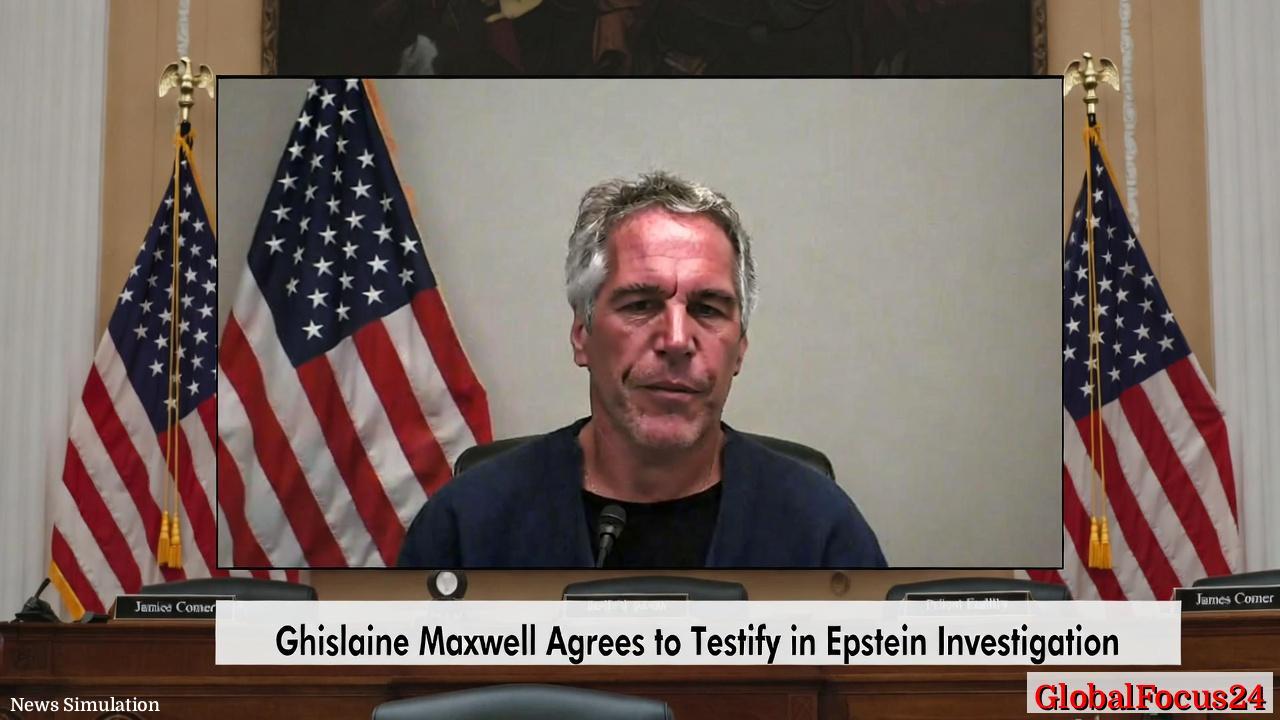
Ghislaine Maxwell to Testify in Epstein Investigation as Congressional Review Expands
A pivotal development in the ongoing federal investigation into Jeffrey Epstein’s long-running case has emerged as Ghislaine Maxwell agrees to testify under oath before a U.S. congressional committee. The House Oversight and Government Reform Committee, chaired by Representative James Comer, announced that Maxwell will participate in a virtual deposition slated for February 2. This marks a notable moment in the committee’s broader effort to scrutinize how the federal government managed the Epstein investigation and subsequent prosecutions.
Historical context and the arc of the Epstein case The Epstein saga began in the early 2000s but re-entered the public spotlight in 2008 with a controversial plea deal that drew widespread scrutiny over prosecutors’ handling of the case. Maxwell, a longtime associate of Epstein, was later convicted in 2023 on charges related to recruiting and trafficking underage girls for Epstein’s sexual exploitation. Her 20-year sentence underscores the severity of the offenses, yet the case continues to reverberate through legal and political circles as investigators pursue every avenue to illuminate the full scope of Epstein’s network.
Maxwell’s decision to testify arises after a sequence of legal maneuvers. Her appeal was rejected by the U.S. Supreme Court in October of the prior year, leaving her with limited avenues to delay or alter the deposition process. Maxwell’s counsel has consistently asserted that testifying without immunity would subject her to significant risks, given the highly politicized environment surrounding the Epstein matter. They have stressed that compelled testimony might not yield new information and could be undermined by procedural constraints or the potential use of the Fifth Amendment.
Committee dynamics and legal considerations The decision to seek immunity has been central to the committee’s strategy. In July, the committee declined to grant immunity, and in August, it issued a subpoena requiring sworn testimony. Maxwell’s legal team argued that testifying from prison under conditions without protection would amount to political theater and a misallocation of taxpayer funds. The February deposition will test the balance between congressional oversight needs and the rights and safety concerns of a convicted witness.
House leadership and procedural implications are significant. The committee’s decision to press forward with testimony, even as it grapples with immunity questions, reflects a broader ambition to scrutinize the executive and prosecutorial decision-making that shaped the Epstein investigation. The outcome could influence deputies’ willingness to pursue similar testimony from other high-profile figures who may have connections to Epstein’s sphere.
Economic and regional impact considerations While the immediate focus is legal and political, there are broader economic and regional implications. High-profile investigations of this nature tend to affect public trust in institutions, which can influence business confidence and investment perceptions in the short term. Regions with heightened attention to legal accountability and governance transparency may experience amplified public discourse around accountability, rule of law, and the protection of victim rights.
Additionally, the Epstein matter intersects with legacy issues concerning philanthropic and elite networks. At a regional level, areas with notable financial services activity and dense political networks may see heightened interest in governance reforms and oversight mechanisms. Public reactions often shape local conversations about safety, compliance, and the effectiveness of federal oversight in high-stakes investigations.
Comparative regional context News coverage and public response to similar oversight proceedings have varied across different regions of the United States. In coastal financial hubs, coverage tends to emphasize institutional accountability, the efficacy of regulatory frameworks, and the implications for market integrity. In inland regions, discussions often center on legal process, victims’ rights, and the transparency of prosecutorial decisions. Across the country, audiences weigh the balance between national security concerns, legal protections, and the perceived integrity of the justice system.
Transparency, victims’ rights, and procedural integrity A central theme across congressional oversight efforts is the protection of victims’ rights and the integrity of the investigative process. Critics of immunity-based testimony argue that compelling statements from individuals with potential liability could undermine ongoing investigations or risk re-traumatizing victims. Proponents of testimony emphasize the necessity of full disclosure to ensure accountability and public confidence in the government’s handling of complex cases.
The ethical dimensions of congressional inquiry are intertwined with legal standards. The Fifth Amendment remains a critical tool for potential witnesses who face self-incrimination. The pending questions include how immunity would be structured, what testimony would be compelled, and how the committee would manage privacy protections for victims while ensuring a thorough account of events.
Public reaction and sentiment Public reaction to these developments has been multifaceted. Supporters of greater congressional scrutiny argue that transparency is essential for democratic governance and for ensuring that justice processes are robust and free from political influence. Critics contend that high-profile inquiries into sensitive criminal matters can devolve into political theater if not tightly focused on factual and legal standards.
In many communities, the Epstein case has left a lasting imprint on trust in institutions. As the February deposition approaches, public interest is likely to intensify, with observers dissecting legal arguments, potential implications for future prosecutions, and the broader lesson about governance and accountability.
Implications for future oversight The Maxwell deposition could set a precedent for how congressional committees navigate similar requests in high-stakes criminal investigations. If immunity arrangements are clarified and a structured framework for testimony is established, it may influence how future witnesses with significant legal exposure approach congressional inquiries. The strategic use of testimony, combined with careful protection of victims and witnesses, could shape the conduct of future investigations into organized crime, trafficking networks, or other complex, high-profile matters.
Legal outcomes and ongoing proceedings Beyond Maxwell’s deposition, the Epstein case continues to unfold in related legal channels. The Department of Justice faced a December deadline to release remaining documents, a process that has drawn scrutiny for redactions and the pace of disclosure. Critics argue that timely transparency is essential to preserving public confidence in federal processes. Supporters maintain that protecting victims’ privacy and sensitive investigations requires careful handling of materials.
Separately, the committee voted to hold former President Bill Clinton and Hillary Clinton in contempt in relation to subpoenas tied to Epstein. While Bill Clinton has denied direct knowledge of Epstein’s crimes, the legal and political implications of the contempt vote underscore the complex intersection of executive privilege, oversight, and accountability. The Clinton matter may proceed to the full House for referral to the Justice Department if the vote advances, highlighting the ongoing tension between investigative oversight and executive branch considerations.
Conclusion The decision for Ghislaine Maxwell to testify in a congressional deposition represents a significant milestone in the Epstein investigation’s latest chapter. As the February 2 session approaches, the interplay of immunity, legal rights, and congressional oversight will come into sharper focus. The case continues to raise important questions about how oversight bodies pursue accountability, how victims’ rights are protected, and what full transparency looks like in cases involving highly influential networks.
In a broader sense, the Maxwell deposition and related proceedings illuminate the enduring challenge of balancing investigative rigor with due process and ethical considerations. The public, lawmakers, and legal professionals will watch closely to see how testimony informs a clearer understanding of Epstein’s operations, the extent of his network, and the efficacy of federal responses over successive administrations. The outcome could shape perceptions of governance accountability for years to come.