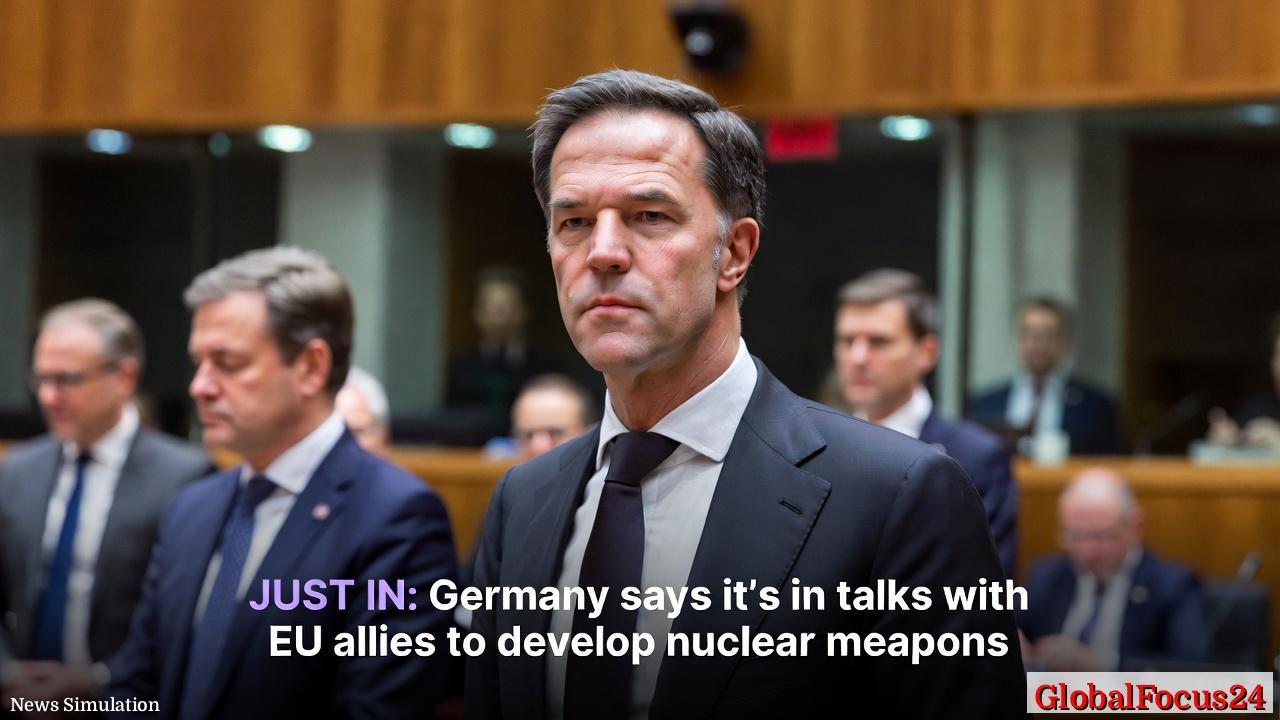
Germany engages EU partners in discussions on European nuclear deterrence strategy
In a significant shift within European security discourse, Germany has signaled ongoing talks with European Union allies to explore the feasibility of developing a regional nuclear capability. The conversations, framed as part of a broader review of strategic defenses and deterrence options, reflect evolving security dynamics on the continent and a desire to strengthen collective resilience in an era of rising geopolitical uncertainty. While exact modalities and timelines remain under study, the discussions underscore a broader re-examination of how Europe ensures credible deterrence while balancing nonproliferation commitments and alliance obligations.
Historical context: Europe’s long arc of deterrence and diplomacy
Europe’s approach to nuclear deterrence has deep roots in the post-World War II order and the Cold War era. The region built steady alliances around shared security guarantees, with NATO’s strategic framework often hinging on the concept of extended deterrence. Over decades, European policymakers calibrated the balance between reliance on alliance-based defense guarantees and independent strategic capabilities. The evolution of the European project, from national arsenals to integrated security planning, has been shaped by shifting threats, technological advances, and the imperative to preserve international norms against the spread of weapons of mass destruction.
Several decades of diplomacy have aimed to reconcile security needs with nonproliferation commitments. The global nonproliferation regime, anchored by treaties and inspections, has influenced European policy choices, even as member states periodically reassessed their defense postures in response to regional tensions and new security challenges. In this context, any discussion about a European nuclear capability inevitably touches on a spectrum of issues, including alliance cohesion, arms control avenues, export controls, and the implications for global stability.
Economic considerations: defense spending, industrial implications, and regional impact
A move toward a collectively developed nuclear capability would carry substantial economic consequences for European economies and defense industries. Key considerations include:
- Investment scale: Building or procuring a European nuclear deterrent would require substantial funding for research, development, testing, and potentially manufacturing infrastructure, as well as long-term maintenance. Governments would need to weigh opportunity costs against investments in other strategic areas such as conventional defense, cyber security, and energy resilience.
- Industrial and innovation implications: Significant opportunities could arise for high-tech defense sectors, including advanced materials, propulsion, and weapons-system integration. A regional program might spur collaboration across national laboratories, universities, and defense contractors, potentially expanding supply chains and creating research-driven job growth.
- Public procurement and national sovereignty: The path to any shared capability would involve complex procurement arrangements, safeguarding national sovereignty while aligning procurement standards, risk management, and interoperability across allied forces.
- Economic resilience and regional balance: A European approach could influence regional economic ecosystems, with potential spillovers to neighboring markets through supply chains, export controls, and technology diffusion. Countries with robust defense-industrial bases could see elevated strategic importance, while others might benefit from shared costs and access to advanced capabilities.
Regional comparisons: Europe versus other major defense architectures
When evaluating Europe’s potential move, it is helpful to compare with parallel security frameworks in other regions:
- Transatlantic alliance dynamics: Within NATO, discussions about deterrence readjustments typically revolve around a mix of conventional, nuclear, and cyber elements. A European-led capability would need to harmonize with longstanding NATO strategies, ensuring cohesion with the alliance’s collective defense commitments and strategic posture.
- Indo-Pacific parallels: In the Indo-Pacific, security conversations center on balancing regional influences, alliances, and capabilities with nonproliferation norms. While the geopolitics differ, the regional emphasis on credible deterrence and alliance solidarity provides useful reference points for Europe’s considerations.
- Non-nuclear regional strategies: Some regions pursue robust conventional deterrence, missile defense, and advanced surveillance to reduce reliance on nuclear options. Europe could explore similar models for risk reduction, while maintaining any strategic balance between deterrence credibility and nonproliferation commitments.
Security environment: tangible threats and strategic calculus
The impetus for evaluating a European nuclear capability arises amid several observable trends in the security environment:
- Evolving threats: State and non-state actors pursue varied means to challenge regional stability, including cyber intrusions, conventional force postures, and regional coercion. A deterrence strategy that signals credible risk to aggression remains central to preventing conflicts from escalating.
- Alliance signaling: The mere discussion of a shared capability can influence regional deterrence dynamics, potentially affecting the calculations of adversaries, partners, and markets. Such signaling must be carefully calibrated to avoid unintended escalations or destabilizing responses from competitors.
- Crisis management and resilience: Beyond weapon systems, the broader framework includes resilience-building measures, rapid decision-making processes, and robust crisis management. These elements are integral to any strategy that seeks to strengthen regional security without compromising international norms.
Geopolitical implications: diplomacy, governance, and coordination
A European approach to deterrence would involve intricate governance arrangements and diplomatic processes:
- Multinational governance: Any framework would require clear roles for participating states, including decision rights, accountability structures, and consistent standards for safety, security, and compliance with international law.
- Nonproliferation commitments: Europe’s approach would need to align with global nonproliferation norms and treaties, reinforcing international legitimacy and preventing escalation or diffusion of weapons capabilities.
- Public diplomacy and transparency: To maintain public trust and international legitimacy, transparent dialogue about objectives, safeguards, and risk management would be essential. Clear communication helps manage expectations and mitigate misperceptions among allies, partners, and rivals.
Technological and legal safeguards: ensuring responsible development
Advances in defense technologies demand rigorous safeguards:
- Safety and risk management: High standards for safety protocols, material control, and accident prevention are critical to prevent unintended use and ensure environmental and human safety.
- Export controls and technology transfer: Any development would involve stringent controls to prevent unauthorized access to sensitive technology, with clear guidelines governing cross-border collaboration.
- Arms control pathways: The potential for a regional capability could be paced with arms-control discussions, aiming for transparency, verification measures, and mutual confidence-building among participating states.
Public reaction and societal perspectives
Public sentiment about any form of nuclear capability is mixed and varies by country and community. In many regions, discussions trigger thoughtful debates about safety, regional stability, and moral responsibility. Public reactions may range from cautious acceptance in light of heightened security concerns to strong opposition rooted in nonproliferation principles and fear of escalating arms races. Policymakers often seek to balance national security priorities with societal values and international obligations, recognizing that public opinion can shape political feasibility and long-term strategy.
Implications for global markets and energy security
Beyond defense-specific effects, a European approach to deterrence could influence broader markets:
- Investment climate: Long-term defense programs can affect fiscal planning, government borrowing, and investment in technology sectors. Markets watch for signals about project viability, cost control, and the potential for public-private partnerships.
- Energy and infrastructure resilience: Security considerations often intersect with energy diversification, critical infrastructure protection, and cyber resilience. Strengthening regional deterrence could indirectly influence energy supply stability and investment in resilient networks.
- Global supply chains: The defense-industrial ecosystem has wide-reaching supply chains. Coordinated procurement and standardization can foster efficiency, but also raise concerns about dependence and strategic autonomy.
Historical myths vs. modern realism: what the debate entails
The conversation about establishing a European nuclear capability is as much about political philosophy as it is about capability. Historical experiences with deterrence, arms control, and alliance commitments illustrate that robust, credible security requires a mix of signaling, defense readiness, and diplomatic engagement. Realistic assessments emphasize that any practical path would require consensus-building across diverse member states with varied security considerations, constitutional constraints, and strategic cultures.
Regional security architecture: potential pathways forward
Several conceivable avenues could shape the trajectory of this discourse:
- Formal alliance integration: A pathway might involve formalizing a shared deterrence framework within existing EU-NATO structures, aligning standards, and ensuring interoperable defense capabilities.
- Joint research programs: Collaborations on nonproliferation safeguards, advanced materials, and safe stewardship could serve as confidence-building steps, laying groundwork for deeper cooperation without committing to immediate possession of nuclear weapons.
- Interim confidence-building measures: Confidence-building steps, including transparency initiatives, joint exercises, and information-sharing arrangements, can strengthen trust among member states and neighboring regions while the policy landscape evolves.
Conclusion: navigating a complex crossroads with clarity and responsibility
The discussions underway reflect Europe’s ongoing effort to reconcile security needs with international norms and broad public interest. Any decision about a European nuclear capability would require careful balancing of strategic credibility, alliance coherence, nonproliferation commitments, and economic realities. As policymakers weigh options, the emphasis remains on safeguarding regional stability, ensuring transparent governance, and maintaining a principled approach to defense in a rapidly changing geopolitical environment. The coming months are likely to bring further clarity on how Europe envisions its role in deterring aggression, protecting civilian populations, and contributing to a stable, rules-based international order.
Follow-up note: If you’d like, I can tailor this article to focus on a specific country’s perspective, a particular region within Europe, or a deeper dive into the economic impact on defense industries.