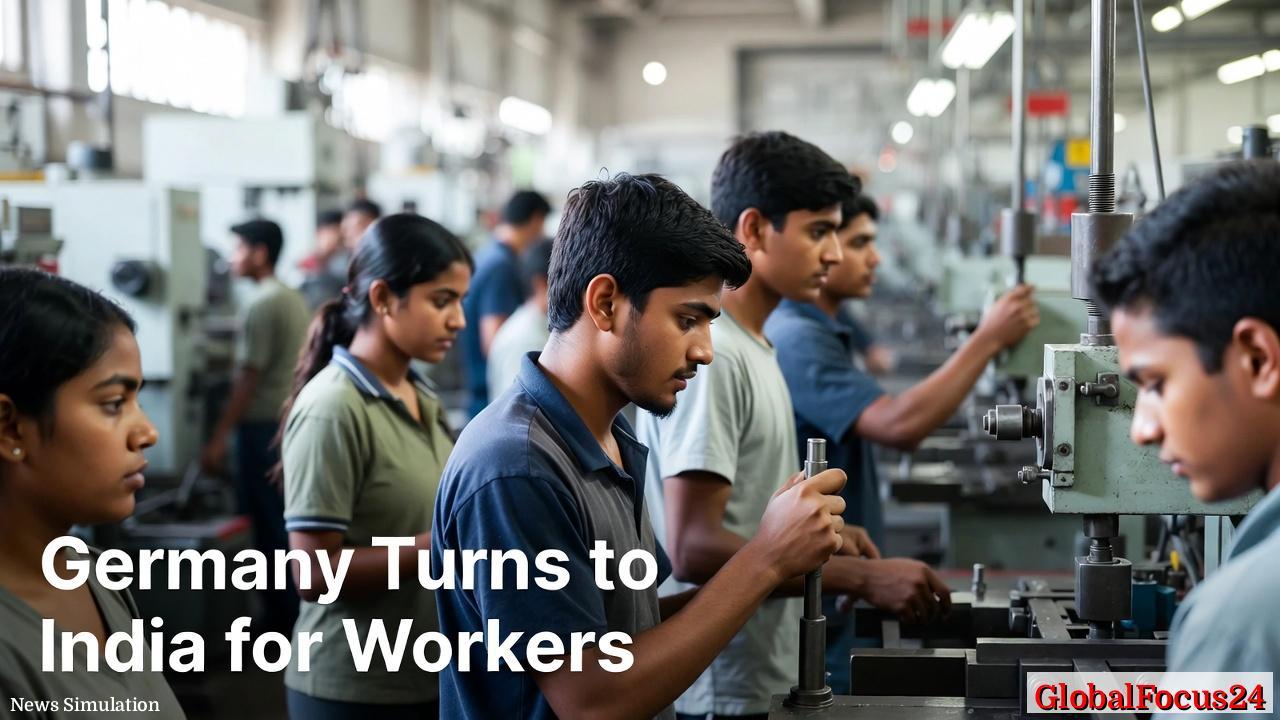
Germany Faces Skilled Labor Shortage as Indian Workers Fill Critical Gaps in Workforce
Aging Population Drives Urgent Labor Demand
Germany’s labor market is undergoing a profound transformation as demographic pressures reshape the country’s economic foundation. With one of the oldest populations in Europe and persistently low birth rates, the country is confronting a widening gap between retiring workers and the younger generation entering the workforce. Analysts estimate that Germany must attract approximately 288,000 foreign workers annually to prevent its labor force from shrinking by up to 10 percent by 2040.
The issue is particularly acute in skilled trades and essential services, where vacancies are increasingly difficult to fill domestically. Industries such as construction, manufacturing, transportation, and food production are already experiencing strain, with some businesses reporting that operations would not be sustainable without foreign labor.
Germany’s demographic challenge is not new. Since reunification in 1990, the country has seen steady declines in birth rates combined with longer life expectancy. While this trend reflects broader patterns across Europe, Germany’s economic reliance on a highly skilled workforce makes the shortage especially consequential.
India Emerges as a Key Talent Source
To address the growing skills gap, German employers and trade organizations have turned to international recruitment, with India emerging as a central partner. The country’s large and youthful population, combined with a growing pool of technically trained workers, makes it an attractive source of talent.
Since 2015, the number of Indian workers in Germany has increased nearly sixfold, rising from 23,320 to 136,670 in 2024. This surge reflects both policy changes and targeted recruitment initiatives designed to streamline migration pathways and improve employment matching.
A migration and mobility agreement signed in 2022 has significantly eased the process for Indian nationals seeking work in Germany. The agreement expanded the annual skilled worker visa quota to 90,000, signaling a strategic shift toward structured labor migration.
German chambers of skilled crafts have partnered with Indian employment agencies to facilitate recruitment, training, and integration. These collaborations are not limited to highly specialized roles; they extend across a wide range of vocational professions that are essential to the functioning of local economies.
Apprenticeships Bridge Workforce Gaps
One of the most notable developments is the expansion of apprenticeship programs for Indian workers. Germany’s dual education system, which combines classroom instruction with on-the-job training, has become a key mechanism for integrating foreign talent into the labor market.
The initiative began modestly in 2022 with the arrival of 13 Indian apprentices in the butchery trade. Since then, the program has grown rapidly, with around 200 Indian apprentices now working in butcher shops across southwestern Germany. Plans are underway to bring an additional 775 apprentices this year, covering professions such as baking, mechanical work, stonemasonry, and road construction.
These programs not only address immediate labor shortages but also provide long-term workforce stability by training workers within Germany’s established vocational framework. Employers report high levels of motivation among participants, many of whom view the opportunity as a pathway to financial stability and professional growth.
Economic Impact on Local Businesses
The influx of Indian workers is already having a measurable impact on local economies, particularly in regions where labor shortages have threatened the survival of small and medium-sized enterprises.
In the butchery sector, for example, the number of family-run shops has declined sharply over the past two decades, falling from approximately 19,000 in 2002 to fewer than 11,000 in 2021. Industry representatives attribute much of this decline to difficulties in recruiting apprentices and retaining skilled workers.
Business owners who have participated in international recruitment initiatives report that foreign apprentices have been instrumental in keeping their operations viable. In some cases, they credit these workers with preventing closures and preserving traditional trades that are deeply rooted in regional culture.
The transportation sector is another area experiencing significant benefits. A mechanical engineering graduate from Hyderabad, unable to secure stable employment in India, retrained as a lorry driver in Germany and now works for a haulage company near Freiburg. Such transitions highlight both the flexibility of the German labor market and the willingness of foreign workers to adapt to new roles.
Public Services Turn to International Hiring
Labor shortages are not confined to private industry. Public sector institutions, including local governments, are increasingly looking abroad to fill critical roles. In southwestern Germany, a municipality has moved to recruit two Indian nationals as kindergarten teachers after failing to find suitable candidates domestically.
This development underscores the breadth of the workforce challenge. Early childhood education, healthcare, and social services are among the sectors most affected by staffing shortages, raising concerns about long-term service provision and quality.
Officials emphasize that international recruitment is no longer a temporary measure but a structural necessity. Without sustained inflows of foreign workers, many public services would face significant disruptions.
Worker Perspectives: Opportunity and Adjustment
For many Indian workers, the decision to move to Germany is driven by a combination of economic and personal factors. Higher wages, improved working conditions, and the opportunity to support family members back home are frequently cited motivations.
A 20-year-old apprentice from a suburb of Delhi, now working in a bakery in the Black Forest region, begins his shifts in the early hours of the morning but describes his experience positively. He points to the clean environment, stable income, and the ability to send remittances as key benefits.
At the same time, integration presents challenges. Language barriers, cultural differences, and the demands of vocational training require significant adaptation. Employers and trade organizations have responded by offering language courses, mentorship programs, and support networks to facilitate the transition.
Regional Comparisons and Broader European Trends
Germany is not alone in facing labor shortages linked to demographic change. Countries such as Italy, Spain, and Poland are experiencing similar pressures, though the scale and policy responses vary.
Germany’s approach stands out for its emphasis on structured migration and vocational integration. While some European nations rely more heavily on seasonal or temporary labor, Germany is investing in long-term workforce development through apprenticeship programs and bilateral agreements.
This strategy reflects the country’s economic model, which depends on a highly skilled and stable labor force. By contrast, countries with higher unemployment rates among younger populations may face different challenges, including labor market mismatches rather than outright shortages.
Long-Term Outlook for Germany’s Labor Market
Looking ahead, Germany’s reliance on foreign workers is expected to deepen as demographic trends continue to evolve. The success of current initiatives will likely influence future policy decisions, including the expansion of migration agreements and the refinement of integration programs.
Economists note that sustained economic growth will depend not only on attracting workers but also on ensuring their successful integration into society and the labor market. This includes addressing housing availability, education, and social inclusion.
The partnership with India represents a significant step in this direction, offering a scalable model for international recruitment. As global competition for talent intensifies, Germany’s ability to position itself as an attractive destination for skilled workers will be a critical factor in maintaining its economic strength.
The evolving workforce landscape highlights a broader shift in how advanced economies respond to demographic change. In Germany, the growing presence of Indian workers is reshaping industries, sustaining businesses, and redefining the future of work in one of Europe’s largest economies.