New Genetic Study Reveals Uneven Interbreeding Between Humans and Neanderthals
Unearthing Clues from Ancient Genomes
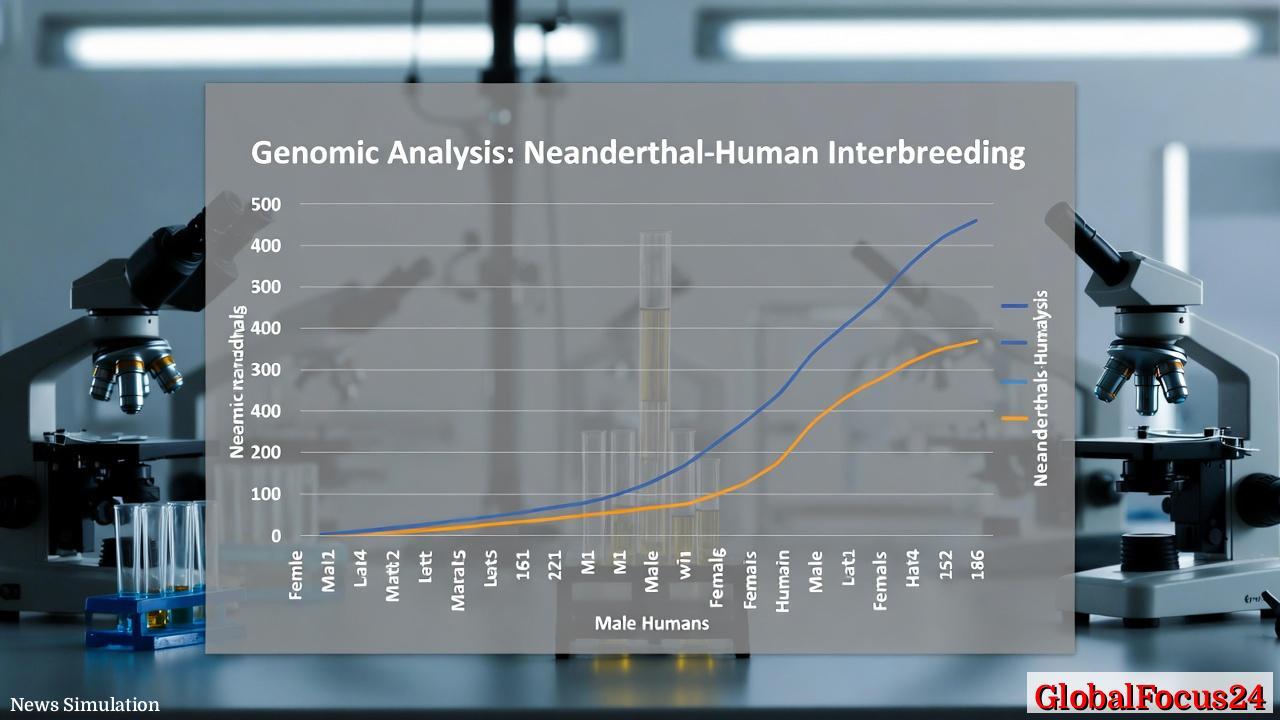
A newly released genomic analysis has provided compelling evidence that interbreeding between early modern humans and Neanderthals was far more unbalanced than once believed. The research shows that pairings between male Neanderthals and female Homo sapiens were significantly more common than those between female Neanderthals and male humans. This finding reshapes the understanding of how two closely related species mingled during the last Ice Age — and how those ancient unions shaped the genetics of modern populations.
These results, drawn from a comprehensive study of ancient DNA samples across Eurasia, challenge a longstanding assumption that interbreeding was symmetrical. In fact, the data suggest that genetic contributions flowed unevenly across species lines, leaving modern humans with far more inheritance from Neanderthal fathers than from Neanderthal mothers.
Tracing Ancient Lineages
The genomic evidence comes from an expanded dataset of more than 300 high-quality DNA sequences extracted from ancient bones and teeth. Many of the samples were collected from archaeological sites spanning Central Asia to Western Europe — regions where human and Neanderthal populations overlapped between 60,000 and 40,000 years ago.
By analyzing differences in mitochondrial DNA (which is inherited maternally) and nuclear DNA (which includes both maternal and paternal contributions), scientists identified a striking pattern: the Neanderthal mitochondrial genome is almost entirely absent in modern humans. This suggests that female Neanderthals rarely contributed maternal lineages to the modern human gene pool.
Conversely, genetic markers tied to the Y chromosome — passed from father to son — show that Neanderthal males did reproduce with human females, and those offspring sometimes succeeded in propagating their genes through subsequent generations.
Insights into Human Migration and Mixing
The timing of these interactions sheds light on a critical era of human expansion. When Homo sapiens migrated out of Africa roughly 70,000 years ago, they encountered Neanderthal populations that had already adapted to the colder regions of Europe and Asia. The two species shared the landscape for several millennia before Neanderthals eventually vanished from the fossil record.
This overlapping period of contact, likely characterized by both cooperation and competition, provided multiple opportunities for interbreeding. However, the newly identified gender asymmetry raises questions about social dynamics, population size, and reproductive viability between the two groups.
Some researchers propose that hybrid offspring from human females and Neanderthal males were more genetically compatible, while unions between male humans and female Neanderthals may have faced biological barriers that made offspring less likely to survive or reproduce. Others suggest that cultural or behavioral factors — such as patterns of migration, group dominance, or social hierarchy — influenced these mating outcomes.
Revisiting the Evolutionary Picture
The asymmetry also has evolutionary significance. Genetic traits passed down through successful hybrid lineages have influenced immunity, metabolism, and adaptation in modern humans. Several studies have linked Neanderthal-derived genes to enhanced resistance to pathogens, improved skin barrier function in colder climates, and even neurological traits that affect sleep and mood regulation.
Understanding which lineages contributed these genes helps scientists track how interbreeding shaped human evolution. Because these traits may have been inherited primarily from male Neanderthal ancestors, the new research could reshape the way scientists model ancient population interactions.
For instance, if most admixture came from Neanderthal males, this may suggest that early human groups encountered smaller, male-dominated Neanderthal bands while expanding northward — a scenario that could have influenced the genetic flow between populations.
Historical Context: Rediscovering Neanderthals
Interest in Neanderthal genetics surged after the first draft of the Neanderthal genome was published in 2010. That landmark project revealed that people of non-African descent carry about 1–2% Neanderthal DNA. Since then, advancements in sequencing technology have allowed more precise reconstruction of interbreeding events.
Early theories assumed that gene exchange was a simple matter of proximity. However, as scientists parsed more detailed population models, it became clear that hybridization occurred in multiple waves, at different times and places.
The latest study adds nuance by explaining why some genetic traces are missing altogether. The near-total absence of Neanderthal mitochondrial DNA in modern humans was once dismissed as a statistical fluke, but researchers now interpret it as evidence of deep structural imbalance in sexual pairings.
In effect, ancient genomic patterns are now revealing not just when and where our ancestors met Neanderthals — but how the interactions unfolded in family units, communities, and generations that followed.
Broader Implications for Human Evolution
These discoveries hold implications beyond academic curiosity. Understanding the routes and results of early human interbreeding offers insight into how modern populations developed biological resilience and diversity.
For example, studies of immune-related genes show that certain alleles derived from Neanderthals helped humans adapt to Eurasian diseases after leaving Africa. Without these genetic boosts, the survival of early migrants in new environments might have been far less certain.
In the broader scope of human evolution, asymmetric mixing could have accelerated the spread of useful genes while filtering out less compatible lineages. This process, known as adaptive introgression, likely contributed to regional variations in modern human physiology and disease susceptibility.
Regional Comparisons: Europe and Asia
The genetic differences between European and Asian populations reflect distinct patterns of Neanderthal interaction. Evidence suggests that both groups carry Neanderthal ancestry, but the proportions and types of inherited genes vary.
Populations in East Asia show slightly higher levels of Neanderthal DNA than those in Europe — a mystery that scientists attribute to multiple admixture events across different geographic zones. In both regions, however, the maternal contribution of Neanderthals remains consistently low, reinforcing the pattern identified in the new study.
Another clue lies in Denisovan DNA — the genetic legacy of another archaic human species that interbred with Homo sapiens in Southeast Asia and Oceania. That history shows a different pattern, with both male and female Denisovans contributing to modern genomes, suggesting that the imbalance observed with Neanderthals was not universal across all archaic human groups.
Methodology and Future Research
The research team used advanced computational tools to simulate genetic recombination across thousands of generations. By comparing mitochondrial and nuclear DNA divergence rates, they reconstructed likely scenarios of mating frequency and directionality.
These models indicate that female Neanderthal involvement in interbreeding events occurred less than one-fifth as often as male participation. While precise numbers remain approximations, the consistency across independent datasets supports a clear demographic pattern rather than random chance.
Future work will focus on rare hybrid skeletons, which may preserve physical evidence of such unions. Archaeological context — the conditions under which two species met — will also be crucial. Understanding family structures, social networks, and even trade or conflict between humans and Neanderthals could further illuminate how these asymmetric relationships formed.
A New Chapter in the Human Story
The emerging picture is one of complexity rather than simplicity. Interbreeding was neither uniform nor incidental — it was a pivotal process that reshaped both species. While Neanderthals eventually disappeared around 40,000 years ago, a piece of their genetic legacy endures in billions of living humans.
What stands out from this study is that that legacy was transmitted unequally, shaped by the dynamics of contact, choice, and circumstance. Female Neanderthals appear to have played a smaller biological role in the formation of modern humanity, while their male counterparts left a more lasting imprint on the human genome.
In the continuing quest to decode our deep ancestry, such findings offer both scientific precision and a strangely human story — one of connection, survival, and the unpredictable paths through which our species became what it is today.