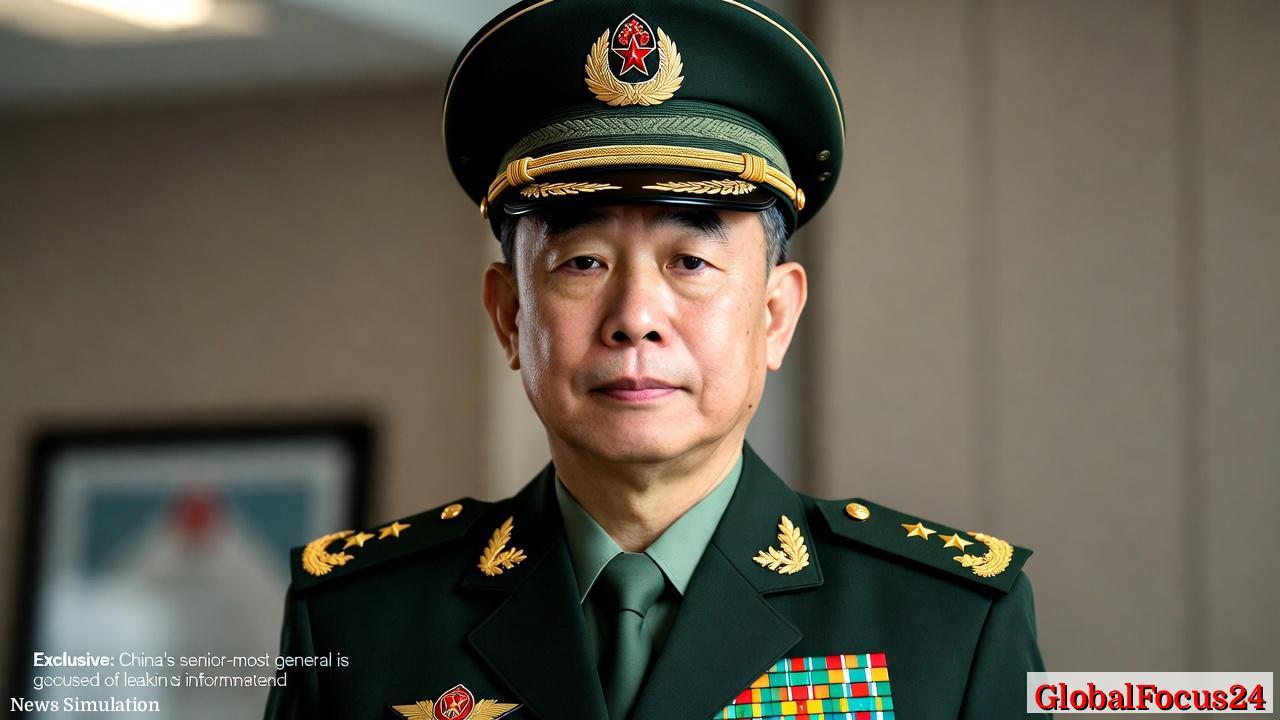
China’s Top General Faces Allegations of Nuclear-Program Leaks and Bribery: A Global Security Moment
In a development that reverberates across international security, China’s senior military leadership stands at the center of a high-stakes case alleging that a top general disclosed sensitive information about the country’s nuclear-weapons program to the United States and accepted bribes for official acts. The charges, while unfolding through complex legal channels, illuminate enduring tensions between transparency, accountability, and strategic ambiguity in the modern theater of great-power competition. As the world watches, the case offers a rare window into how intelligence, governance, and military doctrine intersect at the highest echelons of power.
Historical context: the evolution of China’s nuclear posture and military diplomacy
China’s approach to nuclear strategy has long balanced deterrence, modernization, and concise messaging about restraint. Since the 1960s, China has pursued a pathway of credible minimum deterrence, arguing that a smaller number of survivable warheads and a robust command-and-control backbone can deter aggression while avoiding an arms race. Over the decades, this posture has evolved with technological progress, leading to an expanded arsenal, diversified delivery platforms, and greater command-and-control sophistication. The modernization effort—spanning propulsion systems, mobile missiles, and advanced roving platforms—has been accompanied by a sophisticated intelligence apparatus and a layered military-industrial complex designed to safeguard sensitive data while maintaining a strategic ambiguity that can complicate external assessments.
Against this backdrop, any allegation that a top official would disclose such information to a rival power—particularly the United States, a country with deep historical rivalries and intensive intelligence competition—strikes at the heart of national-security confidence. The stakes extend beyond bilateral frictions: allied and partner nations watch for signals about how China manages sensitive data, how it guards its most sensitive capabilities, and how internal processes respond to allegations of corruption or external influence. The case thus resonates with broader questions about governance, rule-of-law, and the mechanisms by which a nation institutionalizes oversight over strategic assets.
Key details: what the charges imply for the nuclear program and governance norms
At the core of the charges is an assertion that critical information about China’s nuclear weapons program was disclosed to a foreign power, in this case the United States. If substantiated, such disclosures could have multiple implications:
- Operational security risk: sensitive details about warhead design concepts, launch timelines, or force postures could be exposed, potentially narrowing China’s strategic surprise advantage.
- Diplomatic signaling: overt or covert sharing of sensitive information could alter the diplomatic balance, inviting responses from partners and prompting recalibrations of nonproliferation diplomacy, crisis management protocols, and regional security architectures.
- Governance and oversight: accusations of accepting bribes for official acts raise questions about the integrity of senior leadership, internal compliance systems, and the effectiveness of anti-corruption frameworks within the military and security apparatus.
The specifics of the alleged bribery—whether it involved procurement decisions, personnel placements, or access to restricted information—would shape the severity and reach of potential reforms. Regardless of the outcome, the episode has the potential to prompt a broader review of risk-management practices, information-handling protocols, and whistleblower protections within the defense establishment. In many countries, high-profile cases become catalysts for reforms that strengthen accountability and reduce the vulnerability of critical programs to influence or extortion.
Regional comparisons: how similar issues have played out elsewhere
Examining comparable scenarios in other leading powers provides context for interpreting the potential trajectory of this case. Across major national security ecosystems, allegations of leakage or corruption involving senior officers have often triggered a mix of legal proceedings, internal reforms, and public messaging to reassure domestic and international audiences.
- In some jurisdictions, prosecutions of high-ranking military officials for leakage or bribery have been followed by comprehensive reviews of information security protocols, the establishment of independent oversight bodies, and enhanced transparency around procurement and personnel decisions. These measures aim to balance the need for secrecy with public accountability and to demonstrate that strategic assets are protected from undue influence.
- In other scenarios, internal investigations have remained discreet, with outcomes announced selectively to preserve strategic ambiguity or diplomatic relationships. The risk in such approaches is that inadequate disclosure can feed public speculation or erode trust in institutions perceived to be both powerful and insulated.
- For China, observers have long noted a strong emphasis on centralized control and discipline within the party-state apparatus. The current case could prompt discussions about how tightly guarded channels of information are and how those channels are monitored for vulnerabilities. It may also influence how China communicates about its deterrence posture in regional forums, trade discussions, and security dialogues with neighboring states and major partners.
Impact on economic and defense-industrial sectors
Beyond geopolitics, the implications for economic and defense-industrial sectors are tangible. A case that calls attention to controls over sensitive information can affect:
- Defense procurement and R&D investment: perceived risks to information security may influence budget allocations, supplier selection processes, and the pace of long-term modernization programs.
- International collaboration: firms and institutions involved in joint research or technical exchanges may recalibrate collaboration terms, access controls, and compliance requirements to mitigate perceived risk.
- Market confidence: investors and international customers monitor how well a country protects its most sensitive capabilities. A credible, well-managed response can preserve confidence, while perceived lapses may lead to caution or reevaluation of partnerships.
Public reaction and the information environment
Public sentiment around high-stakes security allegations tends to be shaped by a mix of official communications, media narratives, and expert analysis. In such moments, societies often experience heightened interest in governance, anti-corruption efforts, and national resilience. Transparent, methodical updates from authorities—spanning timelines, evidentiary standards, and consequences for those implicated—help to maintain trust and reduce rumor-driven anxiety. Conversely, inconsistent messaging or ambiguous statements can amplify concern and speculation, potentially distracting from substantive policy discussions about modernization, deterrence, and regional stability.
Strategic implications for regional stability
The broader security environment in Asia and beyond is shaped by interactions among major powers, regional players, and non-state actors. In this context, the alleged leak incident intersects with ongoing strategic dynamics:
- Deterrence and risk calculus: if credible information-sharing or insider access vulnerabilities are perceived within the nuclear enterprise, adversaries may adjust their risk tolerance or adjust their own deterrence postures.
- Alliances and partnerships: allies may seek greater assurance of information security and might request enhanced transparency or joint exercises that stress-test intelligence protections.
- Crisis management readiness: the incident can underscore the importance of robust incident response plans, including rapid containment of sensitive data exposure and clear lines of authority for escalation and remediation.
Possible paths forward: governance, reform, and resilience
While the case unfolds, several themes commonly emerge as part of constructive responses to high-stakes allegations:
- Strengthened information-security regimes: institutions may implement stricter access controls, auditing mechanisms, and need-to-know protocols for sensitive programs.
- Independent oversight: establishing or empowering independent bodies to monitor compliance, investigate allegations, and report findings can bolster public confidence.
- Leadership accountability: even in complex political systems, clear consequences for inappropriate conduct reinforce the principle that strategic assets are safeguarded and that public trust depends on integrity at the highest levels.
- Continual modernization with safeguards: as military-technological programs advance, embedding security-by-design principles and rigorous threat assessments helps balance innovation with protection.
National security, transparency, and the rule of law
The interplay between national security imperatives and the rule of law remains central to any such case. Societies depend on credible processes to adjudicate sensitive allegations while safeguarding the practical needs of defense and deterrence. A mature approach emphasizes due process, proportionate response, and a commitment to guarding the integrity of programs that influence regional and global security. The outcome will likely influence not only domestic governance confidence but also how other nations assess risk when engaging with the country on defense technology, arms control dialogues, and security cooperation.
Historical echoes and lessons learned
Throughout history, episodes involving high-level leaks or corruption have prompted a mix of reforms and reaffirmations of core principles. In some instances, nations have emerged with reinforced norms around information protection, tighter command-and-control structures, and renewed emphasis on integrity within the security apparatus. In others, the political effects have injected volatility or shifted strategic calculations within regions. The current episode offers an opportunity to observe how a major power applies lessons from past incidents to contemporary challenges, balancing the imperative to protect sensitive capabilities with the need to maintain credible deterrence and international trust.
Conclusion: navigating uncertainty with rigor and calm
As investigators examine the allegations surrounding a senior Chinese general, the international community watches for clarity, evidence, and proportionate responses. The case produces no simple answers but highlights enduring themes: the fragility and importance of safeguarding nuclear information, the ongoing fight against corruption within critical institutions, and the continuous search for governance reforms that can withstand scrutiny in a global security environment. For policymakers, defense professionals, and observers alike, the focus remains on ensuring robust protections for sensitive data, maintaining transparent and accountable processes, and preserving regional stability in an era where strategic competition intersects with concerns about integrity and the rule of law.