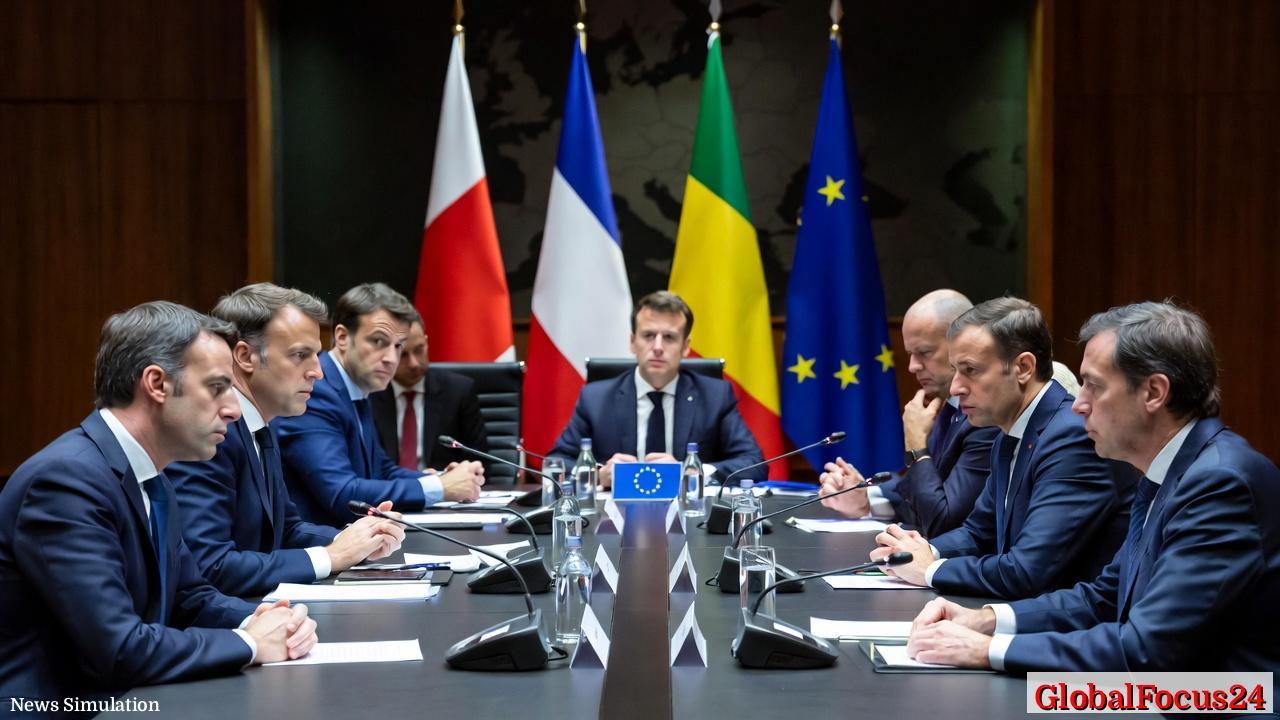
Donald Gaullism Reemerges in Trump-Era America: Europe Rethinks Strategic Autonomy
A shift in the geopolitical mood is underway as European capitals reassess long-standing assumptions about security, alliance commitments, and economic sovereignty in the shadow of a transformed transatlantic partnership. The era branded by Donald Trump’s presidency—with its emphasis on burden-sharing, trade frictions, and a more transactional approach to diplomacy—has functioned as a catalyst for reexamining France’s Gaullist tradition. The result is a recalibration across parts of Europe toward greater strategic autonomy, resilience in supply chains, and a renewed focus on national sovereignty in defense, technology, and critical industries.
Historical context: Gaullism in a modern context The concept of strategic autonomy traces its intellectual lineage to Charles de Gaulle, who argued that nations must maintain the ability to chart independent paths on the world stage. De Gaulle’s stance was born from experience—postwar reconstruction, the rise of a bipolar world order, and the recognition that alliance commitments can come with strategic trade-offs. In the 1960s, his push for an independent nuclear deterrent and for tightening France’s control over its own destiny signaled a deliberate pivot away from reflexive alignment with any single power. In the decades since, European leaders have oscillated between deep integration within transatlantic structures and cautious calls for autonomy that would allow member states to pursue their interests without being hostage to external shifts.
The Trump era amplified these tensions. By challenging traditional alliance expectations—demanding higher defense spending, questioning the fairness of trade deals, and signaling a recalibration of global leadership—Washington’s approach underscored the fragility of a purely alliance-driven security model. For many European policymakers, this accentuated a long-standing concern: overreliance on a single security framework can be a strategic vulnerability in times of diplomatic strain or abrupt policy pivots abroad. In this environment, Gaullist thinking—emphasizing national sovereignty, diversified security arrangements, and a pragmatic willingness to pursue independent options when necessary—gained renewed legitimacy as a credible framework for navigating uncertainty.
Economic implications: resilience, sovereignty, and supply-chain diversification The European response to these dynamics has been multifaceted, spanning defense procurement, energy strategy, semiconductor policy, and climate-era industrial plans. Several trends stand out:
- Defense modernization and diversified partnerships: European capitals are investing in advanced missile systems, air defense networks, and interoperable command-and-control capabilities. The aim is not to replace the transatlantic alliance but to reduce exposure to abrupt policy shifts by ensuring that European forces can operate effectively with or without immediate external support. This approach aligns with Gaullist prudence: cultivate robust domestic capabilities while maintaining open channels with allies.
- Industrial sovereignty and critical technologies: Nations are prioritizing domestic research and production in strategic sectors such as semiconductors, rare earths, and renewable energy components. Governments are using targeted subsidies, public-private partnerships, and strategic stockpiles to mitigate supply shocks and protect critical infrastructure. The emphasis on building local capacity is consistent with a broader shift toward resilience—an acknowledgement that global supply chains can be disrupted by geopolitical tensions or political shifts.
- Energy independence and diversification: The push to diversify energy sources and reduce dependence on a single supplier mirrors the Gaullist impulse to secure national interests through a varied and robust energy mix. Regions that previously relied heavily on one energy partner are accelerating local alternatives, storage capabilities, and cross-border interconnections to ensure stable, affordable power for households and industry.
- Economic diplomacy and balanced trade: In the face of tariff disputes and unilateral policy moves, policymakers are pursuing more balanced trade relationships that protect domestic industries while preserving open markets. The emphasis is on strategic economic resilience—ensuring that industrial vitality persists even when traditional partners recalibrate their own policy priorities.
Regional comparisons: lessons from neighbors and nearby markets Across Europe, responses to this recalibrated paradigm vary, reflecting differences in industrial base, political culture, and exposure to U.S. policy shifts.
- Northern Europe: Markets with deep manufacturing roots have gravitated toward supply-chain redundancy and fortified industrial policy. The emphasis here is on precise, risk-aware governance that supports high-tech sectors while preserving open trade with global partners. The result is a pragmatic version of strategic autonomy that blends alliance commitments with domestic capability.
- Southern Europe: Countries with sizable export-oriented and high-tech sectors are pursuing targeted autonomy without sacrificing European cohesion. Investment in digital infrastructure, clean energy, and advanced manufacturing is coupled with regional integration efforts to maintain competitive advantages within a broader European market.
- Central and Eastern Europe: Regions with rapidly evolving industrial ecosystems are balancing modernization with security concerns. Partners in this corridor often emphasize interoperability and standardized defense equipment, while leveraging regional value chains to advance resilience.
Public reaction and market sentiment: urgency, adaptation, and optimism Public perception of this shift toward strategic autonomy is mixed but increasingly pragmatic. On one hand, citizens recognize the necessity of resilient public services, secure energy supplies, and reliable defense capability. On the other hand, there is concern about potential higher costs or slower decision-making that might accompany more autonomous strategies. Economists note that the short-term fiscal impact of diversification and modernization can be significant, but the longer-term benefits include reduced exposure to external shocks and a steadier path for innovation-driven growth.
Industry voices highlight the practical benefits of Gaullist-inspired policy. Businesses in advanced manufacturing, aerospace, and information technology express optimism that diversified supply chains and local production capacity will yield greater reliability and predictability. They also point to a more level playing field in EU markets, where common rules and streamlined regulatory processes can accelerate innovation while maintaining robust consumer protections.
Geopolitical context: a recalibrated balance between alliance and independence The current moment underscores a nuanced rebalancing of power, where the alliance remains a foundational pillar, but its character evolves. The sense of urgency stems from a recognition that global leadership is not a fixed frame but a dynamic posture that must adapt to changing circumstances—economic, technological, and strategic. Europe’s renewed interest in strategic autonomy is not a repudiation of alliance bonds but an assertion that member states can safeguard their interests through diversified partnerships, robust defense capabilities, and sophisticated industrial policy.
In this landscape, Gaullist principles offer a historical blueprint that remains relevant. The core idea—maintaining the ability to act independently when necessary while staying engaged with global partners—provides a flexible path forward. The modern interpretation stresses resilience, sovereignty, and practical cooperation across borders, rather than a pure ideational retreat from international engagement.
Sustainability, climate policy, and social cohesion A Gaullist-inspired approach to strategic autonomy also intersects with sustainability goals and social equity. Advocates argue that resilient economies are better positioned to pursue ambitious climate targets and social programs because they are less vulnerable to external shocks. Investment in clean energy technologies, green manufacturing, and sustainable infrastructure aligns with both environmental objectives and national interests. Moreover, by strengthening domestic capabilities, governments can pursue inclusive growth strategies that distribute the benefits of modernization more evenly across regions and demographics.
Technology, innovation, and the future of work Technology policy remains central to the autonomy conversation. Governments are prioritizing R&D funding, secure digital infrastructure, data sovereignty, and the protection of critical innovation ecosystems. The idea is to foster homegrown scientific talent and local leadership in next-generation technologies such as artificial intelligence, quantum computing, and advanced materials. As industries evolve, the labor market will require upskilling and targeted training programs to keep pace with automation and digital transformation. A resilient workforce becomes a cornerstone of strategic autonomy, ensuring that a country can adapt quickly to shifting economic realities.
Implications for international institutions The recalibration toward strategic autonomy has implications for international institutions and multilateral forums. There is momentum to reform or reinterpret certain norms to better reflect a multipolar and technologically advanced era. This includes updating security cooperation frameworks, modernizing trade rules to account for the realities of modern supply chains, and strengthening cross-border collaboration on research and public health. The aim is to preserve the benefits of collective action—such as shared security guarantees and global governance mechanisms—while ensuring that member states retain meaningful influence over policies that affect their domestic priorities.
Conclusion: a pragmatic, adaptive path forward The reappearance of Gaullist thinking in a Trump-influenced era signals a broader trend: nations seeking a balance between alliance commitments and national sovereignty, between openness and resilience. The path forward is not a retreat into isolation, but a careful, evidence-based approach to modernization and strategic planning. By reinforcing domestic capabilities, diversifying supply chains, and pursuing intelligent, cooperative engagement with international partners, governments can navigate an uncertain geopolitical landscape while safeguarding prosperity and security for their citizens. The debate continues across capitals, laboratories, and boardrooms, shaping a future where autonomy and alliance coexist in a pragmatic, mutually reinforcing dynamic.