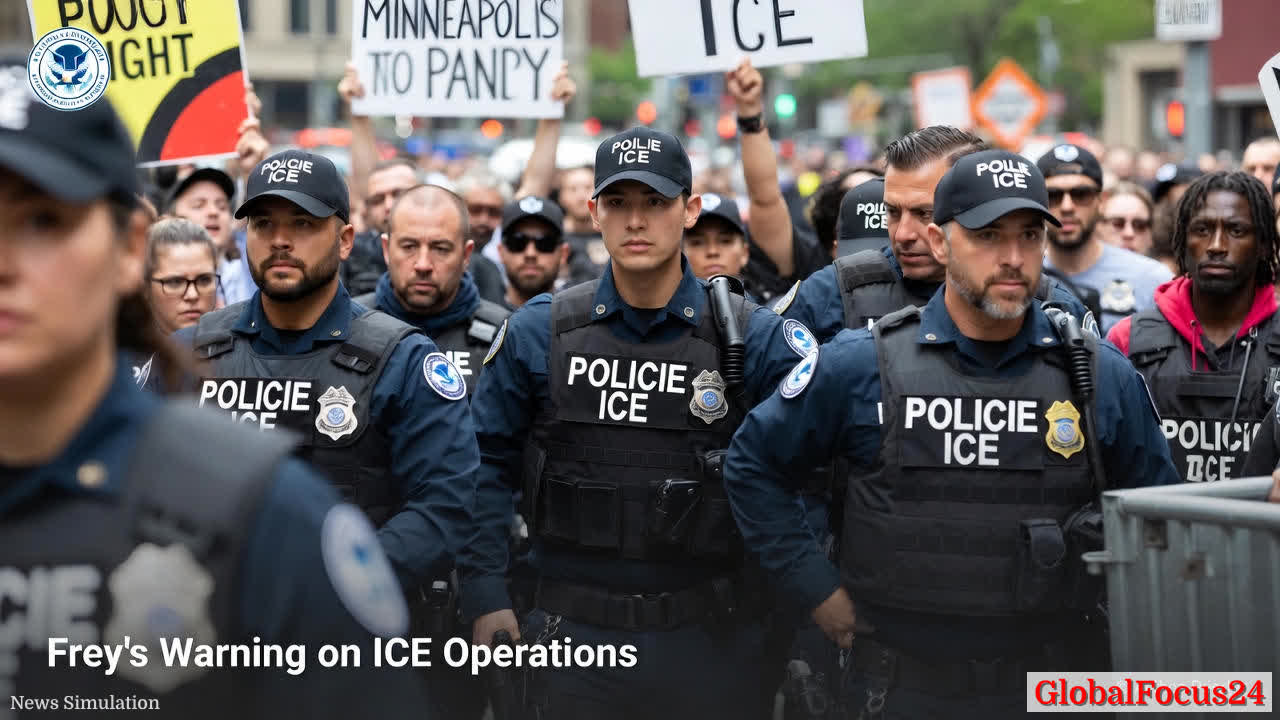
MINNEAPOLIS ICE-THEMED TENSION RISES: MAYOR FREY’S COMMENTS SPARK DEBATE OVER PUBLIC SAFETY AND FEDERAL ENFORCEMENT
In a moment that quickly drew national attention among policymakers, law enforcement, and immigrant communities, Minneapolis Mayor Jacob Frey voiced concerns about the potential for chaos surrounding Immigration and Customs Enforcement (ICE) operations. The remarks, delivered during a period of heightened activism around local resistance to federal enforcement, touched off a wave of interpretation and debate about safety, political rhetoric, and the potential for violence in the streets. Officials and observers alike now face a complex set of questions about the safety of residents, the limits of local tolerance for federal actions, and how cities navigate the tightrope between humanitarian obligations and national security mandates.
Context and historical background
For decades, the relationship between federal immigration enforcement and city governments has been fraught with tension. In many metropolitan areas, local officials have sought to shield undocumented residents from aggressive enforcement actions, arguing that fear of deportation undermines public safety, access to essential services, and the civic trust that underpins urban life. Minneapolis sits at a crossroads of these debates, reflecting broader national patterns where sanctuary policies, municipal ordinances, and public statements by local leaders converge with federal policy shifts.
Historically, the influx of immigrant populations into major American cities has often been accompanied by periods of legal and political contention. Communities with long-standing immigrant roots have sometimes transformed into focal points for debates about security, economic contribution, and social integration. The present moment, characterized by heightened media scrutiny and rapid information dissemination, amplifies the potential for misinterpretation and sensational coverage of leadership statements.
Economic implications and regional comparisons
The economic landscape surrounding immigration enforcement in major urban centers is multifaceted. Businesses rely on diverse labor markets, with immigrant workers contributing to key sectors such as hospitality, construction, healthcare, and logistics. Local governments therefore face a delicate balance: ensuring safe, orderly expansion of services while maintaining a welcoming environment that supports workforce stability and consumer confidence.
Cities with sizeable immigrant populations have tended to experience distinct economic dynamics during periods of aggressive federal enforcement. In the short term, high-profile enforcement actions can disrupt labor markets, boost uncertainty for small businesses, and alter consumer behavior. Conversely, strong community ties and robust local governance can mitigate some economic risks by implementing targeted outreach, providing legal resources, and maintaining open channels of communication between residents and service providers.
Regional comparisons offer useful perspective. In several peer cities across the upper Midwest and beyond, local leaders have pursued policies intended to protect vulnerable residents while honoring legal obligations. Some regions report improved collaboration between law enforcement agencies and community organizations, fostering trust and reducing disruption to everyday life. Others experience heightened caution among residents who fear family separations or personal risk, which can influence patterns of consumption, tax revenue, and educational attainment. These dynamics underscore the importance of clear communication, predictable policy frameworks, and accessible legal resources in maintaining economic stability during periods of federal action.
Public reaction and societal impact
Public reaction to Frey’s remarks has been swift and varied. Supporters emphasize the need for measured, safety-conscious leadership that acknowledges the volatility surrounding enforcement actions and the potential for unintended harm. Critics argue that such statements risk legitimizing violence or weaponizing fear, and they call for a more explicit separation between policy critique and rhetoric that could amplify tensions. In immigrant communities, concerns often center on family security, access to healthcare and education, and the right to participate in civic life without the threat of deportation hanging over daily activities.
Media coverage has amplified the stakes. Narrative framing around “tinderbox” scenarios can intensify anxiety, influencing how residents perceive risk and respond to demonstrations, enforcement presence, or political rhetoric. Local leaders typically respond by reinforcing community safety plans, expanding outreach to vulnerable populations, and coordinating with social services, legal aid organizations, and faith-based groups to provide guidance and support.
Policy frameworks and enforcement realities
The debate around ICE operations in urban areas hinges on a constellation of policy choices and practical realities. On one hand, federal authorities argue that immigration enforcement is a national prerogative essential to border security and regulatory compliance. On the other hand, local officials and community organizations contend that aggressive enforcement in dense urban settings can strain public services, erode trust in law enforcement, and disproportionately impact families and small businesses.
Effective governance in this context often requires transparent procedures for community notification, clear channels for reporting concerns, and robust oversight to prevent abuses. Cities have experimented with targeted engagement strategies that prioritize humanitarian considerations, such as ensuring access to legal counsel, safeguarding due process, and providing resources for housing and basic needs for those affected by enforcement actions.
Importantly, neighbors, employers, and educators play a critical role in shaping the lived experience of residents during periods of heightened enforcement. Public schools, clinics, and community centers frequently serve as touchpoints where information is disseminated, reassurance is offered, and privacy protections are explained. Maintaining a sense of continuity in education, healthcare, and local services helps preserve social cohesion and economic productivity even amid political volatility.
Strategic communication and risk management
A key takeaway from this episode is the centrality of strategic communication in managing risk and public sentiment. Local governments can reduce confusion and fear by delivering consistent, factual updates about enforcement activities, safety measures, and available support systems. Proactive communication—through press briefings, community meetings, multilingual outreach, and user-friendly online resources—helps ensure that residents understand what to expect and where to turn for assistance.
Risk management also involves planning for potential escalations. Public safety officials may intensify surveillance of high-risk neighborhoods, deploy rapid response teams, and coordinate with regional partners to maintain order while preserving civil liberties. At the same time, authorities can emphasize de-escalation, non-violent policing practices, and the protection of vulnerable populations to prevent accidental harm and to reinforce public trust.
Long-term implications for urban policy
Beyond the immediate reactions, the episode has implications for urban policy development. Cities may reexamine sanctuary-related policies, adjust resource allocation for social services, and bolster training for law enforcement on cultural competency and immigrant rights. Collaborative approaches that involve civil society organizations, faith-based groups, and legal aid networks can help cities design more resilient systems that protect residents’ rights while maintaining public safety.
From an economic development standpoint, maintaining a stable and welcoming environment is often essential for attracting and retaining businesses, talent, and investment. Public confidence in the fairness and predictability of local governance can influence decisions about where to locate operations, hire local workers, and participate in community initiatives. In parallel, regional leaders may seek to harmonize policies with neighboring jurisdictions to minimize disruption and jargon-filled bureaucratic hurdles that can deter economic activity.
Regional lessons emerge from cities with similar demographics and governance challenges. Case studies show that transparent policy communication, robust social safety nets, and a commitment to due process can reduce the negative economic spillovers of federal enforcement actions. Conversely, inconsistent messaging or perceived hostility toward immigrant communities can amplify reputational risks, dampen consumer activity, and complicate workforce planning.
Public safety considerations and ethical dimensions
Ethical considerations underpin the conversation around immigration enforcement in urban areas. Balancing national security interests with humanitarian obligations requires careful attention to the rights of individuals, the dignity of families, and the broader obligations of a just society. Public safety is best served not only by preventing crime but also by preserving trust between residents and institutions. When communities feel seen, heard, and protected, they contribute to safer neighborhoods, higher school performance, and stronger civic engagement.
Looking ahead, policymakers may explore avenues to de-risk enforcement actions. This could include stronger oversight mechanisms for ICE operations, independent grievance processes, and clearer guidelines on the use of force and incident reporting. Additionally, building surge capacity in legal aid, housing, and mental health resources can help communities weather periods of heightened enforcement with less disruption.
Conclusion: navigating a complex landscape
The Minneapolis moment reflects a broader, enduring dynamic in American urban governance: the need to reconcile federal immigration enforcement with local values, community safety, and economic vitality. Statements from city leadership that acknowledge potential risks and emphasize the responsibilities of all actors are part of a larger effort to maintain social cohesion in a rapidly changing policy environment. As regions across the country observe and react, the conversation is unlikely to fade soon.
In the days ahead, the focus will likely broaden from immediate rhetoric to tangible measures—clear communication with residents, targeted support for vulnerable populations, and coordinated planning that protects both safety and civil rights. The overarching objective remains straightforward: sustain orderly urban life, uphold the rule of law, and ensure that neighborhoods remain open, inclusive places where people can work, learn, and thrive without fear. The texture of daily life in Minneapolis, like many major cities, depends on that delicate balance—and on a shared commitment to navigate uncertainty with prudence, compassion, and resolve.