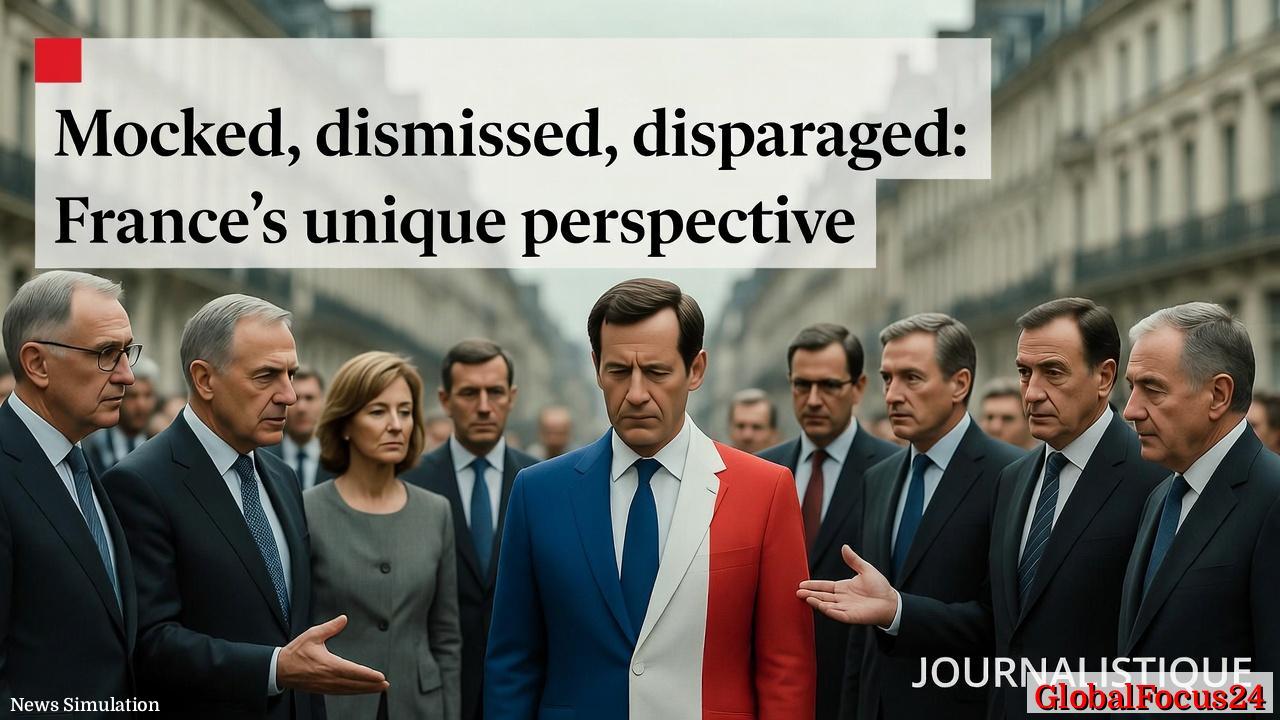
France’s Enduring Role as Europe’s Independent Voice
For centuries, France has stood apart in world affairs—not by isolation, but by willful independence. The country’s insistence on thinking differently, even when it provokes irritation or mockery, has shaped not only its national identity but also the European debate itself. In an era when rapid consensus often takes precedence over reflection, France continues to stand as Europe’s contrarian conscience, a nation unafraid to challenge prevailing assumptions.
A Tradition of Intellectual Independence
France’s reputation for dissent dates back to the Enlightenment, when thinkers like Voltaire, Rousseau, and Montesquieu transformed the philosophical foundation of Western politics and society. Later, the French Revolution of 1789 broke with centuries of monarchy and introduced radical ideas of liberty, equality, and fraternity—principles that continue to echo across the globe.
Throughout history, French leaders and intellectuals have approached international relations with a blend of conviction and skepticism. From Charles de Gaulle’s refusal to fully align with NATO’s military command to President Jacques Chirac’s opposition to the 2003 Iraq War, France has often found itself at odds with allies while arguing from a deeply rooted belief in national sovereignty and multilateral diplomacy.
While critics abroad may have viewed such stances as arrogance or obstructionism, within France they are seen as expressions of political honesty and moral clarity—a determination to act not as a follower, but as a guardian of principle.
The Economic and Diplomatic Balancing Act
France’s independent thinking extends beyond politics into economics. As one of the core members of the European Union, it has balanced a strong national welfare model with the pressures of global market liberalization. The French economy, valued at nearly three trillion euros, remains one of the largest in Europe and a cornerstone of the eurozone.
Unlike some of its neighbors, France has consistently defended state intervention as a stabilizing force. It views public investment not as a hindrance but as a catalyst for innovation, particularly in sectors such as energy transition, aerospace, and high-speed rail. The recent acceleration of France’s nuclear and renewable energy agenda illustrates the country’s preference for long-term planning over short-term political gain.
This approach has not always won favor in European markets. France’s insistence on maintaining agricultural protections through the Common Agricultural Policy (CAP) often frustrates northern European states advocating for leaner budgets and free-market reforms. Yet, the French agricultural lobby—both powerful and symbolic—represents the enduring political importance of rural France, where questions of national food security intersect with cultural heritage.
Standing Apart in European Integration
France’s complex relationship with the European Union is one of ambivalence and leadership intertwined. It was a founder of the postwar European project, advocating for unity as a means to secure peace and prosperity. The Élysée Treaty of 1963, signed between France and Germany, cemented a partnership that remains central to the EU’s functioning.
However, French skepticism toward deeper integration persists. While Germany often champions fiscal discipline and policy orthodoxy, France tends to see the EU as a political project first and an economic instrument second. This philosophical divide continues to shape debates over issues like shared defense, industrial policy, and the green transition.
France’s recent calls for "strategic autonomy" within Europe—particularly in defense and technology—reflect an effort to balance transatlantic cooperation with the goal of European sovereignty. This stance resonates in a continent increasingly aware of its reliance on external powers for energy, technology, and security.
Historical Echoes of Defiance
France’s refusal to conform has earned it both respect and resentment throughout history. In the postwar period, Paris charted its own diplomatic path, withdrawing from NATO’s integrated command in 1966 under de Gaulle while maintaining alliance membership. The move, controversial at the time, symbolized France’s insistence on an independent nuclear deterrent and a distinct global voice.
In later decades, French diplomacy continued to produce moments of principled resistance: opposition to the American-led invasion of Iraq, early warnings about the limits of globalization, and persistent advocacy for cultural exception in trade agreements. These positions, often derided in real time, appear in retrospect as prescient assessments of long-term global trends.
Even when its views prove unpopular, France’s commitment to intellectual independence has forced allies and rivals alike to confront difficult questions—about sovereignty, ethics, and the balance of power in a multipolar world.
The Global Influence of French Thought
Beyond policy, France’s influence endures through the export of its language, culture, and ideas. French diplomacy has long been inseparable from its intellectual life, producing philosophers, economists, and public thinkers whose work shapes debates from Brussels to Beijing.
In international organizations, French diplomats remain highly active, often pushing for environmental protections, social justice, and the preservation of linguistic diversity. France’s role in promoting the Paris Agreement on climate change in 2015 exemplifies its ability to bridge global divides. The accord, signed in the French capital, was a triumph of multilateral negotiation and strategic patience—a hallmark of French diplomacy.
The nation’s strong network of alliances across Africa, the Middle East, and the Indo-Pacific further demonstrates how France’s independent worldview has global reach. While its approach sometimes invites accusations of post-colonial paternalism, others see in it a structured attempt to preserve regional stability and foster development partnerships rooted in mutual benefit.
Cultural Distinctiveness and National Identity
Much of France’s global distinctiveness stems from its rigorous defense of cultural identity. French policymakers have tirelessly opposed what they perceive as the homogenization of the world by dominant cultural forces. Paris has maintained quotas for French-language media, supported independent cinema, and invested heavily in national arts institutions.
While some see these measures as protectionist, they are central to France’s belief that culture underpins sovereignty just as much as defense or economic policy. This conviction has extended into digital regulation, where France is at the forefront of European efforts to hold global tech giants accountable for content moderation and data transparency.
European Comparisons and Future Challenges
When compared with its European peers, France’s approach to national and continental policy looks unusually assertive. Where Germany tends toward economic caution and consensus-building, France often opts for political leadership and strategic symbolism. Southern European economies like Italy and Spain may share France’s social priorities but lack its institutional influence within EU circles.
The debate over energy has further underscored France’s distinctiveness. As Germany dismantled its nuclear sector, France doubled down on atomic energy as a bridge to greener technology. While this decision was criticized at the time, the current energy realities in Europe have prompted many nations to reconsider nuclear investment—a validation, in hindsight, of France’s strategy.
However, domestic challenges remain. Economic inequality, urban unrest, and the pressures of immigration continue to test France’s ability to embody unity while projecting confidence abroad. The balance between social protection and global competitiveness remains delicate, particularly as automation and climate change reshape Europe’s labor markets.
The Irritating Sense That France Was Right
For decades, fellow Europeans have rolled their eyes at what they perceive as France’s stubborn exceptionalism—its lectures on policy, its critiques of globalization, its insistence on national pride. Yet, recent years have seen a subtle shift in perception. As the geopolitical order becomes increasingly uncertain, more of Europe finds itself aligning, however reluctantly, with the French perspective: the need for strategic autonomy, sustainable industry, and moral clarity in diplomacy.
France’s way of thinking—once dismissed as inflexible—appears, in many respects, to have anticipated the dilemmas now confronting the continent. Whether in calls for a stronger European defense, balanced relations with major powers, or sustainable economic policies, the French instinct to question consensus seems less an act of vanity and more an assertion of long-term vision.
Conclusion: The Enduring Power of Contradiction
France’s defining characteristic on the world stage is not mere contrariness, but conviction. The tension between its universal ideals and pragmatic interests has produced a foreign policy both maddening and admirable. In an age when global politics often rewards conformity, France’s willingness to stand apart ensures that Europe retains a voice capable of dissent—and, at times, of being right when others preferred to remain silent.
As economic, environmental, and security challenges mount, France’s centuries-old habit of questioning conventional wisdom may again prove indispensable. Whether its critics acknowledge it or not, Europe still needs France’s stubborn belief in thought, principle, and the power of saying no.