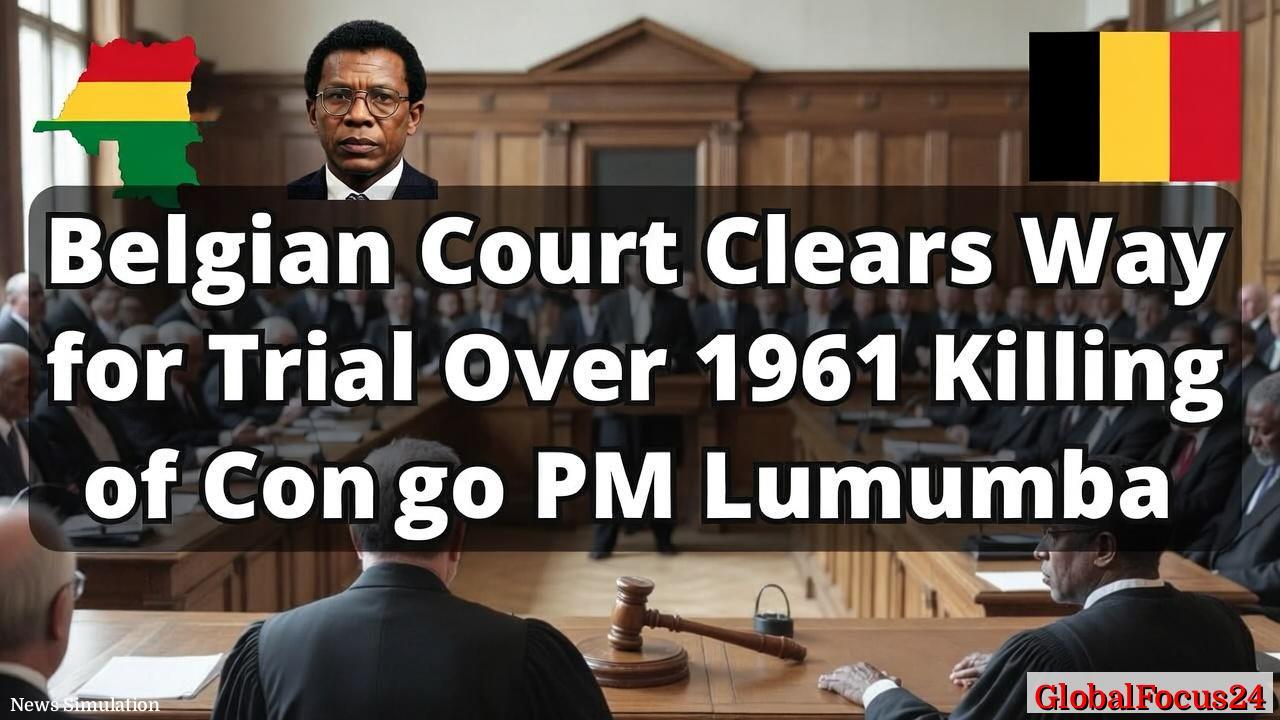
Belgian Court Rules Former Diplomat Can Stand Trial Over Lumumba Killing
A Belgian court has ruled that a former diplomat can stand trial in connection with the 1961 killing of Patrice Lumumba, Congo’s first prime minister after independence. The decision, reached after years of legal wrangling, marks a significant moment in the ongoing reckoning with colonial-era crimes and their lingering legacies. Etienne Davignon, now 93, faces accusations of involvement in the unlawful detention and transfer of Lumumba, as well as his degrading treatment. Davignon was a trainee diplomat at the time and later rose to high office, including serving as vice-president of the European Commission. He is the only surviving member among 10 Belgians named in the criminal case filed by Lumumba’s family in 2011.
Historical Context: From Independence to a Crisis of Legacies
Lumumba’s rise and fall sits at a hinge in African history. Congo gained independence from Belgium in June 1960, a moment celebrated by many as the dawn of self-determination. Lumumba, a charismatic and principled advocate for national sovereignty, quickly emerged as a leading voice against neocolonial influence and for a unified Congo that would chart its own course in a world of Cold War pressures. His tenure, however, was brief and turbulent. Within months of independence, Congo faced internal divisions, regional secessionist movements, and mounting international scrutiny about the country’s future.
In September 1960, a coup toppled Lumumba, and he was captured two months later. By January 1961, Lumumba had been executed, a killing carried out with Belgian support and influence, and his body dissolved in acid. The episode became a stark emblem of post-colonial violence and the ambivalent, often coercive, ties that characterized some Western powers’ involvement in Africa during the era. The episode also prompted a long-running debate about accountability, complicity, and the moral responsibilities of former colonial metropoles.
The decision to extradite or prosecute individuals connected to Lumumba’s death has often collided with questions of jurisdiction, state cooperation, and the limits of legal reckoning across decades. For decades, official apologies and admissions emerged in various forms, including Belgium’s acknowledgment of its role and expressions of regret to Lumumba’s family and to the Democratic Republic of Congo. The courtroom process, however, signals a shift from moral or symbolic gestures toward formal legal accountability, even as the defendants’ ages and the passage of time complicate proceedings.
Legal Pathways and Procedures: The Case and Its Implications
Belgium’s legal system has navigated a complicated path to bring accountability for an event rooted in the early 1960s, well before many contemporary international human-rights statutes were fully developed. The decision to allow a trial rests on a combination of criminal law principles, procedural rules, and the availability of evidence that can withstand modern standards of due process. The prosecution has argued that Davignon, as a participant in the events surrounding Lumumba’s detention and subsequent transfer, bears responsibility for actions that, in their view, violated Lumumba’s rights and his person.
A key challenge in cases of this nature is establishing a direct link between individual actions and the outcome, particularly when the alleged misconduct occurred decades ago and involved state authorities operating within a broader geopolitical context. The court’s ruling to proceed to trial means that judges found sufficient grounds to demonstrate a plausible connection between the accused and the alleged crimes, or at least the possibility that state actors were complicit in wrongdoing. The process will involve witness testimony, documentary evidence, and expert analyses designed to reconstruct events with as much precision as possible given the historical distance.
Implications for Belgium: Accountability and National Conversation
Belgian authorities have long wrestled with how to address past wrongs tied to colonial-era actions. The Lumumba case is one of the more high-profile manifestations of that reckoning. Public reaction to the court’s decision has been varied, reflecting a spectrum of views on how to confront history. For many Congolese and others who view colonial legacies as ongoing sources of inequality, the trial represents a broader demand for accountability and transparency in how nations reckon with past conduct. Lumumba’s family has framed the decision as a step toward closure, though they acknowledge that the legal process will be lengthy and may encounter further appeals.
The case also intersects with broader European debates about historical memory, transitional justice, and the responsibilities of states for actions taken by their diplomats and agents abroad. Critics may argue about the feasibility of pursuing justice across decades, while supporters emphasize the value of formal accountability as a safeguard against repeating historical injustices. The ruling could influence how other jurisdictions approach cases with similar historical roots, particularly when state actors or institutions are implicated in grave violations.
Regional Comparisons: How Other Jurisdictions Handle Historic Crimes
Europe has witnessed a range of approaches to historic crimes tied to colonialism, imperialism, or state-sponsored violence. In some instances, prosecutors have pursued legal avenues long after the events, invoking universal jurisdiction or other legal mechanisms that permit prosecutions for grave crimes regardless of where they occurred. In other contexts, legal systems have faced questions about statute of limitations, evidentiary standards, and the political will to pursue aging defendants.
In Africa, many post-colonial states have pursued truth-telling processes, national commissions, or international mechanisms to address the legacy of colonial rule and the violence associated with it. The Lumumba case presents a confluence of these approaches: it hinges on criminal accountability within a European legal framework while resonating with broader regional memory and the moral imperative to address historical injustices.
Economic Impact and Public Perception: Beyond the Courtroom
While this case centers on historical accountability, it inevitably interacts with economic and social dimensions. Belgium’s international reputation and its role as a hub for diplomacy, finance, and multinational corporations are intertwined with its willingness to confront its colonial past. The legal process can influence perceptions of regulatory and governance standards, affecting foreign investment considerations and Belgium’s relationships with the Democratic Republic of Congo and neighboring regions.
Public perception has also been shaped by competing narratives about history. For some, the court’s decision reinforces the importance of facing uncomfortable truths about the past, potentially fostering a climate of transparency that can support long-term social cohesion. For others, the protracted nature of the case may provoke debates about whether justice is being pursued in a timely and proportionate manner, especially given the advanced ages of the defendants.
Lumumba’s Enduring Legacy: Political and Cultural Repercussions
Patrice Lumumba’s legacy endures in African political thought and in the broader discourse on self-determination and anti-colonial struggle. Lumumba’s insistence on national sovereignty and his denunciation of arrangements that he viewed as neocolonial or exploitative resonated with many liberation movements around the world. His assassination became a symbol of the perils faced when external power dynamics intersect with fragile post-colonial states.
The 1961 execution of Lumumba, and the ensuing revelations about external involvement, helped shape international discussions about intervention, sovereignty, and accountability. In Congo, Lumumba’s memory continues to influence debates about governance, citizenship, and the distribution of power in a country with vast natural resources and complex regional dynamics. The court’s decision to advance the case against Davignon sits within this larger narrative, contributing to a sense that history is not merely a distant memory but a living issue that shapes contemporary relationships among nations.
Background: Lumumba’s Early Life, Independence, and Aftermath
Lumumba’s journey began in the context of Congo’s struggle for independence from Belgian rule. He rose to political prominence as a unifying figure who mobilized broad segments of Congolese society in pursuit of equality, dignity, and political agency. His leadership coincided with a volatile period marked by Cold War interference, regional factionalism, and struggles over control of the country’s rich mineral resources.
Independence Day speech, delivered before King Baudouin and other Belgian dignitaries, showcased Lumumba’s resolve to redefine Congo’s relationship with its former colonial ruler. He highlighted the enduring legacy of oppression and called for a break from humiliating forms of governance, signaling a clear demand for a new political order grounded in national sovereignty. The subsequent coup and his capture underscored the fragility of post-colonial transitions when external and internal forces converge with governance challenges.
The aftermath left a complicated legacy, including ongoing questions about the degree to which Belgium bears responsibility for actions that occurred under its historical stewardship. Belgium’s formal apologies and efforts to engage with Lumumba’s family reflect a broader attempt to reconcile with the past, even as questions about accountability persist in various jurisdictions and among different constituencies.
The Legal Proceedings Ahead: What to Expect
The current ruling to proceed to trial does not determine guilt or innocence; rather, it sets the stage for the judicial process to determine whether the charges merit a full examination in court. The defense will have opportunities to contest evidence, challenge procedures, and present counterarguments. Observers will be watching for how the courtroom handles issues such as the reliability of historical records, the interpretation of actions within the geopolitical context of the era, and the standard of proof required for criminal liability in a case steeped in decades of historical ambiguity.
An appeals process is typical in such matters, and the ruling notes that the decision remains subject to appeal. This means that while the path to trial has been opened, the case may still navigate further legal hurdles before any final adjudication. The timeline for such proceedings is often measured in years rather than months, given the complexity and the age of key participants, as well as the volume of documentary material and witness testimony that must be examined.
Public Reaction and Cultural Significance
Public sentiment around the case reflects a broad interest in how societies address painful chapters from their past. For some communities, the pursuit of legal accountability is a hallmark of a mature justice system that rejects impunity. For others, the memory of Lumumba’s era carries an emotional weight that makes any courtroom proceedings deeply personal. Media coverage, civil society organizations, and academic researchers will likely follow developments closely, analyzing the case’s implications for transitional justice, historical memory, and bilateral relations between Belgium and the Democratic Republic of Congo.
Regional reactions have included calls for continued dialogue and cooperation between European and African partners to address the legacies of colonialism. Beyond legal accountability, there is also a broader push for reparations, educational initiatives, and policy reforms that acknowledge past harms while aiming to prevent their recurrence in the future. The court’s decision, therefore, sits at the intersection of law, history, and the evolving ethics of state responsibility.
Broader Lessons for the Global Community
The Lumumba case offers several lessons for the global community. First, it underscores that accountability for historical abuses can cross generations, particularly when state actors are implicated in violations with lasting consequences. Second, it demonstrates how legal frameworks evolve to confront long-standing grievances, drawing on archival evidence, international norms, and evolving standards of due process. Third, it highlights the importance of transparent investigations and accessible documentation in enabling societies to confront difficult histories with empathy and rigor.
Conclusion: A Moment of Legal and Historical Reckoning
As the Belgian court moves toward trial, the case stands as a substantive milestone in the ongoing effort to address the violence surrounding Lumumba’s death and the broader question of colonial accountability. The decision reflects a commitment to judicial processes that can illuminate past actions, provide a measure of closure for affected communities, and contribute to informed conversations about how nations interpret and respond to their histories. While the path ahead remains uncertain, the courtroom’s role in bearing witness to history—through evidence, testimony, and legal argument—remains a potent reminder that the pursuit of truth and accountability endures, even when it traverses decades.
Mehdi Lumumba, Lumumba’s grandson, welcomed the Brussels court’s decision, saying the country is finally confronting its history. Those words underscore a sense of closure and accountability that resonates beyond the courtroom. The ruling’s implications will unfold over time, and observers will be keenly watching how the legal process unfolds, how evidence is weighed, and how the broader public negotiates the demands of justice, memory, and reconciliation in a world where the past remains inseparable from the present.