Football Surpasses Baseball as Favorite Sport in America
A Changing Tide in American Sports Culture
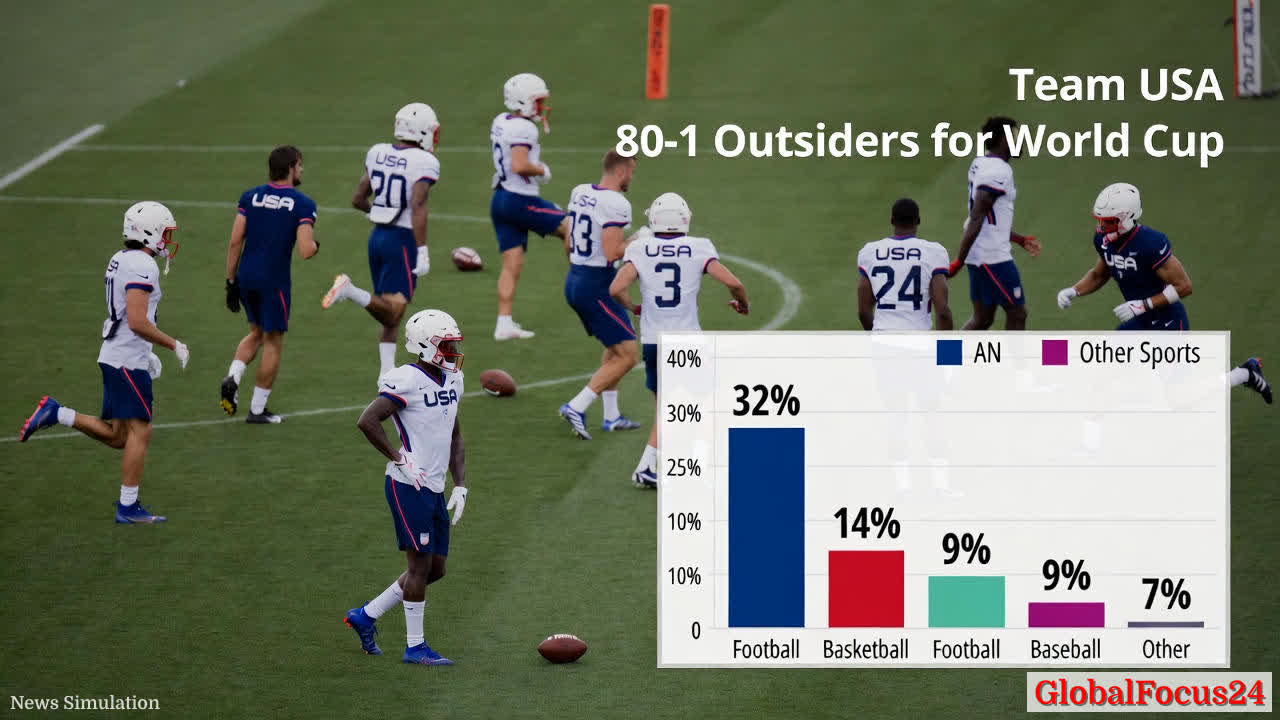
In a striking shift that redefines the American sports landscape, football has officially surpassed baseball as the nation’s favorite sport, marking a historic transformation in fan preferences. According to data from the final quarter of 2024, 32% of Americans now identify football as their top sport, followed by basketball at 14%. Football — known globally as soccer — has climbed to third place with 9%, narrowly overtaking baseball, which trails at 7%. Rounding out the list, ice hockey claims 4%, tennis 3%, and boxing, mixed martial arts, and golf each account for 2–3%.
While American football has long dominated the domestic sports scene, the growing popularity of soccer signals a fundamental change in audience behavior, driven by globalization, shifting demographics, and the rapidly expanding influence of international media.
The Global Game Finds an American Home
The emergence of the United States as a powerhouse consumer market for international football underscores a remarkable evolution. Once considered a niche interest confined to immigrant communities and youth leagues, soccer now commands a central position in the American sports conversation.
The upcoming 2026 FIFA World Cup — which the U.S. will co-host with Mexico and Canada — has only accelerated enthusiasm. For many analysts, the tournament represents a culmination of decades of steady growth rather than an overnight phenomenon. The United States last hosted the World Cup in 1994, a landmark event that introduced millions of Americans to the sport and left a lasting legacy through the establishment of Major League Soccer (MLS) in 1996. What began as an ambitious project with ten teams has evolved into a thriving league of 29 franchises, boasting world-class stadiums, international stars, and steadily increasing TV ratings.
The Financial Footprint of a Growing Industry
Soccer’s commercial footprint in America now rivals that of more established sports. Media rights for international football competitions, including the English Premier League, UEFA Champions League, and La Liga, have surged in value. U.S. broadcasters such as NBC, CBS, ESPN, and streaming platforms have invested billions to secure exclusive coverage, reflecting both audience demand and a long-term belief in the sport’s potential.
Sponsorship deals and advertising revenue have risen alongside broadcast investments. Global brands view soccer’s diversified audience and international reach as a gateway to younger, multicultural consumers. Merchandise sales for top European clubs, youth enrollment in local leagues, and attendance at friendly matches on U.S. soil all reveal an unmistakable trend: soccer is no longer a foreign import but a deeply rooted element of American popular culture.
Demographics and Digital Engagement
The demographic dynamics behind soccer’s rise are as revealing as the numbers themselves. Younger viewers — particularly those under 35 — demonstrate a stronger attachment to international football than to traditional American staples like baseball or golf. The sport’s fast pace, global resonance, and cultural inclusivity appeal to a generation raised in an era of streaming, social media highlights, and global connectivity.
Digital platforms such as TikTok, X (formerly Twitter), and YouTube have amplified football’s reach. Clips of viral goals, player celebrations, and behind-the-scenes content connect fans directly with global stars such as Kylian Mbappé, Lionel Messi, and Erling Haaland. The arrival of Messi in Major League Soccer in 2023 served as a watershed moment, boosting ticket sales, broadcast ratings, and even tourism in host cities.
Baseball’s Waning Dominance
Baseball’s decline in American cultural dominance is not abrupt but gradual. For much of the 20th century, baseball was synonymous with the national identity — from Babe Ruth’s legendary home runs to Jackie Robinson’s breaking of the color barrier. Yet in recent decades, the sport has struggled to keep pace with shifting viewing habits and competition from faster, more globalized entertainment options.
Games that once occupied primetime viewing slots now contend with fragmented attention spans and younger audiences drawn to shorter formats and streaming-friendly content. Major League Baseball has taken steps to modernize its appeal — implementing pitch clocks, reducing downtime, and enhancing digital engagement — but recovering the nostalgic hold it once had may be a taller order.
Basketball’s Consistent Appeal
Basketball remains a steady favorite, holding a strong second place with 14% of Americans citing it as their top sport. The NBA’s success in global marketing, diverse player representation, and integration with cultural movements such as fashion and music ensures its continued relevance. However, unlike soccer, basketball’s growth seems to have reached a plateau rather than an acceleration.
The NBA’s international footprint, particularly in China, Europe, and Africa, parallels soccer’s global ethos. Yet domestically, basketball competes for attention across overlapping seasons and fragmented entertainment ecosystems, where viewer loyalty is often driven by individual player fandom rather than team allegiance.
Regional Growth and Cultural Integration
While soccer’s presence is most pronounced in urban centers and among coastal states, its roots are spreading nationwide. States like Texas, Florida, and California — traditional strongholds of American football and baseball — are witnessing significant increases in soccer participation at the youth and high school levels. Latin American, African, and Asian immigrant communities have played a pivotal role in this transformation, bringing with them deep football traditions and a sense of cultural passion that resonates with broader audiences.
In the Midwest and Pacific Northwest, MLS clubs such as Sporting Kansas City, Seattle Sounders, and Portland Timbers have cultivated intense fan bases comparable to European support cultures, complete with chanting sections, regional rivalries, and year-round community engagement.
Economic Impact and Investment Trends
The economic effects of soccer’s ascent extend beyond television ratings and ticket sales. New stadium projects in cities like Miami, Nashville, and St. Louis have generated thousands of jobs and revitalized urban districts. The sport’s growth has also spurred infrastructure investment, from training academies to youth development facilities, signaling long-term confidence in its domestic viability.
Tech companies, private equity firms, and global investors have all entered the soccer marketplace. Club ownership stakes from American billionaires have multiplied, with investments in English, Italian, and Spanish clubs seen as both financial ventures and strategic branding plays. This cross-pollination underscores the reciprocal relationship between American capital and global football culture.
Historical Context: From 1994 to 2026
The transformation since the 1994 World Cup is nothing short of remarkable. At the time, the U.S. Men’s National Team had only just returned to the tournament after a forty-year absence. The event drew record crowds but left uncertain predictions about long-term impact. Three decades later, America’s football infrastructure is more robust than ever.
The current landscape features established leagues for both men and women, mainstream television coverage, and a pipeline of young talent emerging from academies aligned with top European clubs. The women’s national team, four-time World Cup champions, has played a crucial role in raising the sport’s profile and inspiring new generations of both male and female players.
The Road Ahead
As the 2026 World Cup approaches, expectations are high. Though Team USA faces long odds of 80–1 to claim the title, the tournament’s potential to galvanize interest and drive further economic growth is undeniable. Organizers anticipate record-setting attendance and viewership, with projections that the event could become the most-watched sporting spectacle in North American history.
Beyond the spectacle, the World Cup’s legacy is likely to shape the trajectory of American sports culture for decades to come. With football now entrenched as a core pillar of fan identity, the sport’s rise represents more than a passing trend — it signals the maturation of a truly global pastime within the American heartland.
Conclusion: A New Era of American Fandom
The ascent of football to overtake baseball as America’s favored sport marks a watershed moment in the nation’s cultural evolution. It reflects a country that is increasingly diverse, globally connected, and receptive to new forms of shared experience. As media rights expand, fan engagement deepens, and future tournaments approach, one fact stands clear: football’s future in the United States is no longer on the horizon — it has already arrived.