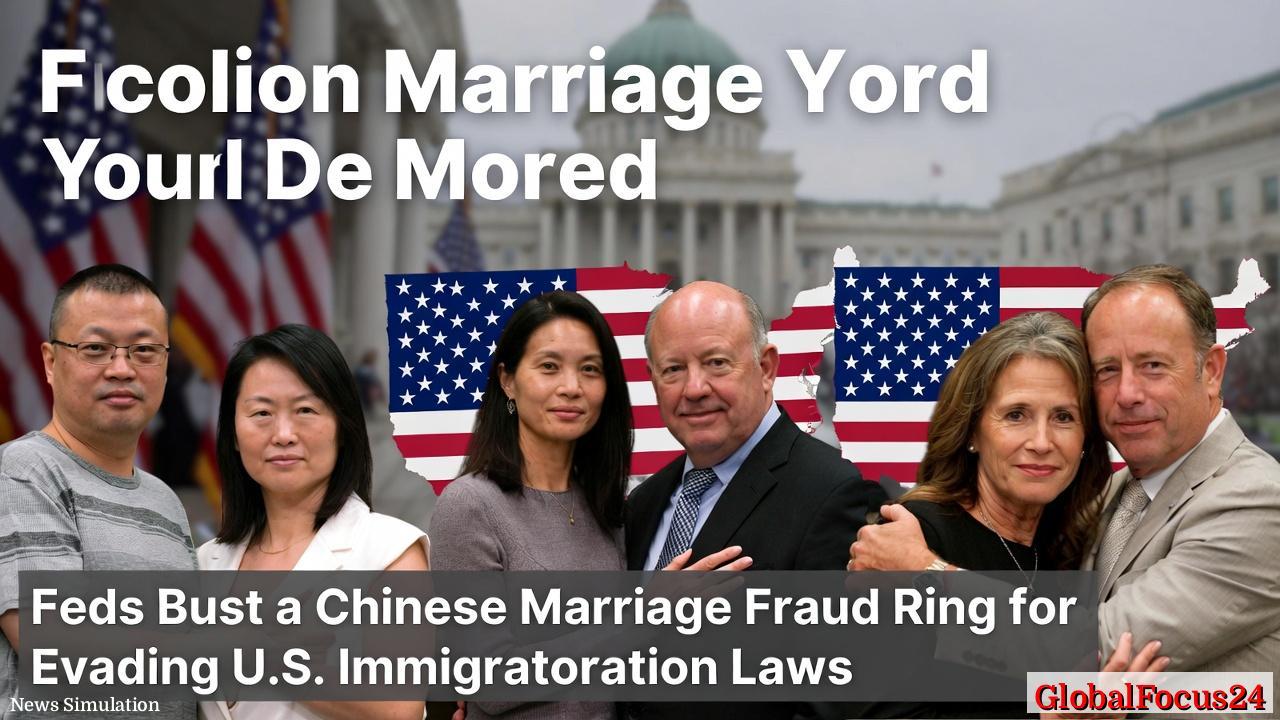
Feds Bust Chinese Marriage Fraud Ring Targeting U.S. Immigration Paths
A coordinated federal operation has dismantled a marriage fraud ring that officials say sought to exploit U.S. immigration rules by arranging sham marriages between Chinese nationals and American citizens to secure lawful permanent residency and, in some cases, citizenship. Eleven individuals of Chinese origin were indicted in the Middle District of Florida, marking another high-profile case in a pattern of enforcement efforts aimed at curbing marriage-based immigration fraud across the United States.
A Complex Web of Fraud According to the U.S. Attorney’s Office, the defendants operated a structured scheme designed to mimic legitimate marriages while functioning as a payment-driven enterprise. The arrangements typically involved U.S. citizen spouses, sometimes members of the military, who agreed to enter into marriages with Chinese nationals for monetary compensation. The scheme unfolded in multiple states, including Florida, New York, Connecticut, and Nevada, illustrating the geographic breadth that fraud rings can achieve through travel and relocation.
Evidence presented by prosecutors portrays a deliberate sequence: an upfront payment to the U.S. citizen spouse at the time of marriage, a second installment upon the successful grant of immigration status, and a final payment following divorce. To give the appearance of authentic unions, the ring fabricated intimate details and staged photographs intended to satisfy immigration authorities reviewing the legitimacy of the relationships. In reality, relationships were transactional, engineered to manipulate the immigration process rather than reflect genuine personal bonds.
Historical Context and Enforcement Evolution Marriage-based pathways to lawful permanent residency have long been a route by which immigrants have pursued legal status in the United States. In many periods, such arrangements were subject to rigorous scrutiny balanced against the recognition that real relationships can form within these unions. Over the past decade, however, federal enforcement agencies have intensified efforts to detect and disrupt fraudulent schemes. Prosecutors and investigators have highlighted patterns such as irregularities in cohabitation evidence, inconsistent documentation, and abnormalities in the lifecycle of the marriage—such as rapid filings or unusual marriage or divorce timelines—as indicators of potential fraud.
Policy shifts in recent years have further shaped the environment. The administration in office previously signaled a willingness to recalibrate how marriage-based applications are adjudicated, emphasizing heightened verification and more stringent review standards. These shifts arrived alongside broader immigration policy discussions at the federal level, where officials have sought to curb abuses that can undermine the integrity of the immigration system and public trust in the process.
Economic and Regional Impact Fraud schemes of this kind have ripple effects beyond the immediate participants. When authorities crack down on fraudulent marriages, resources shift toward investigative and prosecutorial activities, with broader implications for consular processing, immigration attorneys, and communities that rely on legitimate avenues for family reunification. For individuals and families pursuing lawful status through legitimate channels, increased scrutiny can translate into longer processing times and enhanced documentation requirements, though these measures aim to reduce fraud and protect national security and civil processes.
Regional comparisons help illuminate how such schemes adapt to different enforcement landscapes. States with sizable immigrant populations and active immigration communities often see heightened attention from local and federal officials. Florida, New York, Connecticut, and Nevada, for example, represent diverse contexts—ranging from large urban centers with dense immigrant networks to regions where cross-state travel can facilitate the transport and staging of fraudulent activity. In all these locales, the central dynamic remains the same: individuals seeking to navigate the system through means that violate established rules, while enforcement adapts to detect and deter those efforts.
Public Reaction and Community Implications Public reaction to enforcement actions against marriage fraud rings is typically mixed. Supporters emphasize the importance of safeguarding immigration integrity and ensuring that benefits are reserved for legitimate applicants who contribute to American society. Critics, meanwhile, caution against conflating fraud with the normal, sometimes complex, personal circumstances of international couples who pursue lawful status through marriage. In this case, law enforcement messaging underscores the seriousness with which such schemes are treated, highlighting the disruption they cause to the immigration system and the potential for abuse of public resources.
Legal landscape and implications for applicants The case underscores the ongoing tension between safeguarding the integrity of immigration pathways and preserving fair, transparent processes for those who follow the rules. While marriage to a U.S. citizen can accelerate certain aspects of the immigration timeline, it does not guarantee permanent residency or citizenship. Authorities consistently remind applicants that the adjudication process hinges on genuine intent, shared life experiences, and verifiable evidence of a bona fide relationship. Scrutiny has grown, with agencies prioritizing corroborating documentation, consistent cohabitation records, and credible interviews to validate the authenticity of claimed marriages.
Historical precedents show that when fraudulent schemes are exposed, the consequences for participants can be severe. Indictments, criminal charges, and potential penalties are accompanied by years of increased scrutiny for future immigration applications. For communities and families navigating legitimate pathways, the incident reinforces the value of complete transparency and due diligence in documentation and testimony.
The Path Forward for Policy and Practice Experts in immigration policy and law anticipate continued emphasis on rigorous evaluation of marriage-based petitions. Several practical steps are likely to shape the near-term landscape:
- Enhanced verification protocols: Agencies will increasingly rely on cross-referenced data, including civil records, employment histories, and corroborating documentation from a range of sources, to assess the legitimacy of proposed marriages.
- Targeted enforcement: Law enforcement will continue to pursue patterns of staged marriages, payment structures, and other red flags that indicate non-genuine relationships.
- Public awareness and education: Outreach efforts aim to inform prospective applicants about legitimate processes, common fraud schemes, and the risks of participating in illicit arrangements.
- Procedural adjustments: The adjudication process may evolve to incorporate more stringent interviews, longer observation periods, and adaptive case management to detect fraud without imposing undue burdens on legitimate applicants.
Broader regional comparisons highlight that fraud rings do not conform to a single blueprint. Each territorial context presents unique challenges and opportunities for enforcement. In major metropolitan hubs, the convergence of diverse populations and complex travel itineraries creates both opportunities for legitimate immigration activity and vulnerabilities that fraud networks may exploit. The ongoing challenge for policymakers and practitioners is to maintain rigorous scrutiny while preserving timely, humane processing for people seeking to build a life in the United States.
Conclusion The dismantling of this marriage fraud ring reflects a broader commitment to maintaining the integrity of the U.S. immigration system. As authorities continue to refine investigative methods and policy frameworks, the focus remains on distinguishing legitimate family reunification efforts from exploitative schemes that undermine public trust and the fairness of immigration procedures. For individuals pursuing lawful status through genuine marriages, the message is clear: transparency, verifiable documentation, and adherence to legal processes are essential. The landscape of marriage-based immigration will continue to evolve in response to enforcement priorities, judicial interpretations, and the changing dynamics of migration flows in the United States.