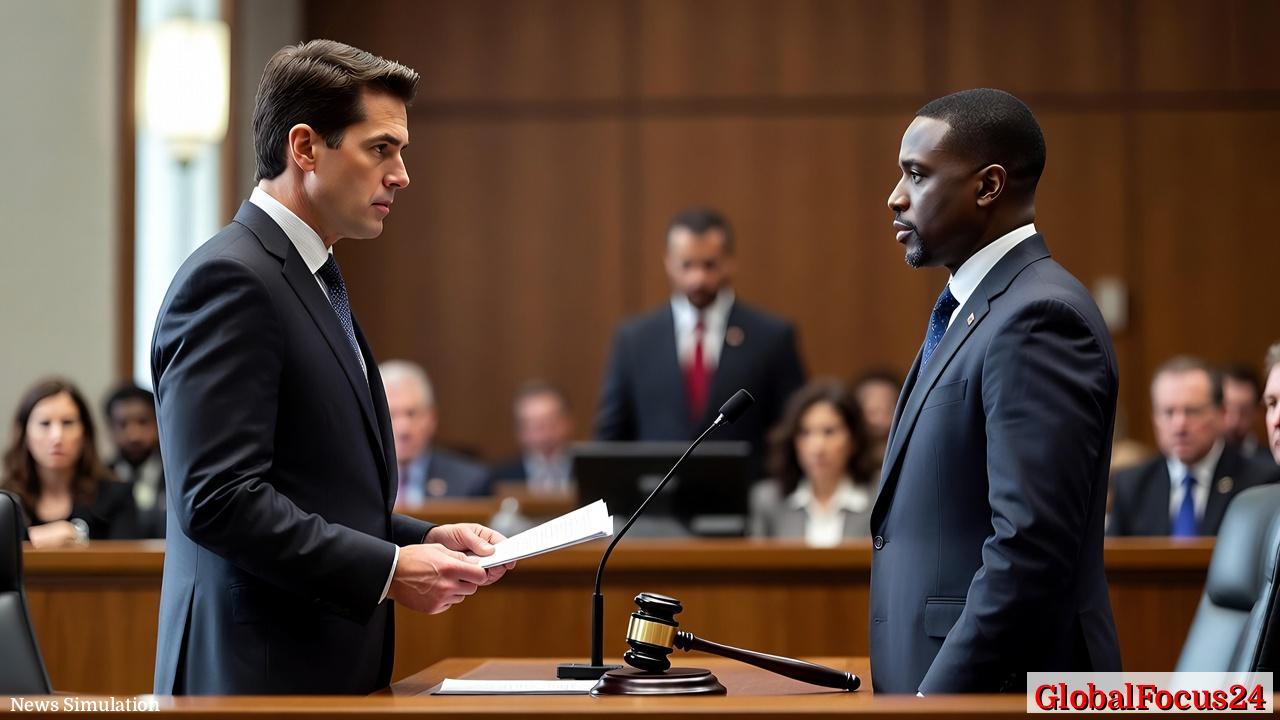
Federal Prosecutors Seek Dismissal of Charges Against Louisville Officers in Breonna Taylor Warrant Case
Federal Motion Marks Potential End to High-Profile Case
Federal prosecutors on Friday moved to dismiss charges against two former Louisville police officers accused of falsifying the warrant that led to the fatal 2020 raid on Breonna Taylor’s apartment, a case that reshaped national conversations around policing, justice, and systemic accountability.
The motion, filed in federal court, calls for all charges against former Detective Joshua Jaynes and former Sergeant Kyle Meany to be dropped “in the interest of justice,” following a detailed review of the evidence, according to court documents. The prosecutors’ decision casts new uncertainty over one of the most scrutinized law enforcement cases in modern American history—one that ignited global protests and forced police departments nationwide to reexamine their conduct.
A hearing on the dismissal request is scheduled for April 3, though the presiding judge has not indicated when a formal ruling will be made. The filing represents the latest turn in a six-year legal odyssey that has seen charges repeatedly reduced, dismissed, and reinterpreted in light of judicial rulings and shifting prosecutorial priorities.
Reversal Follows Legal Erosion of Case
Jaynes and Meany were accused of falsifying key details in the affidavit used to obtain the no-knock search warrant for Taylor’s home. The March 13, 2020 raid ended when officers burst through Taylor’s door and exchanged gunfire with her boyfriend, leaving the 26-year-old emergency medical technician dead.
While prosecutors initially charged the officers with federal civil rights violations and false statements, judges twice downgraded their offenses from felonies to misdemeanors, ruling that no evidence directly linked their actions to Taylor’s death. After the most recent ruling, federal prosecutors determined that continued pursuit of the case would not meet the standard of proof required for conviction.
Attorneys for both defendants welcomed the news. “We are elated with this development,” said Travis Lock, representing Jaynes. Meany’s lawyer, Michael Denbow, expressed gratitude, adding that his client “is looking forward to moving forward with his life.”
Breonna Taylor’s Killing and Its Legacy
Breonna Taylor’s death became emblematic of systemic problems within American policing, particularly in how no-knock warrants intersect with racial disparities and use-of-force policies. Her killing, alongside the murder of George Floyd in Minneapolis that same spring, catalyzed months of demonstrations nationwide calling for racial justice and police reform.
Taylor’s boyfriend, believing intruders were breaking in, fired a single shot that struck an officer. Police returned fire, hitting Taylor multiple times. No drugs were found in her apartment, and the suspect named in the warrant no longer lived there.
The city of Louisville later paid Taylor’s family a $12 million settlement and pledged to enact sweeping police reforms, including the permanent ban of no-knock warrants. These changes were among the earliest concrete policy shifts to emerge from the 2020 protest movement.
Federal Action and Political Divisions
Federal prosecutors under former President Joe Biden filed civil rights and falsification charges against several Louisville officers, aiming to hold them accountable at the federal level. However, the current Department of Justice under President Donald Trump’s administration has taken a markedly different stance, including a motion earlier this year supporting early release for Brett Hankison—the only officer convicted in federal court in connection to the raid.
Hankison received a sentence of two years and nine months in prison for blindly firing 10 bullets into Taylor’s apartment through covered windows. None of those shots struck anyone, but the court found his actions “reckless and unjustifiable.”
Civil rights advocates view the current prosecutorial reversals as an alarming retreat from the government’s earlier commitments. “This latest move underscores how fragile accountability remains in cases involving police use of force,” said Lonita Baker, co-counsel for Taylor’s family.
Family Reaction and Public Response
Taylor’s mother, Tamika Palmer, condemned the Department of Justice’s decision in an emotional statement. “Their phone call today informing me that charges against the police are being dropped while implying they have helped me is utterly disrespectful,” Palmer said. She added that it was the first direct contact with federal authorities since the change in administration.
U.S. Rep. Morgan McGarvey, who represents much of Louisville, echoed the family’s grief. “My heart is heavy for Breonna’s loved ones—this is not justice,” he said, calling the dismissal motion “an insult” to every citizen who demanded accountability in the wake of Taylor’s killing.
Across Louisville, reactions were mixed. Supporters of the decision largely argued that prolonged litigation had failed to yield new evidence and that the legal process should now close. Activists and civil rights organizations, however, rallied downtown Friday night, chanting Taylor’s name and carrying signs reading “Justice Delayed Is Justice Denied.”
Regional Context and National Comparison
The Breonna Taylor case joins a growing list of high-profile prosecutions involving alleged police misconduct that have faltered after years of investigation. Around the country, cases tied to police killings have faced similar challenges: balancing evidentiary thresholds, political pressures, and evolving public sentiment.
In Minneapolis, prosecutors successfully won convictions in the death of George Floyd, setting a rare national precedent for criminal accountability against law enforcement officers. In contrast, cases in cities such as Baton Rouge, Chicago, and Cleveland—where officers were acquitted or charges were dropped—highlight the enduring legal barriers to successful prosecution.
In Kentucky, where local grand juries initially declined to charge officers in Taylor’s death in 2020, the case remains a defining test of trust between law enforcement and the community. Observers note that while major legal reforms were introduced after Taylor’s killing, including statewide limits on no-knock warrants, the erosion of criminal cases against the officers involved sends a complex signal about justice in practice.
Economic and Institutional Fallout
Taylor’s death had economic and institutional consequences for Louisville. The $12 million settlement with her family was one of the largest police misconduct payouts in U.S. history. It prompted city leaders to reevaluate officer training, disciplinary oversight, and liability policies that affect municipal budgets and insurance costs.
The city also experienced a measurable economic slowdown in the months following the protests. Downtown businesses reported record losses amid civil unrest and pandemic-related closures. Local economists estimate that the combination of social unrest and reputational damage cost the city millions in lost tourism and convention revenue between 2020 and 2022.
Further, the case triggered widespread reform in how police departments nationwide manage warrant execution. Departments in Los Angeles, Chicago, and New York introduced or tightened requirements for supervisory approval, body-camera activation, and identification before forced entry—steps widely attributed to lessons drawn from Taylor’s killing.
Continuing Debate Over Accountability
Six years later, the Breonna Taylor case still resonates as a symbol of both progress and unfinished change. While her name became synonymous with calls for justice reform, the legal processes surrounding her death reveal the difficulty of translating moral outrage into lasting accountability.
Lawyers for Taylor’s family continue to argue that falsified information in the police warrant set off a chain of events that would otherwise never have occurred. “Breonna Taylor always deserved more than the scraps of justice she got,” attorneys Ben Crump and Lonita Baker said in a joint statement. “Now, even those may be further stripped away.”
As Louisville awaits the judge’s decision on the prosecutors’ motion, the city stands at another crossroads—between legal closure and moral reckoning. For many residents, the question remains not just whether justice will be served in this single case, but whether the institutions that failed Breonna Taylor will emerge reformed or unchanged.
Looking Ahead
The upcoming April 3 hearing could determine whether the final chapter in the federal prosecution of Taylor’s case is formally closed. Regardless of the outcome, the decision will add to the case’s complicated legacy: a tragedy that forced the nation to reckon with systemic inequities yet still leaves many questions unanswered.
For the community of Louisville, and for the country as a whole, Breonna Taylor’s name continues to echo as both a cry for justice and a reminder of how difficult that justice remains to achieve.