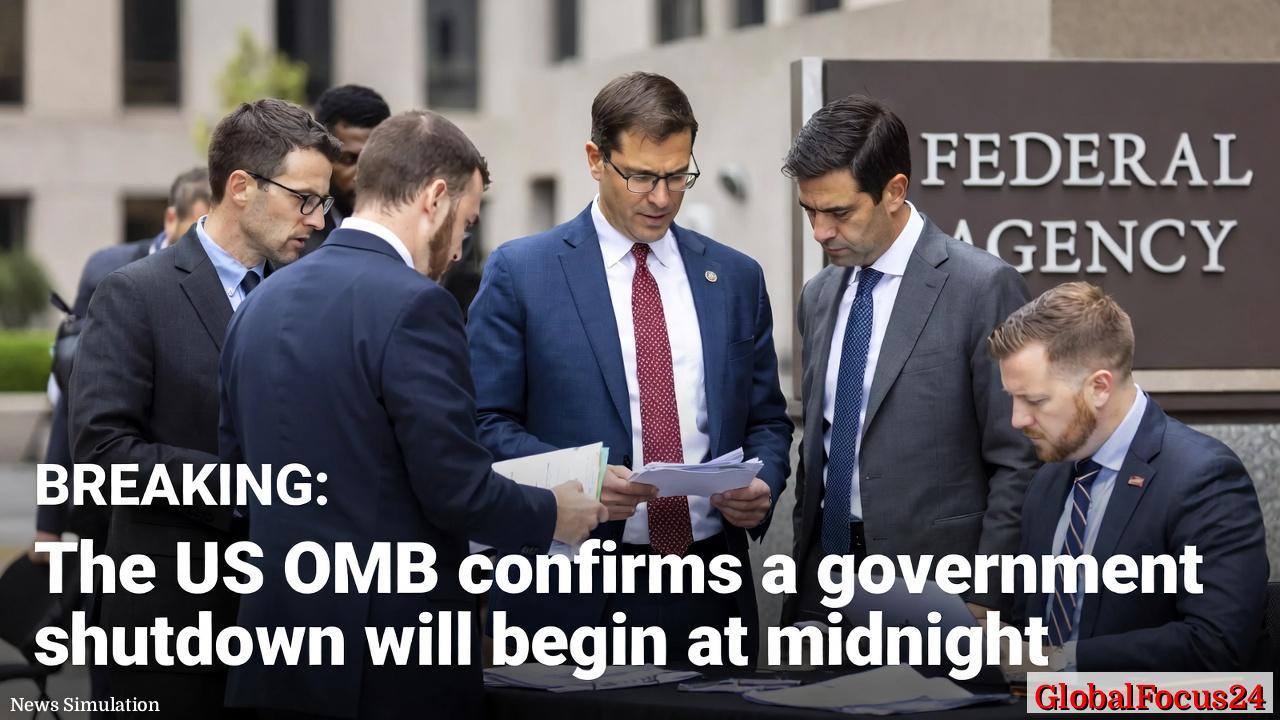
Federal Agencies Prepare for Orderly Shutdown Amid Expiring Appropriations
In a decisive move reflecting the perilous state of fiscal negotiations, the Office of Management and Budget issued a memorandum on January 30, 2026, directing federal agencies to prepare for an orderly shutdown as certain appropriations expire at 11:59 p.m. that night. The memorandum, signed by Director Russell T. Vought, outlines which divisions within Public Law 119-37—Division A of the Continuing Appropriations, Agriculture, Legislative Branch, Military Construction and Veterans Affairs, and Extensions Act, 2026—will lapse and how agencies should proceed in the event Congress cannot finalize funding for Fiscal Year 2026. The announcement marks a moment of heightened urgency for federal operations and the millions of Americans who rely on government services.
Historical Context: A Cycle of Stopgaps and Signals of Fiscal Strain
Shutdowns are not new in American governance, but their frequency and texture have evolved with changing political dynamics and budgetary mechanisms. The current situation follows a tradition of stopgap funding measures designed to avoid brief interruptions in government services while lawmakers negotiate longer-term appropriations. Historically, such stopgap acts have provided temporary stability, yet they also create financial uncertainty for federal agencies, contractors, and the public.
To understand the magnitude of this moment, it helps to recall how fiscal calendars and appropriation authorities work. Each fiscal year begins on October 1, and unless Congress passes a funding bill or a continuing resolution, agencies risk losing the ability to operate beyond the existing funding authority. In practice, agencies plan for potential lulls by implementing orderly shutdown procedures that preserve critical operations and maintain essential services. The January 30 memorandum explicitly directs agencies to activate those contingency plans if a funding gap persists past the deadline, underscoring the high stakes involved when legislative timelines miss their marks.
What Is Expiring and Why It Matters
The memorandum identifies the specific areas whose funding lapses if no new appropriations are enacted:
- Defense spending and related activities of the Department of War.
- Financial Services and General Government programs.
- Department of Homeland Security activities.
- Departments of Labor, Health and Human Services, and Education, and Related Agencies.
- National Security, Department of State, and Related Programs.
- Departments of Transportation, and Housing and Urban Development, and Related Agencies.
These are broad swaths of government activity, spanning national security, transportation infrastructure, social services, and public safety. When funding ceases, a spectrum of consequences could unfold—from paused grant programs and delayed regulatory approvals to furloughs for nonessential federal employees and interruption of non-emergency services. The memorandum directs agencies to prepare to split tasks into essential and nonessential functions, with critical safety, health, and national security operations prioritized.
Economic Impact: Ripple Effects Across Markets and Communities
The potential for a shutdown reverberates through the economy. While the precise consequences depend on the duration and scope of any lapse, several channels tend to bear the effects:
- Government contractors and payrolls: A prolonged funding gap can slow payments, disrupt contracts, and affect cash flow for vendors and service providers that rely on federal dollars. This can cascade into local communities that depend on federal projects for jobs and economic activity.
- Public services and consumer confidence: Delays in processing visas, benefits, and federal permits can affect households and businesses. Slower processing times for infrastructure grants or housing programs can delay private investment decisions and urban development plans.
- Financial markets and credit implications: Even the perception of policy uncertainty can influence interest rates, treasury yields, and investor sentiment. While a short shutdown may have modest market effects, extended uncertainty could alter risk pricing and liquidity in certain financial instruments.
- Regional dependencies: States and cities that rely heavily on federal funding for transportation, housing, and health programs may experience sharper local slowdowns. The memorandum’s reference to Transportation and Housing and Urban Development indicates a broad spectrum of regional effects, including potential impacts on infrastructure maintenance and housing subsidies.
- Government workforce and productivity: While essential personnel maintain critical functions, nonessential personnel may be furloughed. The resulting decrease in overall productivity can affect the pace of policy implementation, research, and public-facing services.
Regional Comparisons: Lessons from Past Shutdowns
Looking at prior episodes provides context for how different regions experience shutdown dynamics:
- Urban centers with significant federal project portfolios often see construction timelines stall and subcontractor schedules shift, creating local employment fluctuations even if payrolls remain partially funded for essential functions.
- Rural districts dependent on agriculture and disaster assistance can experience delays in subsidies, crop insurance processing, and disaster relief programs, which can ripple through local economies and supply chains.
- Border regions with DHS-related activities may face heightened service delays tied to immigration processing, customs operations, and security, influencing cross-border commerce and tourism.
- Regions with major defense installations may observe short-term environmental compliance and civilian workforce disruptions, while defense-related research labs may adjust timelines for grants and collaborations.
In this context, the January 30 memo signals a nationwide preparedness stance, but the regional watchwords are resilience and contingency management. Economic planners, state and local governments, and private sector partners will be watching for agency-specific guidance, potential backlogs, and any steps to minimize public disruption.
Operational Readiness: What Agencies Are Doing Now
The directive to prepare for an orderly shutdown includes several key operational steps:
- Communications and transparency: Agencies will inform employees and stakeholders about which services may be affected, expected suspension dates, and the plan for resuming operations once funding is restored. Clear, consistent messaging helps manage public expectations and reduces confusion during transitions.
- Safeguarding essential services: Critical missions—such as public safety operations, aviation safety, emergency response, and certain health services—will be protected. Agencies will identify which functions must continue to ensure national security, public health, and safety.
- Financial and contract management: Agencies will assess ongoing contracts, grant obligations, and payroll to determine which payments can proceed and which must be paused. Suppliers and grantees will need guidance on billing, milestones, and reporting requirements during a lapse.
- Workforce planning: Nonessential personnel may be furloughed according to established rules, while essential personnel will be deployed to maintain critical functions. Agencies will coordinate with human resources offices to communicate duties, benefits, and expectations.
- Continuity of information systems: IT infrastructure will be prioritized to support essential operations and preserve data integrity. Cybersecurity measures will be reinforced to protect critical systems during any transitional period.
Public Reaction and the Social Dimension
Public sentiment surrounding a potential shutdown tends to be mixed and contextually nuanced. Some communities express concern about disrupted services, especially those relying on housing assistance, nutrition programs, healthcare access, and disaster relief. Others emphasize the importance of fiscal discipline and the need to avoid protracted deficits that burden future generations. Public reaction can influence political dynamics, as local leaders translate national budget tensions into constituent concerns and calls for action.
Experts often highlight how communication plays a central role in shaping public perception. When authorities provide timely updates on which programs are operating and when funding is expected to resume, it can mitigate anxieties and prevent misinterpretations about the government’s ability to function. Conversely, prolonged ambiguity can generate uncertainty in markets, households, and the broader economy.
Guidance for Federal Employees, Contractors, and Grantees
The memorandum emphasizes that agencies will issue precise instructions for personnel and contractors, including:
- Where to report and when, for those designated to support shutdown activities.
- Procedures for handling ongoing obligations, such as grant reporting, reimbursements, and outstanding payments.
- Guidance on the status of permits, licenses, and regulatory actions that may be affected by the funding lapse.
- Steps for resuming normal operations once appropriations are enacted and signed into law.
For contractors and grantees, the period ahead may require careful cash-flow management, renegotiation of milestones, and revised project timelines. Communication with agency program managers will be essential to navigate the transition smoothly and minimize losses or delays.
Looking Ahead: Pathways to Resolution and Economic Stabilization
Administrations and Congress have signaled an intent to work toward timely appropriations. The memorandum notes that negotiations will continue, with the possibility of an additional directive to indicate when government functions resume after the President signs a funding bill. The ultimate path to resolution will depend on a combination of legislative priorities, budgetary constraints, and the effectiveness of cross-party negotiation.
Historical precedent suggests that once a funding bill clears Congress and is signed into law, agencies move rapidly to restart operations, with attention to backlogged activities, payroll, and any backlog of permits or grants. The speed of resumption can be influenced by the complexity of the funding package and the administrative readiness of each department.
Implications for Public Policy: Balancing Priorities and Stability
The current situation underscores several enduring policy considerations:
- Fiscal discipline and predictability: Regular, comprehensive funding agreements help reduce operational risk for government agencies and the public they serve. Longer-term budgets can improve planning for infrastructure, health, education, and security.
- Investment in critical infrastructure: Funding levels for transportation, housing, and digital infrastructure directly affect long-term economic productivity. Stable funding supports maintenance, modernization, and resilience against future shocks.
- Public health and safety readiness: Sustained support for the Department of Health and Human Services, Homeland Security, and related agencies underpins readiness for health emergencies, natural disasters, and security challenges.
Conclusion: A Moment of Fiscal Tension and Public Service Imperatives
As January 30’s directive sets the stage for potential disruption, the broader narrative is one of a government balancing fiscal constraints with the obligation to deliver essential services. The expiring appropriations pull back the curtain on the delicate choreography between legislative timing and administrative execution. While the Administration remains committed to working with Congress toward a timely resolution, the immediate operational reality is clear: agencies are preparing for an orderly shutdown if a funding agreement remains out of reach by the deadline.
In communities large and small, the impact will hinge on how quickly funding is restored, how smoothly operations can be resumed, and how transparently governments communicate what is being affected. The coming weeks will test the resilience of federal programs, the adaptability of agencies, and the patience of the public as lawmakers negotiate a path forward that sustains essential services while addressing fiscal responsibilities. The clock is ticking, and the nation watches closely as negotiations proceed, hopeful for a prompt return to normal operations and a stable budget framework that supports both immediate needs and long-term prosperity.