Federal Immigration Enforcement Surge in Minnesota: Impacts, Context, and Public Response
The December 2025 rollout of a sweeping federal immigration enforcement operation in Minnesota has rapidly evolved into a defining moment for public safety, civil rights, and federal-local collaboration. As thousands of federal agents mobilized in the Twin Cities region, officials framed the effort as a targeted crackdown on individuals with criminal records who are undocumented. Critics contended that the operation risks amplifying racial disparities and eroding trust between immigrant communities and law enforcement. With a federal judge’s decision allowing the operation to proceed, Minnesota entered a tense phase in which public protests, legal challenges, and shifting political rhetoric intersect with the daily realities of enforcement, detention, and community resilience.
Historical context: federal immigration policy and Minnesota’s demographics
To understand the current moment, it helps to situate it within the broader arc of U.S. immigration policy and regional history. Immigration enforcement at the federal level has long operated through a mix of removal priorities, civil immigration penalties, and criminal enforcement channels. In recent years, heightened emphasis on criminal-foreign pairing — prioritizing individuals with prior convictions or active charges — has shaped enforcement strategies. Minnesota, home to a diverse and growing immigrant population, has long grappled with balancing public safety, labor market needs, and humanitarian concerns for newcomers.
The region’s economic profile provides a relevant backdrop. The Minneapolis–Saint Paul metropolitan area is a mid-size economic hub with a robust services sector, manufacturing roots, and a dynamic tech and healthcare ecosystem. Immigrant communities contribute to labor force participation, entrepreneurship, and cultural vibrancy, while also presenting policy challenges related to housing, language access, and integration services. When federal enforcement activities intensify, local economies can experience ripple effects: fear-driven workforce absences, reduced customer footfall in affected neighborhoods, and heightened demand for legal aid and social services.
Operational scope and stated objectives
Officials described Operation Metro Surge as a large-scale effort targeting undocumented individuals with criminal records, with authorities reporting apprehensions in the thousands. The stated aim is public safety — removing individuals who pose serious risks to communities, in the view of federal authorities. In practice, the operation has involved coordinated actions across multiple facilities, including joint task forces and detainer-related operations designed to address detention and removal processes. The scale of deployment has prompted comparisons to prior federal surge efforts in other regions, where the convergence of federal resources and local geography shaped outcomes in complex ways.
Public reaction and civil society response
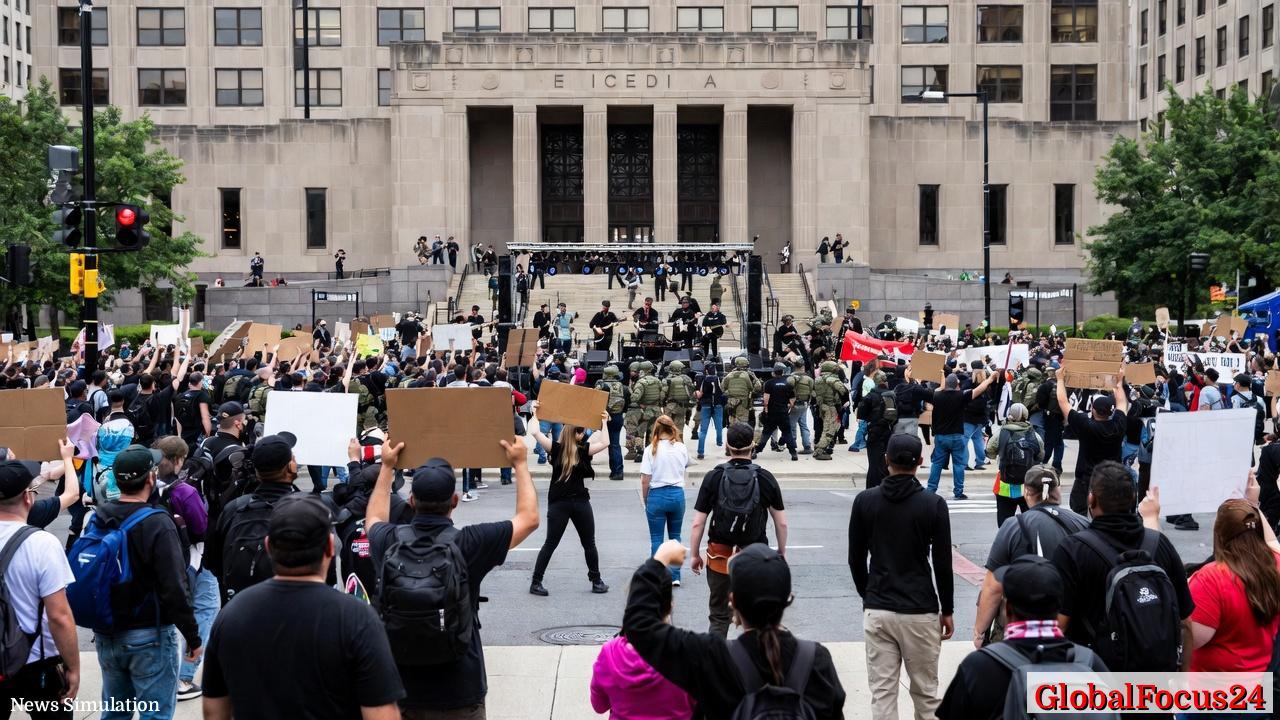
The operation prompted immediate and broad public demonstrations across Minnesota. Protests highlighted concerns about civil liberties, due process, and the potential for racial profiling. Labor unions, faith-based organizations, and community groups argued for greater transparency, accountability, and protective measures for vulnerable residents, including lawful permanent residents and U.S. citizens who could be caught in the crosshairs of broad enforcement sweeps. A notable development was a general strike in Minnesota that underscored union and community solidarity with immigrant communities and families affected by enforcement actions. The strike signaled a broader social conversation about the appropriate role of federal agencies in local communities and the potential consequences for local service provision, school stability, and small businesses.
Legal challenges and judicial developments
A central legal question has been whether the scope and manner of the operation comply with federal and state constitutional protections, administrative procedure, and the principle of local sovereignty in public safety matters. A federal judge’s ruling allowed the operation to continue, finding that the state did not prove the unlawfulness of the broader enforcement actions with sufficient certainty to issue an injunction. The decision did not resolve all questions, however; the ruling left open avenues for further challenges on procedural grounds, the use of detainers, potential violations of due process, and concerns about disproportionate impact on particular communities. Legal observers note that subsequent court orders could alter operational parameters, as could changes in policy guidance from federal authorities or shifts in local jail cooperation.
Economic impact: short-term disruptions and long-term considerations
Enforcement surges can produce measurable economic effects, even beyond the immediate legal and humanitarian consequences. In the short term, employers in industries with significant immigrant labor — such as hospitality, construction, food services, and agriculture — may experience workforce disruptions, wage pressures, and changes in hiring practices. Neighborhoods witnessing high enforcement activity could see fluctuations in consumer activity, property values, and small-business confidence. On a longer horizon, the presence of a large federal enforcement operation can influence investment decisions, real estate markets, and school enrollment patterns if families choose to relocate for safety or access to services.
From a regional comparison perspective, several major metropolitan areas have faced similar dynamics during past enforcement surges: police-community relations challenges, concerns about civil rights protections, and heightened demand for legal and social services. In California, Texas, and the Northeast, for example, enforcement spikes have prompted increased needs for interpretation and translation services, legal aid funding, and community outreach programs designed to maintain public trust. Minnesota’s experience thus aligns with broader national patterns while also reflecting its unique demographics, local government dynamics, and climate-impacted geographic realities that affect mobility and service delivery.
Community impact and public safety implications
Community observers report a range of effects on daily life. In immigrant communities, fear of detention can lead to reluctance to access essential services, contact authorities in emergencies, or participate in schooling and civic activities. School districts and healthcare providers have voiced concerns about potential underutilization of critical services and the chilling effect in communities with mixed-status families. At the same time, supporters of enforcement argue that removing individuals with criminal records contributes to public safety and reliability of local institutions.
Public safety outcomes depend on multiple interacting factors: the efficiency of information-sharing between federal agents and local law enforcement, the accuracy and timeliness of detainer data, and the availability of community-based alternatives to detention. Community organizations have stepped in with guidance on rights education, access to legal counsel, and strategies for maintaining family stability during periods of uncertainty. Public health and social services agencies have also intensified outreach to ensure that urgent needs are met, including mental health support, language-accessible information, and safe pathways for reporting concerns.
Regional comparisons: Minnesota in a national frame
Looking beyond Minnesota, several neighboring states have reported parallel patterns during enforcement operations in the past year. In nearby corridors, communities have observed similar blends of federal presence, protests, and legislative inquiries. Comparisons highlight both common challenges and distinct local responses:
- Local governance and autonomy: Some states have pursued binding resolutions or policy statements regarding cooperation with federal authorities, which influence detainer practices and jail engagement. Minnesota’s state and municipal leadership has publicly weighed the balance between public safety interests and immigrant rights protections, signaling a preference for oversight and accountability without undermining essential law enforcement functions.
- Labor and social cohesion: National labor organizations and civil-rights groups have emphasized the importance of protecting the rights of workers who may be impacted by enforcement actions. Regional differences in labor markets shape how communities respond: areas with higher concentrations of immigrant workers may experience amplified mobilization and advocacy.
- Legal environments: Judicial perspectives on immigration enforcement can vary by circuit, affecting the likelihood and timing of injunctions, stays, or substantive rulings. Minnesota’s federal court landscape, combined with evolving DHS guidelines, creates a dynamic where policy shifts can rapidly alter enforcement practices.
Policy implications and evolving debates
The surge has intensified ongoing national debates about immigration policy, border management, and the role of federal agencies in domestic enforcement. Critics advocate for reforms that emphasize humane treatment, due process, and comprehensive immigration reform that addresses root causes, labor market needs, and family unity. Proponents argue for robust enforcement to enhance public safety and deter illegal entry, insisting that criminal records should be a key criterion for prioritizing limited resources.
Among the policy questions raised by the Minnesota experience are:
- Detainer practices: How reliably do detainers align with due process protections, and what safeguards ensure that detainers are used appropriately without incentivizing racial profiling or unnecessary detention?
- Local-jail coordination: What standards and oversight mechanisms should govern information-sharing and cooperation with federal authorities to protect residents’ rights while supporting public safety?
- Oversight and accountability: What forms of independent monitoring, community listening sessions, and transparent reporting can help rebuild trust during enforcement surges?
- Legal pathways and humanitarian considerations: How can policymakers balance the need to address criminal conduct with protections for families, essential workers, and community members who contribute to local economies?
Public communications and media landscape
The enforcement wave in Minnesota has generated sustained media attention nationwide. Coverage has underscored the human dimensions of enforcement actions — families facing uncertainty, communities organizing in response, and legal analysts examining the implications for constitutional rights and federalism. In parallel, official communications from federal, state, and local authorities have sought to provide timelines, safety advisories, and clarifications about the scope of operations. As the story continues to unfold, credible reporting has emphasized primary-source information, balanced perspective, and verification of incidents before drawing broader conclusions.
Impact on immigrant integration and community resilience
A central long-term question is how communities adapt to heightened enforcement pressures while continuing to integrate and participate in civic life. Community organizations, faith groups, and educational institutions have played critical roles in maintaining support networks, offering legal clinics, language access services, and crisis relief. These efforts aim to preserve social cohesion, encourage lawful participation in public life, and provide pathways for affected families to navigate legal processes, seek guidance, and advocate for fair treatment. The resilience demonstrated by immigrant communities often translates into renewed engagement with local institutions, civic programs, and entrepreneurship, reinforcing the social and economic fabric of Minnesota’s diverse landscape.
What comes next: potential trajectories and scenarios
Experts describe several plausible paths as the situation evolves:
- Incremental drawdown and policy refinement: If cooperation with local systems improves or if legal challenges yield adjustments, authorities may scale back certain aspects of enforcement while preserving core objectives.
- Legal developments shaping practice: Ongoing court actions could lead to injunctions or clarifications that alter detainer usage, arrest protocols, or detainee treatment, with cascading effects on enforcement operations.
- Community-led protections and reforms: Grassroots organizations may broaden their advocacy for guardrails, transparency, and alternatives to detention, potentially influencing future policy reform at local, state, and federal levels.
- Regional variations and replication: Other metropolitan areas could adopt or modify similar strategies, prompting attention to regional differences in demographics, infrastructure, and political climates.
Conclusion: balancing safety, rights, and pragmatic enforcement
The Minnesota enforcement surge reflects a complex intersection of public safety priorities, federal authority, and community rights. The immediate focus for policymakers, law enforcement, and civil society is to ensure that operations are conducted with respect for due process, transparency, and accountability, while continuing to address legitimate concerns about crime and public safety. As communities recover from the initial shock of heightened enforcement, the broader public conversation will likely gravitate toward how to reconcile effective immigration control with inclusive, rights-respecting governance that supports all residents’ dignity and security. The evolving landscape in Minnesota serves as a live case study in how federal actions translate into local realities, how economic rhythms respond to uncertainty, and how communities mobilize to shape a future where safety and opportunity coexist through lawful, principled policy choices.