Family of Palestinian-American Killed in West Bank Demands Accountability Amid Rising Violence
Growing Demands for Justice After Deadly West Bank Attack
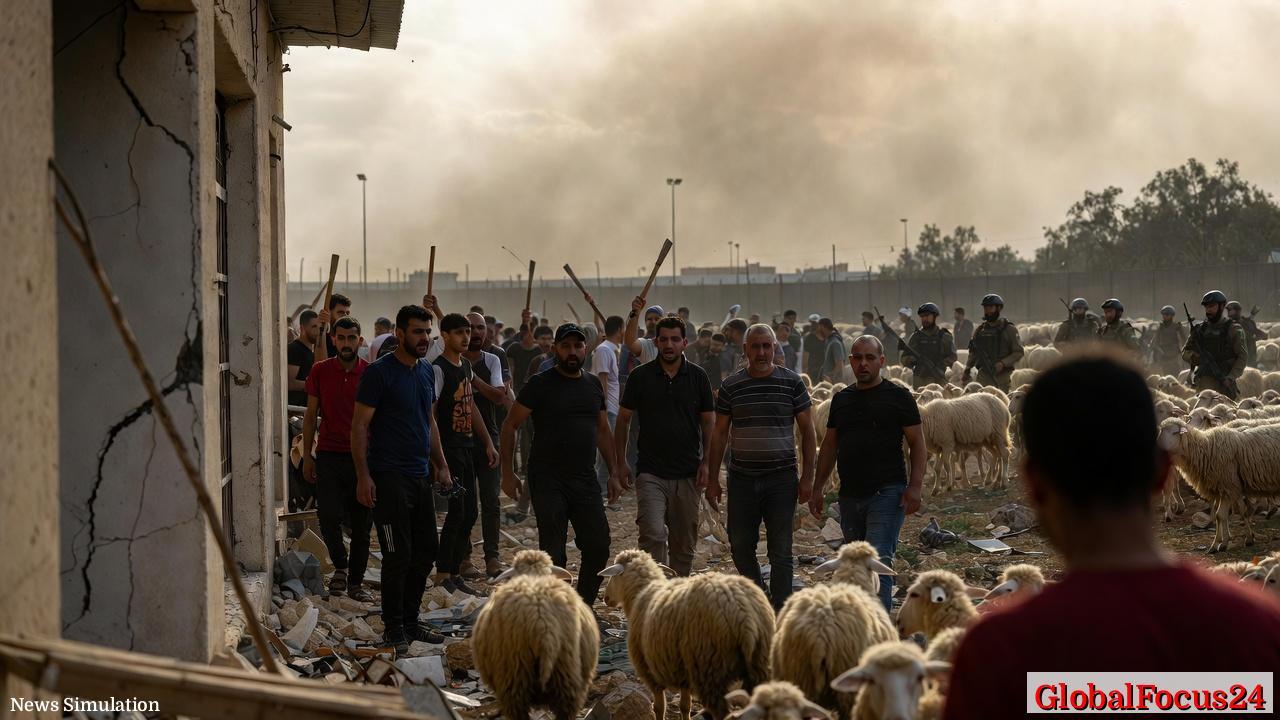
The family of a 19-year-old Palestinian-American man killed in the occupied West Bank is calling for accountability after a violent settler attack near Ramallah left him dead and four others injured. The assault, involving firearms, clubs, and stones, reportedly also resulted in the theft of more than 300 sheep from a nearby village. The incident, which occurred amid escalating tensions and ongoing unrest across the region, has intensified international concern over settler-related violence in the West Bank.
Witnesses described scenes of chaos as a group of Israeli settlers descended on the area late in the day, clashing with Palestinian residents who attempted to protect their property and livestock. Israeli forces fired tear gas to disperse the crowds but did not intervene further, leaving questions about their response and the wider handling of settler attacks in the territory.
A Teenager with Deep Roots in Two Worlds
The victim, a Palestinian-American with both U.S. and Palestinian heritage, had returned to the West Bank to visit family. According to relatives, he was helping tend to livestock when the violence erupted. His death has drawn emotional reactions from both local residents and members of the Palestinian diaspora community in the United States, who have urged a full and transparent investigation.
Family members said they are seeking justice not only through Palestinian channels but also by pressing U.S. authorities to demand accountability from Israel. “He was a kind, respectful young man whose life ended far too soon,” a relative said. “We want the truth to come out and those responsible to face justice.”
Escalating Tensions and a Pattern of Settler Violence
Violence involving Israeli settlers and Palestinian communities in the West Bank has surged over the past year, particularly following the outbreak of conflict in Gaza in late 2023. Human rights groups have documented a growing number of assaults, arson attacks, and property thefts in rural Palestinian areas. These incidents have led to widespread displacement, economic hardship, and heightened fear among local villagers.
According to the United Nations Office for the Coordination of Humanitarian Affairs (OCHA), more than 1,500 Palestinians were displaced from their homes in 2025 due to settler violence and demolition orders. Villages near Ramallah, Nablus, and Hebron have been among the hardest hit, with recurring attacks often targeting herding communities.
The region where the attack occurred—northwest of Ramallah—is an area with a history of friction between settlers and Palestinian residents. While Israeli authorities have occasionally issued indictments in severe cases, prosecutions remain rare. Many Palestinians view this latest killing as part of a broader pattern of impunity.
International Reaction and Calls for Accountability
The killing has prompted a wave of condemnation from international observers, including human rights organizations and members of the Palestinian Authority, who accused Israeli forces of failing to protect civilians. The U.S. State Department has not yet issued an official statement but faces mounting pressure from advocacy groups and members of Congress to demand a credible investigation given the victim’s American citizenship.
Legal and diplomatic experts note that the case could strain Washington’s ongoing engagement with both Israel and the Palestinian leadership. Past incidents involving U.S. citizens in the West Bank have historically prompted calls for bilateral inquiries, though such investigations often stall amid broader political tensions.
The family’s appeal for accountability has garnered growing support from civil society organizations advocating for justice in cross-border cases. Many have urged the U.S. government to invoke mechanisms that ensure transparency in the investigation and potential prosecution process.
Economic and Social Repercussions in the West Bank
The attack’s economic toll extends far beyond the immediate loss of life. The theft of over 300 sheep represents a major setback for the affected community, where livestock herding is one of the few viable sources of income. In rural West Bank areas, flocks are often families’ primary assets, and their loss can plunge households into long-term financial instability.
Economic analysts estimate that such raids collectively cost Palestinian communities millions of dollars each year through livestock theft, destruction of crops, and property damage. The impact is particularly severe for villages already struggling under movement restrictions, limited access to markets, and uncertainty stemming from the broader conflict.
In comparison, neighboring regions in the Jordan Valley and southern West Bank have seen rising reports of similar economic sabotage, including orchard destruction and road blockages by settler groups. These acts not only harm livelihoods but also contribute to migration from rural areas, further depleting the agricultural labor force and weakening local economies.
Historical Context of West Bank Tensions
The current wave of settler violence follows decades of disputes over land ownership, security control, and settlement expansion. Following the 1967 Six-Day War, Israel occupied the West Bank, and since then, settlements—considered illegal under international law—have multiplied across the territory. Today, more than 450,000 Israeli settlers live among approximately 3 million Palestinians in areas under varying degrees of Israeli and Palestinian administrative control.
Over the years, attempts to curb violence through peace initiatives, security coordination, and diplomatic agreements have faltered. The Oslo Accords of the 1990s established zones of shared control, but enforcement mechanisms have weakened substantially. As a result, accountability for crimes committed by settlers against Palestinians remains inconsistent.
Researchers point out that this environment—marked by limited prosecution and the expansion of settler outposts—has emboldened radical factions to carry out attacks with relative impunity. At the same time, communities living under constant threat have faced growing psychological trauma and economic destitution, fostering a volatile atmosphere across the region.
Regional and Diplomatic Comparisons
Similar incidents across other parts of the occupied territories highlight the broader scope of the problem. In contrast to localized clashes in Gaza or along the Israeli-Lebanese border, settler violence in the West Bank represents a slower-moving crisis with persistent humanitarian and geopolitical consequences. Neighboring Jordan and Egypt, which signed peace treaties with Israel decades ago, continue to express concern over policies that may undermine regional stability and the prospects for a two-state solution.
Compared to regional economies, the West Bank’s agricultural output has suffered sharp contractions in recent years, partly due to access restrictions and recurring violence. Analysts note that restoring security and investor confidence will require credible justice measures and sustained international attention.
Community Outrage and a Demand for Action
Following the killing, hundreds of mourners gathered in the victim’s hometown for his funeral, holding signs demanding justice and chanting for an end to settler violence. Villagers reported a heavy military presence in the area as tensions flared, though no arrests were immediately made.
Local leaders have urged not only for the perpetrators to be held accountable but also for international monitors to step in to assess the scale of violence in rural communities. “This is about more than one case,” one local council member said. “It’s about showing that our lives are not disposable.”
The emotional outpouring reflects the deep frustration among Palestinians who say they have few avenues for redress. Repeated appeals to Israeli authorities for investigations often go unanswered, reinforcing a sense of helplessness among victims and families.
The Broader Human Consequences
Beyond political and economic repercussions, the human cost of such attacks remains profound. Families who lose loved ones, property, or livelihoods face years of trauma and instability. For the Palestinian-American family mourning their son, the tragedy also underscores the precariousness of life for those living—or visiting—under occupation.
Human rights experts argue that consistent accountability and protection of civilians are essential to de-escalate violence and prevent recurrence. Without meaningful intervention, they warn, cycles of retaliation and resentment could further entrench divisions and weaken hopes for any future peace agreement.
Uncertainty Ahead
As investigations stall and tensions continue to mount, families across the West Bank watch anxiously for signs of justice. The death of the 19-year-old has become emblematic of a broader struggle over law, security, and human dignity in one of the world’s most contested landscapes.
For his relatives, the goal remains clear: to ensure that his death is not forgotten and that accountability, long evaded in the West Bank, becomes a reality rather than a promise deferred. Their call reverberates far beyond Ramallah, echoing across borders and communities still searching for peace, safety, and a voice that will be heard.