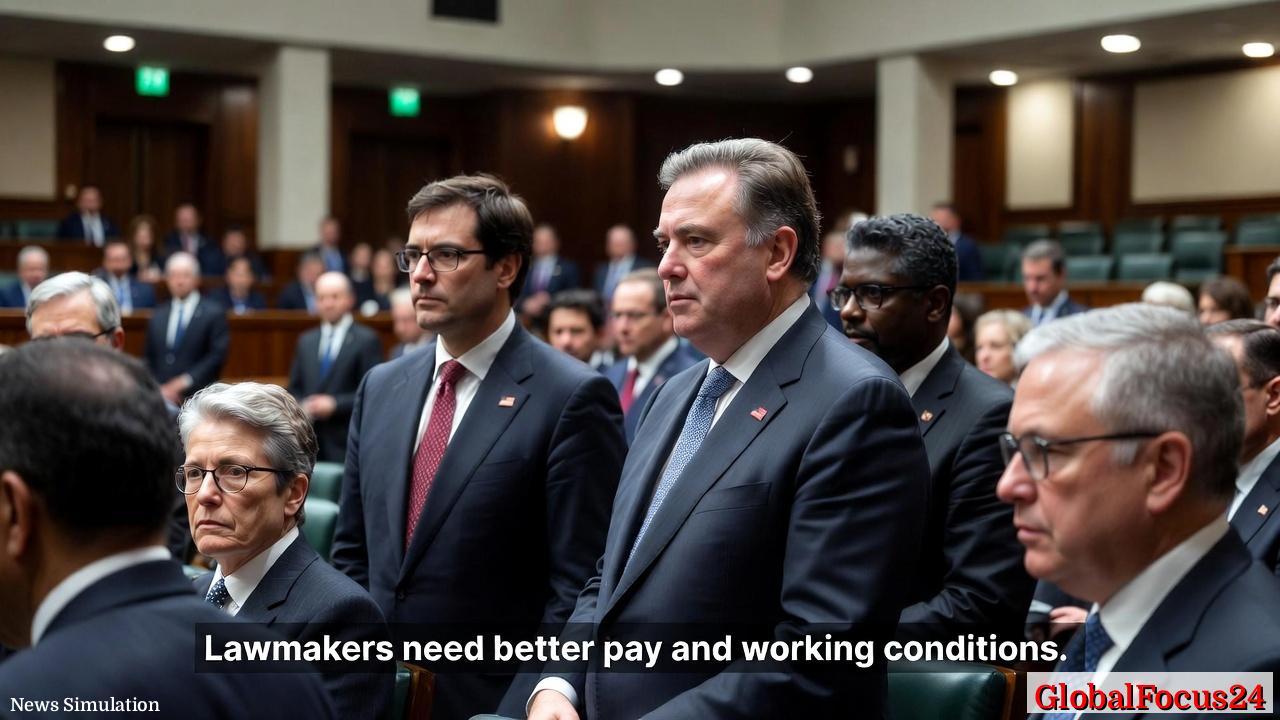
Lawmakers Deserve Better Pay and Working Conditions to Strengthen American Governance
The Unseen Costs of Public Service
Serving in public office has long been romanticized as a noble calling — a chance to craft laws, serve communities, and uphold democracy. Yet, behind this ideal lies a growing problem that threatens the very quality of governance: lawmakers in many parts of the United States are underpaid, overworked, and expected to function under increasingly difficult conditions. The result is a system that often discourages capable individuals from entering or remaining in public service.
Across the country, from state legislatures to municipal councils, compensation for lawmakers frequently fails to reflect the intensity of their responsibilities. In some states, part-time lawmakers are paid less than a living wage, forcing them to maintain second jobs or rely on family income. Even at higher levels, stagnant pay and shrinking staff support mean longer hours, greater turnover, and increasing difficulty attracting and retaining experienced public servants.
When voters consider who represents them, they are, in effect, hiring individuals to perform one of the most complex jobs in the nation. Legislators are not ceremonial cheerleaders for a political team — they are decision-makers who craft policy, manage budgets, and oversee the machinery of government.
Historical Roots of Legislative Compensation
The issue of pay in American legislatures dates back to the early 19th century. Many states originally treated legislative service as a short-term, civic duty rather than a full-time profession. Early lawmakers often returned to their farms or businesses between sessions, and legislative work was intentionally structured to avoid creating a permanent political class.
As the U.S. economy grew more complex and governance became more demanding, this model faltered. By the mid-20th century, expanding budgets, federal regulations, and complex infrastructure projects required legislators to dedicate significantly more time and expertise to their duties. Some states adapted by professionalizing their legislatures — offering higher pay, full-time staff, and longer sessions — while others kept the traditional “citizen legislature” framework, with part-time schedules and modest compensation.
Today, that divide is stark. In states such as California and New York, lawmakers earn salaries comparable to other mid-level public servants and work nearly year-round. Meanwhile, in states like New Hampshire, South Dakota, and New Mexico, legislators receive little more than expense reimbursements or token stipends. This disparity creates uneven representation across the nation and shapes who can afford to serve in the first place.
Economic Impact and Barriers to Entry
Compensation impacts more than individual lawmakers — it influences the composition and performance of entire legislatures. Low pay discourages younger professionals, working-class citizens, and underrepresented groups from running for office. Many who might bring diverse perspectives or technical expertise simply cannot afford to take significant time away from paid employment.
For instance, a working parent making median income may struggle to justify serving in a legislature that pays less than the cost of living in their district. This leads to a legislature dominated by retirees, the independently wealthy, or those with flexible private-sector ties — groups that do not necessarily reflect the broader population’s economic realities.
The economic consequences of low pay ripple outward. Undercompensated lawmakers often lack adequate staff, rely on unpaid interns, or depend heavily on lobbyists and external consultants for policy research. The result can be a less informed, less independent legislative process. A well-compensated legislature, by contrast, has the resources to hire skilled analysts, attract top talent, and dedicate full attention to long-term public challenges such as healthcare reform or infrastructure resilience.
Comparing Legislative Conditions Across Regions
The contrast among state legislatures offers a revealing snapshot of how compensation affects governance. California’s legislature, regarded as one of the most professionalized in the country, pays members nearly $125,000 annually plus per diem expenses. This level of support enables lawmakers to focus full-time on governing, and the state’s budget and policy outcomes often reflect a high degree of legislative initiative and expertise.
At the other end of the spectrum, New Hampshire lawmakers receive a fixed $100 annual salary, unchanged since the late 19th century. While the state takes pride in its tradition of citizen-led government, the low pay and minimal support create challenges in managing contemporary policy issues like healthcare costs and economic competitiveness. Legislators there often meet only part of the year and balance multiple jobs.
Mid-tier states such as Florida, Texas, and Illinois fall somewhere in between. They compensate legislators moderately but maintain part-time schedules, leaving much of the policy analysis and procedural work to staff or external advisors. This hybrid model works when managed carefully but can strain legislative independence when lobbyist influence grows unchecked.
The Case for Better Working Conditions
Pay is only one part of the equation. Working conditions — including long hours, staff shortages, and outdated facilities — also shape the effectiveness of lawmakers. Statehouses often operate with limited administrative support, aging technology systems, and minimal health or family leave provisions. The workload, particularly during budget or committee seasons, can stretch late into the night for weeks at a time.
Better conditions could include expanded administrative staff, access to research resources, improved digital infrastructure, and more predictable session schedules. These changes would not only enhance work-life balance but also improve public transparency and policy quality. Legislators could devote more time to oversight, community engagement, and evidence-based lawmaking, reducing errors and costly policy reversals down the line.
Furthermore, mental health support and security measures are becoming increasingly urgent. The rise in threats against public officials and the high-stress nature of the job can take a personal toll. Creating a safer, more sustainable work environment helps ensure that lawmakers can perform their duties effectively and remain focused on serving their constituents.
Public Misconceptions About Legislative Pay
One of the biggest obstacles to reform is public perception. Many voters bristle at the idea of raising pay for politicians, associating it with waste or self-interest. However, the reality is more complex. Adequate compensation is not a matter of rewarding officeholders — it is about ensuring the government attracts skilled, ethical, and dedicated individuals who can afford to serve without financial hardship.
Consider the private sector: professionals managing organizations with billion-dollar budgets or shaping long-term investment policies are compensated accordingly. Legislators often handle responsibilities of comparable weight, managing state finances, education systems, transportation networks, and public health programs that affect millions. Yet in many cases, their pay does not reflect that scale of responsibility.
Understanding this disconnect is vital for restoring trust and professionalism in governance. Inadequate pay does not save taxpayers money in the long run; it can lead to inefficiency, turnover, and decisions swayed by external pressures rather than informed deliberation.
Lessons from Other Democracies
A global view offers valuable insight. In parliamentary systems like those in Canada, Germany, or the United Kingdom, lawmakers are typically compensated at levels commensurate with senior civil servants. This structure recognizes legislative work as a full-time profession requiring constant study, negotiation, and oversight. Legislative offices are also well-staffed, ensuring members can focus on strategy and policy rather than administrative minutiae.
When lawmakers are treated as professionals, the quality of governance tends to improve. While higher salaries do not guarantee integrity or performance, they remove financial barriers that might exclude qualified candidates and help attract a talent pool aligned with the complexity of modern governance.
Voters as Employers
A central truth often overlooked in discussions about political reform is that voters are, effectively, employers. Casting a ballot is a hiring decision, one that should be made with the same seriousness as selecting a surgeon, architect, or business manager. Legislators are entrusted with solving intricate problems and making decisions that carry long-lasting economic and social implications.
When voters treat elections as popularity contests or cheer for personality-driven politics, they risk hiring representatives ill-suited for the actual work of governance. Evaluating candidates based on their competence, experience, and commitment to policy — rather than on slogans or short-term allegiances — is essential to building a government capable of addressing modern challenges.
A Sustainable Future for Public Service
Improving pay and conditions for lawmakers should not be viewed as an act of generosity, but as an investment in the strength of democracy itself. Public service demands sacrifice, but it should not require financial or personal hardship to the point of deterring capable participation.
States that prioritize legislative professionalization often report better policy outcomes, more stable budgets, and lower turnover among officials. These factors, in turn, build institutional memory — the collective experience that helps governments learn from past successes and mistakes.
As the nation faces complex issues including economic transition, technological disruption, and climate adaptation, the need for well-supported, focused legislators has never been greater. Fair compensation, modern workplaces, and voter awareness form the foundation of an effective, representative, and resilient democracy.
In the end, hiring better lawmakers begins with treating the role itself as the serious profession it is.