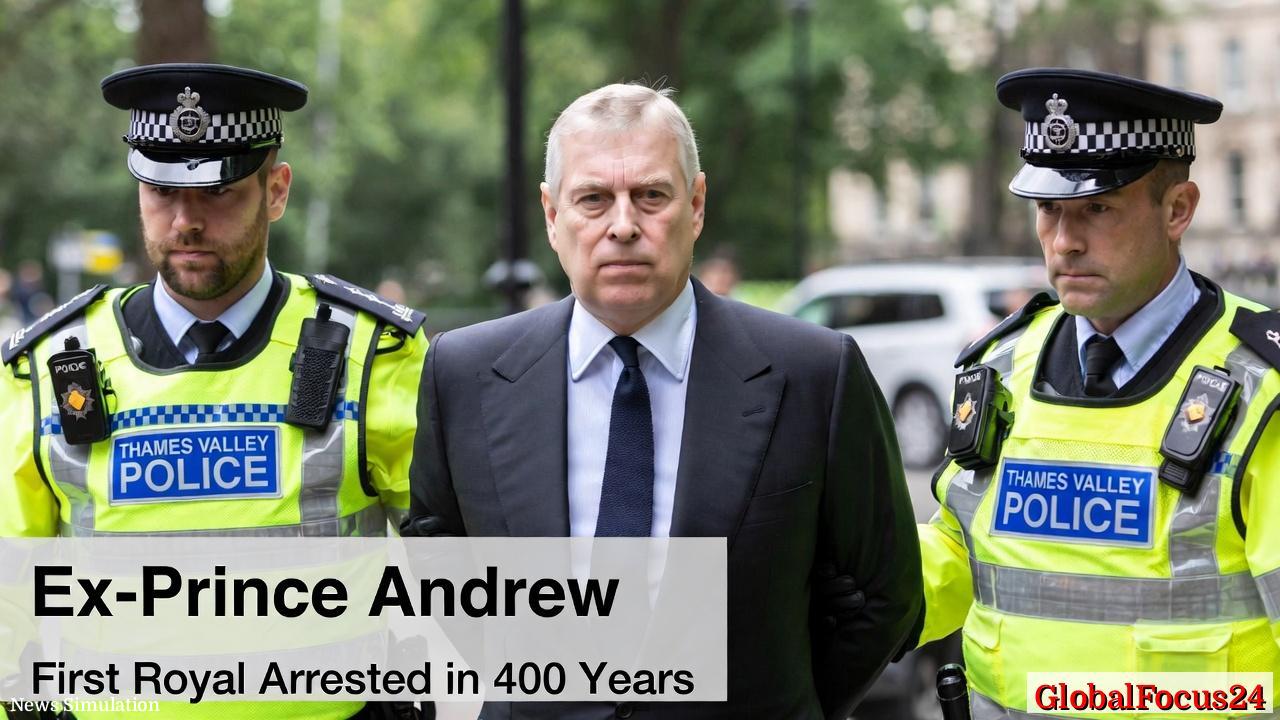
Ex-Prince Andrew Becomes First British Royal Arrested in 400 Years
A Historic Royal Reckoning
For the first time in almost four centuries, a senior member of the British royal family has been taken into police custody. Andrew Mountbatten-Windsor, formerly known as Prince Andrew, was arrested on his 66th birthday by Thames Valley Police, marking an extraordinary moment in modern British history and a profound rupture in the long-standing shield of royal immunity.
Sources confirm that the former Duke of York faces charges of sharing official secrets with the late financier Jeffrey Epstein, accusations that could carry a life sentence if proven in court. The development sent ripples through Britain and the wider Commonwealth, stirring memories of an era when royal figures were not merely subjects of public attention but defendants before the law.
The Last Royal Brought to Justice
The last time a senior British royal faced arrest was during one of the nation’s most turbulent periods—the 17th-century fall of King Charles I. In a stunning act of defiance against monarchical absolutism, Parliament tried the king for treason, convicting him as a tyrant and public enemy. His execution by beheading outside London’s Banqueting House on January 30, 1649, shocked Europe and ushered in a fleeting republic under Oliver Cromwell.
For centuries since, the British monarchy has maintained an image of continuity, stability, and cautious distance from scandal—even as it navigated wars, abdications, and divorces. That long-held balance has now been disrupted in an unprecedented modern echo of history.
A Fall Far From Grace
Once hailed as a decorated Royal Navy officer and a charismatic figure within the monarchy, Andrew’s public standing has declined precipitously over the past two decades. His ties to convicted sex offender Jeffrey Epstein first brought him international scrutiny in the mid-2010s. After a disastrous television interview in 2019, which many viewed as defensive and tone-deaf, he was stripped of his royal duties and titles in 2022.
While the current charges differ from the earlier civil lawsuits and controversies surrounding his personal conduct, they deepen a narrative of decline for the Queen’s once-favored son. British legal experts note that the alleged sharing of official intelligence with a foreign-linked financier could amount to one of the most serious breaches of trust in U.K. royal history.
Legal Implications and the Path Ahead
The Crown Prosecution Service (CPS) has yet to release the full charges, but preliminary reports suggest that the investigation centers on classified information exchanged between 2001 and 2010, a period overlapping with Andrew’s official role as a U.K. trade envoy. That role, meant to promote British business interests abroad, gave him access to diplomatic briefings and sensitive documents.
If convicted, he could face a sentence akin to espionage or treason charges, though modern British law differentiates sharply between treasonous conduct and unauthorized intelligence sharing. Legal analysts describe the case as a potential test of institutional accountability: whether even those born closest to the throne can be judged by the same laws as common citizens.
Reaction from Buckingham Palace
Buckingham Palace confirmed the arrest in a brief statement, describing the event as a “private matter involving a private citizen.” Since relinquishing his royal patronages and the “His Royal Highness” title, Andrew has been regarded as a non-working member of the family, insulating the monarchy from direct legal exposure. However, the optics of his detention remain damaging.
King Charles III, his elder brother, has not commented publicly, but sources say he is “deeply saddened” by the developments. The King’s advisors are now reportedly engaged in complex internal discussions about the potential constitutional and reputational fallout, particularly given the royal family’s ongoing effort to project transparency and fiscal responsibility in a changing Britain.
Public and Political Response
Reaction across the United Kingdom has been swift and divided. Outside Windsor and Buckingham Palace, small crowds have gathered—some expressing disbelief, others demanding justice. On social media, debates rage about privilege, accountability, and whether the monarchy can remain apolitical in an age of relentless public scrutiny.
Members of Parliament from multiple parties have emphasized the importance of due process. A senior MP on the Home Affairs Committee noted that while the monarchy remains a “pillar of British heritage,” the principle of equality before the law “must be neither symbolic nor selective.”
The arrest has also reignited broader discussions about the monarchy’s role in modern governance. The idea that a senior royal could face life imprisonment was once unthinkable; now, it has become part of national conversation.
Historical Echoes of Royal Scandal
Though no royal arrest has occurred since the 1600s, royal controversies are far from new in British history. Edward VIII’s abdication in 1936 over his relationship with American divorcee Wallis Simpson marked another constitutional crisis, though one resolved through voluntary relinquishment rather than coercion. In contrast, Princess Anne, Andrew’s sister, holds the distinction of being the first royal convicted of a criminal offense in modern times.
In 2002, Anne was fined under the Dangerous Dogs Act after her bull terrier attacked two children. Though the punishment was minor, it marked the beginning of a slow unraveling of the royal family's perceived legal invulnerability. Andrew’s case, however, is of an entirely different magnitude—striking at issues of national security and royal privilege that have not been tested in modern law.
Economic and Institutional Impact
The repercussions of Andrew’s arrest extend beyond the palace and into the broader British economy. The monarchy contributes significantly to tourism and soft power, generating hundreds of millions annually through public visits, merchandise, and global visibility. Analysts suggest that a scandal of this magnitude could have measurable effects on royal-related enterprises and institutions tied to public goodwill.
Consumer studies have already shown fluctuations in royal memorabilia sales following earlier royal controversies. In 2026, as the British economy continues to recover from inflationary pressures and international supply chain challenges, any decline in public confidence or overseas tourism could carry tangible fiscal costs.
Beyond economics, institutions linked to the crown—such as charitable foundations or Commonwealth partnerships—may now face heightened scrutiny. Transparency and governance reforms could follow as part of a broader attempt to restore public trust.
Regional Perspectives and Comparisons
Observers across the Commonwealth have responded with cautious interest. In Australia and Canada, public polls already reflect growing ambivalence toward the British monarchy, particularly among younger generations. Political commentators there note that Andrew’s arrest could reenergize republican movements pushing for symbolic or legal separation from the crown.
Comparatively, European monarchies—such as those in Sweden, Denmark, and the Netherlands—have faced their own reckonings in recent decades, often related to financial misconduct or perceived detachment from public life. However, none has seen an arrest of comparable gravity. The British crown, oldest and most globally visible, now finds itself navigating questions its continental counterparts largely avoided through greater institutional modernization.
The Broader Meaning for the Monarchy
The arrest of ex-Prince Andrew may signal an inflection point not only for the individual involved but for the modern monarchy itself. Once seen as an unassailable symbol above politics and prosecution, the institution now confronts a transformation that balances ceremonial purpose with civic accountability.
Constitutional scholars suggest that the monarchy’s future stability will depend on its ability to adapt to democratic expectations without losing its unique cultural role. The current crisis may accelerate long-discussed conversations about narrowing the working royal roster, establishing clearer legal frameworks, and reaffirming the crown’s commitment to public ethics.
A Nation Confronts Its Past and Future
As Britain watches one of its most controversial royal figures face the justice system, the echoes of 1649 resonate unmistakably. Four centuries ago, it was the execution of a king that redefined the boundary between sovereign power and public will. Today, the arrest of a titled subject—stripped of privilege but still bound by heritage—may do the same for a constitutional monarchy that has endured successive storms.
Whether Andrew is ultimately convicted or cleared, his detention marks a moment when history, law, and monarchy once again collide—reminding citizens and sovereigns alike that no lineage stands entirely above the reach of justice.