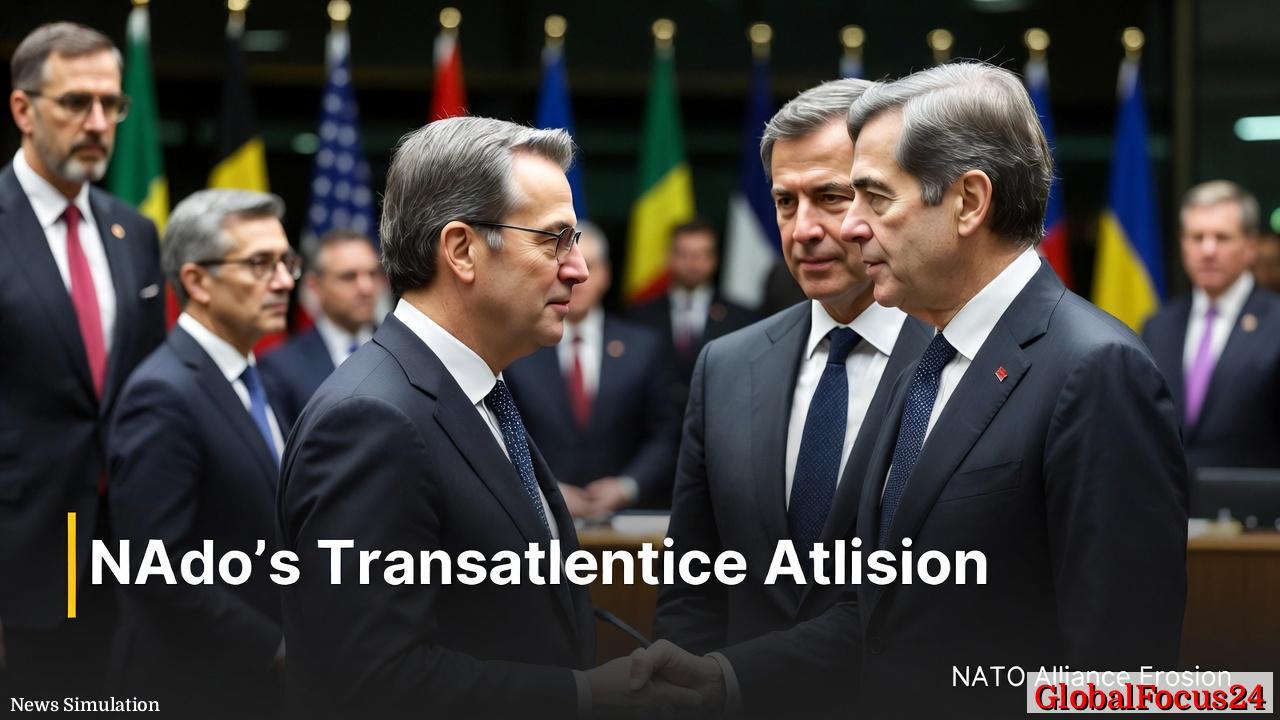
NATO’s Transatlantic Promise in Flux: Europe’s Five Stages of Grief and the New Security Landscape
Europe is progressing through five stages of grief as the once-unshakable transatlantic alliance undergoes a quiet recalibration. From denial to acceptance, policymakers, manufacturers, and citizens are watching a long-standing security architecture adapt to a shifting geopolitical reality. While the foundational commitment—America’s pledge to defend Europe in the event of aggression—remains a touchstone for many, the practical mechanisms, burdens, and strategic calculations that underpin the alliance are evolving in real time. This evolution is reshaping defense spending, regional security protocols, and international cooperation across Europe, North America, and beyond.
Historical context: the alliance’s creation and evolution The North Atlantic Treaty Organization emerged in the aftermath of World War II, born from a shared conviction that collective defense was essential to preventing another continental-scale catastrophe. The alliance solidified during the Cold War, turning deterrence into a central pillar of European security. The Mutual Defense Clause, Article 5, established a persuasive guarantee: attack against one member is considered an attack against all. For decades, this framework provided a predictable strategic order that guided national budgets, industrial policy, and diplomatic postures.
The dissolution of the Soviet Union did not erase the alliance’s relevance, but it did usher in a period of reevaluation. NATO broadened its membership, expanded mission sets, and integrated new partners into joint exercises and interoperability programs. Partnerships with non-member states, security sector reforms, and crisis-response capabilities became hallmarks of NATO’s post–Cold War adaptation. Yet even during decades of steady collaboration, the alliance’s core reliance on U.S. leadership remained a defining feature. Washington’s military posture and defense technology—airpower, naval power, advanced munitions, and alliance-wide intelligence-sharing—stabilized the transatlantic security architecture.
The current inflection point: pressures on the transatlantic bargain In recent years, strategic pressures have intensified on both sides of the Atlantic. Europe seeks greater autonomy in defense planning and capability development while relying on American expertise for high-end capabilities, interoperability, and joint exercises. Simultaneously, the U.S. faces competing priorities, including broader geopolitical competition with near-peers, domestic fiscal constraints, and questions about burden-sharing and strategic clarity. The result is a reconfiguration rather than a rupture: a more diversified security ecosystem with stronger European defense industrial bases, more robust regional deterrence in Eastern Europe, and a renewed emphasis on security partnerships in the Indo-Pacific.
Economic impact: defense budgets, industry, and national resilience The recalibration of the NATO framework has concrete economic implications. European defense budgets have increasingly prioritized modernization of air and missile defense, cyber resilience, and smart-border security. Countries are reappraising force readiness, maintenance cycles, and personnel costs to ensure swift deployment and durable deterrence. This shift stimulates a diversified defense-industrial ecosystem, encouraging domestic production of critical components such as intercontinental ballistic missile warning capabilities, space-based surveillance, and advanced communications networks. The result is not simply higher military spending, but a more capable industrial base that can sustain high-end military technologies.
In parallel, the United States has signaled a nuanced approach to burden sharing. While European allies have intensified investments in defense modernization, Washington remains a pivotal actor in ensuring alliance depth. This dynamic has spurred cross-Atlantic procurement collaborations, joint development programs, and shared research initiatives in emerging technologies such as hypersonics, directed energy weapons, and secure networked command-and-control systems. The economic ripple effects extend beyond defense sectors; regional supply chains, specialized training pipelines, and technology transfer agreements influence civilian industries, academic research, and national security resilience.
Regional comparisons: how Europe’s defense posture compares with peers Across NATO members, defense posture exhibits regional variation shaped by geography, history, and political will. Northern and Central European states tend to emphasize air and missile defense, long-range precision strike capabilities, and resilient logistics. In Eastern Europe, deterrence and rapid reinforcement have come to the forefront in response to evolving security concerns near contested borders. Southern European states increasingly prioritize rapid-reaction forces, cyber resilience, and civil-defense integration to address irregular threats and climate-related vulnerabilities.
In the United States, the defense budget remains balanced between sustaining core capabilities and pursuing next-generation technologies. The approach emphasizes combined arms, advanced aircraft, naval power, space assets, and cyber operations. When viewed together, these regional profiles reflect a shared objective: maintain credible deterrence, protect critical supply chains, and preserve interoperability among allies. The converging trend is clear: European defense modernization and American strategic patience are intertwining more closely than in previous decades, but with careful attention to national sovereignty and domestic political considerations.
Key strategic questions shaping policy today
- How can European allies sustain credible deterrence while optimizing force readiness and modernization without overburdening national budgets?
- What is the right balance between national defense autonomy and reliance on U.S.-led security assurances?
- How can the alliance foster resilience in critical infrastructure, cyber networks, and supply chains against hybrid threats?
- In what ways can joint research and development in emerging technologies accelerate interoperability and reduce duplication of effort?
- How will the alliance adapt to evolving threat environments, including space, cyber, and climate-related security risks?
Operational priorities driving immediate action
- Modernization of air and missile defense: Upgrading Patriot, Aegis, and allied systems to improve layered defenses against long-range missiles and hypersonic trajectories.
- Forward presence and rapid reinforcement: Maintaining ready forces in Eastern Europe and the Baltic region to demonstrate credible deterrence and reassure partners.
- Enhanced intelligence-sharing and warning systems: Expanding secure channels for real-time information exchange to shorten decision cycles in crises.
- Cyber resilience and space assets: Integrating cyber defense into every component of national and alliance security architectures, and safeguarding space-based intelligence, surveillance, and communication capabilities.
- Industrial base and supply chain resilience: Encouraging diversified supply chains, dual-use technologies, and adaptive production capabilities to withstand disruptions.
Public reaction and societal dimension Public sentiment across Europe reflects a mix of reassurance, concern, and pragmatism. Citizens value the alliance’s deterrence effect and the stability it provides for long-term economic planning. Yet awareness of the evolving burden-sharing narrative prompts discussions about national responsibilities, taxation, and factory-level investment. Public engagement with defense policy has become more prevalent in political discourse, as communities weigh local impacts of security investments against broader regional security gains.
Implications for regional partners beyond Europe NATO’s evolution has consequences for partners far beyond the Atlantic. In Canada, the security relationship reinforces the northern frontier’s defenses while aligning with Arctic geostrategic interests. In the United Kingdom, France, Germany, and Italy, defense modernization dovetails with industrial strategy and technology policy, shaping national procurement priorities and export competitiveness. For regional players in the Indo-Pacific seeking lessons from NATO’s approach to alliance management, the emphasis on interoperability, burden-sharing, and crisis management provides a practical playbook for building strategic trust with partners facing similar security challenges.
Interoperability as a core strength A defining feature of the alliance’s resilience is interoperability—the shared standards, protocols, and procedures that enable different national forces to operate in concert. Through joint exercises, standardized training, and common doctrine, member nations can deploy combined capabilities with speed and precision. This interoperability extends beyond hardware to include cybersecurity protocols, command-and-control architectures, and logistics coordination. As threats grow more complex, the value of a highly interoperable alliance becomes more evident, enabling rapid mobilization and more effective crisis response.
Strategic warnings and the path forward The enduring question is whether the transatlantic bargain can sustain momentum in an era of shifting power dynamics and rising regional ambitions. The answer will depend on continued political clarity, economic will, and a shared sense of purpose among member states. The alliance’s future hinges on its ability to translate collective intent into tangible capabilities, while preserving national autonomy and democratic governance. For Europe, the path forward involves strengthening defense industries, expanding credible deterrence, and deepening cooperation with transatlantic partners. For the United States, the challenge is to balance strategic leadership with genuine burden-sharing, ensuring that alliance commitments remain credible without compromising domestic priorities.
Adapting to a broader security ecosystem The modern security environment includes not only state actors but also non-state threats, cyber adversaries, and parallel information warfare campaigns. Effective defense now requires a multi-layered approach that blends conventional deterrence with resilience at the community level. Protection of critical infrastructure, robust crisis response planning, and reinforced social trust in democratic institutions contribute to a comprehensive security posture. The alliance is increasingly focused on preventive diplomacy, crisis management, and rapid stabilization operations that help deter escalation and protect civilian populations.
Historical resonance and the sense of urgency The tension between enduring commitments and evolving capabilities is not new in international alliances. History shows that alliances endure through adaptation rather than rigid adherence to past formulas. The current moment carries a tangible sense of urgency: modernization isn’t optional, and the pace of geopolitical change necessitates decisive action. Communities across Europe and North America watch closely as defense budgets, research funding, and policy decisions translate into real-world capabilities that influence regional security and global stability.
Conclusion: toward a revised but durable agreement NATO’s long-standing promise—America’s defense commitment to Europe—remains a cornerstone of Western security architecture. Yet the practical expression of that promise is undergoing thoughtful recalibration to reflect new threats, economic realities, and strategic preferences. Europe’s five-stage process of grappling with the alliance’s evolution mirrors a broader global pattern: entrenched alliances must evolve to stay credible and effective. By investing in modernization, sustaining interoperability, and fostering shared responsibility, the transatlantic partnership can maintain its relevance and resilience in a rapidly changing world.
In the end, the alliance’s strength lies not in a single treaty text, but in a living framework of collaboration, trust, and shared resilience. As Europe navigates this transitional period, the region’s security posture—and its economic vitality—will be defined by how well it aligns national ambitions with collective defense objectives, how effectively it integrates new technologies and industrial capabilities, and how openly it communicates with allies and citizens about risks, costs, and benefits. The road ahead will require steady leadership, prudent resource allocation, and a shared commitment to preserving peace through credible deterrence and sustained cooperation.