Erdogan Positions Himself as Voice of the Muslim World Amid Growing Regional Rivalries
A Modern Bid for Spiritual and Political Leadership
Since the death of the Prophet Muhammad in 632 CE, the Muslim world has not had a single, universally recognized leader. Over the centuries, rulers from the caliphs of Damascus and Baghdad to the sultans of Istanbul have sought to claim spiritual and political authority over the umma — the global community of Muslims. Nearly fourteen centuries later, the question of leadership remains contested.
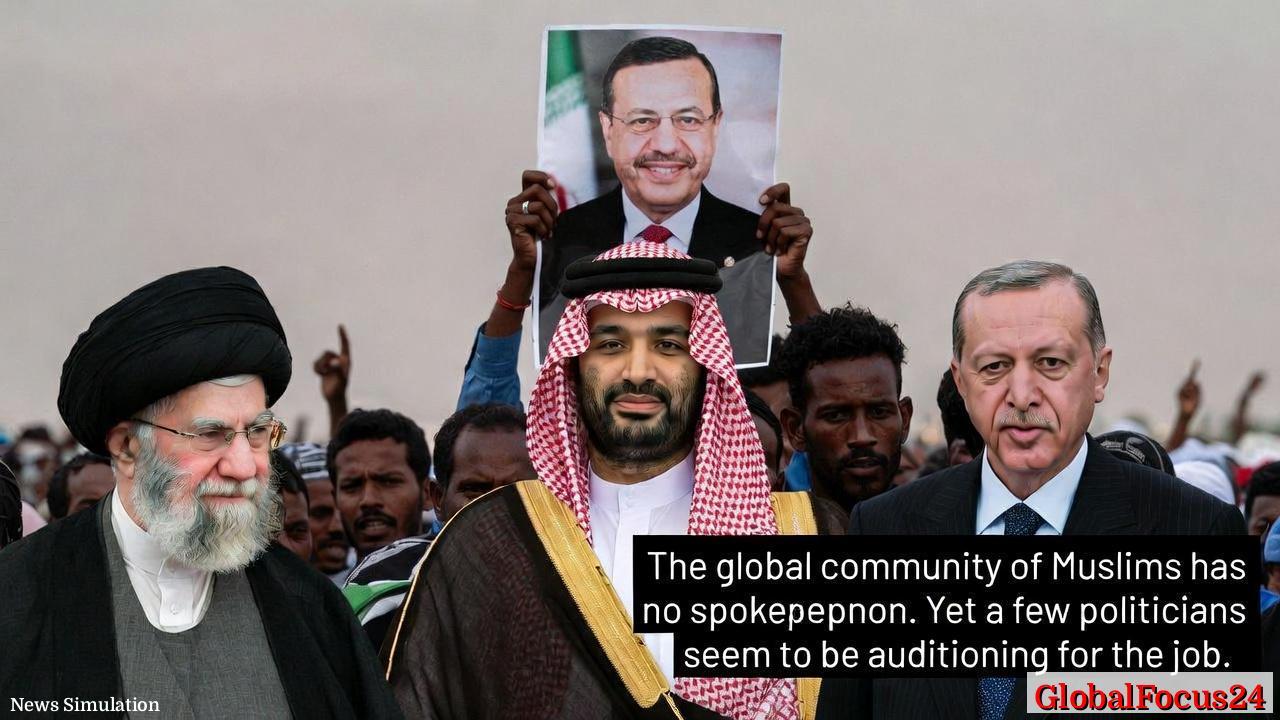
In 2026, as global tensions and sectarian fractures deepen, a new generation of political figures appears to be vying for the symbolic mantle of Muslim leadership. Among them are Iran’s Supreme Leader Ayatollah Ali Khamenei, Saudi Arabia’s Crown Prince Muhammad bin Salman, and—standing out for his rhetorical skill and populist appeal—Turkey’s President Recep Tayyip Erdoğan.
Erdoğan’s recent address to provincial governors in mid-February, delivered on the eve of Ramadan at his presidential palace in Ankara, underscores his ambition. His speech, aimed explicitly at nearly two billion Muslims worldwide, called for solidarity in an era of “moral decline and injustice,” according to Turkish officials. To his supporters abroad, it was more than a political statement—it was an appeal to faith and identity.
From Regional Power to Global Advocate
Erdoğan’s ascent from mayor of Istanbul in the 1990s to one of the most visible leaders in the Muslim world reflects a calculated balancing of religion and realpolitik. Over the past two decades, he has transformed Turkish domestic politics, projecting himself as a defender of Islamic values within a secular republic while expanding Ankara’s influence across the Middle East, Africa, and beyond.
Turkey’s assertive foreign policy—ranging from military interventions in Syria and Libya to humanitarian initiatives in Somalia and Gaza—has built Erdoğan’s image as a champion of “Muslim causes.” His approach, mixing nationalism with religious solidarity, resonates with diverse audiences.
In Somalia, for instance, Erdoğan remains immensely popular. Turkish-built hospitals and infrastructure projects there are tangible symbols of Ankara’s growing presence. Public rallies in Mogadishu have even featured portraits of the Turkish president, portraying him as a global defender of Islam—a sentiment not widely seen since the Ottoman era.
Historical Echoes of Imperial Authority
The echoes of the Ottoman Caliphate, which once claimed to lead the Muslim world, are unavoidable. When Mustafa Kemal Atatürk abolished the caliphate in 1924, Turkey formally retreated from the religious leadership that had defined its empire. Yet nearly a century later, Erdoğan’s rhetoric often invokes that legacy.
Historians note that while Erdoğan has never explicitly called for reinstating the caliphate, his speeches emphasize Muslim unity, justice, and sovereignty—concepts historically linked to the caliphal idea. For his supporters, this represents a reclaiming of heritage; for critics, it signals political opportunism cloaked in religious language.
Erdoğan’s strategy aligns with a broader trend among contemporary leaders in Muslim-majority states who harness faith to expand influence. Iran’s Khamenei commands religious authority backed by a revolutionary ideology. Saudi Arabia, as custodian of Mecca and Medina, leverages its spiritual significance and economic power. But neither figures possess Erdoğan’s global reach or his ability to resonate beyond sectarian lines. Turkey’s Sunni-majority base and historical ties to former Ottoman territories give Erdoğan an unmatched symbolic advantage.
The Economic Foundations of Influence
Turkey’s expanding footprint in the Muslim world is not only ideological but also economic. Through a combination of investment, infrastructure, and humanitarian assistance, Ankara has positioned itself as a partner of choice for developing Muslim nations.
Turkish construction firms now operate across North Africa, Central Asia, and the Middle East. The Turkish Cooperation and Coordination Agency (TİKA) has dozens of offices in Muslim-majority countries, distributing aid and funding schools, mosques, and hospitals. These soft-power instruments reinforce Turkey’s diplomatic presence, often outpacing Western aid in both visibility and cultural resonance.
Domestically, however, Erdoğan faces mounting economic challenges. Inflation, which surged past 50% in recent years, continues to strain Turkish households. The lira’s prolonged volatility has eroded public confidence. Yet Erdoğan’s ability to reframe economic struggle as part of a broader national mission—defending Turkey’s sovereignty and leading the Muslim world—has helped sustain his political base.
By linking domestic rejuvenation to a civilizational narrative, Erdoğan has turned economic hardship into a rallying point. For supporters, his leadership embodies endurance and faith; for detractors, it’s a distraction from policy shortcomings.
Regional Comparisons: Competing Visions for the Umma
The Muslim world’s competing centers of gravity—Tehran, Riyadh, and Ankara—illustrate divergent approaches to leadership.
In Iran, authority remains intertwined with clerical hierarchy. Khamenei’s vision is rooted in Shiite theology and the 1979 revolution’s enduring call for resistance to Western influence. His model appeals to ideological allies but faces limitations among Sunni populations.
Saudi Arabia projects its claim from religious custodianship rather than political theology. The kingdom’s leadership of the Organization of Islamic Cooperation and its control of the hajj pilgrimage give it unmatched symbolic power. Yet its rapid modernization drive under Crown Prince Muhammad bin Salman, including loosening social restrictions and curbing the clerical establishment’s power, has drawn mixed feelings within traditionalist circles.
Turkey’s approach, by contrast, blends modern populism with religious identity. Rather than relying on clerics or sacred geography, Erdoğan’s appeal flows from his persona—an elected Muslim leader who, through rhetoric and action, presents himself as the voice of global Muslim concerns.
While Iran and Saudi Arabia represent more constrained models—sectarian or custodial—Turkey’s claim rests on pan-Islamic empathy and activism. This has allowed Erdoğan to reach across divides, galvanizing sympathy from regions as distant as West Africa and Southeast Asia.
Populism Meets Piety on the World Stage
Erdoğan’s global campaign for Muslim unity has grown increasingly visible through diplomatic forums, cultural events, and international media networks. In recent years, Turkey has hosted conferences on Islamophobia, refugee rights, and economic cooperation among Muslim nations. Ankara’s media channels, such as TRT World, promote narratives emphasizing injustice against Muslims globally—in Palestine, Kashmir, and Myanmar—reinforcing the perception of Erdoğan as an outspoken advocate for the oppressed.
His rhetoric, however, often blurs the line between religious solidarity and political mobilization. By positioning Turkey as both leader and protector, Erdoğan effectively merges the fate of the Muslim umma with Turkey’s national interests. This dual framing amplifies Ankara’s global visibility but occasionally sparks tensions with Western allies, particularly when Turkish diplomacy contrasts sharply with NATO partners’ positions on conflicts in Gaza, Libya, and Syria.
Nevertheless, Erdoğan’s voice—delivered in emotionally charged speeches and amplified through digital media—continues to resonate across Muslim-majority societies. His warnings about global injustice and calls for unity find receptive audiences wearied by division and instability.
Measuring the Reach: Influence Beyond Borders
Beyond rhetoric, Turkey’s activist diplomacy underscores its pursuit of a leadership role. Turkish peacekeepers and humanitarian agencies operate in dozens of Muslim-majority states, from Bosnia to Afghanistan. Educational institutions, such as scholarship programs and foundations, attract thousands of international students to Turkish universities, embedding cultural ties that yield long-term influence.
In Africa, Turkey’s expanding presence serves as a case study. Trade between Turkey and sub-Saharan Africa has grown more than fivefold over two decades, while embassies have multiplied. Ankara’s outreach has been warmly received by governments eager for investment unburdened by the political conditions attached to Western aid.
Such tangible initiatives transform Erdoğan’s religious rhetoric into visible structures—bridges, clinics, and schools—that reaffirm Turkey’s role as both benefactor and brother in faith.
Cultural Diplomacy and Symbolism
Erdoğan’s use of cultural symbolism deepens his connection to Muslim identity. The reconversion of Hagia Sophia into a mosque in 2020 remains one of his most emblematic acts. While controversial in Europe, it was celebrated across much of the Muslim world as a restoration of heritage.
Similarly, Turkish television dramas broadcast globally—many funded or endorsed by the state—depict historical Ottoman heroes and Islamic virtues. These soft-power exports shape perceptions, reinforcing an idealized image of Turkish-led unity that appeals emotionally where diplomacy sometimes falters.
By combining faith, history, and media prowess, Erdoğan effectively revives nostalgia for Islamic strength under Ottoman stewardship—a narrative that grants modern Turkey moral authority in the eyes of sympathetic audiences.
A Contested Future of Leadership
Whether Erdoğan can translate symbolic leadership into lasting influence remains uncertain. The Muslim world is too diverse, fractured by sect, ethnicity, and politics, for any one leader to claim universal authority. Yet his ability to harness history and emotion to project moral leadership is undeniable.
As Ramadan approaches, Erdoğan’s message of unity comes amid humanitarian crises and renewed conflicts across the Middle East. In that context, his appeal for brotherhood finds resonance far beyond Turkey’s borders. Whether this rhetoric will evolve into a new form of global leadership or remain a powerful but contested voice within an increasingly multipolar Muslim world will depend on what comes next—both in Ankara and across the broader umma.