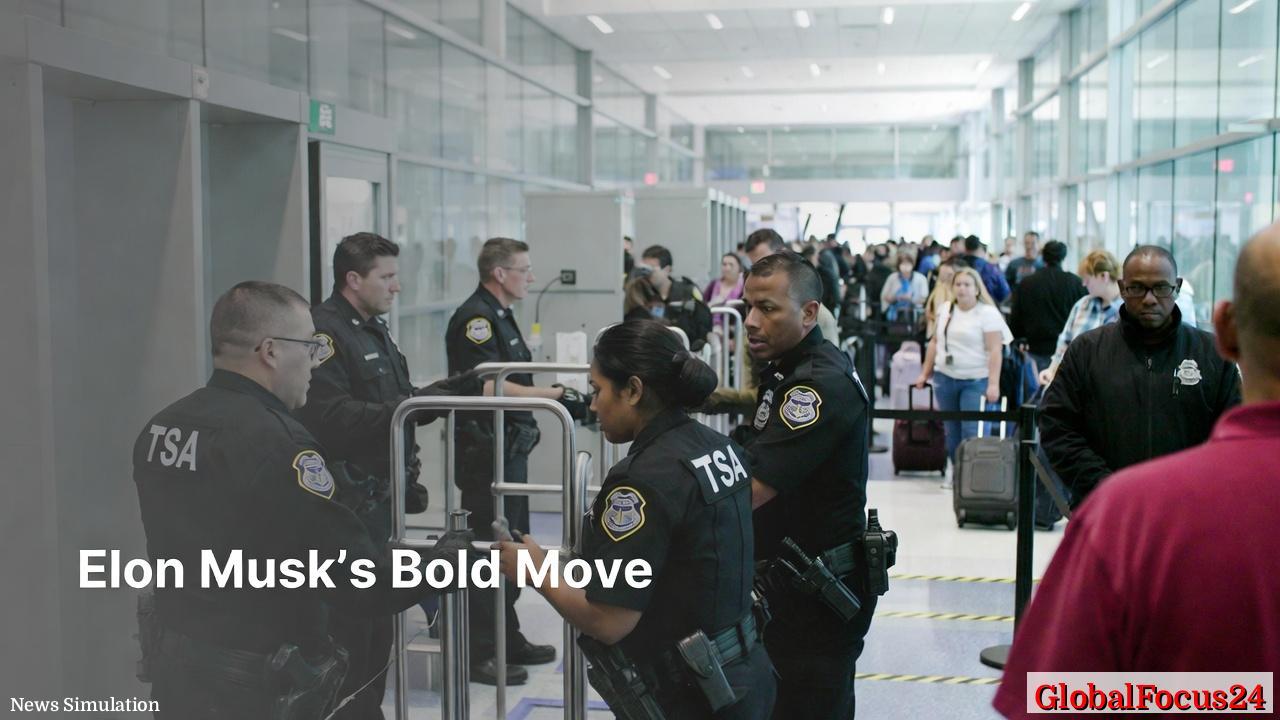
Elon Musk Offers to Pay TSA Salaries Amid Prolonged Government Shutdown
Travel Turmoil Deepens as TSA Crisis Enters Second Month
A deepening government funding stalemate has left thousands of Transportation Security Administration employees working without pay for more than a month, fueling chaos at airports nationwide. The Department of Homeland Security (DHS), which oversees TSA operations, remains partially shut down as lawmakers clash over funding priorities.
In a surprising move, entrepreneur Elon Musk has offered to personally cover the salaries of TSA personnel until the federal government restores agency funding. The gesture, which Musk framed as a temporary measure to alleviate pressure on both workers and the traveling public, has generated intense discussion about the role of private citizens in sustaining essential government functions.
At major airports across the country, wait times have exceeded three hours as staffing shortages intensify. Frustration among travelers has surged, with reports of missed flights, abandoned travel plans, and exhausted TSA officers stretched to their limits.
The Shutdown’s Impact on Transportation Security
The Department of Homeland Security’s budget impasse has left TSA agents among the most visibly affected federal workers. Classified as “essential employees,” they are legally obligated to report to duty — despite going unpaid since the shutdown began.
For weeks, airport terminals in Houston, Atlanta, New Orleans, and Philadelphia have faced crippling congestion. Some checkpoints have closed unexpectedly due to staffing shortfalls. According to internal TSA data, absentee rates have reached levels not seen since the 2019 federal shutdown, when similar funding delays forced agents to seek other employment or take unpaid leave.
Union leaders warn that the situation is approaching a critical threshold. “People are making impossible choices between showing up for work and keeping their families afloat,” one TSA union representative said. A nationwide hiring freeze, introduced last year to reduce administrative costs, has only compounded the shortage. Without additional staff or pay relief, the risks to airport security and operational integrity continue to escalate.
Musk’s Offer Sparks Unprecedented Debate
Musk’s proposal to personally finance TSA wages has no clear precedent in modern federal history. While the billionaire has a long record of supplementing public initiatives — from offering Starlink internet access in disaster zones to contributing equipment during humanitarian crises — the notion of covering government salaries treads into uncharted legal and ethical territory.
Legal experts note that U.S. law strictly regulates how and when private funds can be used to compensate federal workers. Any direct payment would likely require congressional or executive authorization. “The federal compensation framework does not permit ad hoc payments from individuals, even with good intentions,” said one government ethics specialist. “There would need to be a structured mechanism, possibly through a public-private trust or donation fund administered by the Treasury.”
Musk’s representatives have not detailed the logistics of how his offer would be implemented. However, the announcement has received widespread attention on social media, where opinions are sharply divided. Supporters argue that the move demonstrates leadership and compassion during a national crisis, while critics caution that such actions risk blurring the boundaries between private wealth and public duty.
Historical Context: Lessons from Past Shutdowns
The United States has experienced 22 government shutdowns since 1976, when modernization of budgetary procedures first made such interruptions possible. The 2018–2019 shutdown, the longest in history at 35 days, offers a revealing comparison. During that period, TSA absenteeism surged by nearly 10%, forcing multiple airport terminals to close. The economic losses from travel delays and airport inefficiencies that year were later estimated to exceed $3 billion.
In contrast, shorter shutdowns — such as those in 2013 and 1995 — had limited long-term impact but disproportionately affected federal employees in frontline roles. Each episode underscored how tightly the nation’s security infrastructure depends on the uninterrupted functioning of relatively low-paid but essential staff.
Today’s situation bears striking similarities. With thousands of agents now entering their fifth unpaid pay cycle, and retention rates dropping, industry analysts fear a repeat of those severe disruptions. The airline industry, still recovering from pandemic-era turbulence, faces renewed uncertainty as domestic tourism and business travel slow under the weight of security bottlenecks.
Economic Ripple Effects Across the Nation
The prolonged shutdown has begun to ripple through the broader U.S. economy. Air travel delays strain supply chains, dampen consumer confidence, and erode productivity in industries dependent on predictable transportation. Economists estimate that each week of disrupted airport operations could cost the U.S. economy several hundred million dollars in lost output.
Airlines and airport authorities have pressed Congress for swift action. Several have offered temporary stipends, meal vouchers, and transport assistance to unpaid TSA workers. Still, these measures provide only partial relief. Smaller regional airports, with thinner staffing margins, have been particularly hard hit — some operating with less than 60% of standard personnel levels.
Hospitality and tourism sectors in major cities also report declining visitor traffic and canceled bookings, especially in regions like the Southeast and Gulf Coast, where air travel congestion has been most severe. “We can feel the slowdown week by week,” said a Houston travel industry insider. “People are hesitant to fly when they see three-hour security lines on the news.”
Congressional Gridlock and the DHS Funding Debate
At the heart of the stalemate lies a clash over how to allocate funds for the Department of Homeland Security. Republicans have called for full departmental funding, encompassing all branches, including immigration enforcement operations. Democrats, meanwhile, advocate for standalone appropriations for agencies like TSA, FEMA, and the Coast Guard — effectively separating them from controversial border programs.
This divide has prevented a comprehensive funding resolution, leaving roughly one-third of DHS staff unpaid but still working. Congressional aides familiar with the talks describe fragile progress but little consensus on a path forward. Temporary continuing resolutions, which could reopen parts of the department on a short-term basis, remain under discussion but face opposition from both sides.
Without resolution, DHS operations risk further degradation. Key cybersecurity, emergency management, and transportation security functions all fall within its remit. The longer these remain underfunded, officials warn, the more difficult recovery will become — financially and operationally.
Public Sentiment and Growing Pressure to Act
Across the country, public patience is wearing thin. Social media platforms are flooded with firsthand accounts from travelers facing hours-long delays and from TSA employees balancing essential duties with mounting financial hardship. Grassroots support networks have emerged to provide food assistance and temporary relief, reminiscent of the volunteer efforts during the 2019 shutdown.
Opinion polling suggests broad bipartisan frustration with the stalemate. A recent survey indicated that over 70% of Americans favor an immediate reopening of DHS, even through temporary funding measures, to restore normal airport operations. The travel industry has echoed that sentiment, with multiple airline CEOs urging Congress to “depoliticize” security funding.
Elon Musk’s intervention, while unconventional, has spotlighted the human toll of the crisis. His offer has spurred renewed debate about civic responsibility and the limits of private influence in public administration. Whether or not his plan proves legally feasible, it underscores a wider truth: the country’s essential workers continue to bear the brunt of political gridlock.
Uncertain Path Forward for TSA and DHS
For now, TSA officers continue to report to duty each day, navigating strained workloads and uncertain futures. The Department of Homeland Security has acknowledged the growing pressure but maintains that pay restoration depends entirely on congressional action.
If the shutdown extends further into spring, experts predict a cascading effect across the aviation ecosystem — including potential reductions in flight schedules and longer-term attrition among trained screening staff. Industry observers caution that rebuilding the workforce after such disruptions could take months, even after funding is restored.
As the nation waits for a resolution, Elon Musk’s offer remains a striking symbol of intervention in a moment of institutional paralysis. It captures both the urgency of restoring federal functionality and the fragile interdependence of public and private sectors in maintaining the rhythms of daily American life.
Whether viewed as bold or impractical, the gesture has thrown the spotlight back on Washington — and on the workers whose quiet persistence keeps the nation’s airports running, one checkpoint at a time.