Early Onset Puberty Surges as Obesity, Environment, and Stress Reshape Pediatric Health
A rising number of girls are entering puberty at eight years old or younger, a trend that has accelerated in recent decades and is prompting renewed attention from medical specialists, educators, and policymakers. Researchers are examining a constellation of potential causes—among them obesity, environmental chemicals, and stress—while weighing the health consequences and refining strategies to support affected families. The shift marks a notable departure from historical patterns and carries implications for child development, education, and long-term public health.
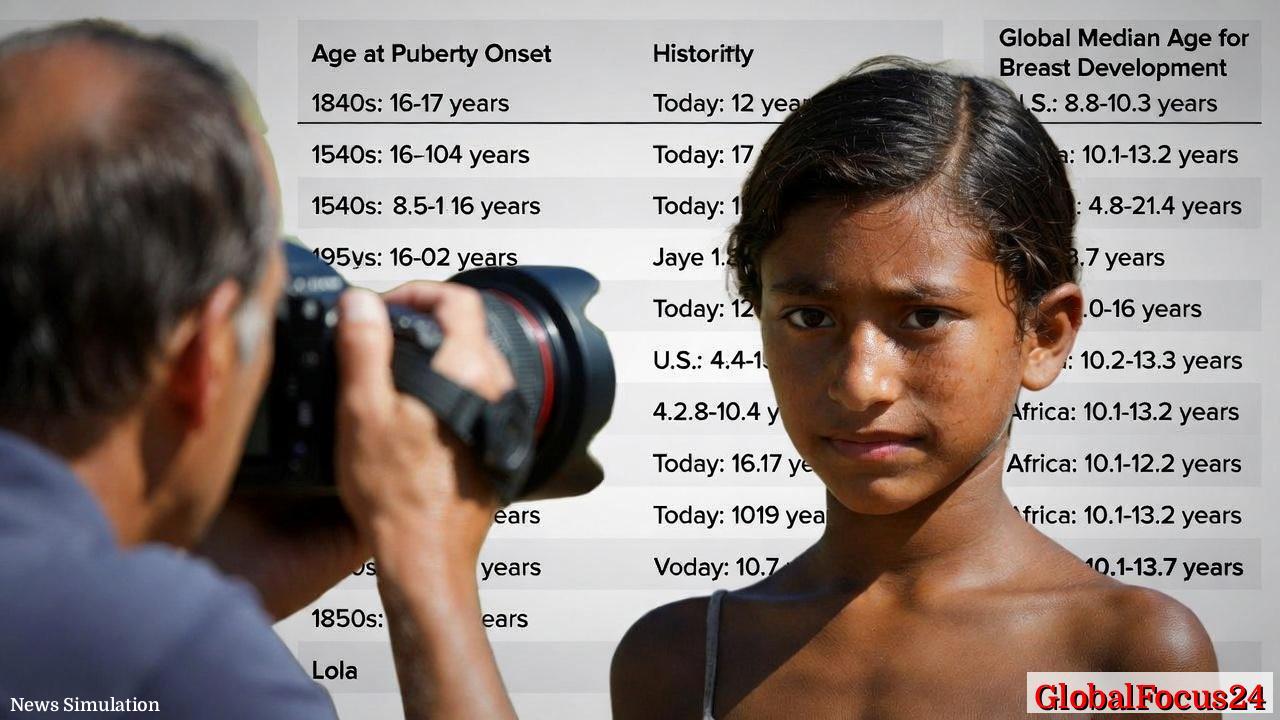
Historical context and growing pattern Historical data illustrate a long-term decline in the age at which puberty begins. In the 1840s, the average age of menarche—the first menstrual period—fell in the mid-to-late teens. By the present era, the onset of puberty has tended to occur earlier, with the median age shifting into the preadolescent years. Research focusing on breast development as an early puberty marker shows a similar downward trend: from roughly 11 years in the 1960s to 9–10 years by the 1990s in the United States. A 2020 global meta-analysis found the median age for breast development decreasing by about three months per decade from 1977 to 2013, a pattern that a 2025 update indicates persists. In the United States, current medians range from about 8.8 to 10.3 years, while some regions in Africa report later onset, at roughly 10.1 to 13.2 years.
The sequence of early puberty often begins with breast development, followed by other secondary sexual characteristics and, in many cases, earlier menarche. Personal stories underscore the intense, lived experience of these physiological changes. For example, an eight-year-old named Lola began showing rapid physical changes in 2023, including acne, pubic hair, and emotional distress marked by daily panic attacks. Her endocrinologist confirmed early puberty, highlighting the personal toll of these biological shifts on mood, self-image, and daily functioning.
Potential drivers: obesity, environment, and stress Obesity stands out as a major contributor to earlier pubertal timing. Global rates of obesity among children and adolescents have climbed since the 1990s, with estimates rising from around 2% in 1990 to about 8% in 2022 worldwide. In the United States, obesity rates among youth have surged from roughly 11% in earlier decades to more than 20% in recent years. Adipose tissue produces leptin, a hormone that signals energy sufficiency and can influence the onset of puberty. In a comprehensive study of more than 130,000 U.S. children, a higher body mass index (BMI) correlated with earlier pubertal onset. Pediatric endocrinologist Paul Kaplowitz emphasizes that obesity is a major driver in many cases, though it is not the sole factor, and the interaction between weight, hormones, and development is multifaceted.
Environmental chemicals have also entered the conversation as a potential accelerator of puberty onset. Substances such as phthalates and per- and polyfluoroalkyl substances (PFAS) are used in plastics, fragrances, and other consumer products and have properties that can mimic or disrupt natural hormonal signaling. Yet research yields mixed results. Not all studies draw a direct causal line between exposure and earlier puberty, and some scientists caution against overgeneralizing findings. Danish researchers in the late 2000s observed a decline in the median age of breast development in the absence of clear BMI shifts, suggesting that environmental chemicals might contribute in some contexts. The field remains active, with ongoing studies aiming to clarify dose-response relationships, exposure timing, and vulnerable developmental windows.
Psychosocial stress is another factor scientists are studying. Early-life adversity, poverty, discrimination, and household instability have been linked to shifts in pubertal timing in several investigations. A 2022 study associated early-life abuse with earlier menarche, while another line of inquiry suggests that high stress, when coupled with high BMI, could accelerate breast development by several months. The COVID-19 pandemic provided a natural stressor experiment, with Italian pediatric centers reporting an increase in referrals for precocious puberty during 2020 compared with 2019, and anecdotal signals of faster progression in some patients. These findings point to a biopsychosocial dimension of puberty timing, in which stress biology interacts with metabolic factors to influence development.
Other factors and uncertainties Genetics undoubtedly shape puberty timing, though no universal biological minimum age for onset exists. The interplay between genes and environment remains complex and is the focus of ongoing research. Nutritional status, physical activity, sleep patterns, and exposure to endocrine-disrupting chemicals all contribute to a multifactorial landscape. Socioeconomic variables also influence health behaviors, access to pediatric care, and detection timing, potentially shaping observed trends across populations and regions.
Health implications for early puberty The health consequences of earlier puberty extend beyond the physical changes visible to caregivers. In the short term, accelerated development can be accompanied by emotional strain, mood swings, and anxiety, as seen in Lola’s case. In the longer term, epidemiological data link earlier pubertal timing with higher risks of obesity, cardiovascular disease, type 2 diabetes, and breast cancer later in life. Mental health concerns, including depression and anxiety, have also shown associations with early puberty, underscoring the need for integrated care that addresses both physical and psychological well-being.
Regional contrasts and public health considerations Regional data reveal notable variations in puberty timing, reflecting differences in obesity prevalence, environmental exposures, and healthcare infrastructures. In the United States, a higher prevalence of childhood obesity aligns with higher rates of earlier puberty in some cohorts, reinforcing the importance of obesity prevention and early intervention programs. Africa, meanwhile, has reported later onset in certain studies, though urbanization, nutrition transitions, and changing environmental exposures complicate the picture and call for region-specific research and public health strategies.
Public health responses aim to balance medical management with education and societal support. Endocrinology guidelines historically defined precocious puberty as development before age nine in girls, but expert consensus is shifting as new evidence accumulates. The Endocrine Society has signaled plans to publish updated clinical guidelines in mid-2026, with potential redefinition of precocious puberty to begin before age eight. This evolution reflects a broader aim to standardize diagnosis, optimize treatment timing, and preserve healthy psychosocial development.
Clinical approaches and patient-centered care Medical responses to early puberty are increasingly individualized, weighing risk-benefit profiles for interventions that pause or slow pubertal progression when clinically indicated. Medications that temporarily suppress puberty are among the tools used in selected cases, particularly when early progression could compromise growth, psychosocial health, or physical development patterns. Early psychological support is also emphasized to help children navigate the social and emotional dimensions of entering puberty earlier than peers. Psychologists and pediatricians advocate for proactive conversations with families to foster resilience, reduce stigma, and address fears about future health and appearance.
Education, families, and community support Education emerges as a cornerstone of a comprehensive response. Teaching children and caregivers about puberty in an age-appropriate, scientifically accurate manner reduces confusion and anxiety, supports healthy body image, and encourages timely medical consultation when concerns arise. Schools and community organizations can play a pivotal role by providing consistent messaging, access to school nurses or counselors, and links to pediatric care. Public health campaigns that emphasize healthy lifestyle choices—balanced nutrition, regular physical activity, adequate sleep, and stress management—may indirectly influence pubertal timing by addressing modifiable risk factors like obesity and chronic stress.
Looking forward: research, policy, and public engagement Continued research is essential to unravel the precise mechanisms driving earlier puberty, quantify the relative contributions of obesity, chemicals, and stress, and identify subgroups most at risk. Large-scale, longitudinal studies that track health trajectories from early childhood into adulthood will help clarify long-term outcomes and inform targeted interventions. Policymakers can support these efforts by funding robust pediatric health programs, expanding access to endocrinology and mental health services, and promoting environmental health initiatives that reduce exposure to suspected endocrine disruptors.
In parallel, healthcare providers are refining screening and referral pathways to ensure timely evaluation of early puberty symptoms. Public health agencies may consider integrating puberty education into school-based health curricula, normalizing conversations around development, and reducing stigma for children experiencing atypical maturation patterns. Communities with higher obesity prevalence or greater exposure to environmental pollutants may prioritize resource allocation to pediatric clinics, nutrition programs, and environmental health monitoring.
Societal implications and equity considerations The shift toward earlier puberty has broad social and equity dimensions. Children who mature earlier may encounter distinct social pressures, including judgments about appearance, behavior, and maturity, which can intensify experiences of bias or discrimination. For girls from marginalized communities, these pressures may intersect with existing health disparities, highlighting the need for culturally sensitive care, accessible mental health resources, and inclusive support networks. Public health messaging should avoid shaming while promoting empowerment—emphasizing health, resilience, and informed decision-making for families navigating puberty-related changes.
Case examples and human impact Individual experiences illuminate the human side of population-level trends. Lola’s story illustrates how early physical changes, coupled with emotional distress, can affect daily life, school performance, and social interactions. Clinicians stress that early detection and compassionate care can mitigate some of the negative consequences, guiding families through medical evaluations, treatment options, and psychosocial support. Stories from communities across regions reveal both the challenges and the resilience of youth and families facing these puberty timing shifts.
Conclusion: a evolving landscape of pediatric puberty The increasing incidence of early puberty among girls reflects a complex interplay of metabolic, environmental, and psychosocial factors. While obesity emerges as a central driver, research continues to parse the roles of chemicals, stress, and gene-environment interactions in shaping developmental timing. The health implications—ranging from physical risks to mental health concerns—underscore the need for comprehensive, empathetic care that integrates medical treatment with education and psychosocial support. As guidelines evolve and public health strategies adapt, the focus remains on safeguarding children’s physical development and emotional well-being while providing families with clear information, accessible care, and a path toward healthy futures.