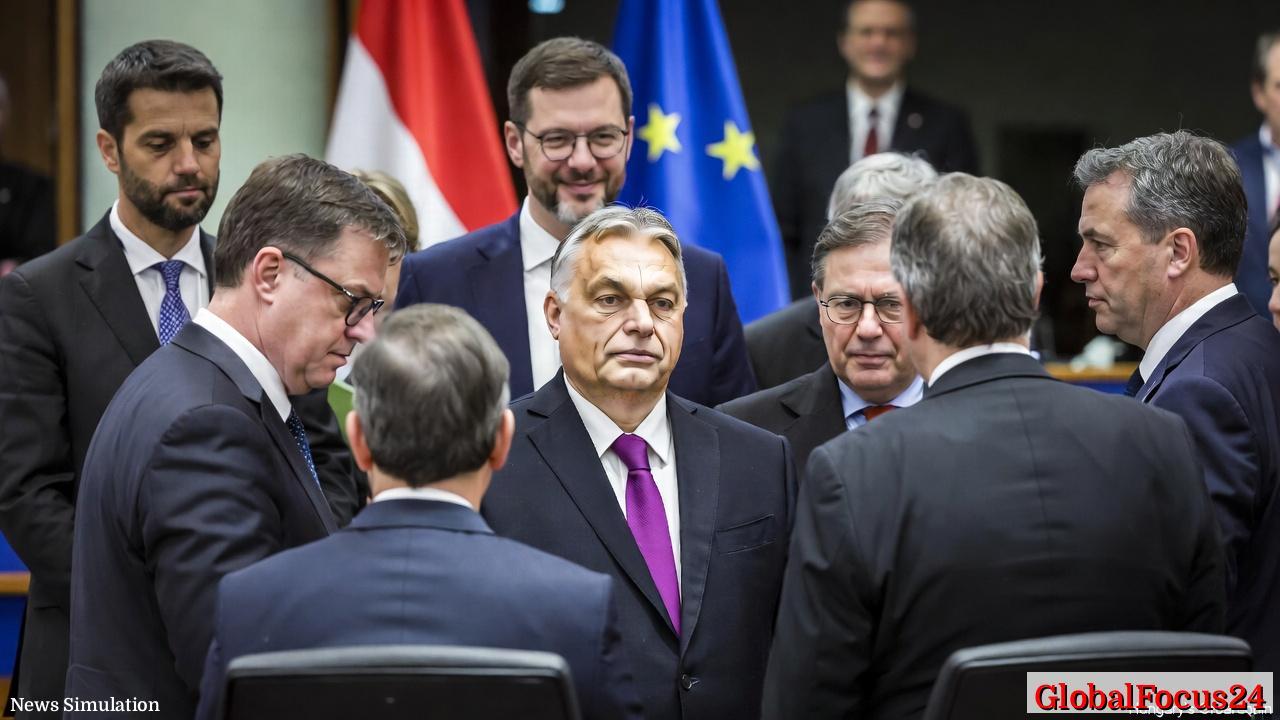
EU Leaders Clash With Hungary Over Blocked €90 Billion Ukraine Loan Amid Deepening Energy Dispute
Brussels Summit Ends in Deadlock Over Ukraine Funding
A high-stakes European Union summit in Brussels has ended in sharp division after Hungarian Prime Minister Viktor Orbán blocked a €90 billion financial package intended to support Ukraine, triggering a wave of criticism from European leaders and exposing deep fractures within the bloc.
The proposed loan, designed to stabilize Ukraine’s economy and sustain essential government functions amid ongoing conflict, required unanimous approval from EU member states. Orbán’s refusal to lift his veto halted the initiative, despite mounting urgency from Kyiv and strong backing from major European economies.
Leaders described the move in unusually blunt terms. German Chancellor Friedrich Merz called it a “gross act of disloyalty,” warning that it could leave lasting damage on EU cohesion. European Council President António Costa went further, characterizing Hungary’s stance as “blackmail,” emphasizing that no member state should leverage collective decisions for national bargaining.
French President Emmanuel Macron labeled the situation “unprecedented,” underscoring the stakes involved and insisting that the funding must move forward without delay.
Energy Dispute at the Core of the Standoff
At the center of Hungary’s position is a dispute over energy supplies, specifically oil transported via the Soviet-era Druzhba pipeline. Hungary, heavily dependent on Russian energy imports, claims that disruptions caused by damage to the pipeline have significantly affected its national energy security.
The pipeline was reportedly damaged during Russian air strikes earlier in the year, interrupting flows of crude oil destined for Central Europe. Hungary has accused Ukraine of failing to expedite repairs and has linked its veto directly to the restoration of these supplies.
Orbán has made his position clear: without guarantees that oil deliveries will resume, Hungary will not support the EU’s financial assistance package for Ukraine.
Ukraine, however, has pushed back on that narrative. Officials in Kyiv have stated that repairs are ongoing but complex, requiring weeks to complete. They have also argued that restoring oil transit under current conditions risks undermining sanctions imposed on Russia, a cornerstone of Western efforts to pressure Moscow economically.
This clash highlights a broader dilemma facing Europe—balancing energy security with geopolitical commitments.
Historical Context: Hungary’s Complex Relationship With Russia
Hungary’s stance is not an isolated development but part of a longer pattern that has set it apart from many of its European counterparts since Russia’s full-scale invasion of Ukraine in 2022.
While the EU has largely maintained a unified front in imposing sanctions on Russia and providing aid to Ukraine, Hungary has repeatedly taken a more cautious approach. The country’s reliance on Russian oil and gas has shaped its foreign policy decisions, often leading to delays or objections during key EU negotiations.
Historically, Hungary’s energy infrastructure has been closely tied to Russia dating back to the Cold War era. The Druzhba pipeline, one of the longest oil pipelines in the world, has served as a critical supply route for decades. Efforts to diversify energy sources have been gradual, leaving Hungary more exposed to disruptions than some Western European nations.
Orbán’s government has also cultivated diplomatic ties with Moscow, even as other EU members have moved to isolate Russia economically and politically. This balancing act has drawn criticism but reflects Hungary’s strategic priorities and domestic considerations.
Economic Stakes for Ukraine and the EU
The blocked €90 billion loan is a cornerstone of the EU’s broader financial support strategy for Ukraine, aimed at ensuring economic stability during an extended period of conflict.
The package is expected to cover:
- Public sector salaries, including healthcare and education workers
- Infrastructure repair and reconstruction
- Social welfare programs
- Macroeconomic stabilization to prevent currency collapse
Ukrainian President Volodymyr Zelensky has described the funding as critical for maintaining basic state functions and protecting civilian livelihoods. Without it, Ukraine faces increased fiscal pressure at a time when its economy remains heavily strained by war-related disruptions.
For the European Union, the stakes extend beyond Ukraine. The ability to deliver coordinated financial assistance is seen as a test of the bloc’s credibility and unity. Prolonged delays risk undermining confidence among member states and international partners, as well as financial markets monitoring Europe’s response to geopolitical crises.
Regional Divisions and Central European Dynamics
Hungary is not entirely alone in expressing reservations. Slovakia’s Prime Minister Robert Fico also declined to endorse the summit’s conclusions regarding the funding package, signaling broader unease within parts of Central Europe.
While Slovakia has not formally vetoed the loan, its reluctance adds another layer of complexity to negotiations. The Czech Republic, which had previously aligned with Hungary and Slovakia on certain financial exemptions, has taken a more supportive stance toward Ukraine in recent months.
These differing positions reflect varying national interests across the region:
- Energy dependence on Russia remains higher in Central and Eastern Europe compared to Western Europe
- Economic exposure to the war differs, influencing domestic political calculations
- Public opinion on Ukraine support varies across member states
Such divisions are not new but have become more pronounced as the war enters a prolonged phase, testing political cohesion across the EU.
Escalating Tensions Within the European Union
The tone of the Brussels summit underscored growing frustration among EU leaders. Negotiations extended late into the night, with multiple attempts to reach a compromise ultimately failing.
Orbán remained firm throughout, describing the discussions as “tough” but reiterating Hungary’s right to oppose the loan. His government has framed the veto as a defense of national interests rather than an act of obstruction.
However, other leaders have warned that repeated use of veto power on critical issues could erode trust within the union. The EU’s decision-making process, which requires unanimity in key areas such as foreign policy and financial aid, has increasingly come under scrutiny.
European Commission President Ursula von der Leyen sought to reassure stakeholders, stating that the funding would be delivered “one way or another,” hinting at potential alternative mechanisms that could bypass Hungary’s veto if necessary.
Political Timing and Domestic Pressures in Hungary
The dispute unfolds against the backdrop of Hungary’s upcoming national elections scheduled for April 12. Orbán has made opposition to EU policies on Ukraine a central theme of his campaign, positioning himself as a defender of Hungarian sovereignty and economic interests.
Recent polling indicates that his party faces a competitive race, adding political urgency to his stance in Brussels. Analysts suggest that maintaining a hard line on issues such as energy security and financial contributions to Ukraine may resonate with segments of the domestic electorate.
This intersection of domestic politics and international diplomacy complicates efforts to reach consensus at the EU level.
Broader Implications for EU Unity and Policy
The current standoff raises broader questions about the European Union’s ability to act decisively during crises. As geopolitical tensions persist, the requirement for unanimous agreement on major initiatives has become both a strength and a vulnerability.
On one hand, it ensures that all member states have a voice in critical decisions. On the other, it creates opportunities for individual countries to leverage their position for national gains, potentially delaying urgent action.
Comparisons have been drawn to previous EU challenges, including debates over fiscal policy during the eurozone crisis and disagreements on migration policy. In each case, internal divisions tested the limits of collective decision-making.
The Ukraine funding dispute may similarly serve as a turning point, prompting discussions about potential reforms to EU governance structures.
What Comes Next
The issue is expected to return to the agenda at the next EU leaders’ meeting, where efforts to break the deadlock will continue. Diplomatic negotiations are likely to intensify in the coming weeks, with pressure mounting on all sides to find a resolution.
In the meantime, uncertainty surrounding the €90 billion loan adds to the challenges facing Ukraine, as well as to the broader strategic calculations within Europe.
As the EU grapples with internal divisions and external pressures, the outcome of this dispute will carry significant implications—not only for Ukraine’s immediate future but also for the cohesion and credibility of the European project itself.