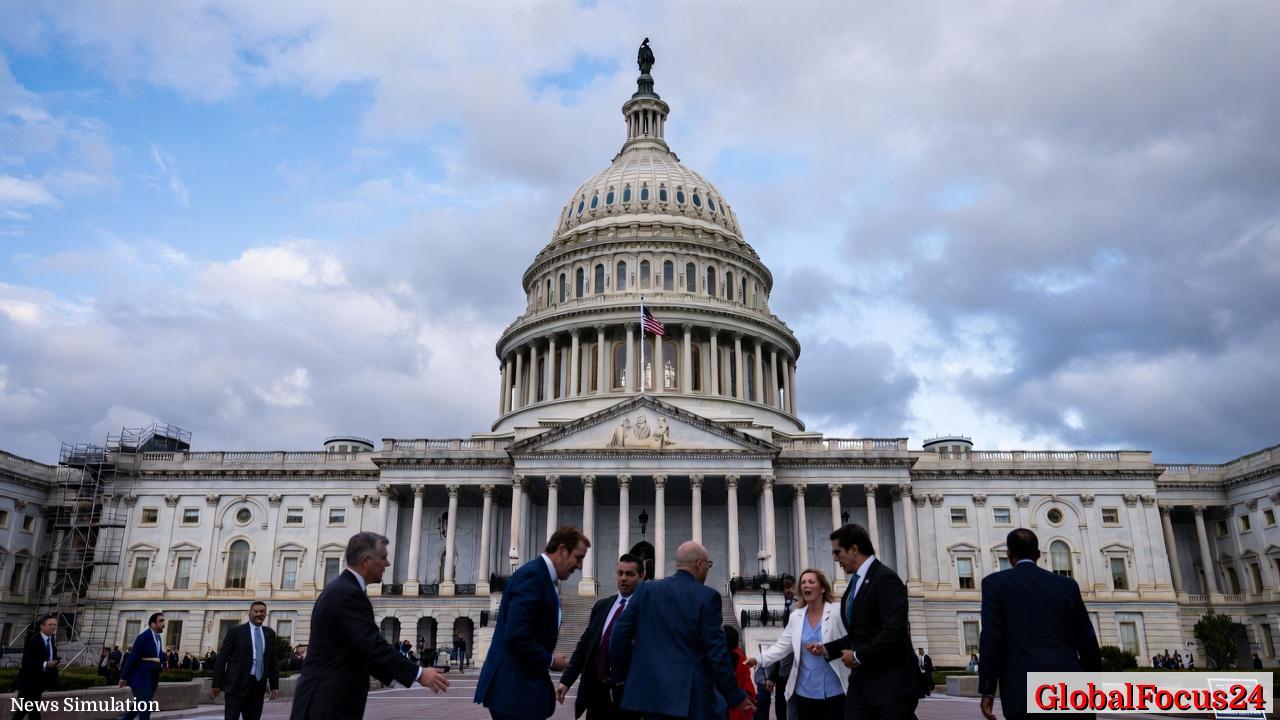
Potential Democratic Takeover of House Could Energize Capitol
Mounting Pressure Ahead of the 2026 Elections
As the 2026 midterm elections draw closer, a growing number of political analysts and pollsters anticipate a significant shift in power on Capitol Hill. Forecasts suggest that Democrats stand a strong chance of reclaiming control of the U.S. House of Representatives — a development that could reshape both the tone and the tempo of American lawmaking after one of the least productive sessions in recent history.
Across the country, voter frustration with Washington is running deep. Surveys show that 80 percent of Americans disapprove of Congress’s performance, a remarkable low point compared to the more than 50 percent approval rates recorded roughly twenty-five years ago. In an era when public trust in institutions is wavering, this widespread discontent is shaking the foundations of America’s representative government.
Public Discontent and Eroding Trust
The perception that Congress is ineffective has hardened over several sessions. Despite the nation’s complex challenges—from inflation pressures and housing shortages to global instability—lawmakers have advanced little major legislation in recent years. According to congressional data, the current session has passed fewer substantive laws than any since the mid-19th century.
Public skepticism extends beyond performance to character. Polling data indicate that only 8 percent of Americans rate members of Congress as high in honesty and ethics—a number roughly equivalent to the trust placed in advertising executives, and only slightly above the level attributed to lobbyists and car salespeople. This poor standing underscores how deeply voters question both integrity and accountability inside the Capitol.
A Legislative Branch in Retreat
Observers say that Congress has gradually ceded much of its institutional authority to the presidency and federal agencies over the past two decades. Decisions once vigorously debated within committees are now frequently shaped by executive orders or administrative rulings. This power shift, while politically convenient during times of gridlock, has weakened the legislative branch’s credibility as an independent policymaking institution.
The result has been a cycle of limited achievements and recurring confrontations, often culminating in disruptive government shutdowns. The most recent partial shutdown has again exposed internal divisions and procedural breakdowns that prevent the passage of even basic appropriations bills. For many Americans, these crises have turned frustration into cynicism.
What a Democratic House Could Mean
Should Democrats retake control of the chamber in November, the political atmosphere on Capitol Hill could change markedly. Party strategists claim a renewed majority would bring increased oversight of executive actions, more consistent legislative scheduling, and a return to committee-driven policymaking. Democrats also see potential to revive lapsed bipartisan negotiations on infrastructure, immigration reform, and technology policy, areas long stalled amid partisan disputes.
Policy analysts caution, however, that any House majority—Democratic or Republican—must overcome systemic barriers. Deep polarization, internal caucus rivalries, and the Senate’s procedural hurdles have made coalition-building more difficult than at any time in modern history. Yet renewed leadership could motivate efforts to modernize congressional operations, strengthen transparency rules, and restore legislative relevance in an era dominated by presidential authority.
Historical Parallels and Political Cycles
Historically, party shifts in Congress have marked pivotal moments in U.S. governance. The Democratic “wave” elections of 2006, following discontent with the handling of the Iraq War, led to ambitious ethics reforms and oversight hearings. Likewise, the Republican victory in 1994 under the “Contract with America” reshaped budget policy and welfare reform.
Political scientists note that public dissatisfaction often breeds demand for institutional renewal rather than purely ideological change. Previous waves of reform tended to prioritize restoring trust through procedural transparency and fiscal accountability. If Democrats win back the House, many expect similar calls—emphasizing professional standards, legislative productivity, and responsiveness to voter priorities.
Regional and Economic Factors Shaping the Contest
Economic unease remains one of the strongest forces influencing voter sentiment this election cycle. Despite a cooling inflation rate, wage growth has lagged behind living costs in several metropolitan areas, while housing unaffordability has reached record levels in coastal states. In regions like the Midwest and Rust Belt, manufacturing recovery has been uneven, leaving working-class voters frustrated with Washington’s perceived detachment from everyday concerns.
Democrats are focusing major resources on suburban districts in Arizona, Nevada, Pennsylvania, and Michigan—territories where demographic shifts favor their base but where local economies remain fragile. Republicans, meanwhile, are emphasizing energy policy and border security in attempts to solidify support across rural and Southern constituencies. Analysts view these regional battlegrounds as decisive in determining the House balance.
The Price of Legislative Paralysis
The cost of congressional dysfunction extends beyond partisan optics. Economic forecasters warn that repeated shutdowns and funding delays undermine confidence in U.S. fiscal stability, raising borrowing costs and shaking investor trust. Each impasse, particularly those driven by budget standoffs, disrupts federal services, from food safety inspections to national park operations, reverberating through households and businesses alike.
In fiscal terms, the Congressional Budget Office has previously estimated that prolonged shutdowns can shave billions off quarterly GDP growth. But the larger consequence may be psychological: a perception that the world’s oldest continuous democracy can no longer manage its own internal processes efficiently.
Restoring Purpose and Productivity
Advocates for congressional reform argue that restoring functionality requires more than a change of party leadership. They propose updates to outdated procedures, including modernization of committee jurisdiction, streamlined debate rules, and long-term budgeting mechanisms that minimize brinksmanship. Technology, they note, could play a greater role in legislative planning and public interface, ensuring that citizens have clearer access to bill tracking and debate records.
Some believe a Democratic majority could champion such modernization initiatives, drawing lessons from similar reforms undertaken in European parliaments and Canada’s House of Commons. While structural overhauls are unlikely to occur overnight, even modest steps toward efficiency could signal to voters that Congress is prepared to reclaim its constitutional role.
Comparisons with Other Democracies
Compared with peer legislatures in advanced economies, the U.S. Congress has become strikingly inefficient. The British Parliament, though adversarial, typically manages to pass budgets and annual legislation without recurring shutdown threats. Germany’s Bundestag, operating under a multiparty coalition framework, enforces stricter timetables for debate and voting. Many analysts argue that the U.S. could adapt similar mechanisms without compromising democratic deliberation.
Political historians often point out that American legislators were once renowned for both vigor and compromise. From the postwar boom through the mid-20th century, major bipartisan achievements—the Interstate Highway System, the Civil Rights Act, and landmark environmental laws—arose from pragmatic negotiation. The current stagnation, by contrast, represents a dramatic departure from that tradition.
The Stakes for Democracy
The 2026 midterm elections will test whether the American public can push Congress toward renewal. While political winds appear to favor Democrats at this stage, the broader question concerns institutional vitality rather than party labels. A revitalized House could restore balance among the branches of government and reinvigorate democratic participation.
Yet the opportunity comes with urgency. If Congress continues to underperform, voters may grow even more disengaged, deepening the very cycle of distrust that now defines public perception. The road back to credibility requires a sustained commitment to transparency, compromise, and tangible results.
A Capitol Poised for Renewal—or More Frustration
As election season intensifies, both major parties face a defining test. Voters want not only new leadership but a new sense of purpose in Washington—one capable of proving that representative government can still adapt and deliver. Whether the Democrats ultimately regain control of the House or not, the demand for a more disciplined, responsive, and ethical Congress has never been clearer.
In the months ahead, the battle for legislative control may serve as more than just a contest of strategies; it could determine whether Capitol Hill remains mired in stalemate or begins the long journey toward restoration. The future of American governance—and the credibility of its lawmakers—hangs in that balance.