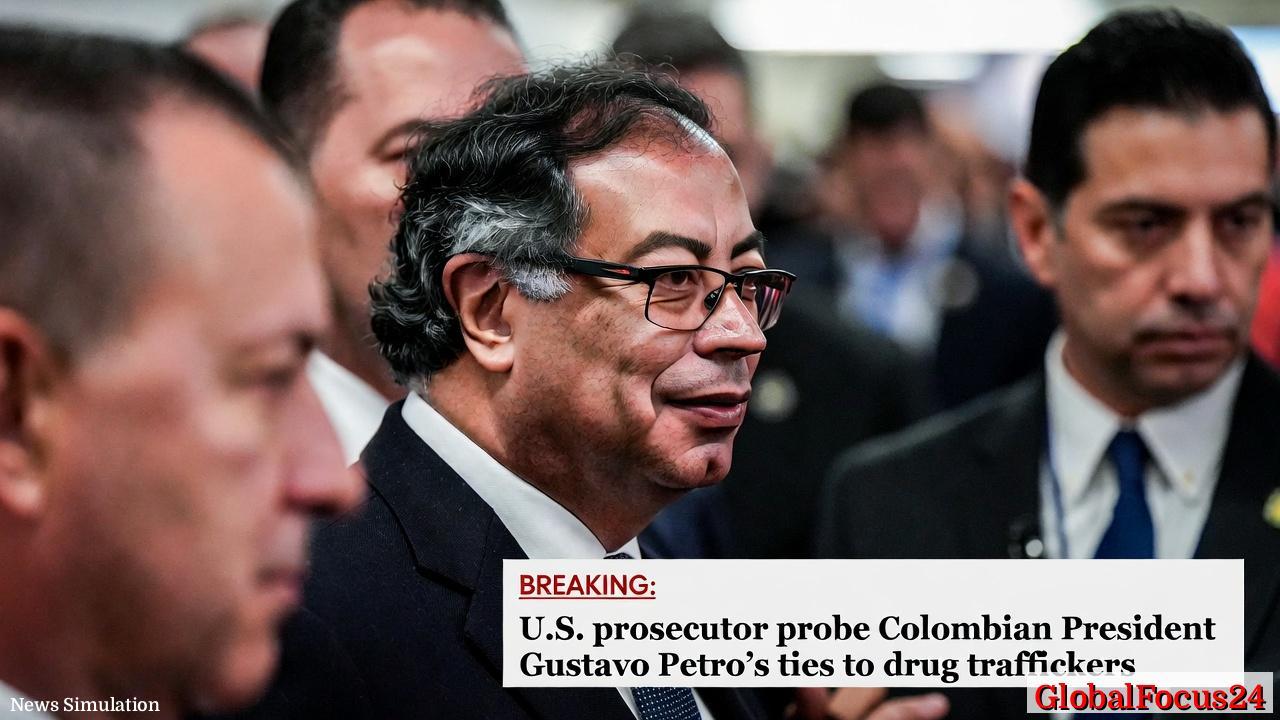
DEA Names Colombian President Gustavo Petro a ‘Priority Target’ as U.S. Prosecutors Probe Ties to Drug Traffickers
U.S. Federal Investigators Intensify Focus on Colombia’s Leader
The U.S. Drug Enforcement Administration (DEA) has classified Colombian President Gustavo Petro as a “priority target” in a widening investigation into alleged connections between his political network and major drug trafficking organizations. According to federal sources familiar with the matter, prosecutors in New York are probing reports that Petro and several close associates maintained improper relationships with figures linked to the Sinaloa cartel and other regional drug groups.
While the investigation remains in early stages, the designation marks a significant escalation in U.S. scrutiny of Colombia’s first leftist president — signaling that agents consider his potential influence within the drug trade to be of global consequence.
Allegations Rooted in DEA and Prosecutorial Records
Documents reviewed by federal investigators indicate that Petro’s name has surfaced in numerous drug enforcement investigations since 2022. Much of the information reportedly originates from confidential informants who described shadow negotiations involving the president’s envoys and prominent traffickers.
These reports suggest that Petro’s “total peace” initiative — a central part of his political agenda aimed at demobilizing armed groups — may have been exploited by cartel figures looking to secure immunity from extradition or leverage reduced sentences. Some informants alleged that intermediaries connected to the presidential campaign promised legal protection in exchange for financial support, though no charges have yet been filed.
Colombian law enforcement and U.S. agents are also examining potential misuse of state authorities for illicit trafficking through national ports, particularly the export of cocaine and fentanyl shipments. If verified, such a link would represent a profound breach of both domestic and international anti-narcotics operations.
Petro’s Denials and Government Response
President Petro has categorically denied the accusations, describing the claims as politically motivated fabrications driven by his opponents. His administration insists that he never accepted funds from criminal organizations, and that any suggestion of campaign irregularities lacks supporting evidence.
In an official statement, Colombia’s Embassy in Washington dismissed the reports as “unverified,” asserting that no legal findings substantiate the DEA’s internal designations. “The insinuations rest on fragmented intelligence and misinterpreted interviews,” the embassy explained, emphasizing that U.S. authorities have not filed any charges against Petro or his top officials.
Expanding U.S. Inquiry into Alleged Bribes and Extradition Deals
Investigators in Brooklyn and Manhattan have reportedly questioned convicted traffickers regarding the president’s inner circle. Witnesses described alleged solicitations of bribes to halt or delay extraditions to the United States, focusing on incidents tied to La Picota prison in Bogotá.
Though no direct evidence implicates Petro personally, prosecutors are analyzing whether his political allies acted in coordination with imprisoned cartel leaders. The inquiry has been complicated by overlapping testimonies and limited documentation, a common challenge in corruption-linked narcotics cases spanning multiple jurisdictions.
Historical Context: Colombia’s Enduring Narco Conflicts
Colombia’s struggles with drug trafficking are deeply entrenched in its political and social fabric. Since the 1980s, the nation’s ruling institutions have battled to sever ties between politics, armed militias, and the coca economy. Successive administrations have faced scandals involving the Medellín and Cali cartels, the AUC paramilitaries, and FARC dissidents who financed operations through the cocaine trade.
Petro’s position makes the current allegations particularly sensitive. A former member of the M-19 guerrilla movement — a group historically accused, though never conclusively proven, to have accepted cartel money during the height of Colombia’s drug wars — Petro represents a generational shift toward reconciliation and reform. His presidency has sought to recast Colombia’s global image, yet these allegations risk reigniting international skepticism about the country’s anti-narcotics commitments.
Economic Implications and Market Uncertainty
The controversy threatens to unsettle Colombia’s economic environment at a delicate moment. The peso, already pressured by falling oil revenues and a volatile global commodities market, could face additional strain if investor confidence wanes. Analysts note that any perception of state-linked corruption or U.S. sanctions could raise borrowing costs and dampen foreign investment, particularly in sectors like energy, infrastructure, and agriculture.
International lenders have historically been sensitive to instability in Colombia’s governance. When former leaders faced investigations tied to illegal armed groups in the early 2000s, credit ratings briefly plummeted, affecting consumer confidence and regional trade flows. Investors are now closely monitoring developments, mindful that an extended U.S. probe could disrupt political priorities and delay ongoing economic reforms.
Cross-Border Political Ramifications
Washington has so far maintained a cautious distance, with the White House declining to comment on any active investigation. Officials emphasized that the inquiry is being handled solely by law enforcement and prosecutorial agencies without executive involvement. Still, the development carries potential diplomatic ramifications.
Petro’s administration has walked a fine line between cooperation and criticism of U.S. drug policy. Although he met recently with the American president to discuss migration and climate issues, Petro has repeatedly condemned what he calls the “failure” of the U.S.-led war on drugs. The allegations now place additional strain on bilateral collaboration, particularly as both countries navigate complex trade and security partnerships across Latin America.
The Role of Ecopetrol and Financial Oversight
DEA records reportedly reference suspicions that certain transactions involving Ecopetrol, Colombia’s state-owned oil company, may have been used to funnel funds abroad under the guise of legitimate contracts. Ricardo Roa, Ecopetrol’s president and a close Petro ally, forcefully rejected the notion, stating that the enterprise maintains “zero tolerance for corruption” and complies with international financial regulations.
Compliance experts suggest that even unproven allegations can prompt external audits or shareholder actions, both of which could slow operations or deter partnerships with U.S.-based companies that must adhere to strict anti-money-laundering mandates.
Petro Family Under Additional Scrutiny
The president’s family has faced separate legal challenges since his election. His son, Nicolás Petro, was charged in 2023 with soliciting illicit campaign contributions from a convicted drug trafficker but maintains his innocence. Petro’s brother, Juan Fernando Petro, has also come under investigation for alleged secret negotiations with cartel inmates. Colombian prosecutors contend these talks may have aimed to secure political concessions in exchange for protections against extradition.
While such family investigations are not directly tied to the DEA’s U.S.-based probe, their convergence has intensified questions about the administration’s transparency and its ability to govern free from criminal influence.
Regional Comparisons and Precedent
Comparatively, Colombia’s unfolding controversy mirrors previous regional scandals where political figures were entangled in U.S. anti-narcotics operations. In Mexico, investigations into officials accused of cartel collusion have reshaped bilateral cooperation and triggered domestic reforms. Similar probes in Honduras and Venezuela have led to indictments of high-ranking officials, demonstrating Washington’s willingness to pursue cases beyond its borders when transnational trafficking networks are involved.
For Colombia, a country historically seen as a cornerstone of U.S. regional drug enforcement, the prospect of its sitting president listed among “priority targets” represents a diplomatic and symbolic rupture not seen since the height of cartel rule in the 1990s.
What the Designation Means
The DEA’s “priority target” classification is reserved for individuals deemed to exert substantial influence over narcotics production or distribution networks. While it does not automatically indicate guilt, the label typically precedes intensified surveillance, asset analysis, and the deployment of international investigative teams.
Senior officials familiar with the process explain that the designation often serves as a coordination signal within federal agencies — prompting allied governments to share intelligence and restrict subjects’ financial mobility. For Petro, this could entail scrutiny of his communications, past campaign donations, and any overseas investments linked to his associates.
Colombia’s Political Future Amid Uncertainty
At home, the allegations have exacerbated tensions within Colombia’s divided political landscape. Opposition lawmakers have demanded congressional hearings, while Petro’s supporters accuse detractors of attempting a “judicial coup” to derail social reform programs. The government’s ongoing negotiations with armed groups, already facing delays, could be jeopardized if international trust in Colombia’s leadership erodes.
Despite the mounting pressure, Petro has continued his public schedule, emphasizing anti-corruption and environmental priorities. His administration plans to introduce additional measures for transparency in public procurement and campaign financing. Political observers, however, warn that even modest legal findings abroad could undermine his credibility and embolden domestic challengers ahead of the next election cycle.
A Nation at a Crossroads
Colombia stands at a pivotal moment. Decades of progress against paramilitary violence and cartel dominance now intersect with allegations reaching the highest office in the land. Whether the probe yields criminal charges or fades amid insufficient evidence, its repercussions are already profound — reshaping Colombia’s political discourse and testing the resilience of its democratic institutions.
As the DEA expands its inquiry and prosecutors weigh potential findings, the case underscores the persistent entanglement between power and the drug trade in Latin America — a dynamic that continues to challenge both domestic governance and international diplomacy.