Crypto Funds See $1.06 Billion Inflows, Third Straight Week of Gains as Bitcoin ETFs Lead
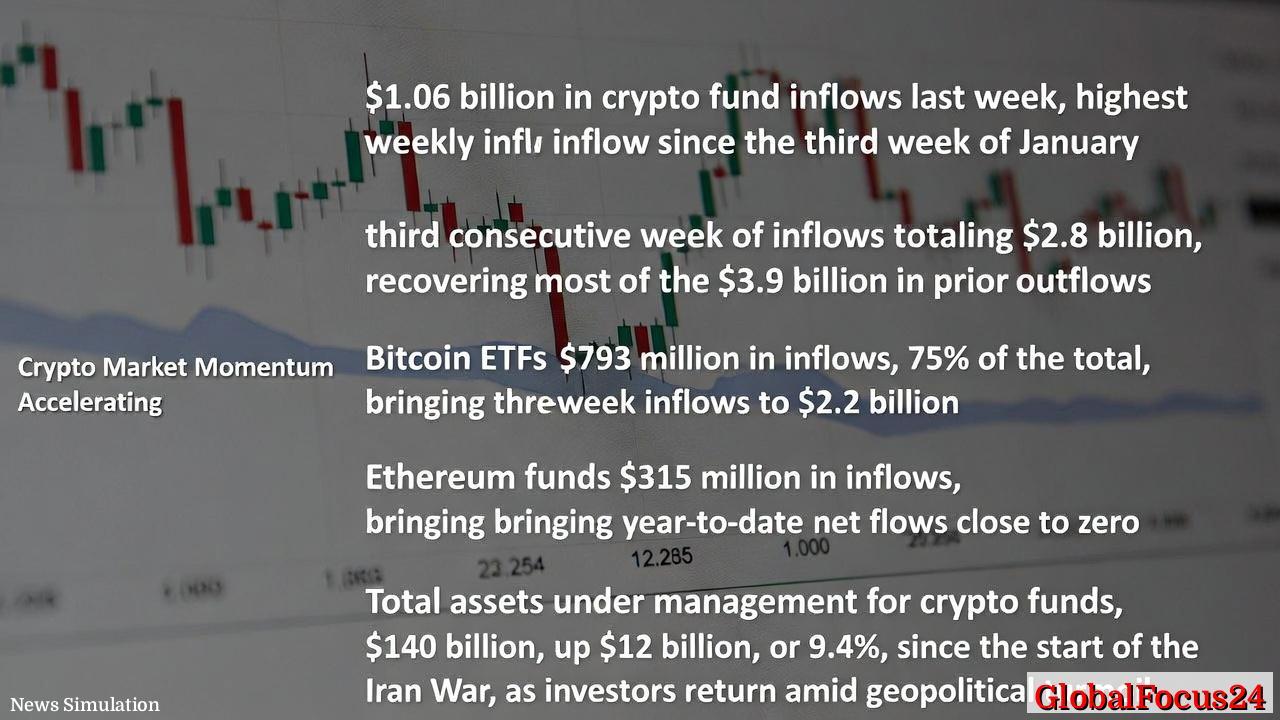
Abstract Investors poured a total of $1.06 billion into crypto funds over the past week, marking the highest weekly inflow since the third week of January and extending a three-week streak of net purchases. Bitcoin-focused ETFs accounted for the majority of the momentum, while Ethereum-related funds posted meaningful, though smaller, inflows. The sustained inflows come amid heightened geopolitical tension and macro uncertainty, with market participants recalibrating exposure to digital assets within a broader risk-off to risk-on cycle.
Context and momentum The latest weekly data show a quiet but notable shift back toward crypto assets after a pronounced retreat earlier in the year. Inflows of $1.06 billion lift year-to-date totals and help replenish a significant portion of earlier outflows that occurred during a five-week selling wave. The dynamic underscores how investor sentiment can pivot on macro signals and policy developments, as well as on broader risk management considerations in diversified portfolios.
Bitcoin ETFs drive the surge Bitcoin-focused exchange-traded funds dominated the week’s activity, contributing approximately $793 million of the inflows. This sector led the aggregate totals, delivering about 75 percent of weekly crypto fund inflows and pushing three-week cumulative flows for Bitcoin-focused products to roughly $2.2 billion. The concentration of capital in Bitcoin-linked vehicles reflects continued investor interest in the flagship cryptocurrency as a proxy for digital scarcity, liquidity, and ease of access through regulated investment vehicles.
Ethereum funds and broader diversification Ethereum-themed funds drew in about $315 million for the week, contributing to a year-to-date net flow that remains near zero. The gap between Bitcoin and Ethereum inflows highlights a continued divergence in investor preferences between the leading digital asset by market cap and the broader smart contract platform. While Ethereum liquidity has rebounded from earlier softness, the pace of inflows suggests that risk managers are still evaluating the relative catalysts—network upgrades, layer-2 scalability progress, and on-chain activity—to determine how much exposure to allocate beyond Bitcoin-centric strategies.
Assets under management and the broader market backdrop Since the onset of significant geopolitical developments, total crypto ETF assets under management have risen by around $12 billion, representing a gain of roughly 9.4 percent to reach approximately $140 billion. This uplift indicates sustained capital allocation in regulated crypto products even as regulatory and macro headwinds persist in other markets. The inflows contribute to a broader narrative: investors are seeking structured access to digital assets within familiar oversight frameworks, which can dampen some volatility associated with direct holdings.
Global and regional implications The influx into crypto funds is not confined to a single geography, but regional patterns provide useful context for interpreting the flow dynamics. In Europe and North America, regulated crypto funds have gained traction as institutional and accredited investors seek product-level exposure with defined risk controls. In Asia-Pacific markets, regulators have pursued a cautious but expanding stance toward digital assets, creating a mixed environment where investors weigh regulatory clarity against the potential for innovation and market development. The net effect is a more connected global market in which cross-border capital can flow into compliant products that offer diversification benefits for diversified portfolios.
Historical context and market cycles The current inflow cycle follows a period of pronounced outflows that reflected a risk-off stance amid interest rate expectations, inflation concerns, and geopolitical tensions. Historically, crypto fund flows have shown sensitivity to macro shifts and regulatory news, with liquidity and investor confidence often oscillating in response to changing risk appetites. The present period resembles a pivot phase seen in past market cycles when investors reassessed exposure to digital assets as part of a broader portfolio rebalancing effort.
Economic impact and implications for investors
- Liquidity and price discovery: The weekly inflows bolster liquidity in crypto funds, supporting smoother price discovery and potentially reducing bid-ask spreads for underlying assets within regulated vehicles.
- Institutional access: The continued interest in Bitcoin ETFs reflects growing acceptance of regulated products as entry points for institutional participants, including wealth managers and pension funds seeking exposure with defined custody and compliance frameworks.
- Diversification benefits: Ethereum and other asset streams offer complementary exposure, potentially benefiting diversified portfolios that aim to balance store-of-value characteristics with ecosystem activity and use-case momentum.
- Risk management considerations: Despite the positive flow environment, investors should weigh scenarios such as regulatory shifts, network congestion, and macro volatility that can influence fund performance and underlying asset risk.
Public sentiment and market narratives Public reaction to crypto fund inflows often blends optimism about mainstream adoption with prudent caution about structural and regulatory uncertainties. The sense of urgency among market watchers typically centers on translating inflows into sustainable demand rather than episodic, one-off capital moves. As users observe the evolving regulatory landscape and the balance between risk and reward in regulated vehicles, their attitudes toward crypto assets may continue to evolve in tandem with broader market conditions.
Regional comparisons and performance implications
- North America: Strong demand for Bitcoin ETFs aligns with investor preference for regulated access and transparent risk controls. This region continues to lead in product development and adoption, reinforcing the role of regulated vehicles in shaping crypto market participation.
- Europe: European investors often prioritize compliance, governance, and fund-level disclosures. The inflow trend supports ongoing interest in diversified crypto products that integrate with existing European financial markets and retirement accounts.
- Asia-Pacific: Regulatory clarity remains a key determinant of capital flow. Steady progress in policy development could unlock greater participation, particularly among institutions seeking regulated exposure and innovative investment structures.
Forward-looking considerations
- Regulatory trajectory: Any clarity or tightening of crypto asset regulation will influence the pace and magnitude of future inflows. Markets tend to react to policy signals that affect risk perception and product availability.
- Technological momentum: Developments in blockchain scalability, interoperability, and ecosystem activity can drive investor interest beyond Bitcoin, expanding demand for diversified fund offerings across asset classes.
- Market volatility: While inflows signal confidence in regulated products, macro-driven volatility or unexpected shocks could test investor appetite for crypto funds and impact performance.
Conclusion The current week’s $1.06 billion inflow into crypto funds, led by Bitcoin ETFs, marks a continued stabilization after earlier volatility and underscores investor appetite for regulated exposure to digital assets. Ethereum-related funds add nuance to the mix, reflecting a broader search for diversification within the crypto universe. As global markets navigate geopolitical tensions and shifting macro conditions, the appeal of regulated crypto products—combined with a track record of improving liquidity and transparency—appears to be sustaining investor interest and contributing to a more mature, broadly accessible asset class.