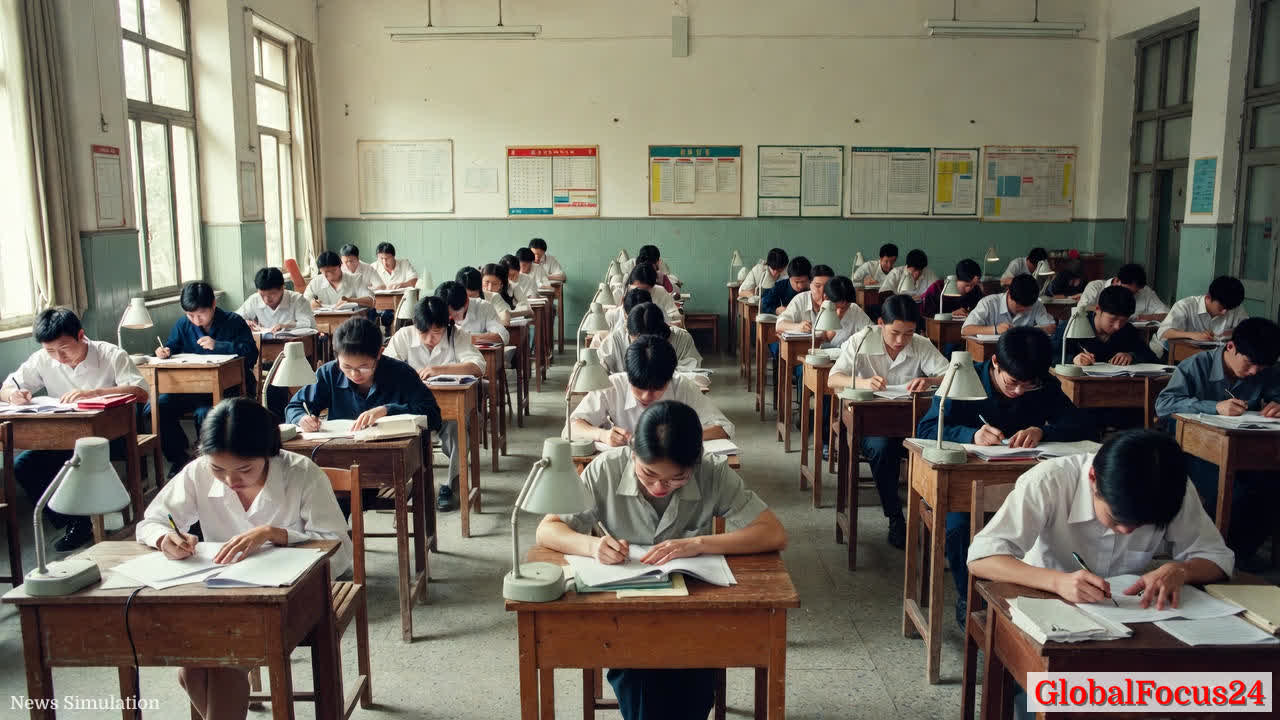
Civil Service Exams: A Test of Society
The civil service examinations of China and India stand as enduring institutions that shape career pathways, social mobility, and regional development. They are not merely quizzes of memory or reasoning; they are social rituals that encode values, reward perseverance, and synchronize generations to the needs of the state. While both nations approach the exam with distinct histories and structures, the underlying purpose remains strikingly consistent: to identify individuals whose training, judgment, and character align with the demands of public service.
Historical context and evolution
In China, the imperial examination system that once governed eligibility for officialdom evolved into a modern civil service framework in the 20th century. The transformation accelerated as the People’s Republic of China sought to professionalize governance and reduce the influence of hereditary or patronage-based appointments. The modern equivalent emphasizes standardized testing, merit-based assessment, and a wide recruitment pool that includes university graduates from diverse regions. The system’s historical memory—of rigorous literary and administrative preparation—continues to influence how contemporary exams are designed, perceived, and pursued by aspirants.
India’s civil service examination tradition traces a different arc. Rooted in the colonial era and refined in the post-independence period, India’s UPSC (Union Public Service Commission) examinations have long served as a unifying mechanism to select officers for the Indian Administrative Service, Indian Police Service, and other key civil services. The competitive process draws applicants from all corners of the country, reflecting linguistic diversity, regional identity, and varied educational backgrounds. Over decades, reforms have sought to balance rigorous assessment with broader access, while maintaining a standard that prize analytical ability, ethical judgment, and leadership potential.
Structure and process
Both nations employ multi-stage processes designed to filter for capability, resilience, and adaptability. In China, the assessment often combines written examinations with interviews and sometimes additional evaluations, depending on the specific track and level of appointment. In India, the UPSC system typically involves a preliminary exam to screen candidates, a main examination covering multiple papers and disciplines, and a personal interview. Across both systems, the emphasis is on a blend of knowledge, critical thinking, and the ability to synthesize information in public-interest contexts.
A defining feature in many exam traditions is the central role of preparation communities—families, coaching centers, and peer networks that organize study schedules, supply resources, and share strategies. This ecosystem can create a highly competitive environment where dedication and discipline become social currencies. The result is a cohort of civil servants who are not only technically competent but also well-versed in the social responsibilities that accompany public office.
Economic impact and workforce implications
The civil service seeding process has substantial economic implications for national governance and development. By channeling top graduates into administration, ministries gain access to individuals trained to analyze complex data, design policy, and implement programs at scale. The efficiency and effectiveness of public administration are, in part, a function of the strength of this talent pipeline.
In both countries, the exams influence regional economic patterns. Regions with robust higher education ecosystems often produce stronger applicant pools, which can elevate local labor markets and attract investment in human capital infrastructure. Conversely, regions with fewer educational resources may experience constraints in talent development, affecting regional governance capacity and the distribution of public services.
Public administration modernization and reform efforts are frequently intertwined with civil service examinations. As governments pursue digital governance, data-driven policymaking, and accountability frameworks, the skill sets prized by the exams—analytical reasoning, ethical judgment, and policy synthesis—become increasingly critical. This alignment helps ensure that the civil service remains capable of adapting to changing technology, demographic shifts, and evolving citizen expectations.
Regional comparisons and shared challenges
While China and India operate within distinct political cultures and administrative traditions, several common themes emerge when examining civil service examinations and their societal role:
- Merit-based selection as a public trust mechanism: Both systems use examinations to signal that recruitment is based on ability rather than patronage, reinforcing public confidence in governance.
- Lifelong learning and career development: The exam-based entry often intersects with ongoing professional development, including in-service training, policy specializations, and leadership programs.
- Urban-rural and regional balance: Efforts to broaden access to prestigious examinations confront disparities in educational opportunities, naming and addressing regional inequities in preparation resources and mentorship.
- Global competitiveness and benchmark standards: As both nations engage with global markets and international institutions, the civil service must demonstrate capacity in policy design for trade, climate change, public health, and digital transformation.
Economic elasticity and adaptability
The modern civil service is increasingly a catalyst for economic elasticity. Competent administrators can accelerate project delivery, improve administrative efficiency, and streamline regulatory processes that unlock private-sector investment. In large, diverse economies, the ability to interpret data, anticipate risks, and coordinate across agencies translates into tangible outcomes—whether in infrastructure deployment, environmental stewardship, or social programs.
Exam-driven talent pipelines also influence innovation ecosystems. High-performing civil servants may become stewards of policy experimentation, piloting pilots in urban planning, education reform, or public health initiatives. Their capacity to balance constraints with evidence-based approaches can spell the difference between incremental improvements and transformative change.
Public perception and societal implications
The prestige associated with civil service exams stems from the promise of stability, intellectual rigor, and meaningful public service. Yet, it is important to recognize the social dynamics these systems create. The dedication required to prepare for the exams can place substantial pressure on individuals and families, influencing life choices, educational trajectories, and career aspirations. When the exams function as ladders to opportunity, they can contribute to social mobility; when access to preparation resources remains uneven, they risk reinforcing existing inequities.
In both countries, public reaction to examination outcomes—such as the publication of results or the announcement of top performers—reflects broader questions about merit, equity, and governance legitimacy. Transparent processes, clear criteria, and accessible information about preparation pathways help sustain trust in the system and align expectations with how public service contributes to societal well-being.
A practical lens: what aspirants experience
For many candidates, the journey begins with a deep immersion in literature, policy history, mathematics, and current affairs. The study culture often emphasizes discipline: long hours of reading, practice tests, and deliberate rehearsal of writing and interview techniques. Beyond content mastery, successful applicants develop an aptitude for problem framing, time management, and concise communication—skills that translate to effective governance.
Coaching ecosystems, mentorship networks, and peer study groups can provide crucial support. Access to quality resources, guidance on exam strategy, and exposure to real-world policy contexts shape how candidates prepare and perform. When these elements are available broadly, the system can more reliably identify diverse talents who can contribute to public administration across sectors and regions.
Implications for regional policy and development
In regions where higher education facilities are concentrated, talent with exam-ready credentials may cluster near urban centers or national capitals. This distribution has implications for regional development strategies. Policymakers may seek to:
- Invest in regional preparatory programs and scholarships to broaden the applicant pool.
- Enhance collaboration between universities and public sector entities to align curricula with governance needs.
- Implement mentorship and internship pipelines that connect students to hands-on policy experiences.
- Monitor equity indicators to ensure that examination access correlates with actual opportunity, not merely initial preparation resources.
Conclusion: a steady engine for public service
Civil service examinations in China and India remain a central mechanism for recruiting capable administrators and leaders for the public sector. Their enduring relevance lies in their ability to identify individuals with the analytical discipline, ethical judgment, and resilience required to steward complex systems and serve diverse populations. As both nations continue to modernize governance, these exams will likely adapt to evolving policy landscapes, leveraging technology, data analytics, and new forms of assessment while preserving the core merit-based ethos that underpins public trust.
In a world where the machinery of government must respond to rapid change, the civil service examination tradition offers a reminder that public service is built on a foundation of rigorous preparation, sustained effort, and a commitment to the common good.