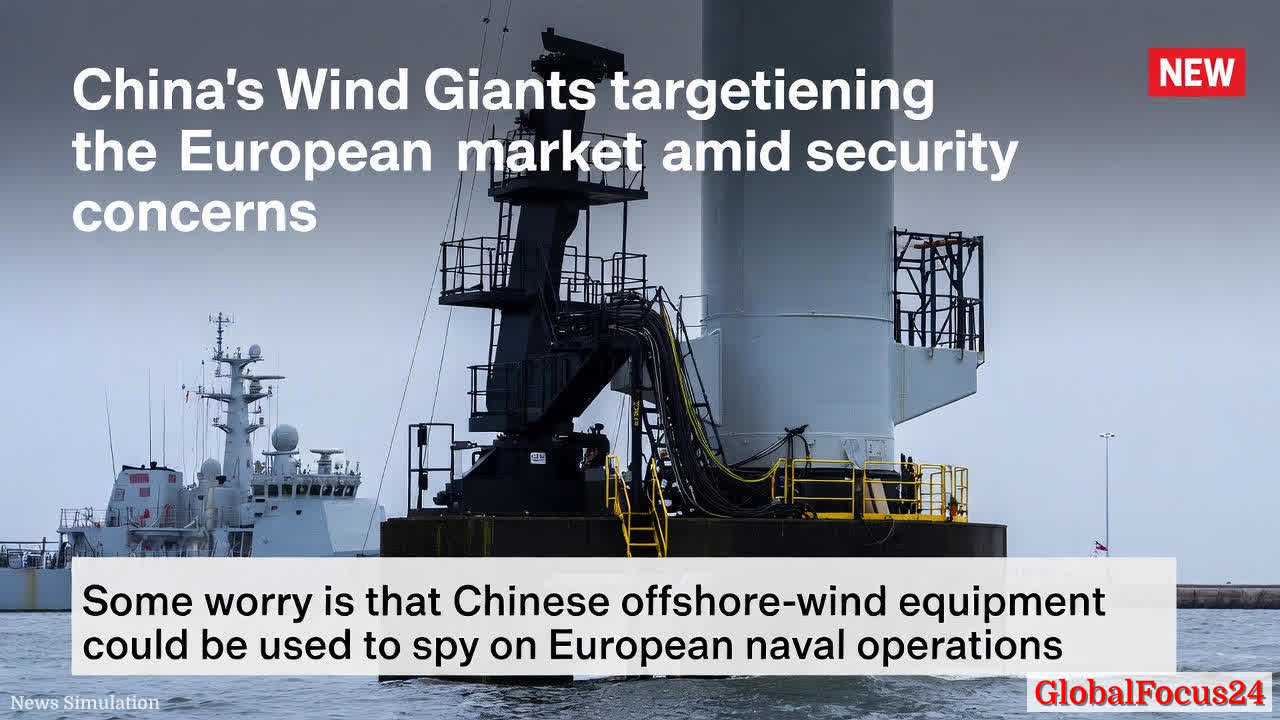
China’s Wind Giants Target European Market Amid Security Concerns
European offshore wind capacity is entering a pivotal phase as Chinese manufacturers ramp up bids, partnerships, and potential local production to capture a growing share of the continent’s renewable energy sector. The trend reflects a broader shift in global supply chains for clean energy technologies, as Chinese engineering firms bring advanced turbine components, logistics capabilities, and cost efficiencies to projects across Europe. While this expansion promises lower costs and accelerated deployment, it also arrives amid a mix of excitement for investment and anxiety about security and dependencies in critical infrastructure.
Historical context: Europe’s offshore wind ascent and China’s rising role Offshore wind emerged in Europe as a cornerstone of energy diversification in the early 2010s, with nations such as the United Kingdom, Germany, and Denmark pioneering large-scale installations in the North Sea and Baltic Sea. Over the past decade, European policymakers and industry players have invested billions to raise capacity, improve grid connectivity, and standardize turbine technology. The sector’s growth timeline has been shaped by evolving supply chains, with Danish and German manufacturers historically supplying much of the equipment and European utility companies coordinating complex auctions and power purchase agreements.
In parallel, China’s wind industry expanded rapidly, transitioning from a producer of foundational components to a comprehensive technology and manufacturing powerhouse. Chinese firms developed large-scale blade production, nacelle assembly, and offshore installation capabilities, supported by aggressive state-led financing, supply chain integration, and expansive manufacturing ecosystems. By the mid-2020s, several Chinese wind giants had established global footprints, bringing competitive pricing, sophisticated manufacturing, and after-sales service networks to international markets.
Economic impact: cost competitiveness, investment flows, and local value The influx of Chinese equipment and services into Europe’s offshore wind projects is altering project economics in meaningful ways. Key economic effects include:
- Lower capital expenditures and operating costs: Chinese suppliers often offer competitive pricing, shorter lead times, and streamlined logistics. This pricing pressure can reduce the overall levelized cost of energy (LCOE) for European projects, potentially improving the financial viability of more ambitious install schedules or repowering efforts.
- Job creation and local capabilities: European developers and engineers increasingly collaborate with Chinese manufacturers to establish local assembly, service centers, and training programs. These collaborations can generate skilled jobs, support local supply chains, and bolster regional knowledge transfer in wind technology.
- Trade and investment flows: Joint ventures, minority stakes, and technology transfer agreements reflect a broader trend of cross-border investment in renewables. As Europe seeks energy security and price stability, diversified supplier bases reduce single-source dependence while encouraging innovation through competition.
- Manufacturing resilience: The emergence of regional production hubs—whether in Europe or adjacent markets—can mitigate risk associated with global transport disruptions, currency volatility, and policy shifts. Localized manufacturing also aligns with European industrial strategies that emphasize strategic autonomy in critical infrastructure.
Regional comparisons: Europe versus other major wind markets
- Western Europe: In the North Sea, where offshore wind capacity has matured, European operators would benefit from Chinese suppliers’ scalable production and the potential for expedited project timelines. However, buyers weigh the implications for supply chain resilience, quality control, and after-sales support.
- Southern Europe and the Adriatic: Regions undergoing rapid offshore planning may view Chinese participation as a means to accelerate development, provided project structuring includes robust risk management, local content requirements, and transparent governance.
- Asia-Pacific markets: As Chinese wind manufacturers expand domestically and in nearby regions, Europe remains a separate but connected market. Lessons learned from Europe’s permitting processes and grid integration can influence Chinese approaches abroad, while European standards continue to evolve in response to global competition.
- Global supply network: The offshore wind supply chain spans blade manufacturing, nacelles, towers, foundations, substations, and cable systems. Chinese players often offer integrated solutions across several of these segments, enabling streamlined procurement but also prompting buyers to scrutinize compatibility with existing grids, port logistics, and certification regimes.
Security considerations and policy responses The rapid entry of Chinese wind equipment into Europe’s offshore energy space has spurred robust dialogue about national security, critical infrastructure protection, and economic policy. Key concerns include:
- Espionage and monitoring risk: Officials fear that hardware used to monitor or influence naval activities in adjacent waters could be repurposed or compromised. The risk is anchored in broader debates about supply chain integrity and the secure sourcing of critical components.
- Intellectual property and licensing: European regulators emphasize rigorous due diligence around technology licenses, cybersecurity standards, and remote access capabilities embedded in smart wind turbines and control systems.
- Supply chain diversification: Policymakers advocate for a balanced mix of suppliers to avoid single-point vulnerabilities. This includes supporting domestic manufacturing, regional hubs, and transparent certification pathways that maintain safety and reliability.
- Environmental and social governance: Beyond security, authorities consider environmental impact, labor standards, and community engagement when evaluating large-scale offshore projects involving foreign manufacturers.
Industry reaction and public sentiment The wind industry often frames Chinese participation in offshore projects as a lever for price stability and accelerated deployment, with benefits extending to consumers through lower electricity costs and faster energy transitions. At the same time, energy ministries, port authorities, and industry groups stress the importance of rigorous project governance, cybersecurity, and clear political risk assessment to maintain public trust. Local communities weigh the trade-offs of offshore development, including construction activity, marine life considerations, and long-term revenue streams from lease agreements and revenue sharing.
Project examples and market dynamics
- Bid activity and auctions: Chinese firms have entered competitive bidding rounds for offshore wind projects, leveraging economies of scale and experienced project management. Successful bids can catalyze further investment and stimulate supplier ecosystems in Europe.
- Local production facilities: Discussions about establishing European assembly lines or small-module manufacturing hubs aim to reduce import reliance, shorten delivery times, and strengthen after-sales responsiveness. Such facilities can also support workforce development in engineering and manufacturing disciplines.
- Service and maintenance networks: Beyond initial installation, Chinese manufacturers can provide global service fleets, spare parts logistics, and remote monitoring platforms. A robust service network is essential for maximizing turbine uptime and project lifetime value.
- Technology standards: Alignment with European grid codes, safety standards, and certification processes remains critical. Chinese technology developers often invest in meeting or exceeding local standards to ease market access and ensure long-term performance.
Environmental and societal considerations Offshore wind projects intersect with marine ecosystems, fisheries, and coastal communities. As China-backed installations expand, environmental impact assessments (EIAs), marine spatial planning, and stakeholder consultations become central to project approvals. Industry operators increasingly incorporate wildlife monitoring, sediment management, and portside logistics optimization to minimize disruption. Public engagement and transparent reporting about environmental outcomes contribute to social license to operate in nearby coastal regions.
Outlook: navigating opportunities and mitigating risks The convergence of affordable Chinese wind technologies with Europe’s rigorous regulatory environment signals a transformative period for offshore wind. If managed prudently, this dynamic can unlock faster deployment, broader energy mix diversification, and strengthened European energy resilience. Success hinges on transparent procurement, robust cybersecurity measures, and clear governance frameworks that balance economic efficiency with national security and environmental stewardship.
Conclusion: a turning point for offshore wind supply chains As Chinese wind giants deepen their footprint in Europe, the continent faces a critical crossroads between leveraging competitive manufacturing capabilities and safeguarding strategic infrastructure. The coming years will test policymakers, industry players, and communities as they negotiate supply chain resilience, cost trajectories, and governance norms. In this evolving landscape, the offshore wind sector’s progress will be measured not only by megawatts installed but also by the clarity of collaboration, the rigor of safety standards, and the transparency with which nations chart their renewable energy futures.