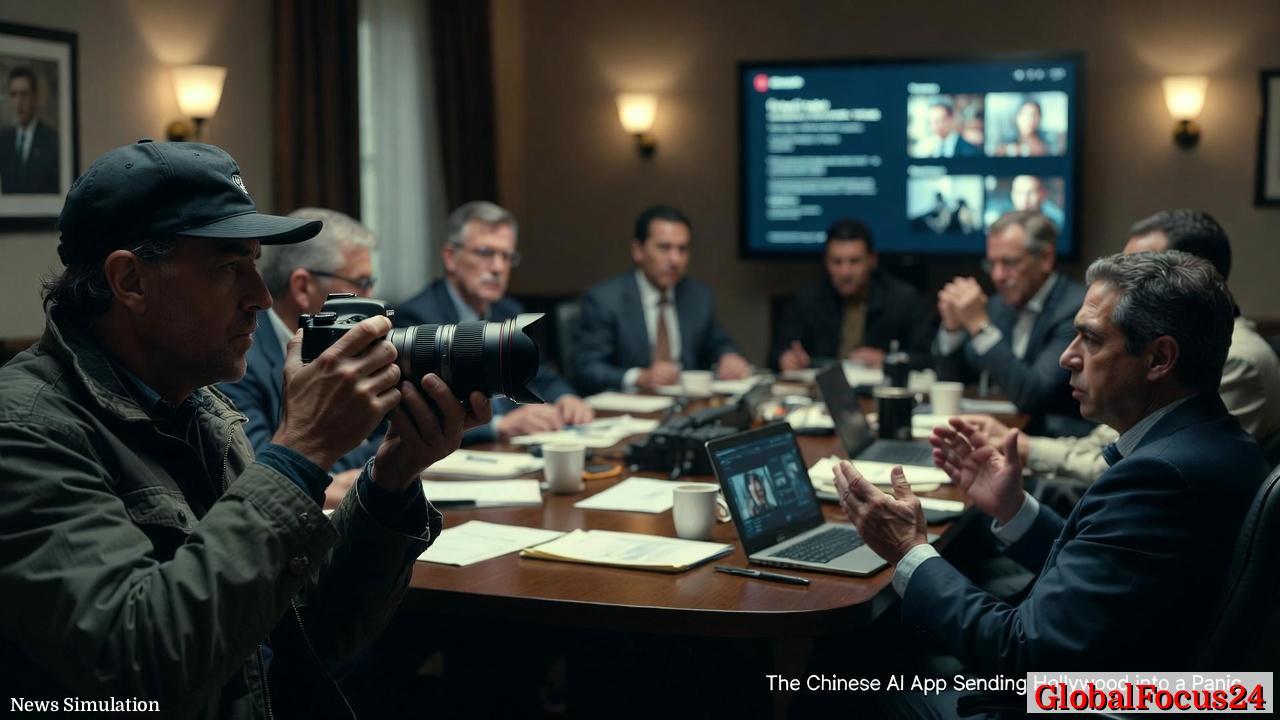
AI Video Tool Sparks Hollywood Alarm: Speed, Realism, and the Copyright Challenge
A new Chinese AI video application is drawing intense attention in Hollywood as industry insiders grapple with its potential to reshape cinematic production. The tool, designed to generate highly realistic cinematic scenes, complete with sound effects and dialogue, from simple text prompts, has sparked a broad conversation about copyright, authenticity, and the evolving economics of film and television.
Historical context: a rapid shift in AI-assisted media Over the past decade, artificial intelligence has moved from conceptual demonstrations to practical production tools across entertainment, journalism, and advertising. Early experiments focused on captioning, upsampling, and basic CGI; today, AI can draft entire storyboards, generate photorealistic characters, and synthesize voices that closely mimic real performers. Hollywood has responded with a mix of caution and curiosity, exploring how these technologies can reduce production timelines, lower costs, and unlock creative possibilities—while preserving the artistic integrity and human labor at the core of storytelling.
This latest development arrives at a pivotal moment for the industry. Traditional film and television production faces sustained pressure from rising budgets, crowded release calendars, and the need for faster turnaround times to respond to audience demand. AI-assisted workflows promise to streamline preproduction, postproduction, and even on-set processes, enabling studios to prototype scenes, test variations, and iterate rapidly. However, the same capabilities raise questions about originality, compensation, and control over likeness rights, especially when life-like performances are crafted from prompts without the involvement of the original performers.
Economic impact: speed, cost, and competition One of the most striking aspects of the new tool is its apparent ability to deliver high-quality footage at a fraction of conventional blockbuster budgets. Industry observers note that the application operates on subscription models and cloud-based processing, removing some of the heavy upfront capital typically associated with major productions. In practical terms, studios and independent producers could experiment with multiple scenes, entire sequences, or even short films with minimal to moderate upfront investment, testing audience response before committing to larger-scale investments.
The potential cost structure has broad implications for the economics of film and streaming. If directors and producers can generate market-ready footage or prototype scenes quickly, the risk profile of ambitious projects could shift. On the one hand, this might empower smaller studios and emerging creators by leveling access to advanced visual capabilities. On the other hand, the tool’s affordability could intensify competition, pressuring traditional production houses to accelerate their own pipelines or invest more aggressively in proprietary AI safety and licensing frameworks.
Regional comparisons underscore the uneven distribution of these transformative capabilities. In regions with established visual effects (VFX) hubs, such as North America and Western Europe, studios are already accustomed to complex workflows that incorporate AI-assisted tools for tasks like color grading, de-noising, and motion capture cleanup. The new application, by delivering end-to-end prompts that yield cinematic scenes, could compress stages of production that historically required extensive VFX houses, motion-capture studios, and practical-effects teams. Conversely, markets with less mature ecosystems for high-end film production may experience both opportunity and disruption, as access to scalable AI tooling lowers barriers to entry for content creators outside traditional hubs.
Lifelong implications for talent and labor The rapid rise of capable AI video tools raises fundamental questions about the roles of actors, voice performers, writers, and technicians. In a world where machines can generate scenes and dialogue from textual prompts, the demand for certain types of labor may shift toward oversight, creative direction, scriptwriting, and ethical licensing. The industry has long wrestled with questions about the use of an actor’s likeness in new contexts, the need for consent, and the fair compensation for digital reproductions. The current scenario intensifies those concerns, because the line between inspiration and replication can blur when an AI model can reproduce a recognizable actor’s appearance and voice.
Ethical and legal considerations Several ethical and legal questions emerge in tandem with this technological leap. Intellectual property rights become a central, nuanced issue when the generated content features likenesses of well-known actors and fictional characters. Questions include:
- Consent and licensing: Should performers have a say in how their likeness is used in AI-generated content, and how should royalties be structured when a new performance is produced primarily by an algorithm?
- Right of publicity: To what extent can a company recreate a real person’s persona without explicit authorization, and how might this apply to public figures versus private individuals?
- Copyright and derivative works: If a generated scene closely mirrors an existing copyrighted film or character, does it constitute a derivative work, and who oversees enforcement?
- Safety and misrepresentation: How can studios mitigate misuse, such as creating convincing forgeries that could defame, deceive, or manipulate audiences?
From a policy perspective, lawmakers and industry groups are exploring licensing frameworks, watermarking strategies, and standardized consent processes to address these concerns. Some proposals emphasize robust transparent disclosures about AI-generated content, while others advocate for opt-in rights managed through performer unions and guilds. The balance between innovation and protection will likely shape regulatory discussions in the coming years.
Technical capabilities and limitations The application’s core strength lies in its ability to render lifelike scenes from textual prompts, including dialogue, sound effects, and ambient details. This represents a leap beyond earlier, more incremental AI-generated assets by delivering cohesive sequences that feel cinematic rather than modular. The technology’s potential to simulate recognizable actors and iconic characters adds a powerful dimension to its appeal, enabling user-driven storytelling and rapid iteration.
However, notable limitations remain. Even advanced systems can struggle with long-form narrative coherence, complex character arcs, and ethical considerations embedded in dialogue and plot. Lip-sync accuracy, environmental lighting consistency, and subtle facial expressions continue to challenge current capabilities, especially across diverse languages and dialects. Additionally, ensuring that synthesized performances remain within legal and ethical boundaries requires ongoing governance, watermarking, and provenance tracking to distinguish human-created content from machine-generated material.
Public reaction and industry response Public sentiment toward AI-generated content often blends fascination with concern. A segment of audiences appreciates the democratization of content creation, envisioning indie filmmakers and smaller studios producing high-quality material without massive budgets. Others worry about a future in which original artistry is commodified, and the distinctive human element of filmmaking could be supplanted by algorithmic production.
In Hollywood, studios and unions are weighing responses that protect workers while embracing productive efficiency. Some producers emphasize the potential to expand storytelling by enabling more rapid testing of concept ideas, marketing cuts, and alternate endings, which could enhance viewer engagement and experimentation. Others push for stringent guardrails, licensing requirements, and clear attribution to avoid misappropriation of performers’ likenesses.
Regional case studies and comparisons
- North America: A mature entertainment market with a robust VFX infrastructure. The new tool could complement existing pipelines, offering a fast track for concept development and previsualization, while elevating concerns about fair compensation and consent for AI-assisted reproductions of performers.
- Europe: A continent with strong regulatory emphasis on privacy, data protection, and cultural heritage. Adoption will likely be cautious, balancing rapid innovation with strict compliance and ethical considerations, potentially shaping cross-border licensing norms.
- Asia-Pacific: A dynamic market with significant content demand and growing production capacity. The technology could accelerate content generation for streaming platforms and regional studios, prompting discussions about licensing standards and talent rights across diverse jurisdictions.
What this means for consumers and the broader media landscape For audiences, the evolution of AI-driven video tools could translate into more varied content, faster release schedules, and experimental storytelling that previously required substantial financial risk. However, the broader media ecosystem will need to navigate questions of authenticity, spoilers, and the potential for misrepresentation. Transparent disclosure about AI involvement in content, robust licensing agreements, and thoughtful governance will be essential to maintaining trust and protecting intellectual property.
Looking ahead: balancing innovation with safeguards The emergence of this Chinese AI video application marks a significant inflection point in the film and entertainment industries. Its capacity to generate realistic scenes from text prompts at a comparatively low cost signals an accelerated shift in how media may be produced, distributed, and consumed. The trajectory will hinge on how well creators, studios, unions, and regulators collaborate to establish clear licensing norms, protect performers’ rights, and preserve the integrity of original storytelling.
As producers evaluate whether to integrate AI-assisted workflows into their pipelines, they will likely adopt a layered approach: leveraging AI for ideation and rapid prototyping while maintaining traditional production elements for final execution and artistic control. In this model, humans retain the essential role of guiding narrative, shaping character development, and ensuring ethical and legal compliance, while AI tools handle repetitive, data-driven, or time-intensive tasks.
Conclusion The Hollywood conversation around this new AI video tool is less about a single product and more about the evolving relationship between technology and storytelling. The tool’s capacity to deliver film-ready sequences from textual prompts at a fraction of the customary cost underscores both opportunity and risk. As the industry navigates copyright concerns, talent rights, and regulatory guidance, the core imperative remains clear: advance creative expression while upholding fairness, transparency, and artistic integrity. In the months ahead, decisions on licensing, governance, and collaboration will shape how AI-enabled cinema unfolds—from development desks to the silver screen.