China’s Nuclear Brief: High-Rstanding General, Leaks Allegations, and Regional Implications
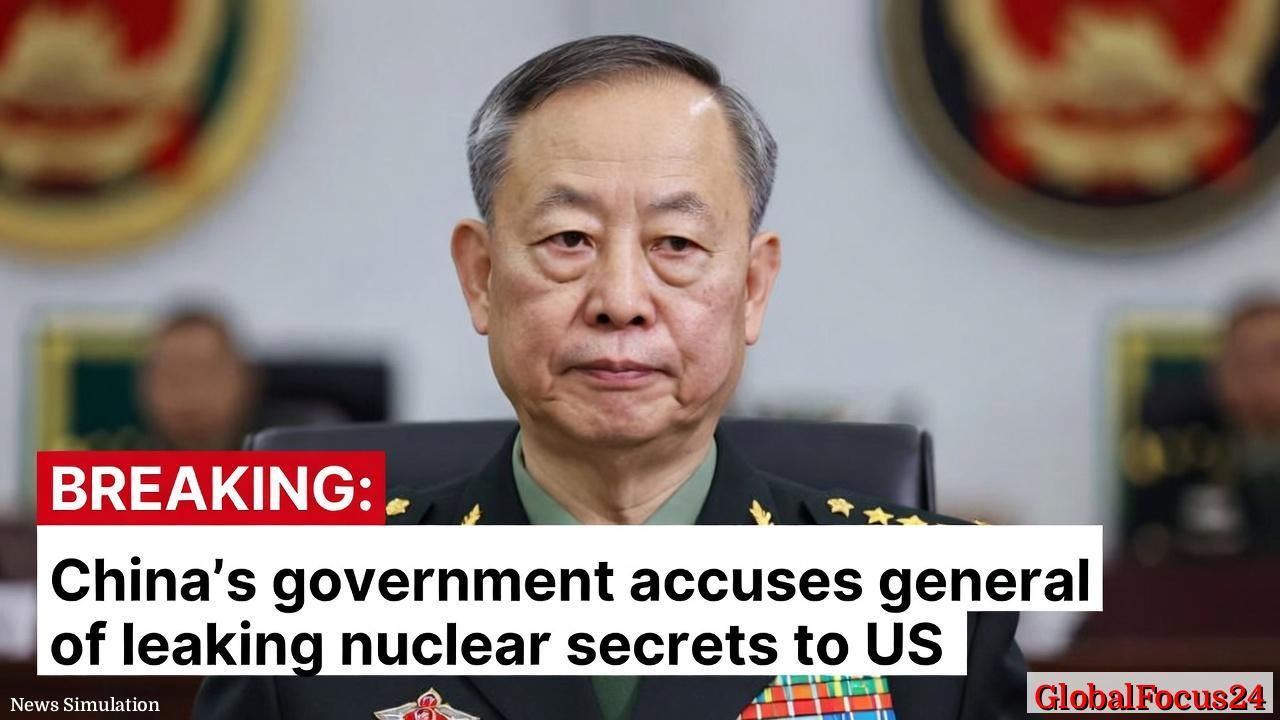
In a development that has reverberated through military and diplomatic channels, allegations from the Chinese government accuse its most senior general, Zhang Youxia, of leaking core nuclear weapons secrets to the United States. The claims, which officials say involve sensitive technical data, arrived amid a broader backdrop of personnel scrutiny within China’s military leadership and a tightening of information control around strategic capabilities. As analysts assess the credibility and potential consequences, markets, regional security planners, and international partners are weighing how such disclosures—whether substantiated or contested—could reshape strategic calculus in Asia and beyond.
Historical context: the arc of China’s nuclear modernization and military governance
To understand the significance of these accusations, it helps to situate them within China’s long arc of nuclear weapons development and military reform. Since the establishment of the People’s Republic, China’s nuclear program has evolved from an annihilation-focused deterrent to a more diversified capability that supports strategic experimentation and regional power projection. The era of rapid modernization for the People’s Liberation Army (PLA) began in the late 1990s and accelerated after 2000, with a shift toward advanced missile systems, hardened command-and-control networks, and more sophisticated strategic planning. General Zhang Youxia, a veteran of the PLA, has been a central figure in several high-level reform efforts, including the consolidation of branches and the emphasis on joint operations and modernized strategic systems.
The alleged leak, if true, would touch the core tension at the heart of China’s strategic posture: how to preserve secrecy about critical capabilities while maintaining the transparency necessary for international confidence in a complex, multipolar security environment. In the past, China has balanced openness in some scientific and civil domains with strict confidentiality in military know-how. Any assertion that a top PLA commander disclosed nuclear-related technical data to a foreign power would constitute a dramatic breach of that balance, triggering a cascade of questions about oversight, accountability, and the integrity of China’s strategic communications.
Economic impact: multi-layered channels and regional spillovers
The economic implications of such allegations unfold along several channels. First, any credible signal of internal instability within China’s military leadership can affect investor sentiment and attitudes toward long-horizon defense procurement. Markets generally respond to perceived risk, and a step toward leadership uncertainty could influence financing for defense modernization programs, research, and supply chains tied to sensitive technologies. While the Chinese economy has shown remarkable resilience, even at times of internal political complexity, investors typically seek clarity on policy direction. Ambiguity around who controls strategic assets or holds sensitive information can raise questions about the continuity and reliability of defense-related contracts and partnerships.
Second, regional defense economies could feel the ripple effects. Neighboring nations, including those in East Asia and Southeast Asia, routinely evaluate their security postures in light of China’s declared and presumed capabilities. If there is perceived erosion of secrecy or a shift in the governance of strategic weapons programs, regional markets for defense hardware, cyber resilience, and secure communications may experience adjustments in pricing, demand, and collaboration models. Governments in the region may respond by recalibrating transparency requirements with allies, accelerating joint exercises, or expanding procurement pipelines for allied defense industrial bases.
Third, beyond defense-specific markets, the broader supply chain ecosystem could be influenced. Nuclear weapons programs rely on a network of high-precision components, materials, and advanced manufacturing ecosystems. Any perceived weakening of governance around sensitive information can prompt suppliers and contractors to reexamine risk exposures, qualifications, and dual-use controls. In the longer term, if the episode impacts international scientific collaboration or technology transfer norms, there could be a measurable effect on innovation ecosystems tied to defense-adjacent sectors.
Regional comparisons: past episodes and current trajectories
To gauge potential trajectories, a look at analogous situations in recent history proves instructive. Countries facing leadership-level disputes over sensitive information often experience short-term volatility followed by a recalibration of internal governance mechanisms. In several cases, steadying moves—such as reaffirmations of civilian oversight, enhanced transparency with select international partners, or targeted leadership changes—have helped restore confidence in strategic programs while preserving essential secrecy. Comparisons can be drawn with how other nuclear-enabled states have navigated periods of internal scrutiny without compromising deterrence credibility or international stability.
Within the Asia-Pacific context, the dynamic is particularly nuanced. China’s neighbors and strategic partners must balance deterrence, diplomacy, and economic interdependence. A credible and well-managed response to any leakage claims is essential for maintaining regional stability. The presence of robust crisis-management frameworks, aligned treaty commitments, and transparent back-channel communications channels often determines whether such incidents precipitate a broader strategic drift or are contained as a limited, internal matter.
Security implications: deterrence, signaling, and alliance coordination
The incident sits at the intersection of deterrence theory and real-world signaling. Deterrence depends on credible capabilities paired with credible resolve. If the alleged leaks cast doubt on the confidentiality of core technical data, allied observers might reassess the reliability of China’s strategic messaging and the security of its propulsion and weaponization infrastructure. In response, regional allies and partners could seek to reinforce deterrence through increased interoperability, joint exercises, and diversified supply chains for critical defense technologies.
An important consideration is how China’s leadership would choose to address the allegations publicly, if at all. Official communications strategies in authoritarian-leaning systems often emphasize control, stability, and the primacy of national defense. A measured, transparent response that confirms or denies specifics, while outlining steps to enhance oversight, can help preserve credibility and dampen misinterpretations. Conversely, a stonewall or evasive approach can amplify speculation and risk eroding trust among domestic stakeholders and international partners.
Public reaction and societal context
Public sentiment around national security can influence policy responses and risk management choices. In large, highly engaged societies, rumors and media discourse about weapon secrets can create a climate of anxiety or heightened vigilance. Government statements, official investigations, and visible accountability measures can shape how the public perceives the nation’s commitment to safeguarding essential information. In China, as in many other countries, the interplay between political messaging, economic performance, and social stability often shapes the tempo and tone of any official disclosures. For foreign observers, understanding this dynamic is key to interpreting official moves and future policy directions.
Operational considerations: governance and safeguards
From an governance perspective, the episode underscores the ongoing importance of robust oversight mechanisms for sensitive national security assets. Independent audit processes, clear lines of responsibility, and traceable information-handling protocols are foundational to maintaining integrity in strategic programs. In addition to internal safeguards, international cooperation on defense technologies—through controlled exchanges and mutually agreed safeguards—plays a critical role in ensuring that sensitive data remains protected while enabling legitimate collaboration in areas like missile technology, space-based assets, and nuclear stewardship.
Regional engagement: diplomacy, deterrence, and dialogue opportunities
Even amid allegations, regional diplomacy continues to be a central pillar of stability. Nations in Asia and beyond may seek to reaffirm existing confidence-building measures, clarify red lines, and sustain channels for crisis communication. Such efforts can reduce the risk of miscalculation and misinterpretation during moments of leadership scrutiny. For partners with shared interests in nonproliferation and arms control, the incident could motivate renewed discussions about transparency norms, verification mechanisms, and the possible expansion of multilateral frameworks that address strategic weapons governance.
Looking ahead: what to monitor
- Official statements and investigations: The progression of any formal inquiries, whether through military commissions, civilian oversight bodies, or party-structured investigations, will be critical indicators of how the situation evolves and what governance reforms might emerge.
- Military modernization timelines: As China continues to advance its strategic capabilities, observers will watch for any pauses, accelerations, or recalibrations in procurement and development programs that could reflect a response to leadership scrutiny.
- International responses: Reactions from key partners, including allies and regional security forums, will shape the broader diplomatic environment and influence security architectures in the Indo-Pacific.
- Economic signals: Market reactions to policy announcements, procurement shifts, or changes in defense-industrial collaboration will offer a read on how investors are pricing risk related to strategic governance and national security.
Conclusion: a moment of recalibration rather than a reset
This latest development—whether ultimately substantiated or not—highlights the fragility and complexity of managing high-stakes information in a system where strategic weapons and advanced technologies are integral to national security. It presents a moment for introspection within China’s military governance framework, as policymakers weigh the balance between maintaining secrecy, demonstrating accountability, and preserving strategic credibility on the world stage. For observers around the world, the episode serves as a reminder that the management of sensitive data at the highest echelons of power influences not only domestic stability but also regional risk, global markets, and the calculus of alliance diplomacy.
As China navigates this consequential episode, stakeholders across government, industry, and international communities will be closely watching for clarity, consistency, and credible steps that reinforce the integrity of its strategic programs while continuing to pursue the peaceful, stable development that has underpinned regional growth for decades.