Chinese Research Body Boycotts NeurIPS 2026 Amid Policy Dispute Over Sanctioned Institutions
NeurIPS Controversy Triggers Global Backlash
A major Chinese scientific organization has announced a boycott of the 2026 Conference on Neural Information Processing Systems (NeurIPS), one of the world’s most influential artificial intelligence gatherings, following a dispute over participation policies tied to U.S.-sanctioned institutions. The move marks a significant escalation in tensions within the global AI research community and raises questions about the future of international collaboration in a rapidly evolving field.
The controversy began on March 23, when NeurIPS organizers introduced a policy stating that submissions from researchers affiliated with certain sanctioned institutions would be rejected. The list included several high-profile Chinese technology firms that have been subject to U.S. export controls and trade restrictions in recent years.
The announcement quickly drew criticism from academics and researchers worldwide, many of whom argued that the policy risked undermining the open and collaborative ethos that has historically defined the AI research ecosystem. Within days, calls for a boycott emerged, with prominent Chinese scientific bodies endorsing the response.
Policy Revision Fails to Ease Concerns
In response to mounting backlash, NeurIPS organizers issued a public apology and revised the policy. The updated version significantly narrowed the scope of affected institutions, aiming to clarify that only a limited subset of entities would be subject to restrictions.
Despite the revision, the China Association for Science and Technology (CAST), one of the country’s most influential scientific organizations, confirmed it would proceed with its boycott. The group stated that it would halt funding for Chinese researchers attending NeurIPS 2026 and exclude NeurIPS publications from key academic evaluation metrics.
Instead, funding and institutional support will be redirected toward alternative international conferences and domestic research initiatives. The decision is expected to have a ripple effect across China’s AI research landscape, influencing where top scientists choose to publish and present their work.
China’s Growing Influence in AI Research
The boycott carries weight because of China’s increasingly prominent role in global artificial intelligence research. In recent years, China-based researchers have become major contributors to leading conferences, including NeurIPS, ICML, and CVPR.
At the 2025 NeurIPS conference, researchers affiliated with Chinese institutions accounted for the largest share of first authors on accepted papers. This reflects broader trends in scientific output, with China producing a significant volume of AI-related publications and patents.
The country’s rapid ascent in AI has been fueled by a combination of government investment, private-sector innovation, and a large pool of engineering talent. Chinese technology companies have also played a key role, contributing not only research but also infrastructure and datasets that support advances in machine learning.
The exclusion—or perceived exclusion—of such contributors from a major conference has therefore sparked concern about fragmentation in the global research community.
Historical Context of Scientific Collaboration
NeurIPS, founded in 1987, has long served as a hub for cutting-edge developments in machine learning, neural networks, and computational neuroscience. Over the decades, it has evolved into a flagship event attracting thousands of researchers, industry leaders, and students from around the world.
Historically, the conference has emphasized openness, with peer review processes designed to evaluate work based on technical merit rather than institutional affiliation or nationality. This approach has been credited with accelerating innovation and fostering cross-border collaboration.
However, the increasing intersection of technology and geopolitics has introduced new challenges. Export controls, national security concerns, and regulatory frameworks have begun to influence how research is shared and disseminated. The NeurIPS policy dispute is the latest example of how these dynamics are reshaping the scientific landscape.
Economic Stakes in the AI Ecosystem
The implications of the boycott extend beyond academia into the broader AI economy. Artificial intelligence is a key driver of growth across industries, from healthcare and finance to manufacturing and autonomous systems.
Global investment in AI technologies has surged over the past decade, with both public and private sectors allocating billions of dollars annually. Conferences like NeurIPS play a critical role in this ecosystem by facilitating knowledge exchange, talent recruitment, and partnerships between academia and industry.
A reduction in participation from Chinese researchers could have several economic consequences:
- Slower dissemination of research findings across borders, potentially delaying innovation cycles.
- Reduced opportunities for multinational collaboration on large-scale AI projects.
- Shifts in conference attendance and sponsorship patterns, affecting host cities and organizers.
- Increased investment in alternative conferences and regional research hubs.
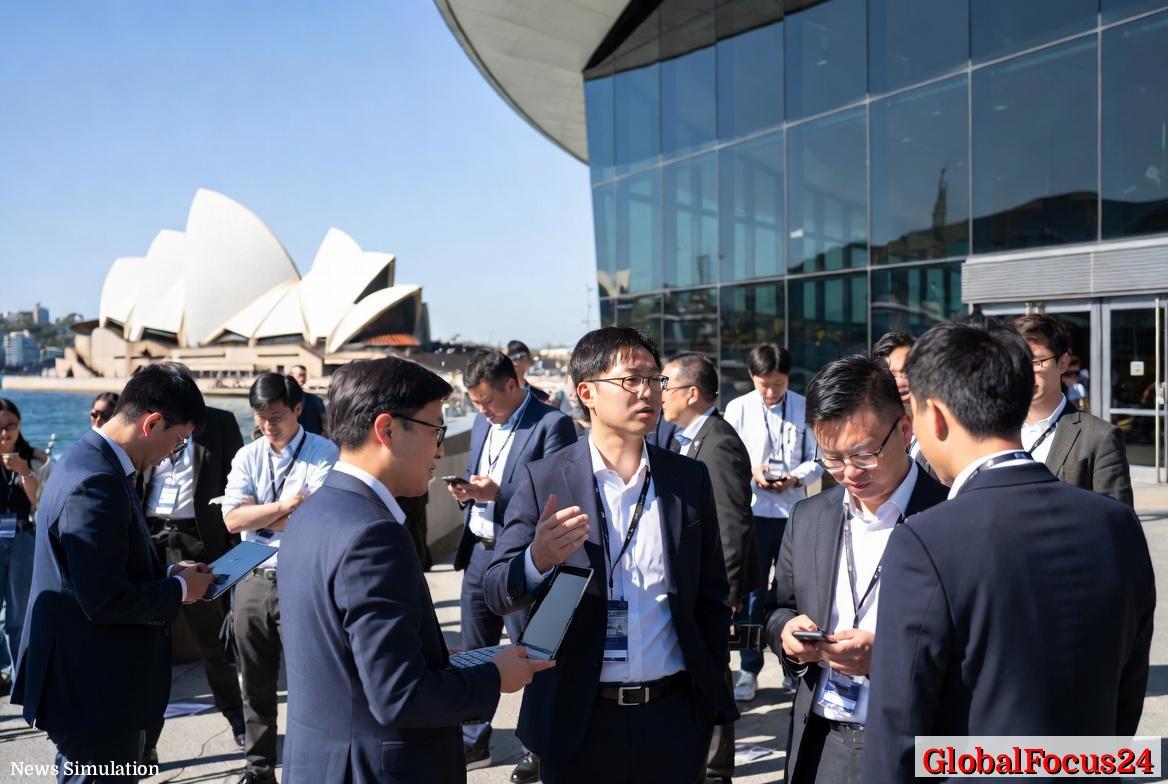
Sydney, which is set to host NeurIPS 2026, may also feel indirect effects if attendance patterns change significantly. Large international conferences typically generate substantial economic activity through travel, hospitality, and related services.
Regional Comparisons and Diverging Paths
The situation highlights broader regional differences in how AI research is organized and governed. In North America and Europe, research institutions often operate within frameworks shaped by export controls and regulatory oversight. These measures aim to balance innovation with national security considerations.
In contrast, China has pursued a more centralized strategy, with strong government support for AI development and integration across sectors. This has enabled rapid scaling but has also brought Chinese institutions under scrutiny in international contexts.
Other regions, including Southeast Asia and the Middle East, are increasingly positioning themselves as neutral grounds for scientific collaboration. Countries such as Singapore and the United Arab Emirates have invested heavily in AI research infrastructure and international partnerships, seeking to attract global talent and host major conferences.
The NeurIPS dispute may accelerate these trends, as researchers and organizations explore alternative venues that offer fewer geopolitical constraints.
Impact on Researchers and Academic Careers
For individual researchers, the boycott introduces new uncertainties. NeurIPS has traditionally been considered a top-tier venue, with accepted papers carrying significant weight in hiring, promotion, and funding decisions.
CAST’s decision to exclude NeurIPS publications from evaluation criteria effectively reshapes incentives for Chinese researchers. Many may choose to submit their work to other conferences or journals that are recognized within domestic evaluation systems.
This shift could lead to a redistribution of high-quality research across different platforms, potentially elevating the status of alternative conferences. At the same time, it may create challenges for early-career researchers seeking international visibility.
Researchers outside China may also feel the impact, as reduced participation could limit exposure to diverse perspectives and collaboration opportunities.
Community Reaction and Calls for Clarity
The global AI community has responded with a mix of concern and calls for greater transparency. Many researchers have emphasized the importance of maintaining open channels for scientific exchange, even amid geopolitical tensions.
Some have urged conference organizers to establish clearer guidelines and communication processes to avoid misunderstandings. Others have highlighted the need for international frameworks that balance security considerations with the principles of academic freedom.
The incident has also sparked broader discussions about governance in scientific conferences, including how policies are developed and who has a voice in decision-making.
Future of Global AI Collaboration
The boycott of NeurIPS 2026 underscores the fragile balance between openness and regulation in the AI field. As artificial intelligence becomes increasingly central to economic and technological competition, the structures that support research collaboration are likely to face continued pressure.
Whether the current dispute leads to lasting divisions or prompts new forms of cooperation remains uncertain. What is clear is that the decisions made by major stakeholders—conference organizers, research institutions, and governments—will shape the trajectory of AI development in the years ahead.
For now, the NeurIPS controversy serves as a reminder that scientific progress does not occur in isolation. It is deeply intertwined with global systems, where policy decisions can reverberate across laboratories, industries, and borders.