China Renews Clean-Sweep at Top of PLA as General Under Investigation
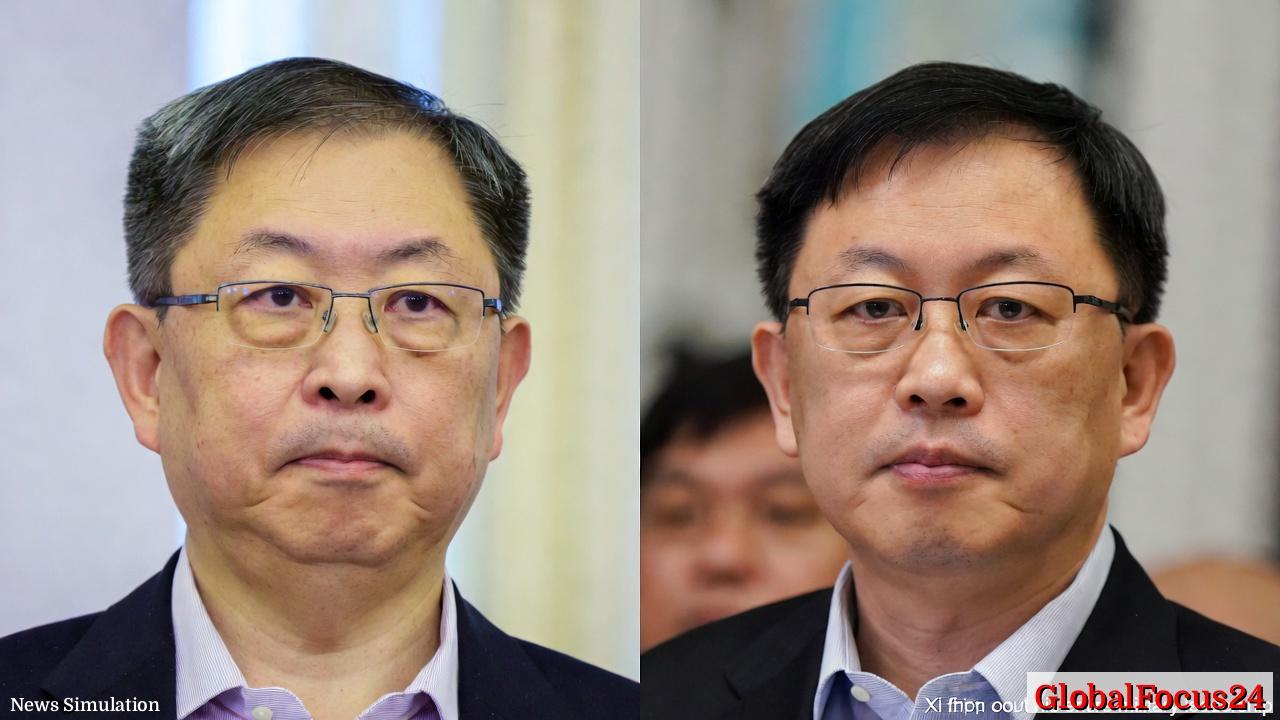
Beijing — The People’s Liberation Army (PLA) faces a landmark moment as its highest-ranking officer, Zhang Youxia, comes under investigation for suspected serious violations of discipline and law. The defense ministry confirmed the probe on a Saturday, signaling an intensified phase in Beijing’s long-running anti-corruption campaign within the military. The development marks one of the most consequential actions against senior leadership in decades and raises questions about how the crackdown might reshape military doctrine, procurement, and strategic posture.
Historical context of the crackdown
Since 2012, President Xi Jinping has prioritized a sweeping anti-corruption campaign aimed at strengthening party control, modernizing the armed forces, and eliminating entrenched networks of privilege. The PLA has undergone substantial organizational reform, shrinking some structures while expanding others and pushing modernization across conventional and emerging domains. The campaign has not been limited to low-ranking officers; in recent years, several two- and three-star generals, along with senior staff, have faced investigations or removal on graft charges. The current probe against Zhang Youxia—who serves as vice-chairman of the Central Military Commission (CMC) and is a long-standing power broker within the PLA—accelerates a trend toward higher-profile accountability and a more centralized initiative to reshape leadership legitimacy.
Zhang Youxia’s career arc provides a lens into the shifting balance of power within the PLA. A veteran of border conflicts in the late 20th century and a key architect of modernization since the early 2010s, Zhang’s experience spans both traditional artillery and modernized, network-centric capabilities. His trajectory illustrates the PLA’s transition from a primarily manpower-intensive force to a more technologically driven, doctrine-focused military organization. The investigation thus intersects with broader questions about how China intends to balance rapid modernization with political reliability, especially as it seeks to project influence in contested regions.
Who is under investigation and what this signals
Zhang Youxia, a Beijing-born officer who joined the army in 1968, has long stood at the apex of the PLA’s command structure. As vice-chairman of the Central Military Commission, he is second only to the president in military hierarchy and holds a seat in the Communist Party’s Politburo—a position that underscores his political as well as military clout. The defense ministry’s statement also named Liu Zhenli, chief of staff of the commission’s Joint Staff Department, as a target of a similar inquiry. The simultaneous focus on two core leadership roles indicates a systemic probe into procurement, discipline, and governance within the highest echelons of military leadership.
Analysts emphasize that while the daily operations of the PLA are expected to continue, the investigations reveal Beijing’s willingness to tackle perceived governance gaps at the very top. Historical patterns show that the party often uses high-profile cases to set precedents and signal that accountability extends beyond crews on the frontline. Interim appointments from second-line officers are filling vacated roles, a pragmatic step to maintain continuity as senior leadership undergoes scrutiny. The broader implication is a potential recalibration of command styles, risk tolerance, and oversight mechanisms across branches, from ground forces to the Rocket Force and naval services.
Economic impact and defense-industrial implications
The ripple effects of a top-level purge extend beyond personnel changes and into defense procurement, budgeting, and industrial strategy. The PLA’s drive to modernize is closely tied to a domestic defense-industrial ecosystem that includes state-owned arms producers, defense technology firms, and a growing ecosystem of private sector suppliers. High-profile removals can influence procurement trajectories, delay flagship programs, or recalibrate priorities toward areas deemed politically reliable or institutionally aligned with the party’s governance goals.
In recent years, the crackdown has coincided with shifts in the defense market’s risk profile. Firms tied to advanced weapon systems—such as next-generation missiles, air defenses, electronic warfare platforms, and cyber capabilities—face heightened scrutiny over contracts, oversight, and compliance. Even as the PLA maintains ambitious modernization goals, the leadership transition dynamics can introduce short-term uncertainty for suppliers, while potentially boosting confidence among international partners that governance standards are being reinforced.
Regional comparisons illuminate how such internal reforms resonate beyond China’s borders. Other major military powers have grappled with similar issues of accountability, governance, and reform, though with distinct institutional frameworks. For instance, large, centralized militaries in other regions often confront reputational and strategic implications when top leaders are replaced or investigated, particularly if those leaders are closely associated with modernization programs or regional power projection.
Geopolitical context and strategic posture
China’s posture in recent years has centered on asserting regional influence in the East and South China Seas, shaping military readiness around scenarios involving Taiwan, and maintaining a consistent message of national sovereignty. The timing of leadership investigations can influence how Beijing calibrates its deterrence and signaling, both domestically and internationally. While routine exercises and readiness activities are expected to carry on, observers will watch for shifts in strategic emphasis—whether the crackdown prompts a more conservative risk posture, or alternatively accelerates deployment of new capabilities to deter potential adversaries.
Taiwan remains a focal point in China’s security calculus, with large-scale exercises and long-term modernization shaping cross-strait dynamics. The PLA’s modernization timeline envisions achieving certain capabilities by set milestones, including basic modernization by 2035 and world-class status by 2049. The political signal from a high-profile investigation, in this context, could influence how quickly or cautiously such capabilities are portrayed or deployed, depending on how leadership views institutional stability and public confidence.
Public reaction and civil-military relations
Public perception of a top-level purge often hinges on transparency, perceived fairness, and the speed of institutional reform. In China, where information flows are strictly managed, the public discourse surrounding such investigations tends to be filtered through official channels and state media. Nonetheless, within the broader international community and defense circles, analysts assess the investigation as a barometer of political will to address corruption and strengthen governance. The sense of urgency accompanying these actions can reflect a broader cultural emphasis on discipline, accountability, and stability—values that are central to the ruling party’s legitimacy.
Historical memory of leadership changes in China’s military often intertwines with political calculations. The Cultural Revolution era remains a reference point for many observers, underscoring the potential risks of political turmoil in parallel with military reform. While today’s context differs markedly, the specter of upheaval can influence how the PLA communicates changes and how allies and adversaries interpret Beijing’s strategic intentions.
Key takeaways for policymakers and observers
- Leadership accountability signals a continuing emphasis on governance within the PLA, reinforcing the idea that modernization and discipline go hand in hand.
- The focus on the highest ranks suggests that reforms will extend beyond routine personnel changes, potentially affecting long-term procurement, training, and doctrine development.
- The downtime between investigations and public reorganization will be watched for signs of strategic intent, including shifts in force posture, readiness cycles, and international signaling.
- Regional dynamics, especially in contested maritime theaters and cross-strait scenarios, may experience subtle realignments as Beijing recalibrates its messaging and risk tolerance.
Contextualizing within China’s broader modernization drive
The ongoing anti-corruption campaign is nested within a decades-long effort to modernize the PLA across architecture, weapons, training, and command-and-control systems. This modernization is not merely about upgrading hardware; it is also about reforming governance structures to ensure cohesive execution of complex military campaigns, joint operations, and integrated logistics. The current developments underscore the delicate balance Beijing seeks between rapid technological advancement and the political oversight that sustains centralized control.
Looking ahead
As the investigation unfolds, the PLA will likely emphasize continuity in operations while deploying interim leadership arrangements to prevent disruption across commands. The broader strategic landscape—marked by regional volatility, evolving defense technologies, and growing attention to governance within security institutions—will continue to shape how Beijing communicates reforms and manages expectations among domestic and international audiences.
In the months ahead, observers will assess whether the leadership shake-up accelerates reforms in oversight, procurement transparency, and personnel management. They will also monitor how regional allies and competitors interpret the trajectory of China’s military modernization and the signals it sends about the pace and direction of its strategic ambitions.
Public and analyst assessments will vary, but one thread remains clear: the PLA’s path toward modernization is inseparable from the governance structures that supply it with both legitimacy and discipline. The current investigation, set against a backdrop of sustained modernization goals and a complex regional security environment, will likely become a reference point for how China negotiates the intersection of power, governance, and global military competition in the decade ahead.