China’s Nuclear Secrets Under Scrutiny: A Global Reassessment of Security, Economics, and Regional Dynamics
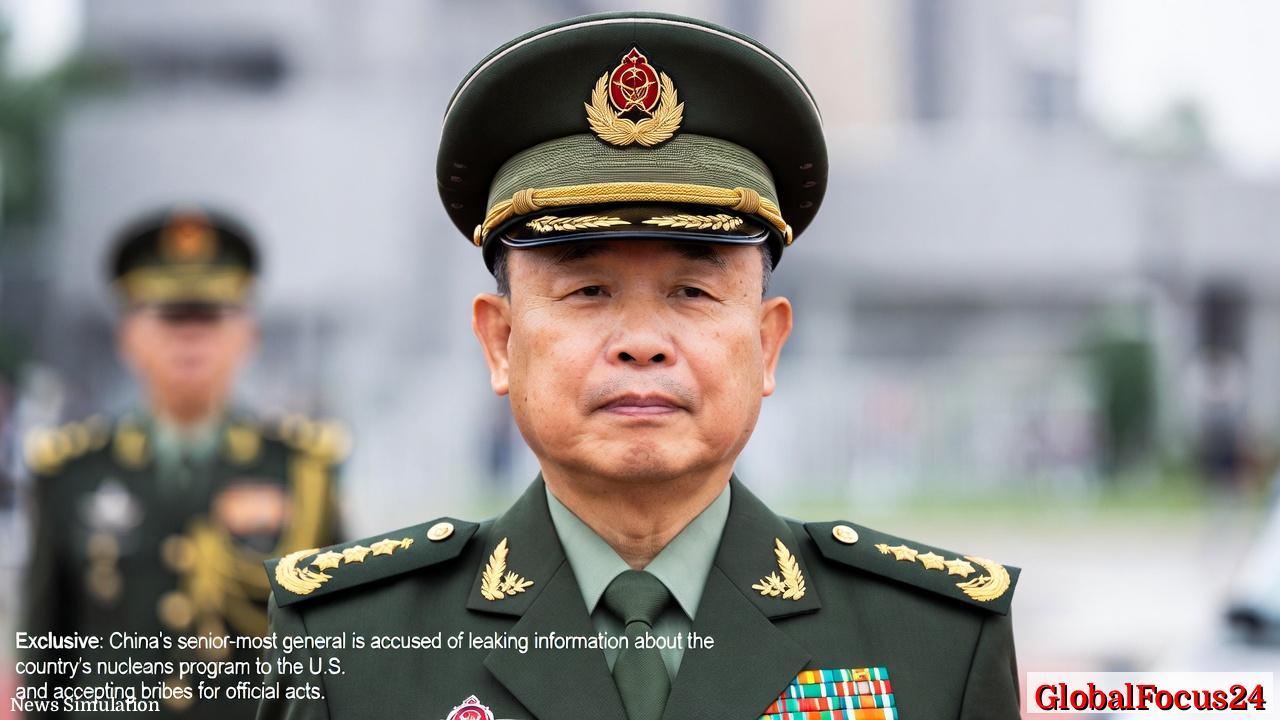
In a development that reverberates across defense, diplomacy, and energy markets, a senior Chinese military official stands accused of leaking information about the country’s nuclear-weapons program to a foreign power and accepting bribes for official acts. While the specifics of any ongoing investigations remain sensitive, the case has sharpened the lens on how nuclear security, corruption risks, and geopolitical rivalry intersect in a world still recalibrating after decades of rapid strategic shifts. This article examines the historical context, potential economic impacts, and regional comparisons that help illuminate why such allegations matter beyond the walls of defense ministries and intelligence circles.
Historical Context: Nuclear Strategy and Civil-Military Governance
To understand the potential implications, it helps to revisit the arc of China’s nuclear strategy and the civil-military governance structures that oversee it. Since the 1960s, China has maintained a position of nuclear ambiguity and deterrence, balancing a declared doctrine of minimum deterrence with a robust modernization program. Over the last several decades, Beijing has pursued technological advancements in missile systems, warhead design, and command-and-control architectures, while expanding its nuclear arsenal to reflect evolving security challenges and regional rivalries.
Historically, the reliability and integrity of a nation’s nuclear program depend not only on technical sophistication but also on governance, transparency, and safeguarding against insider threats. The intersection of high-stakes military research with escalating global competition can create incentive structures in which gatekeeping becomes both a protective measure and a potential vulnerability. In many major powers, oversight mechanisms—integrated with civilian leadership, military leadership, and external audits where applicable—are designed to minimize leakage, bribery, or coercion. When allegations involve the highest levels of leadership or senior officers, markets, allies, and adversaries alike pay close attention to how such governance gaps are addressed, since they can affect strategic stability and crisis signaling.
Economic Impact: Markets, Supply Chains, and Confidence
The economic ramifications of high-profile security allegations extend well beyond defense budgets. Investors, lenders, and manufacturers watch for signs of systemic risk, especially when information security and procurement integrity intersect with dual-use technologies. A case of alleged leakage or bribery in a nuclear program can have several economic channels:
- Defense spending and procurement confidence: If the responsible authorities are perceived as fragile or compromised, governments may accelerate reforms, tighten procurement controls, or restructure research institutions to restore trust. These changes can reallocate funds between traditional arms programs, civil energy research, and technology development, with downstream effects on related industries such as material science, precision manufacturing, and cybersecurity.
- Foreign investment and technology transfer: Perceptions of elevated risk can influence foreign direct investment, joint ventures, and technology-sharing agreements. Partners may seek more stringent due diligence, longer negotiation timelines, or diversified suppliers, all of which can affect innovation ecosystems and regional industrial clustering.
- Financial markets and risk premia: Insurance costs for defense contractors, credit pricing for state-backed research projects, and derivative hedges tied to geopolitical risk can reflect shifts in perceived stability. Even if the event is not a direct concession of guilt, the optics of insider risk can prompt risk-off behavior in capital markets and affect currency volatility in regions tied to strategic energy and defense supply chains.
Regional Comparisons: How Different Markets Respond
Regional dynamics shape how such allegations unfold in markets:
- East Asia’s strategic balance: In a region where security assurances, alliance commitments, and energy security converge, market participants closely monitor how Beijing manages insider risk within its military modernization programs. The response of regional partners can influence supply chains for critical materials, such as rare earths and advanced composites, as well as collaborations in space and cyber domains.
- Europe’s diversification of supply chains: European manufacturers and energy suppliers often look to diversify away from single-source dependencies for critical technologies. Any signs of governance weakness in a major power’s nuclear program can reinforce incentives to broaden supplier networks and invest in domestic or allied R&D capabilities, affecting trade patterns and industrial policy.
- North America's risk assessment: For the United States and Canada, allegations of leakage in a rival nation’s nuclear program can prompt tighter export controls, enhanced screening of dual-use technologies, and multilateral coordination on sanctions or diplomacy. This can also influence energy market expectations, given the interconnections among global energy security, military deterrence, and technological leadership.
Historical Comparisons: Notable Precedents and Lessons
Past episodes involving national security and insider risk offer useful benchmarks. In several cases around the world, leadership-level integrity questions have triggered comprehensive reforms, independent investigations, and, in some instances, public policy changes that strengthened governance. The recurring lesson is that transparency, accountability, and a clear separation between civilian leadership and sensitive defense functions tend to stabilize strategic relationships and reassure markets. Conversely, perceived opacity or unresolved questions about governance can erode confidence, complicate alliance coordination, and slow the acceleration of critical defense technologies.
Operational and Strategic Implications: Deterrence, Crisis Management, and Collaboration
From a defense perspective, the integrity of information and the trustworthiness of personnel at the highest levels are central to deterrence and crisis management. If senior officers are implicated in leaking sensitive program details, even inadvertently, it raises concerns about how well critical command-and-control data, access protocols, and sensitive archives are protected. This may prompt a re-evaluation of:
- Access controls and vetting procedures: Strengthening background checks, improving more granular access permissions for sensitive data, and employing more rigorous monitoring of insider threats.
- Information security culture: Reinforcing the doctrine that sensitive information remains compartmentalized, with clear rules about who can access what, and under what circumstances.
- Incident response and foreign intelligence risk: Expanding collaboration with international partners on cyber defense, intelligence sharing, and incident-response protocols to deter and detect leaks early.
Beyond national defense, the case touches on international scientific collaboration and dual-use research governance. Nuclear-related research often spills into civilian energy technologies, materials science, and quantum information fields. The balance between openness for innovation and strict controls to prevent proliferation requires continuous refinement of norms, regulations, and verification mechanisms that operate across borders.
Public Reaction: Society and Media Narratives
Public reaction to high-stakes security allegations tends to be swift and multi-faceted. In many countries, such news prompts discussions about national security, leadership accountability, and the incentives that drive risk-taking within elite circles. Public sentiment can influence policy agendas, pushing for more transparent governance and stronger anti-corruption measures. Yet it also risks fueling anxieties around security and economic stability, underscoring the need for measured communication from authorities about the scope of investigations, the safeguards in place, and the steps being taken to protect critical infrastructure.
Reaffirming Confidence: Policy and Practice
To preserve and rebuild confidence, policymakers typically pursue a multi-pronged approach:
- Strengthening governance: Clarifying the lines of authority between military and civilian institutions, improving auditing, and enforcing anti-corruption measures help restore credibility.
- Enhancing transparency where appropriate: While defense secrecy is essential, sharing aggregate metrics about reform progress, procurement reforms, and compliance improvements can reassure allies and markets without compromising security.
- Investing in resilience: Upgrading physical and cyber security, diversifying supply chains, and fortifying critical infrastructure can help mitigate systemic risk and maintain steady economic momentum amid geopolitical turbulence.
Regional Economic Signals: Observing the Wake of Allegations
Markets often respond to such developments with sensitivity to near-term volatility and longer-term strategic shifts. Analysts watch for changes in defense procurement cycles, adjustments to energy policy, and shifts in international collaboration that could affect technology ecosystems. In regions closely tied to industrial bases supporting defense and energy transitions, even rumors or preliminary findings can ripple through stock prices of defense contractors, research institutions, and suppliers of specialized materials.
A Still-Evolving Narrative: What to Watch Going Forward
As investigations progress, a few key indicators will help observers gauge the trajectory:
- Official disclosures and timelines: The pace and specificity of official updates will influence market expectations and the perceived credibility of governance reforms.
- Structural reforms: Announcements about reorganizing defense ministry oversight, appointing independent inspectors, or expanding civilian-military coordination will signal a commitment to reinforcing integrity.
- International cooperation: Continued or expanded collaboration with allies on nonproliferation, cyber defense, and procurement standards can demonstrate a proactive approach to risk management.
- Economic resilience indicators: Monitoring defense-related budget allocations, R&D investment, and private-sector participation in critical technology development will reveal how economies adapt to heightened security scrutiny.
Conclusion: A Moment to Reassess, Rebuild, and Realign
The allegations facing a senior figure within China’s defense establishment underscore the enduring tension between security imperatives and governance integrity in a high-stakes geopolitical environment. Historical context shows that robust governance and transparent reforms tend to stabilize strategic relationships and sustain innovation. The economic implications are nuanced, with potential shifts in defense spending, supply-chain diversification, and market sentiment shaping near- and long-term outcomes.
Ultimately, the global community’s response will hinge on the rigor and transparency of investigations, the credibility of reform measures, and the willingness of authorities to reinforce preventive safeguards without compromising legitimate security needs. As nations navigate a complex web of deterrence, collaboration, and competition, the resilience of governance frameworks and the clarity of strategic objectives will remain central to sustaining security, prosperity, and regional stability in an interconnected world.