China Advances Compact High-Power Microwave System for Satellite Disruption
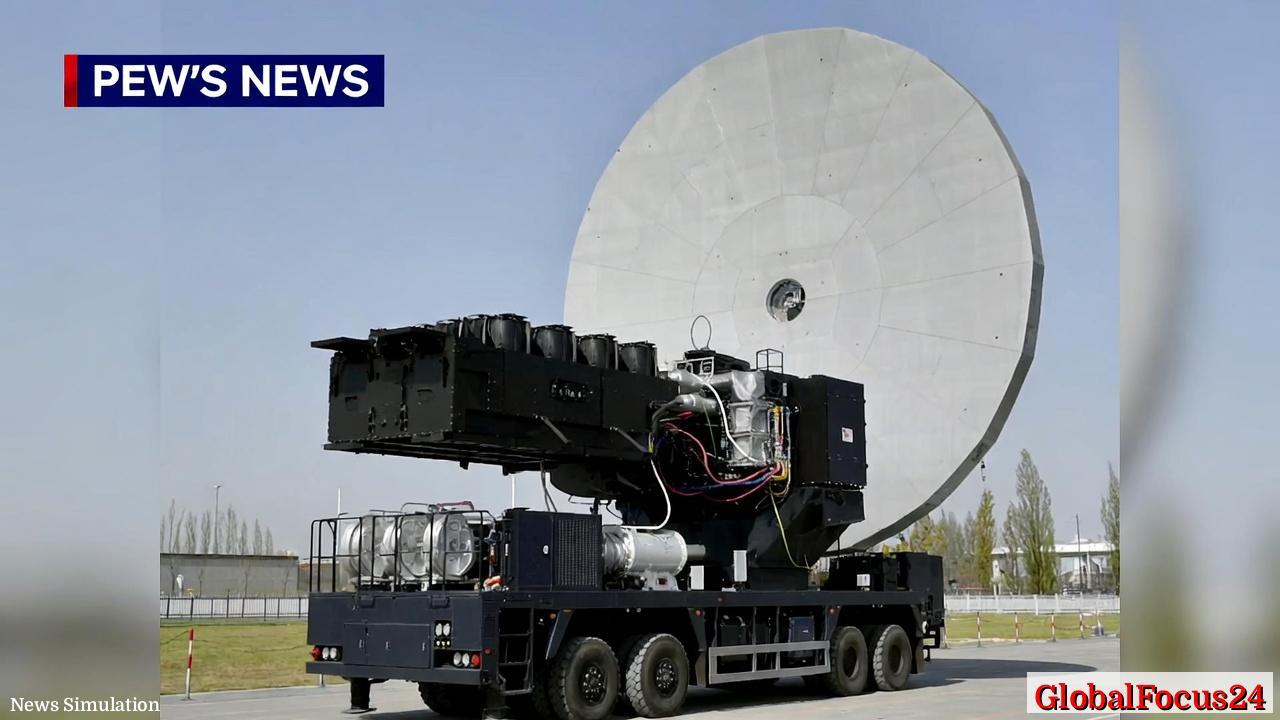
China has announced the development of a compact high-power microwave (HPM) system designed to disrupt satellites in low Earth orbit, marking a notable milestone in directed-energy technology and space-enabled warfare capabilities. The device, identified as the TPG1000Cs, is described by researchers at the Northwest Institute of Nuclear Technology in Xi’an as capable of generating substantial pulse power within a relatively small and mobile platform. The project underscores ongoing interest in electronic warfare tools that can affect space-based assets, a domain increasingly central to modern national security thinking.
Historical context: evolution of directed-energy research Directed-energy weapons—ranging from lasers to microwave systems—have long captured strategic interest due to their potential to disable or degrade critical electronics without traditional kinetic effects. Early demonstrations in the late 20th and early 21st centuries showcased the feasibility of concentrated energy delivering targeted disruption. Over the last decade, advancements in compact pulsed power, materials science, and high-precision timing have accelerated the practicality of portable or vehicle-mounted systems. The TPG1000Cs fits within a broader trajectory in which nations seek scalable, rapid-response means to affect space-enabled infrastructure without relying on conventional munitions.
Technical overview: what the TPG1000Cs reportedly achieves
- Power and duration: The system is described as producing 20 gigawatts of peak power in pulses lasting up to one minute. This combination of high peak power and extended duration is unusual for compact HPM devices and suggests emphasis on sustained interference capabilities over a relatively long engagement window.
- Physical footprint: Reports place the device at roughly the size of a small truck with a weight around five tons. If accurate, this would represent a meaningful improvement in portability compared with earlier, bulkier high-power microwave installations.
- Energy density and insulation: The technology is said to rely on advanced pulsed-power architecture based on a Tesla transformer and an insulating liquid designed to achieve high energy density, enhanced insulation, and reduced energy loss. These choices aim to improve efficiency and thermal management, which are critical for maintaining performance during high-duty-cycle operations.
- Beam control and synchronization: The system is described as capable of synchronizing multiple beams with timing precision around 170 picoseconds. Such precise timing would enable a concentrated power surge on a targeted orbital asset, increasing the likelihood of disrupting sensitive electronics.
- Applications and range: While the primary stated goal is satellite disruption, the broader capability set implies potential uses in electronic warfare, radar denial, and communications interference. The portability and modularity could enable deployment from land-based platforms, aircraft, ships, or potentially mobile launch platforms.
Economic impact: implications for industry and research ecosystems
- Defense technology value chain: The emergence of more compact, high-power systems highlights growth in sectors related to pulsed power, dielectric materials, high-frequency transistors, and thermal management. Suppliers of specialty insulating liquids, cooling systems, and precision timing components may see increased demand as interest in mobile HPM capabilities grows.
- Space economy considerations: Satellite constellations and space infrastructure underpin diverse sectors, from telecommunications to weather forecasting and navigation. Developments that could potentially threaten satellite operations tend to elevate risk assessments across aerospace, insurance, and finance, influencing investment in space resilience, on-orbit servicing, and rapid replacement strategies.
- Supply chain resilience: As countries explore HPM and space-domain defense options, there is heightened attention to secure, diversified supply chains for critical components, including high-grade dielectrics, superconducting or pulsed-power elements, and robust testing facilities. This can drive regional collaborations and international partnerships focused on safeguarding technology access.
Regional comparisons: how this development fits into broader trends
- Asia-Pacific activity: Several regional actors have pursued high-power and directed-energy capabilities, reflecting a pattern of accelerating investments in space, cyber, and electromagnetic domains. The emphasis on mobility and rapid-deployment platforms aligns with broader regional defense modernization trends.
- Global balance of capabilities: Across major military powers, there is a continued push toward integrated electronic warfare that can influence space assets, ground-based communications, and air defense networks. The TPG1000Cs contributes to a competitive landscape in which states seek to diversify their toolkit for influencing or denying adversaries’ access to critical space-based services.
Operational and strategic considerations
- Space reliability and redundancy: The potential to disrupt satellites raises questions about how nations plan for space resilience. Operators are increasingly expanding redundant satellite architectures, diverse orbits, and ground-based backup systems to mitigate single-point failures.
- Legal and ethical dimensions: The deployment of HPM systems against space assets intersects with international law, including space governance norms and the prevention of harmful interference with civilian satellites. While the article avoids political commentary, observers note that evolving norms and treaties will influence how such technologies are developed and used.
- Public reaction and risk perception: Public awareness of space security threats is rising, particularly as everyday services depend on satellite data. Communities that rely on GPS, weather data, and communications may perceive the emergence of potent HPM capabilities as a wake-up call to strengthen space situational awareness and emergency preparedness.
Technical challenges and future prospects
- Thermal management and material limits: Sustained high-power operation imposes significant thermal loads. Achieving reliable performance over extended pulses requires advanced cooling strategies and materials that can withstand repetitive exposure to intense fields without breakdown.
- Targeting precision and collateral risk: While precise timing enables focused energy delivery to specific orbital targets, the risk of unintended interference with nearby assets or ground-based systems remains a critical consideration for developers and operators.
- Integration with broader systems: For any directed-energy capability to be effective, it must integrate with command-and-control networks, sensor suites, and countermeasures to minimize vulnerabilities and ensure timely, accurate engagement decisions.
Public and industry reactions: a snapshot
- Industry observers point to the potential for accelerated investment in space-domain defense, including satellite hardening, rapid-launch capabilities, and space-domain awareness platforms.
- Analysts emphasize that while hardware capabilities can appear impressive, real-world effectiveness depends on a holistic ecosystem of detection, tracking, attribution, and response planning.
- Local and regional media have highlighted Xi’an-based research facilities as part of a broader national effort to advance strategic technologies, reflecting a growing public interest in the science underpinning national security.
Conclusion: a pivotal moment in space-based defense technology The introduction of a compact, high-power microwave system capable of targeting satellites in low Earth orbit signals a noteworthy development in the evolution of space-focused electronic warfare. The TPG1000Cs, as described by researchers, embodies a combination of power density, portability, and timing precision that could influence how nations approach satellite protection, disruption, and resilience. While the full operational implications remain to be validated through independent verification and field demonstrations, the technology underscores a global trend toward more agile, edge-focused systems that can extend a nation’s reach into the space domain without traditional kinetic means.
As space becomes increasingly crowded and interdependent with civilian life, the ongoing balance between capability, resilience, and responsible stewardship will shape how such innovations are governed and deployed across the international landscape. The pace of advancement in compact high-power microwave technology suggests that space security will continue to be a central topic for policymakers, engineers, and the public as nations navigate the complexities of protecting, guiding, and sustaining critical satellite services in the decades ahead.