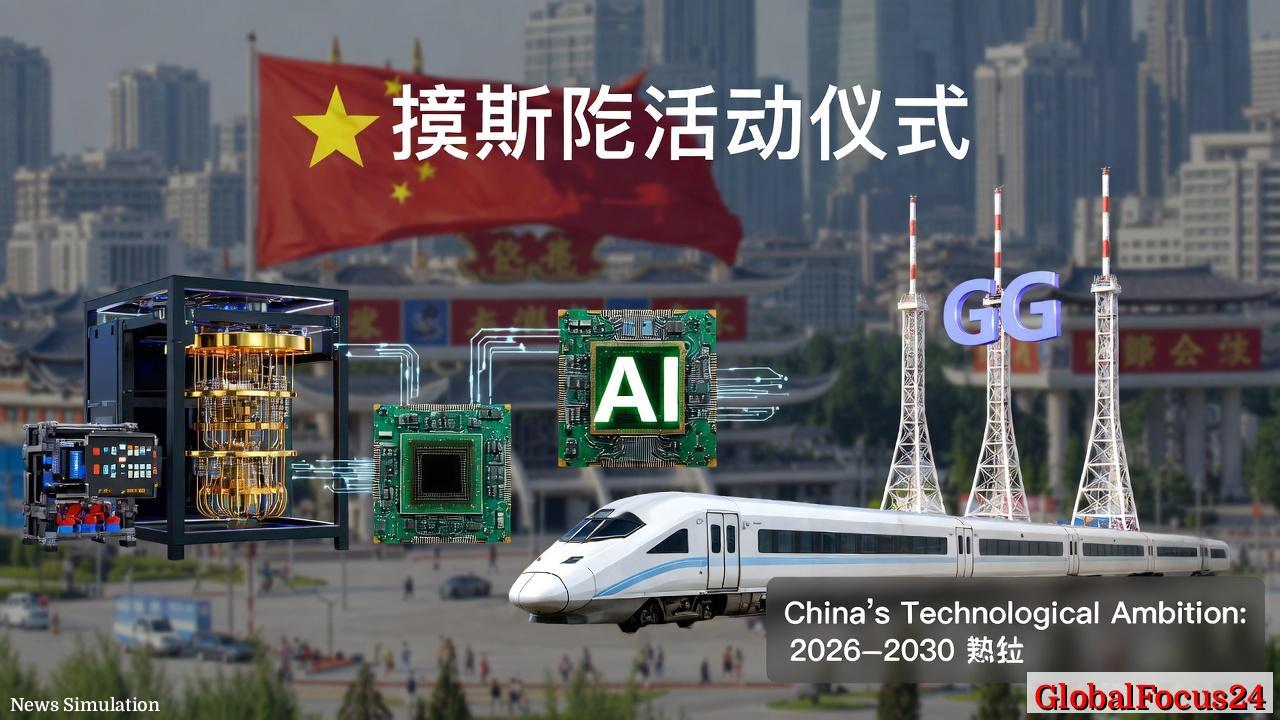
China’s Bold Blueprint: Five-Year Plan Targets AI, Quantum Tech, and Self-R reliance
In a decisive push to redefine its role in the global tech landscape, China has unveiled a comprehensive five-year plan for 2026 to 2030 that elevates artificial intelligence, quantum technologies, and other frontier sciences to the forefront of national strategy. Framed as a blueprint for self-reliance and long-term competitiveness, the plan charts a course for intensified investment, accelerated research, and deliberate policy instruments designed to consolidate China’s position as a global leader in next‑generation technologies. The document signals a historic shift from incremental improvement to an explicit, state‑backed acceleration of capabilities across multiple critical sectors.
Historical Context: From Catching Up to Leading in Strategic Technologies
China’s journey in high-tech development has been marked by a sustained transition from follower to frontrunner in a growing set of strategic industries. In the late 1990s and early 2000s, the country focused on building manufacturing scale and expanding access to global markets. Over the past decade, policy has increasingly leaned toward “indigenous innovation” and “core technology self-sufficiency” as responses to global supply-chain disruptions and geopolitical competition. The current plan reflects a maturation of that philosophy: a deliberate, government‑backed effort to seed breakthrough capabilities in applied AI, semiconductor supply chains, precision manufacturing, and foundational software.
Key Pillars: Six Priority Areas for Full-Chain Development
The plan identifies six priority areas where the state aims to cultivate end-to-end capabilities:
- Integrated circuits: Aimed at reducing reliance on foreign suppliers across design, fabrication, and packaging, with a focus on domestic design tools, lithography readiness, and foundry capacity expansion.
- Industrial machine tools: Targeting precision engineering, robotics, and smart manufacturing to lift productivity across industries and underpin advanced fabrication.
- High-end scientific instruments: Investments to empower universities and research institutes with state-of-the-art measurement and analysis tools, enabling accelerated discovery.
- Foundational software: Development of robust, secure software ecosystems, including operating systems, middleware, and development platforms essential for critical sectors.
- Advanced materials: Exploration of new composites, semiconductors, and surface technologies to improve performance in electronics, energy, and manufacturing.
- Biomanufacturing: Scaling biotechnology production with safety, quality, and regulatory frameworks to support health, agriculture, and industrial applications.
Economic Impacts: A Tenacious Boost to R&D and Supply Chains
The financial framework accompanying the plan signals a bold expansion of China’s science and technology budget. Officials anticipate a substantial rise in research and development outlays, with a defined target to push national science spending to roughly 426 billion yuan (about US$62 billion) within the current year. This level represents a meaningful uptick relative to 2025 and signals a broader willingness to fund long‑term, high‑risk research alongside applied, near-term development.
From an economic standpoint, the plan seeks to:
- Expand domestic supply chains for critical technologies, reducing exposure to external shocks and geopolitical tensions.
- Accelerate the transfer of research from universities to industry, shortening the distance from discovery to application.
- Foster high-value manufacturing and technology export capabilities, potentially reshaping regional supply chains in Asia and beyond.
Regional Implications: Comparative Momentum Across Asia
China’s plan sits within a dynamic regional landscape where neighboring economies are likewise prioritizing strategic technologies, albeit with different emphasis and timelines. Key regional comparisons include:
- Semiconductor ecosystems: While Taiwan remains a critical node for advanced lithography and chip fabrication, and South Korea emphasizes memory and foundry capabilities, China’s strategy focuses on self-reliance across the entire production chain, including design, equipment, and materials.
- AI and software ecosystems: The broader Asia-Pacific region is witnessing growing investments in AI talent, cloud infrastructure, and data governance. China’s “AI Plus” initiative, with its emphasis on integrating AI across industries and governance, adds a distinctive national dimension to the regional AI race.
- Biomanufacturing and materials science: Nations across East Asia are accelerating capabilities in biotech manufacturing, advanced materials, and clean energy technologies. China’s plan aligns with these trends while aiming for leadership in foundational software and advanced materials to support a broader industrial base.
Technological Focus: AI as a Strategic Resource and Governance Tool
At the heart of the plan lies artificial intelligence, framed not just as a technology but as a strategic resource essential to multiple facets of national life. The AI strategy envisions deploying AI across sectors, including public governance, industry, and research institutions, under a broad umbrella often described as an “AI Plus” campaign. The plan emphasizes secure supply chains for chips, software, and large‑scale training data and models, reflecting a recognition that AI leadership hinges on both hardware and software ecosystems, as well as governance frameworks that enable responsible deployment.
Recent progress in domestic AI initiatives has reinforced optimism about China’s capacity to compete on the world stage and to influence global norms around AI governance. The emphasis on talent acquisition—through special visa programs for foreign scientists—signals a willingness to attract top minds to accelerate development, while acknowledging the importance of integrating global expertise with domestic research ecosystems.
Biotechnology and Neuroscience: Expanding Frontiers
Beyond AI, the plan elevates biotechnology and neuroscience as core areas with the potential to transform health, agriculture, and industry. Investments in biomanufacturing aim to scale up production capabilities while maintaining rigorous safety and regulatory standards. Advances in neuroscience research could underpin smarter medical devices, brain-inspired computing, and novel diagnostic technologies. The plan’s cross-cutting approach seeks to translate fundamental discoveries into practical technologies that generate economic value and address demographic challenges such as aging populations and healthcare demand.
Industrial Strategy: From Plan to Factory Floor
A central objective is to translate ambition into tangible improvements on the factory floor. This means advancing industrial machine tools and high-end scientific instruments to improve precision, efficiency, and reliability in manufacturing. The goal is to create a robust ecosystem where domestic suppliers can meet the standards required by both consumer markets and critical infrastructure sectors. By strengthening domestic capabilities at every stage of production, the plan envisions smoother supply chains, shorter lead times, and enhanced resilience against external shocks.
Foundational Software and Data Infrastructure
Foundational software remains a cornerstone of the plan, recognizing that modern economies rely on robust, secure software stacks and interoperable platforms. Investments in this area aim to reduce dependence on external platforms for essential services, while fostering domestic innovation in operating systems, cybersecurity, data analytics, and cloud technologies. A secure, scalable software backbone supports AI deployment, scientific research, and industrial automation, creating a virtuous cycle of capability building across sectors.
Advanced Materials and Energy Implications
Advances in materials science have the potential to unlock breakthroughs across electronics, energy storage, and manufacturing. The plan’s emphasis on new materials—from semiconductors to composites—could enhance device performance, enable lighter and stronger structures, and improve energy efficiency in mobile devices and industrial equipment. This focus aligns with broader global efforts to accelerate clean energy technologies and sustainable manufacturing, positioning China to contribute to and benefit from a transition to low-carbon systems.
Biomanufacturing and Public Health
Biomanufacturing is framed not only as an economic opportunity but as a strategic capability for healthcare resilience. Scaled production of biologics, vaccines, and bioproducts can improve access and reduce dependence on external suppliers during health emergencies. The plan also highlights the importance of regulatory frameworks that ensure safety, quality, and ethical considerations—an area where international collaboration and standards development will be critical to long‑term success.
Talent, Talent, Talent: Attracting Global Minds
To accelerate progress, the plan incorporates talent acquisition measures designed to attract top-tier scientists and engineers from around the world. Special visa programs for foreign researchers are part of a broader strategy to infuse domestic research ecosystems with international expertise while maintaining rigorous oversight and compliance with national priorities. This approach, while potentially accelerating innovation, also reflects a broader policy stance on global scientific collaboration in a competitive environment.
Public Reaction: A Mix of Hope and Caution
Public sentiment toward the plan is likely to reflect a mix of optimism and caution. On one hand, the emphasis on self-reliance, job creation in high-tech sectors, and potential improvements in national competitiveness resonates with citizens and business leaders seeking stability and growth. On the other hand, questions remain about the pace of execution, the balance between openness to international collaboration and pressures for domestic prioritization, and how the plan will impact pricing, Wages, and consumer markets. Observers also watch how intellectual property regimes, regulatory oversight, and international trade dynamics align with the country’s ambition to shape global tech governance.
Global Implications: Shaping the Next Phase of Tech Competition
China’s five-year plan arrives at a moment of intensified global technology competition, with several economies pursuing strategic investments in AI, quantum computing, and advanced manufacturing. If the plan translates into tangible breakthroughs, the country could gain leverage across several dimensions:
- Innovation velocity: Sustained, well-funded R&D can translate into faster development cycles, a broader pipeline of technologies, and improved performance across AI, materials science, and biotech.
- Industrial modernization: Strengthened domestic toolmaking and semiconductor supply chains can reduce exposure to external shocks and create opportunities for trade and investment in downstream industries.
- Global standards and governance: As domestic capabilities advance, China may exercise greater influence in international standards bodies, data governance frameworks, and regulatory norms related to AI, cybersecurity, and biotech.
- Talent and immigration dynamics: New visa initiatives for foreign scientists could reshape talent flows, creating hubs of cross-border collaboration and competition to attract the best researchers.
Operational and Policy Considerations
To realize the five-year plan, several operational and policy considerations will determine the speed and sustainability of progress:
- Funding execution: Translating the 426 billion yuan science budget into measurable outcomes requires transparent governance, clear milestones, and robust oversight to prevent inefficiencies and ensure strategic alignment.
- Sector integration: Achieving full-chain development in six priority areas necessitates seamless coordination across ministries, state-owned enterprises, universities, and private sector partners. Cross-cutting programs in talent, procurement, and intellectual property will be essential.
- International collaboration: Balancing national priorities with openness to global talent and collaboration will influence the quality and diversity of innovation. Policymakers will need to manage risk while allowing productive international partnerships.
- Regulatory readiness: As AI, biotechnology, and advanced manufacturing expand, regulatory frameworks for safety, privacy, ethics, and accountability will shape adoption and public trust.
- Domestic market dynamics: The plan’s success will also hinge on consumer demand, competition, and prices in a rapidly evolving economy. Smart policy design could help translate breakthroughs into widespread benefits.
Public Infrastructure and Digital Readiness
Beyond technical capabilities, digital infrastructure and the broader ecosystem will determine how quickly innovations can scale. Investments in data centers, high-speed connectivity, and secure cloud services will underpin AI training, large-scale simulations, and biomanufacturing workflows. Workforce development programs aimed at data science, robotics, and software engineering will help ensure a continuous supply of skilled labor to sustain momentum across multiple domains.
Regional Development and Urban Innovation
Strategic deployment of resources to inland regions and burgeoning tech corridors can spread the benefits of growth beyond coastal cities. The five-year plan’s implementation could spur the construction of new research parks, innovation hubs, and industrial clusters that attract investment, create high‑quality jobs, and bolster regional economies. Such development would complement national efforts to diversify growth and reduce regional disparities, while reinforcing domestic capacity in core technologies.
Risks and Mitigation
No ambitious national plan is without risk. Potential challenges include:
- Execution risk: Delays or inefficiencies in procurement, project management, or talent attraction could slow progress.
- Global headwinds: Trade tensions, export controls, and shifts in international collaboration could affect access to essential equipment, software, and components.
- Intellectual property concerns: Balancing protection with open science is crucial to maintain incentives for innovation while enabling widespread application.
- Social and ethical considerations: Rapid deployment of AI and biotech requires careful governance to address privacy, safety, and ethical implications.
Illustrative Example: The AI Plus Initiative in Practice
Consider a hypothetical but plausible scenario: a major city leverages AI Plus to optimize public transportation, energy use, and municipal services. AI systems could analyze traffic patterns, predict maintenance needs for critical infrastructure, and assist disaster response planning. The city partners with universities and a domestic chip designer to deploy a scalable AI platform that runs on secure, locally hosted servers. The initiative demonstrates how AI, when integrated with government services and industrial partners, can improve efficiency, reduce costs, and inform policy decisions with data-driven insights. This kind of deployment illustrates how the five-year plan’s objectives could translate into real-world outcomes while highlighting the importance of governance, data security, and public trust.
Conclusion: A Milestone in Strategic Technology Planning
The newly approved five-year plan marks a clear, strategic bet on science and technology as the engine of economic vitality and national security. By prioritizing AI, quantum technologies, integrated circuits, and foundational software, the plan aims to build resilience, accelerate innovation, and cement leadership in areas that will define the 21st-century global economy. As the plan moves from policy to practice, observers will watch for evidence of momentum—whether through successful lab-to-market translations, the establishment of robust domestic supply chains, or the emergence of new regional innovation clusters. The path ahead is challenging, but the potential payoff—a more self-reliant, technologically advanced economy with a greater voice in setting international technical standards—will shape the trajectory of global tech competition for years to come.