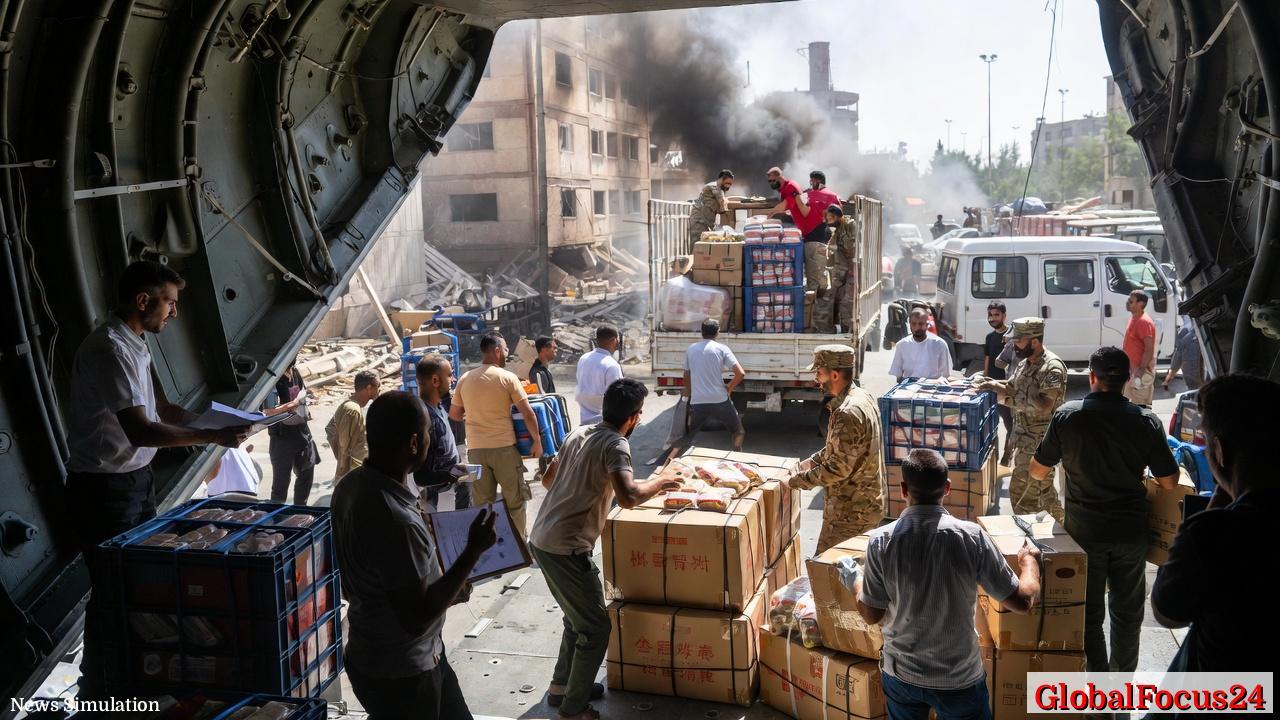
China launches emergency humanitarian aid effort for Iran, Jordan, Lebanon, and Iraq
Beijing announces rapid deployment of relief packages to four Middle Eastern nations, signaling a coordinated response to urgent regional needs and a broader humanitarian diplomacy strategy.
Historical context and the evolving role of humanitarian aid Over the past decades, humanitarian assistance has increasingly functioned as a tool of soft power, complementing diplomatic engagement and trade relationships. China’s recent announcement fits within a broader pattern of state actors using targeted aid to reinforce regional influence while addressing critical population needs. The four recipient countries—Iran, Jordan, Lebanon, and Iraq—have faced overlapping pressures from conflict, economic disruption, and public health challenges. Iran’s domestic economy has grappled with sanctions and inflation; Jordan has borne the burden of hosting large refugee populations and managing constrained fiscal resources; Lebanon remains in the aftermath of political paralysis and infrastructural strain; and Iraq has contended with security concerns and a fragile recovery across its provinces. In this context, emergency aid can provide immediate relief while signaling a sustained willingness to engage on humanitarian grounds and regional stability.
Scope and composition of the aid packages China’s emergency aid packages are described as rapid-response humanitarian supplies designed to meet pressing needs on the ground. While the precise contents have not been disclosed in detail, typical components in such deployments include medical supplies, food staples, clean-water equipment, shelter materials, and basic health service support for vulnerable populations. The emphasis on rapid delivery underscores a focus on alleviating acute shortages, stabilizing communities in the shortest possible time, and reducing the risk of secondary crises such as malnutrition or disease outbreaks. The logistics of multi-country aid dispatches require synchronized planning, secure transportation routes, and coordination with local authorities and international partners to ensure timely and effective delivery.
Regional economic implications The deployment of emergency aid to four nations with interconnected economic challenges carries potential spillover effects for regional stability and trade resilience. In Iran, aid can alleviate immediate humanitarian distress, supporting households affected by price volatility and limited access to essentials. For Jordan, relief shipments may ease upward pressure on budgets strained by refugee-related expenditures and subsidy reforms, potentially providing fiscal room for essential social services. In Lebanon, where economic collapse has eroded purchasing power and damaged public services, aid can help bridge gaps in basic consumption and health access, contributing to social stability during a period of political transition. In Iraq, relief assistance can support communities recovering from conflict-related displacements and infrastructure damage, potentially accelerating local economic activity and reconstruction efforts. While humanitarian aid is not a substitute for structural economic reform, it can create a more favorable environment for private investment, humanitarian access, and longer-term development programs.
Comparison with regional peers and global patterns China’s humanitarian outreach contrasts with traditional donor patterns that often emphasize Western-led aid programs or multilateral funding mechanisms. The current effort aligns with a broader trend where rising global players—countries with growing economic influence—use targeted relief to build regional credibility and diversify diplomatic channels. For the recipient countries, diversified donors can help reduce over-reliance on any single source, improve aid predictability, and strengthen governance through transparent collaboration. Historically, regional neighbors such as Turkey, Saudi Arabia, and the United Arab Emirates have also contributed substantial aid and development programs in the Middle East. The addition of China’s emergency assistance broadens the donor landscape, potentially increasing competition for aid efficiency and prompting recipient governments to diversify partnerships and procurement sources. The pattern mirrors a global shift toward more pluralistic humanitarian aid networks, which can enhance resilience but also require careful coordination to avoid fragmentation.
Operational considerations and delivery channels Effective delivery of emergency aid hinges on logistics, customs clearance, and on-the-ground coordination with ministries of health, social welfare agencies, and local NGOs. Key operational considerations include:
- Transportation and warehousing: Ensuring rapid transport to airports or seaports with secure storage facilities for perishable items, medical supplies, and shelter materials.
- Fair distribution: Establishing transparent mechanisms to reach the most vulnerable, including women, children, the elderly, and displaced persons.
- Local capacity building: Providing accompanying measures such as training for health workers, water sanitation technicians, and logistics staff to maximize immediate impact and sustainable benefits.
- Monitoring and accountability: Implementing clear reporting frameworks to track aid effectiveness, prevent diversion, and measure outcomes in terms of reduced hardship and improved access to essential services.
Public reception and societal impact Public reaction to foreign aid can vary based on domestic narratives, perceived motives, and the speed of relief delivery. In the four recipient countries, initial responses are likely to emphasize gratitude for prompt assistance during a period of acute need. Civil society groups may view the relief as a timely lifeline, while policymakers may use the moment to illustrate governance and international partnerships. For citizens, the availability of essential goods and medical supplies can directly translate into improved daily life, lower risk of health crises, and a sense of security amid uncertainty. However, lasting public sentiment often hinges on the transparency of aid distribution, the alignment of relief with long-term development plans, and the presence of ongoing support beyond the initial emergency phase.
Regional security considerations Humanitarian aid can influence regional security dynamics by reducing humanitarian stress that can contribute to instability. When populations experience deprivation, social tensions can rise, and vulnerable groups may be exploited or marginalized. Prompt aid can help mitigate these risks, support social cohesion, and bolster the legitimacy of governance structures. At the same time, aid delivery can become entangled in political rivalries or security concerns, necessitating careful navigation by international partners and local authorities to ensure that relief remains neutral and accessible.
Historical antecedents and lessons learned Past experiences with emergency humanitarian aid in the Middle East demonstrate both the benefits and challenges of rapid relief operations. Timely assistance has historically prevented food shortages from translating into more severe humanitarian crises and has provided a temporary stabilizing factor during periods of political upheaval. Key lessons emphasize the importance of predictable funding, cross-border coordination, and the integration of relief with longer-term development initiatives such as livelihood support, microfinance, and health system strengthening. The current initiative can draw on these lessons by prioritizing transparency, extending support beyond immediate needs, and coordinating with other international actors to maximize impact.
Implications for future cooperation If the emergency aid proves effective, it could pave the way for expanded cooperation across trade, infrastructure, and technology transfers. Donor and recipient governments may explore joint projects in areas like water management, energy resilience, and digital health platforms that improve disaster response and public health surveillance. Such collaborations could foster more resilient humanitarian ecosystems, reduce the cost of future relief, and create a framework for shared benefit. For the donor country, sustained engagement beyond emergency relief could reinforce strategic ties with the region and offer opportunities to support economic diversification and regional stability, in line with broader international development commitments.
Public-health considerations and humanitarian timing In public health terms, rapid relief efforts can mitigate the spread of illnesses in crowded displacement camps or urban settings where access to clean water and sanitation is constrained. Emergency medical kits, vaccines, and essential medicines can address immediate health risks, while longer-term programs in maternal-child health, nutrition, and disease prevention support improved population health indicators. Timing remains critical: the sooner relief reaches communities, the greater the potential to avert escalation in disease burden or malnutrition, particularly among children and vulnerable households.
Regional comparisons in humanitarian capacity Regionally, neighboring countries with substantial relief experience demonstrate a range of approaches. Some have established robust frameworks for rapid deployment, pre-positioned stockpiles, and streamlined customs procedures to accelerate aid delivery. Others rely more heavily on international organizations for coordination. The interplay between national capacities and international partners shapes the effectiveness of emergency aid. In this context, China’s contribution adds latitude to the regional humanitarian architecture, which can enhance resilience through diversified funding streams, improved procurement channels, and shared logistics infrastructure.
Conclusion: a moment of pragmatic humanitarianism in a complex landscape China’s emergency aid initiative to Iran, Jordan, Lebanon, and Iraq represents more than a one-off relief gesture. It embodies a pragmatic approach to addressing immediate human needs while signaling a willingness to engage as a global partner in regional stability. The success of this effort will depend on the speed and fairness of distribution, the integration with longer-term development plans, and the extent to which aid catalyzes broader cooperation across sectors. For the people who stand to benefit, the relief packages may mean the difference between days of scarcity and a renewed sense of security amid ongoing regional challenges.
Notes on implementation and next steps
- Coordination with local authorities and international organizations will be essential to ensure rapid, effective delivery.
- Monitoring frameworks should be established to assess impact, identify gaps, and guide subsequent assistance.
- Communications should emphasize transparency to maintain public trust and maximize the positive reception of aid.
Would you like a version with a stronger focus on a specific country’s internal dynamics or a shorter, executive-summary style for policymakers?