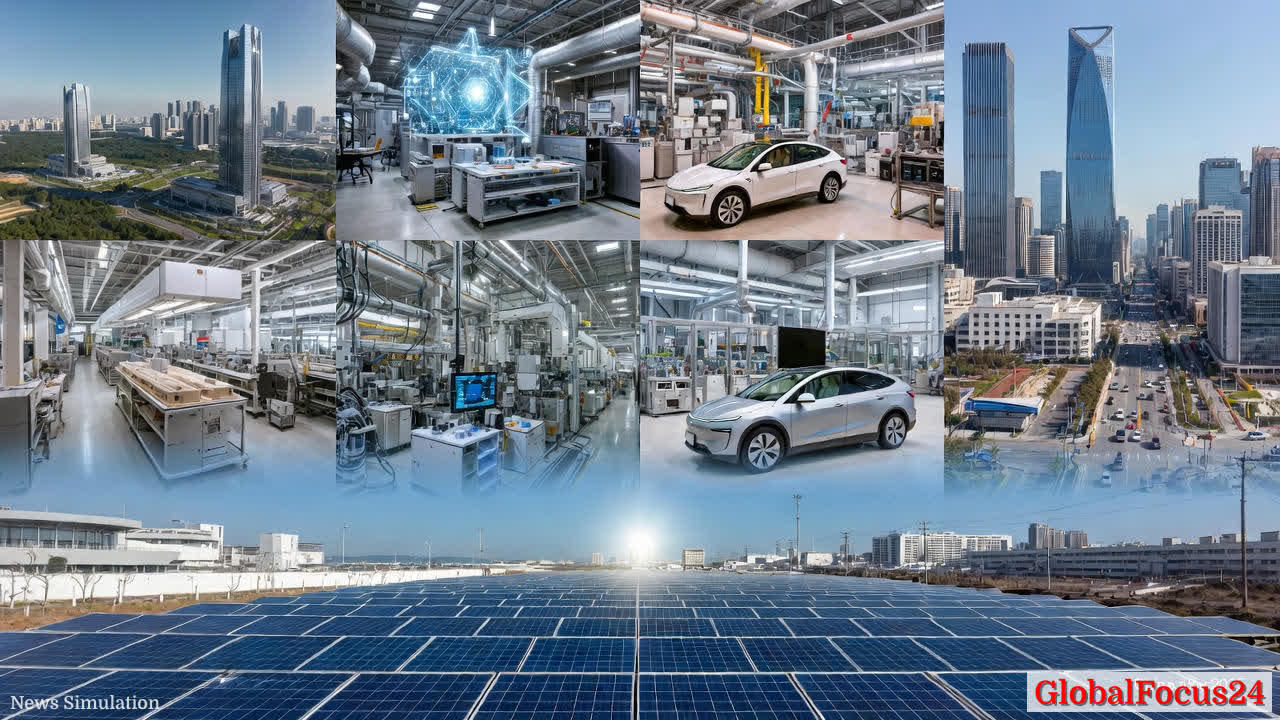
China’s Economic Resilience and Technological Momentum in 2025
In 2025, China demonstrated notable resilience and forward momentum across technology, manufacturing, and infrastructure, signaling a durable shift in the global economic landscape. The year underscored how strategic investments, policy alignment, and targeted innovation can propel a large economy through shifting international currents. This analysis examines the drivers behind China’s 2025 performance, its international implications, and how regional comparisons illuminate the broader picture.
Historical Context: A Decade of Transformation
Over the past decade, China has transitioned from a high-growth, export-oriented model to a more balanced economy that emphasizes domestic demand, advanced manufacturing, and technological self-reliance. After the global financial crisis, China accelerated investment in infrastructure and export-oriented industries, while gradually expanding services, consumption, and high-tech capabilities. By 2025, this trajectory manifested in a mature ecosystem for renewable energy, electric vehicles, semiconductors, and artificial intelligence. The year’s results reflected a long arc of development: sustained investment-led growth, rising productivity, and a shift toward higher value-added manufacturing. The integration of urbanization, digital infrastructure, and industrial policy created a framework in which innovation could scale across sectors.
Key Economic Drivers in 2025
- Technology and Innovation Leadership
- Renewable energy and grid modernization: China’s investments in solar, wind, and storage technologies continued to yield cost declines and greater grid reliability. The expansion of smart grid solutions and provincial energy exchanges helped optimize supply and demand, contributing to lower system costs and higher resilience.
- Electric vehicles and supply chains: Domestic manufacturing of EVs, batteries, and related components strengthened. Localized sourcing and layered supplier ecosystems reduced exposure to international disruptions, while sustained policy support for charging networks and consumer incentives reinforced demand.
- Artificial intelligence and industrial automation: AI adoption extended beyond consumer devices into manufacturing, logistics, and services. The integration of AI with robotics and autonomous systems enhanced productivity, quality control, and operational efficiency across multiple industries.
- Semiconductors and stepwise domestic capability: Progress in semiconductor design, equipment, and fabrication capacity supported greater self-sufficiency in key electronics sectors. While supply constraints remained a global issue, national programs emphasized critical capabilities to reduce dependence on external sources.
- Manufacturing Strength and Infrastructure
- High-tech manufacturing base: The shift toward advanced manufacturing persisted, with emphasis on precision equipment, aerospace, and biomedical devices. This reinforced China’s role as a global production hub capable of delivering complex goods at scale.
- Infrastructure investments: Ongoing projects in rail, highways, and urban transit expanded connectivity and reduced logistics costs. Efficient transport networks complemented growing domestic demand and export throughput, supporting overall competitiveness.
- Export performance under shifting demand: While the global trading environment evolved, Chinese exports remained robust in sectors where technology and value-added manufacturing provided clear advantages. Diversified markets helped stabilize external demand and reduce reliance on any single region.
- Energy Transition and Sustainability
- Clean energy leadership: Continued emphasis on reducing carbon intensity positioned China as a key player in the transition to low-carbon energy. Large-scale deployment of renewable projects and low-emission technologies contributed to measurable progress in climate goals and energy security.
- Industrial efficiency: Advances in energy efficiency across heavy industries and manufacturing helped curb energy costs and improve environmental outcomes. This supported a more sustainable growth path and aligned with global expectations for responsible industrial policy.
Regional Comparisons: Where China Stands
- Asia-Pacific peers: Among major regional economies, China’s combination of scale, integrated supply chains, and policy support gave it an edge in high-tech manufacturing and innovation ecosystems. Countries focusing on niche sectors or services faced different growth dynamics, but China’s broad-based strategy provided resilience amid regional shifts.
- Europe and the United States: In a global environment shaped by technology competition and supply chain realignment, China’s emphasis on self-sufficiency in critical technologies and domestic market expansion created a counterweight to Western-led production networks. Collaborative opportunities persisted in areas like green tech and digital infrastructure, even as strategic competition intensified.
- Emerging markets: China’s Belt and Road initiatives and investment programs continued to influence trade and investment patterns across Asia, Africa, and beyond. While ensuring access to growing markets, these activities also highlighted the need for sustainable financing and risk management to sustain long-term benefits.
Economic Impact and Public Response
- GDP growth and productivity: The 2025 performance supported a favorable growth trajectory, with productivity gains from automation, digitalization, and a more efficient industrial base contributing to healthier macro metrics. The gains translated into steadier employment prospects in higher-skilled sectors and improved consumer confidence.
- Trade and investment flows: Direct investment and foreign trade adapted to a more multipolar world. While friction in global markets persisted, China’s ability to attract investment in strategic sectors bolstered its position as a preferred hub for technology-driven manufacturing and R&D activity.
- Employment and upskilling: The labor market benefited from upskilling initiatives and higher demand for engineers, technicians, and data specialists. Public and private sector collaboration on workforce development helped align skills with evolving industry needs.
Policy Context and Structural Considerations
- Innovation-forward policy mix: Government programs that prioritized innovation, intellectual property development, and funding for high-tech sectors underpinned the 2025 outcomes. The policy environment encouraged collaboration between universities, research institutes, and industry to accelerate commercialization.
- Regulatory environment and flexibility: While centralized decision-making can expedite large-scale projects, there is ongoing discussion about improving flexibility and input diversity to sustain long-term dynamism in a rapidly evolving global economy.
- Sustainability and resilience: Environmental considerations and resilience planning were increasingly integrated into growth strategies. The emphasis on sustainable development helped align economic performance with social and ecological objectives.
Public Perception and Global Dialogue
- Public sentiment on growth and stability: The public view on China’s economic trajectory reflected cautious optimism, with expectations centered on continued innovation and improving living standards. Local media and social discourse highlighted milestones in technology adoption, job creation, and urban modernization.
- International collaboration and competition: Global partners continued to weigh opportunities for cooperation in green tech, AI, and supply chain resilience. The international community recognized China as a major driver of technological progress and industrial capacity, even as strategic competition shaped policy conversations.
Conclusion: A Year Marked by Momentum and Resilience
The year 2025 stands as a landmark in China’s contemporary economic narrative, demonstrating how a concerted focus on technology, manufacturing excellence, and sustainable infrastructure can sustain growth amid global uncertainty. The outcomes reflect an economy that has moved beyond its early-stage development phase into a mature mix of high-tech leadership and scalable production. As other economies navigate similar transitions, China’s experience offers both a blueprint for investment in innovation and a reminder of the importance of balancing rapid execution with adaptive governance.
In the years ahead, sustaining momentum will hinge on continuing to expand domestic consumption, fostering innovation ecosystems, and reinforcing resilience against external shocks. With its large domestic market, ambitious technological programs, and integrated industrial policy, China remains a central force shaping the trajectory of global technology and economic development. The questions that will define the next chapter revolve around how effectively policy balances control with flexibility, how supply chains evolve to meet evolving demand, and how regions adapt to a rapidly changing international landscape.