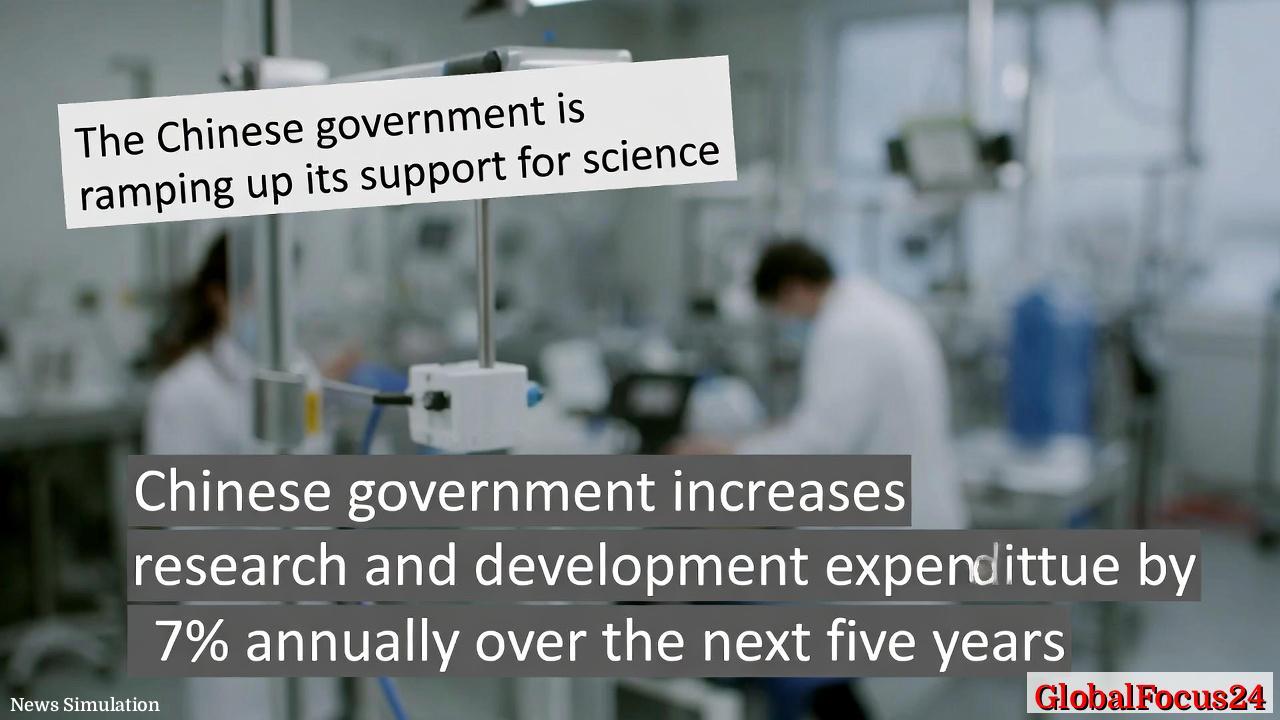
China Signals Surge in R&D as Five-Year Plan Targets 7% Annual Growth
China’s leadership has unveiled a bold expansion plan for research and development, aiming to lift overall R&D expenditure by at least 7% annually over the next five years. The initiative, embedded in the ongoing 15th Five-Year Plan for 2026-2030, signals a sustained push to deepen basic research, applied research, and experimental development across sectors. With this framework, the government expects billions of dollars to flow into laboratories, national projects, and innovative ventures each year, reinforcing China’s position as the world’s largest R&D spender.
Historical context: steady ascent to a global R&D heavyweight Over the past decade, China has transformed its science and technology landscape from a rapid catch-up phase into a long-term innovation strategy. Last year, total R&D spending surpassed 3.9 trillion yuan (about US$567 billion), marking a period of robust growth that has consistently outpaced many peers. The annual expansion in recent years has often exceeded 8%, underscoring a national priority that marries scientific ambition with industrial policy. This trajectory has positioned China as a central node in global supply chains for high-tech goods, while also fueling ambitious domestic initiatives in areas ranging from semiconductor manufacturing to biotechnology.
Economy-wide implications: shifting the funding mix One of the plan’s notable features is a policy tilt toward private-sector leadership in research and development. The government is signaling a strategic transition away from a model dominated by state-owned enterprises and government laboratories. If realized, this shift could alter how research is funded, how projects are selected, and how commercialization flows from discovery to market. Historically, a more balanced public-private approach has been linked to greater flexibility, faster scaling of breakthrough technologies, and improved alignment between research agendas and industry needs. Analysts will be watching how funding channels—grants, tax incentives, and public-private partnerships—are optimized to encourage risk-taking and long-term investment.
The science budget: targeted increases to propel core capabilities This year’s science and technology budget is set to rise to 426 billion yuan, a 10% increase from 2025. The allocation targets major projects, national laboratories, and the removal of technical bottlenecks that constrain progress across critical sectors. By prioritizing foundational science alongside applied programs, the plan aims to build a robust platform for innovation that can sustain downstream growth in high-value industries such as advanced manufacturing, information technology, and green technologies. The emphasis on foundational research reflects a recognition that enduring breakthroughs often emerge from deep investigations into fundamental questions.
Key sectors under the spotlight: AI, semiconductors, and beyond Artificial intelligence (AI) remains a central pillar of China’s economic strategy, with policymakers viewing it as essential to sustaining growth and global competitiveness. The plan’s emphasis on AI reflects both immediate applications—automation, data analytics, and intelligent decision-making—and longer-term potential, including breakthroughs in machine learning efficiency, edge computing, and AI-enabled robotics. Alongside AI, sectors like semiconductors, quantum information science, biotechnology, and clean energy technologies are expected to receive heightened funding attention as the country seeks to reduce external dependencies and cultivate a self-reinforcing ecosystem of innovation.
Regional comparisons: how China’s approach stacks up Relative to other major economies, China’s R&D push is notably ambitious in scale and continuity. Several advanced economies have pursued targeted, time-bound investments in AI and biotech, but China’s five-year horizon coupled with sustained annual growth benchmarks stands out for its declared consistency. In regional terms, the plan complements China’s broader efforts to upgrade inland provinces and coastal hubs alike, aiming to spread high-tech capabilities more evenly across the country. For neighboring economies and regional partners, the strategy can influence collaboration patterns, supply chain resilience, and competitive dynamics in global technology markets.
Historical context, continued: lessons from past cycles Past cycles of policy-driven R&D in China have shown that clear objectives, stable funding streams, and a favorable regulatory environment can accelerate project maturation. The current plan’s emphasis on private-sector leadership may accelerate the translation of fundamental science into commercial products, provided that intellectual property protections, market access, and financing conditions are conducive. Observers expect that progress will be uneven across disciplines, with some fields advancing rapidly and others encountering longer development timelines or greater geopolitical headwinds.
Impact on employment, industry, and regional development An expanded R&D budget is likely to ripple through employment patterns, with higher demand for researchers, engineers, and technicians across universities, research institutes, and corporate labs. Industries linked to advanced manufacturing, energy transition, and digital services stand to benefit from stronger innovation pipelines. Regions with established research ecosystems—such as major metropolitan areas with universities and incubators—could attract more talent and investment, while less-developed regions may receive targeted support to build out scientific infrastructure. In the long run, a more innovation-driven economy can improve productivity, raise export competitiveness, and contribute to a more resilient growth model.
Public reactions and socio-economic considerations Public sentiment toward government-backed innovation initiatives is often mixed, balancing optimism about new opportunities with concerns about intellectual property protection, data governance, and the pace of reform. The renewed emphasis on private-sector leadership may help alleviate some calls for market-driven efficiency, yet the success of this approach hinges on fostering a healthy commercial environment—clear regulatory pathways, transparent project selection, and accessible funding mechanisms. As the plan unfolds, policymakers will need to demonstrate tangible progress in delivering practical outcomes, from new technologies to scaled manufacturing capabilities.
Global collaboration and supply chain implications China’s intensified R&D effort is likely to influence global collaboration in science and technology. International partnerships in AI, materials science, and life sciences may adapt as researchers navigate shared challenges and competing interests. For downstream industries, the push could affect supply chain resilience by accelerating domestic capabilities in critical components and systems. Companies worldwide may recalibrate investment strategies, seeking to align with China’s evolving research landscape while navigating export controls, data localization requirements, and potential policy shifts.
Policy instruments and governance The plan’s success will depend on a mix of policy instruments, including tax incentives for private R&D, subsidy reforms that encourage productive collaboration, and stronger ties between universities and industry. Robust governance structures will be essential to ensure accountability, measurement of outcomes, and the efficient allocation of funds. Transparent reporting on milestones, cost-benefit analyses of major projects, and independent reviews could bolster confidence among stakeholders while supporting sustained investment over the long haul.
Historical context and economic signals China’s ongoing commitment to R&D underscores a broader economic signal: the shift toward knowledge-intensive growth. As industries increasingly rely on sophisticated technologies, nations that cultivate robust innovation ecosystems tend to exhibit more durable productivity gains and competitive advantages in high-value sectors. The current plan reinforces a trajectory where basic science, applied research, and scalable technologies coalesce to propel long-run economic performance.
What this means for business leaders and investors For business executives and venture capital participants, the renewed emphasis on R&D signals a favorable funding environment, potential partnerships with national laboratories, and opportunities to align product development with strategic national priorities. Companies that invest in advanced capabilities, cultivate strong IP portfolios, and maintain agile collaboration models are likely to be well-positioned to benefit from government-backed initiatives and the growing demand for next-generation technologies. However, navigating regulatory frameworks and ensuring alignment with national strategic objectives will be essential for long-term success.
Sustainability and environmental considerations As China expands its R&D base, attention to environmental impact and sustainable development will be increasingly important. Investments in clean energy, energy efficiency, and environmentally friendly manufacturing processes can yield long-term economic and social benefits. Policymakers may track environmental indicators alongside innovation metrics to ensure that growth remains aligned with climate goals and sustainable development priorities.
Conclusion: a deliberate, high-stakes accelerator for science and industry China’s plan to elevate R&D spending by at least 7% annually over five years represents a decisive commitment to sustaining high-speed innovation. By prioritizing foundational science, catalyzing private-sector leadership, and funding major national projects, the country aims to fortify its position as a global leader in science and technology, with AI and other strategic technologies at the core. While challenges remain—ranging from governance and IP considerations to global competition and geopolitical dynamics—the direction is clear: a knowledge-driven economy that seeks to translate discovery into broad-based economic and social gains.
Note: This article presents a synthesis of publicly available policy signals and historical trends to provide context and analysis.